

Gold Brass Spark Guard
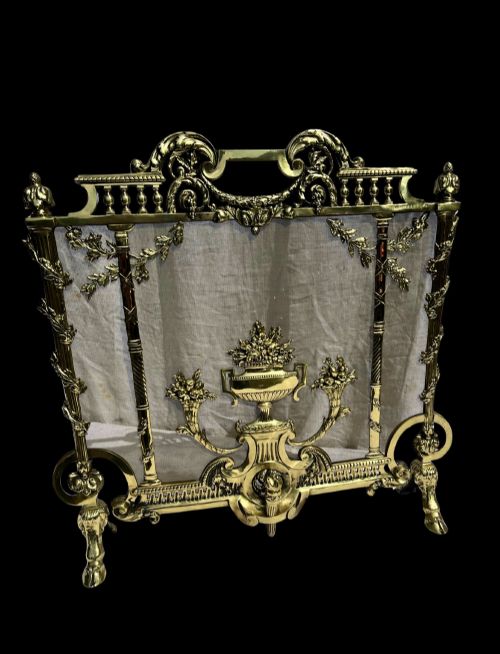
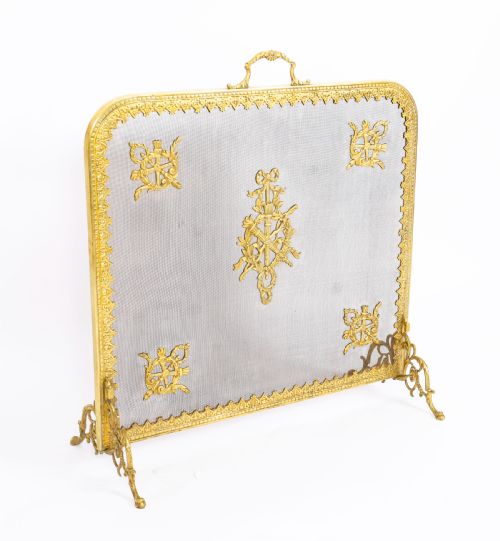
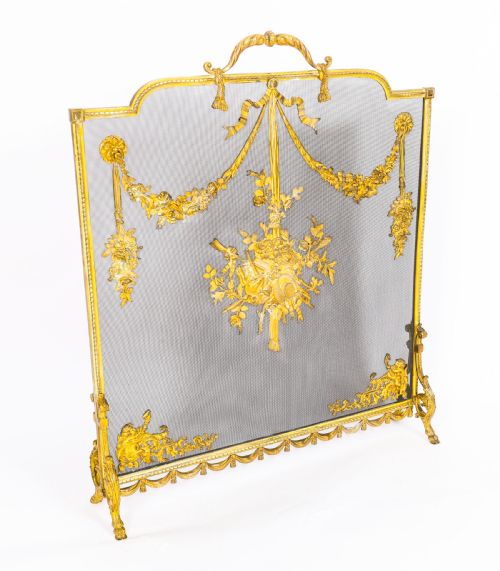
A gold brass spark guard stands before the hearth, catching the firelight and shielding the room with ornamental metalwork.
Gold Brass Spark Guard
A gold brass spark guard functions as a decorative and protective screen placed in front of an active fireplace. These pieces range from simple domestic folding guards to elaborate French revival screens designed to catch stray embers.
The versions most commonly met on this page date from the nineteenth century through the Edwardian period and the 1920s. They appear frequently in Victorian designs alongside French Rococo, Empire Revival, and Louis styles.
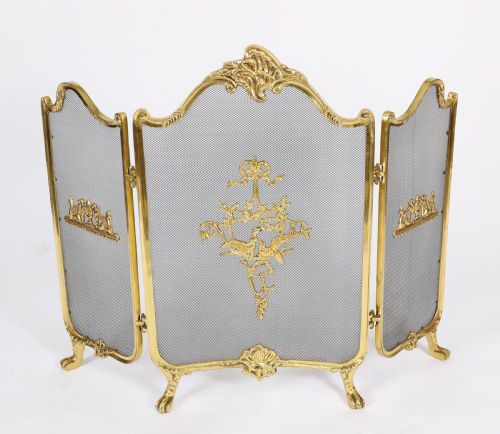
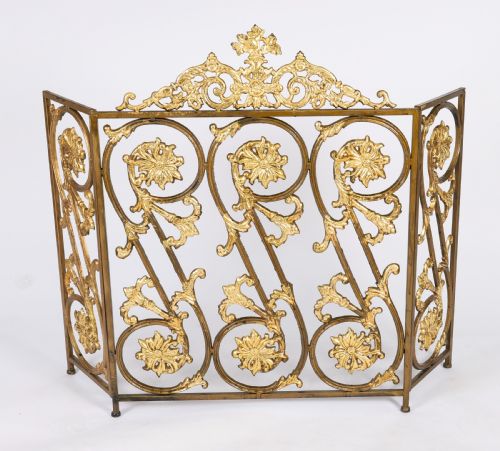
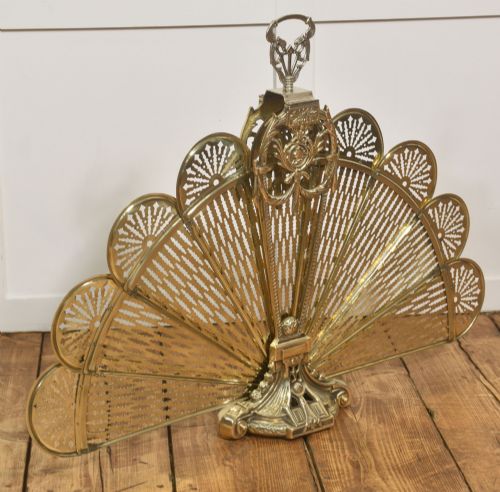
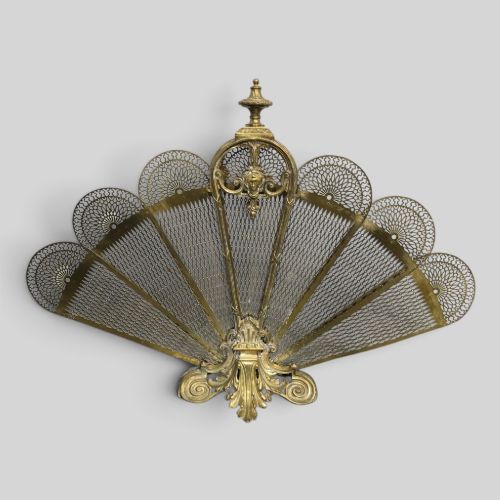
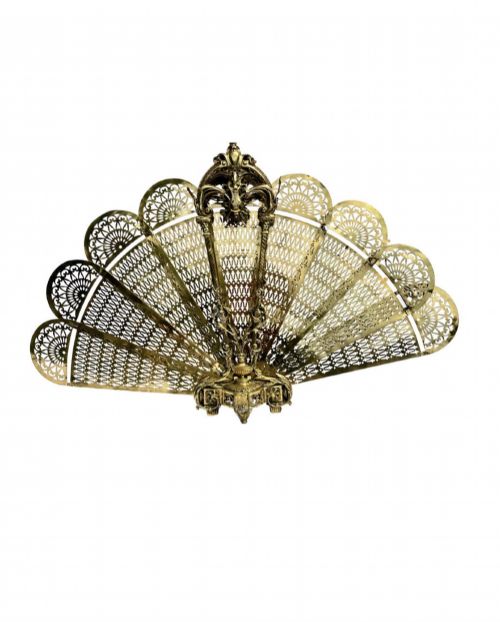
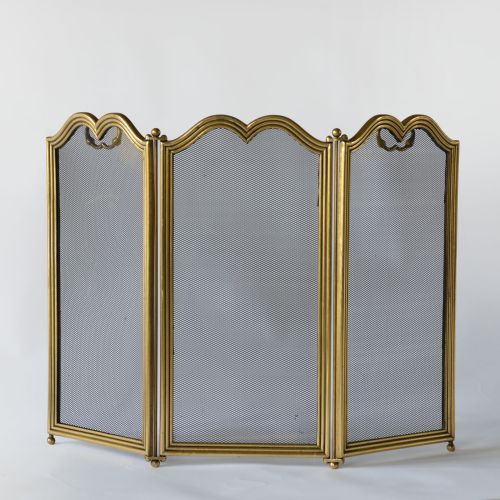
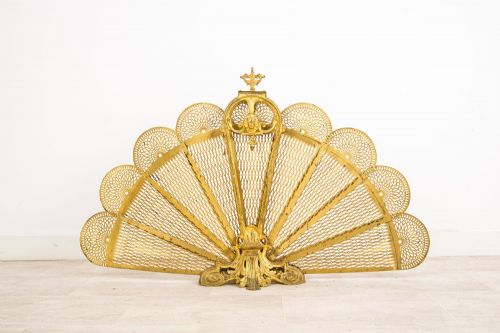
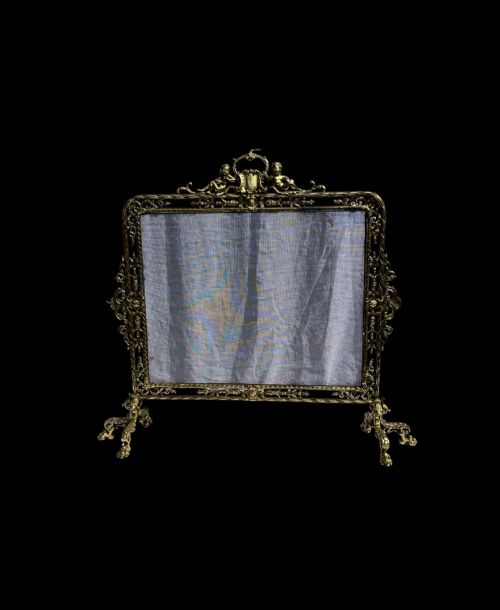
Makers utilised various configurations, including tripartite folding frames, gate-fronted barriers, and expanding peacock fan designs. Each form offers a specific way to manage hearth safety while adding metallic warmth to a room.
Materials and construction
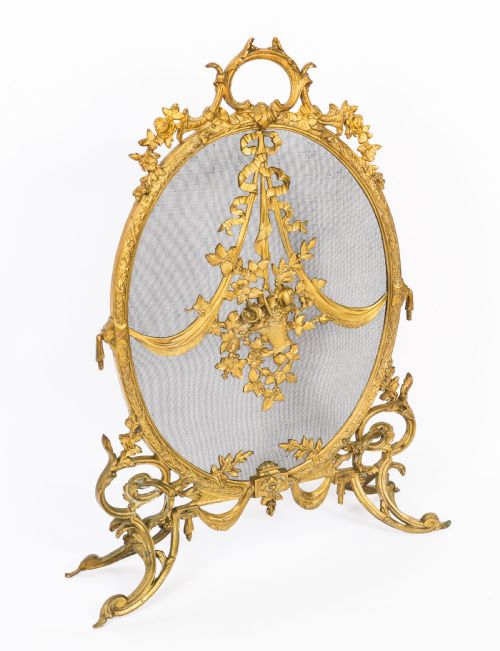
Makers constructed the primary frames of a gold brass spark guard from cast brass, gilt bronze, and ormolu. These metals were often polished to a bright finish or gilded to enhance their reflective quality.
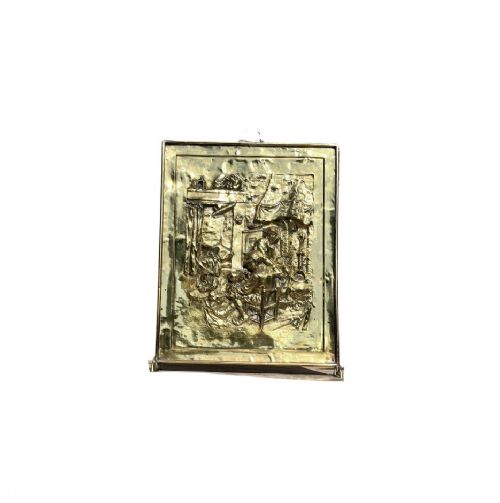
Wire mesh, steel mesh, and pierced sheet brass form the protective panels that catch sparks while allowing heat to circulate. Some examples incorporate bevelled glass or mirror panels within the metal framework.
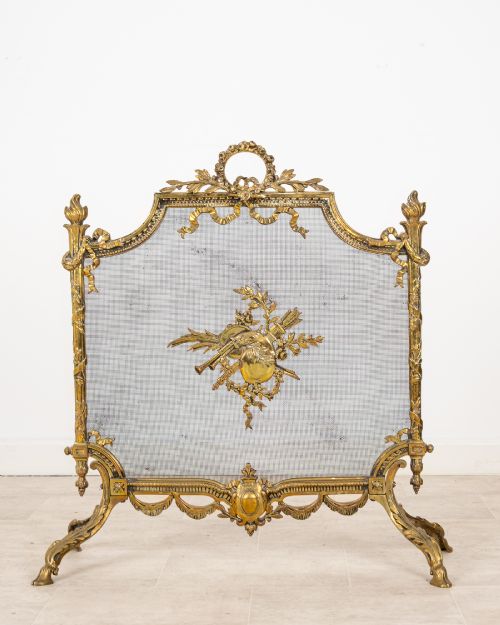
Decorative elements such as floral trophies, flaming torches, dolphins, and musical motifs were cast separately and fixed to the frame. Hinges allowed folding models and peacock fan screens to expand and contract smoothly.
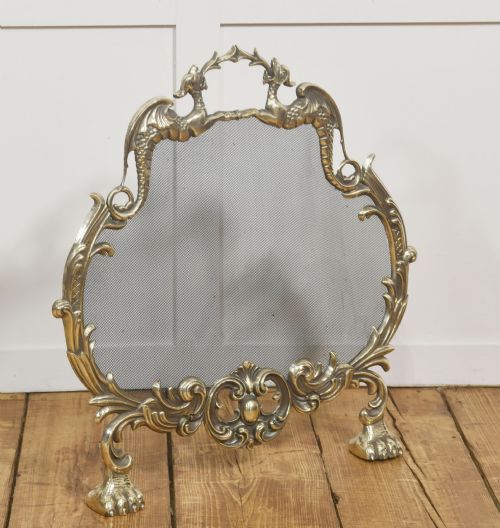
The inventory includes single-panel screens, folding tripartite guards, and expanding peacock fan configurations.
Evaluating the craftsmanship
The distinction between standard domestic fireguards and finer examples rests upon the depth and crispness of the cast ornamentation. Superior pieces exhibit hand-chased details on the gilt bronze and ormolu mounts rather than plain cast surfaces.
Substantial gauge brass and robust hinge construction separate heavy, stable screens from lighter variants that warp under heat. The complexity of the wire mesh or pierced brass work also indicates the ambition of the original workshop.
The Gold Brass Spark Guard Glossary
- Ormolu
- Gilt bronze mounted or applied to decorative metalwork. This technique involves gilding a mercury and bronze amalgam to achieve a rich gold finish.
- Peacock fan screen
- A fire guard featuring overlapping metal blades that fan outwards into a semicircle. These blades fold together neatly when the fireplace is not in use.
- Rococo revival
- A nineteenth-century design style characterised by asymmetrical scrollwork, C-scrolls, and naturalistic plant motifs. It heavily influences many French and English fire screens on this page.
- Tripartite
- A screen divided into three distinct panels connected by hinges. This construction allows the outer wings to angle inward and enclose the hearth opening.
- Gilt brass
- Brass that has been treated with a thin layer of gold or gold-coloured wash. It provides the appearance of solid gold bronze at a lighter weight.
Gold Brass Spark Guard: Frequently Asked Questions
What is a gold brass spark guard?
A gold brass spark guard is a protective barrier placed in front of a fireplace to catch flying embers and sparks. They combine functional wire mesh or pierced metal with decorative frames made from brass and gilt bronze.
These guards protect flooring and furnishings from open flames while serving as a decorative focal point in the room. They appear in various formats, from rigid single panels to expanding folding fans.
How do peacock fan screens work?
Peacock fan screens consist of multiple rigid metal blades pivoting on a central axis at the base. Pulling the top of the handle fans the blades outward into a protective semicircle.
When pushed closed, the blades stack neatly behind one another into a compact vertical space-saving shape. This design gained popularity during the Victorian and Edwardian eras for its versatility.
How do I date a brass fire screen?
Dating a fire screen involves examining the prevailing design style, manufacturing techniques, and materials used in the frame. Nineteenth-century examples often display heavy cast brass and intricate French revival ornamentation.
Later pieces from the 1920s frequently incorporate Art Deco sunburst motifs or simplified geometric piercing. Patent marks, hinge types, and the method of mesh attachment also offer clues to the decade of manufacture.
Are these screens suitable for active fires?
Most antique spark guards feature sturdy brass frames and wire mesh specifically designed to withstand hearth temperatures. They effectively block sparks while permitting radiant heat to warm the room.
Some highly decorative gilt bronze or mirrored screens function primarily as summer infills when the fireplace is unlit. Checking the integrity of the mesh and frame ensures safe everyday usage.