
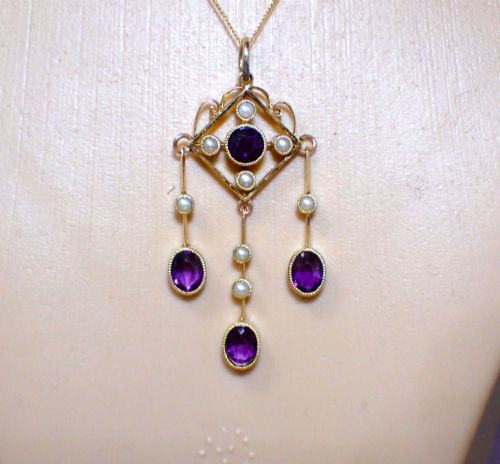


Gold Amethyst Pearl Necklace
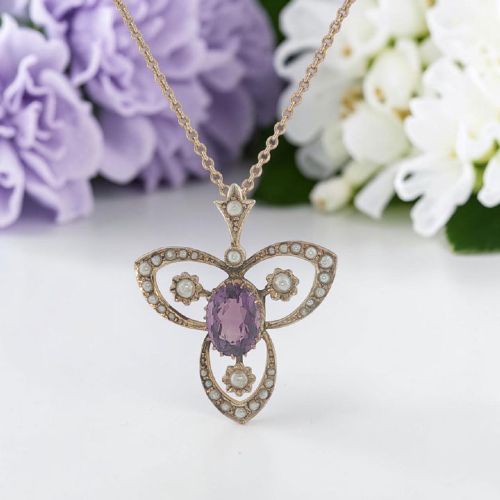
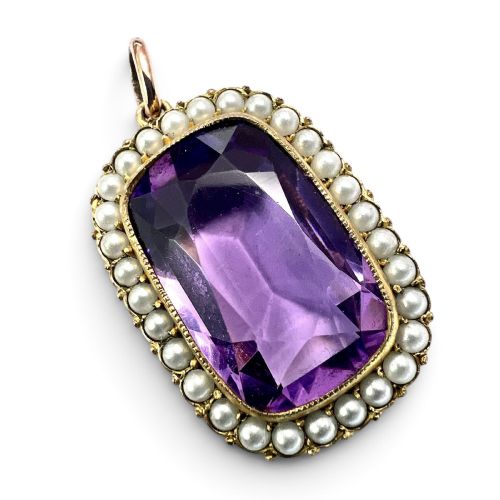
A gold amethyst pearl necklace brings together deep purple quartz and lustrous pearls in precious metal settings designed across the Victorian and Edwardian eras.
Gold Amethyst Pearl Necklace
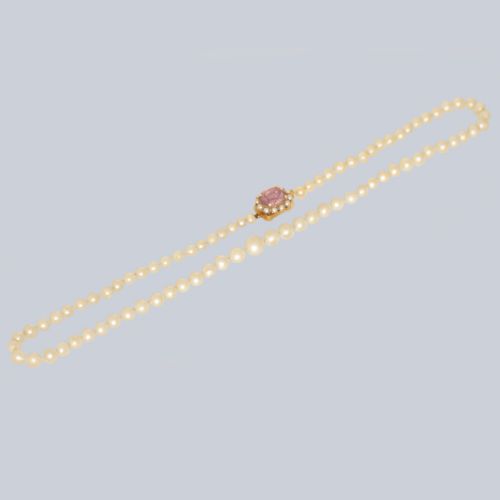
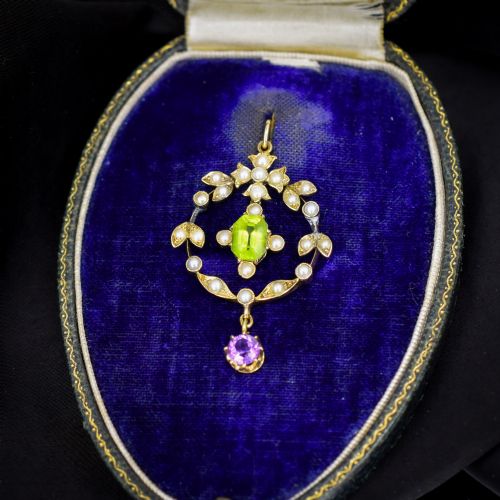
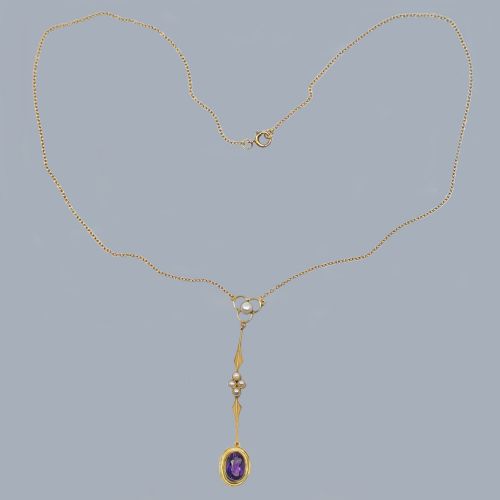
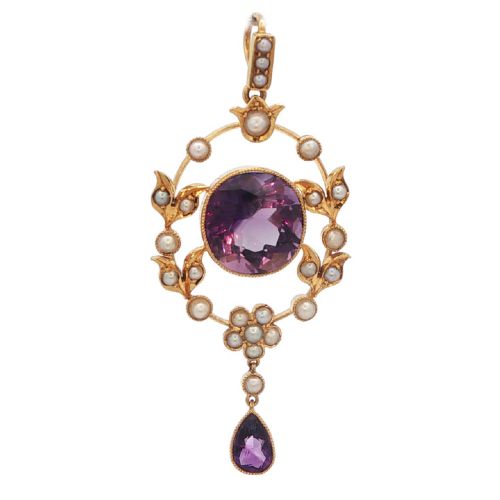
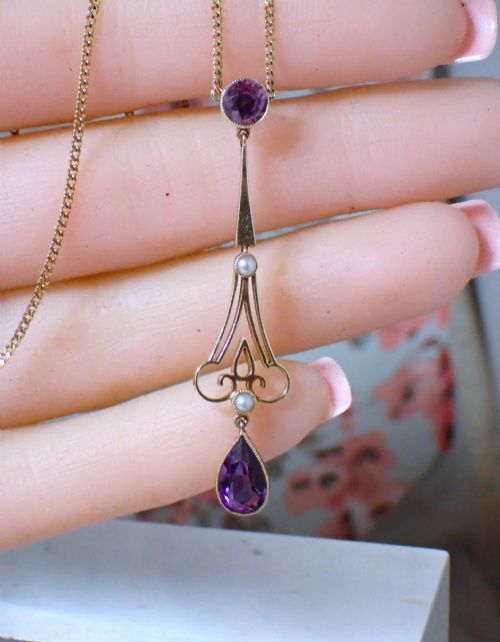
A gold amethyst pearl necklace typically manifests as a pendant suspended from a fine chain, or as multi-strand pearl configurations featuring elaborate gemstone clasps. The forms span drop pendants, lavalieres, and negligé designs created during the height of late nineteenth and early twentieth century craftsmanship.
The pieces on this page are most frequently encountered in Edwardian and Victorian iterations, often bearing the characteristic flowing asymmetry of the Art Nouveau style. Makers utilised both nine-carat and fifteen-carat yellow gold to mount central amethysts framed by delicate seed pearls.
How they were made
Goldsmiths worked primarily in nine-carat and fifteen-carat yellow gold, employing hollow stamping, wire twisting, and delicate bezel settings to construct intricate frames without excessive weight. Seed pearls were meticulously half-drilled and secured onto tiny pins or glued into position, surrounding large step-cut or cabochon amethysts.
Art Nouveau examples frequently incorporated plique-à-jour enamel or fluid whiplash motifs, while later mid-century pieces turned towards multi-strand pearl configurations secured by gem-set clasps. Master jewellers balanced structural rigidity with visual lightness, suspending drops from articulated links to ensure movement when worn.
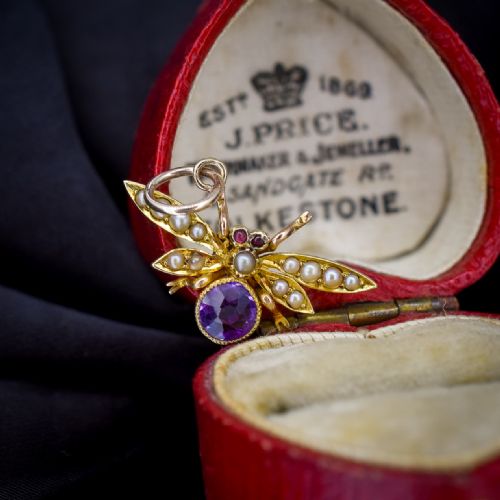
Surviving designs incorporate botanical motifs, hearts, bows, and insect charms alongside classic multi-strand pearl configurations.
What varies in quality
The distinction between ordinary and exceptional examples rests upon the saturation and cutting of the quartz alongside the uniformity of the pearls. Superior pieces display deep, evenly coloured amethysts free from windowing, matched with perfectly round, lustrous seed pearls that retain their original orient.
Execution of the metalwork forms the second pillar of quality, separating standard commercial output from master workshop production. Finer necklaces reveal crisp chasing, secure claw or bezel work without excess solder, and robust articulated joints that withstand the test of time.
S. Blanckensee & Son·Hamilton & Co
The Gold Amethyst Pearl Necklace Glossary
- Lavalier
- A pendant necklace featuring a central gemstone drop suspended below a smaller focal element. This style gained immense popularity during the Edwardian period.
- Seed Pearl
- Very small, naturally occurring or cultured pearls used en masse to create delicate borders and floral motifs in antique jewellery. Their uniform size and subtle lustre define the period aesthetic.
- Negligé Necklace
- A pendant design featuring two unequal drops suspended from a central cluster or bow motif. These asymmetric pieces were a hallmark of Edwardian fine jewellery.
- Plique-à-jour
- An enamelling technique where enamel is applied within a wire framework without a backing, resembling miniature stained glass. It allows light to pass directly through the translucent coloured glass.
- Fringe Necklace
- A necklace style featuring numerous small vertical pendants or drops suspended at regular intervals along the lower edge of the chain. This arrangement creates a dynamic, cascading effect when worn.
Gold Amethyst Pearl Necklace: Frequently Asked Questions
How do I date a gold amethyst pearl necklace?
Dating relies on stylistic markers, gold carat marks, and construction techniques. Victorian pieces often use heavy bezels and rose gold, while Edwardian examples favour lighter yellow gold frames with intricate Art Nouveau wirework.
Hallmarks and stamps provide definitive chronological anchors when present. Makers' marks combined with specific gold standards like fifteen-carat help narrow down the period of production.
What is a lavalier necklace?
A lavalier is a drop pendant necklace featuring a central stone or motif suspended below a secondary focal point. The design moves freely and sways with the wearer.
Originating in the early twentieth century, these pieces often incorporate seed pearls and amethysts. They represent a distinctly feminine aesthetic from the late Edwardian era.
Are the pearls natural or cultured?
Most antique pieces from the Victorian and Edwardian eras utilise natural seed pearls harvested from saltwater oysters or freshwater mussels. Cultured pearls became more widespread by the mid-twentieth century.
Examining the drill holes and surface lustre under magnification reveals the organic origin. Natural seed pearls typically display a softer, deeper iridescence than modern mass-produced alternatives.