


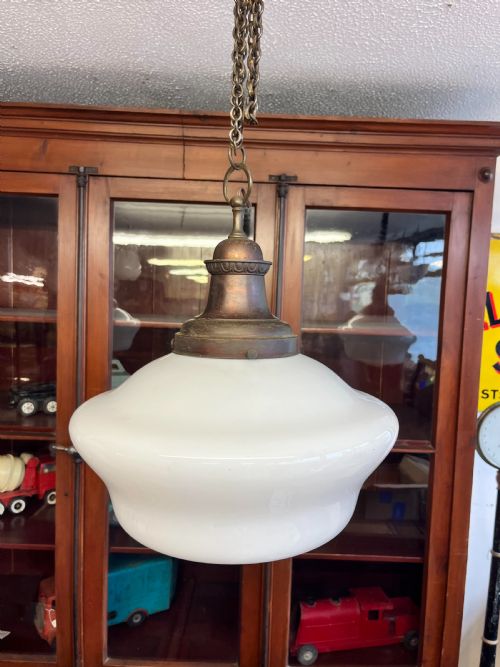


Globe Shade Hanging Light
A globe shade hanging light brings diffuse illumination to a room, prized for spherical glass bowls that soften light output.
Globe Shade Hanging Light
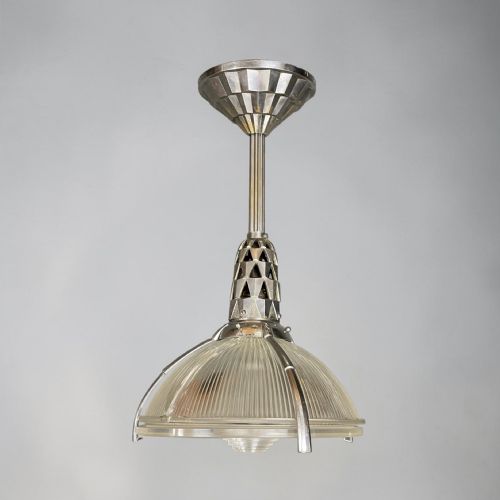
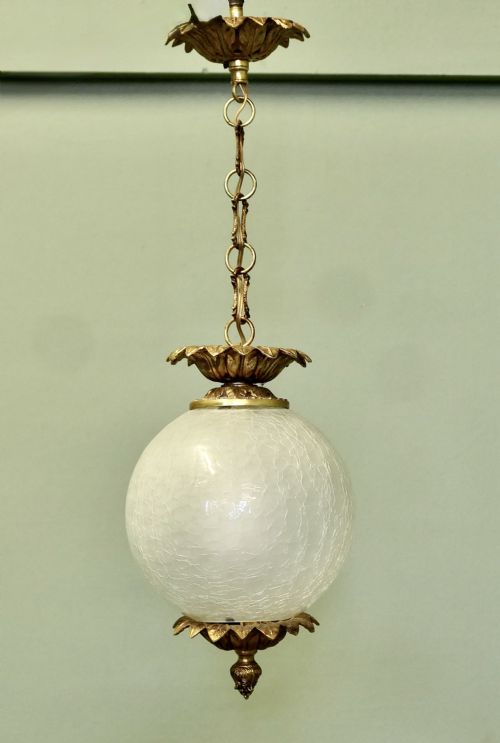
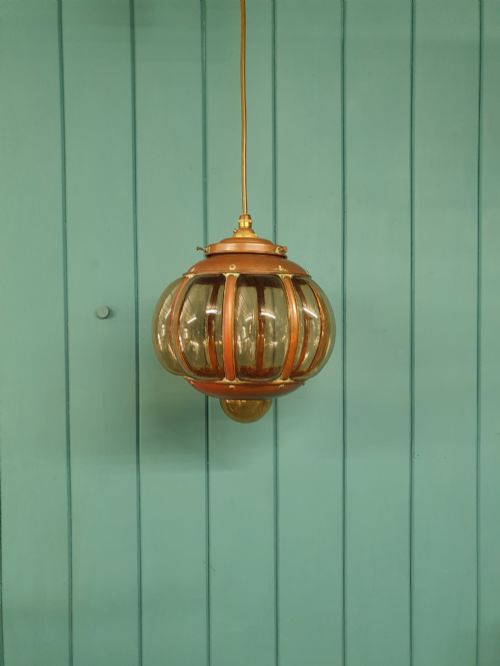
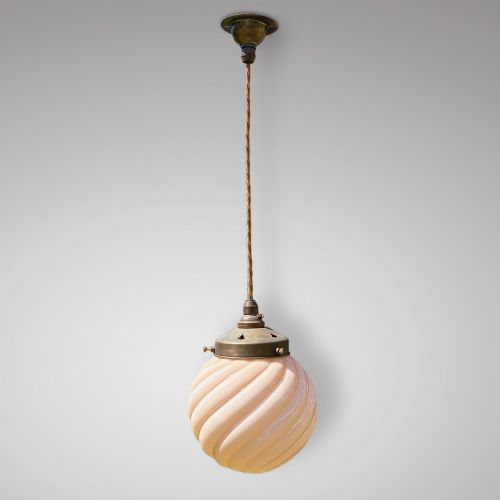
A globe shade hanging light centres on a spherical glass diffuser suspended from a ceiling mounting, functioning as a primary source of illumination in hallways, corridors, and rooms. Buyers seeking these fixtures encounter pendant lights and ceiling lighting originating from the Edwardian period through the 1920s and 1930s.
The forms range from compact hallway pendants to large institutional chapel and pharmacy lights, reflecting the practical lighting needs of residential and public spaces during the early decades of the twentieth century. Each configuration balances functional suspension with diffused architectural lighting.
How they were made
The construction of a globe shade hanging light relies on the pairing of metal hardware with blown or moulded glass shades. Metal components utilise brass, copper, nickel plated metal, and bronze to form the suspension fixtures, galleries, and ceiling mounts.
Glass production involves techniques such as moulding and blowing to create opaline, moonstone, smoked, purple, and crackle finishes. Fabric flex provides the electrical suspension, connecting the ceiling fixture to the suspended glass globe.
Some fish scale shades cast patterns that make ceilings look remarkably scaly.
What varies in quality
The quality of a globe shade hanging light is distinguished by the weight and finish of the glass and metal components. Superior examples display dense opaline or evenly textured crackle glass paired with substantial cast brass, copper, or bronze hardware rather than lighter plated alternatives.
Design execution separates standard fixtures from finer examples, particularly in the proportion between the spherical shade and the suspending metal gallery. The integration of period-appropriate fabric flex and the purity of colour within the glass shade further determine the standing of each piece.
Émile-Jacques Ruhlmann
The Globe Shade Hanging Light Glossary
- Opaline Glass
- A milky, semi-translucent glass that diffuses light evenly while hiding the bulb within. It is frequently found in early twentieth-century lighting fixtures.
- Pendant Light
- A single light fixture that hangs from the ceiling by a cord, chain, or metal rod. These lights provide direct or ambient illumination depending on the shade.
- Art Deco
- A design style of the 1920s and 1930s characterised by geometric forms, stylised motifs, and sleek industrial materials. It strongly influences the silhouettes of many period globes.
- Fabric Flex
- An electrical cord covered in woven fabric, used to suspend and power pendant lights. It offers both flexibility and a traditional decorative finish.
- Nautical
- A stylistic category inspired by maritime equipment, often featuring robust brass or copper housings built to withstand marine environments.
Globe Shade Hanging Light: Frequently Asked Questions
What is a globe shade hanging light?
A globe shade hanging light is a ceiling-suspended fixture featuring a spherical glass diffuser. These lights distribute ambient illumination evenly across a space.
They appear in various styles from the Edwardian era through the Art Deco period, utilising materials like opaline glass and brass.
How were globe pendant lights used?
These fixtures served as primary interior illumination in domestic hallways, commercial shops, and institutional chapels. Their suspended form brought light down from high ceilings.
The enclosed glass globe protected the bulb while softening the glare for inhabitants below.
How do I style a hanging globe light?
A hanging globe light works well suspended centrally in a hallway or above a small table. Pairing the fixture with complementary period brass or bronze hardware enhances its historical character.
Consider the drop length relative to ceiling height to ensure proper placement within the room.
How do I identify a 1920s pendant light?
Pieces from the 1920s often display distinct Art Deco geometric lines or utilise opaline and frosted glass shades. The hardware typically consists of cast brass or nickel-plated metal.
Examining the manufacturing techniques and material combinations helps separate these early pieces from later reproductions.