


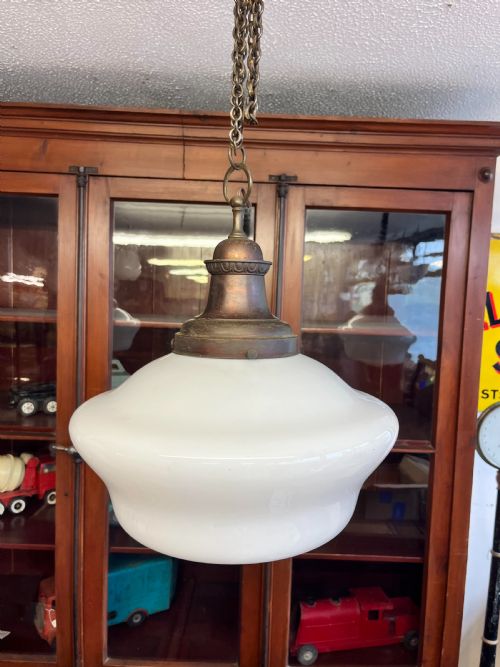


Brass Globe Pendant Lamp
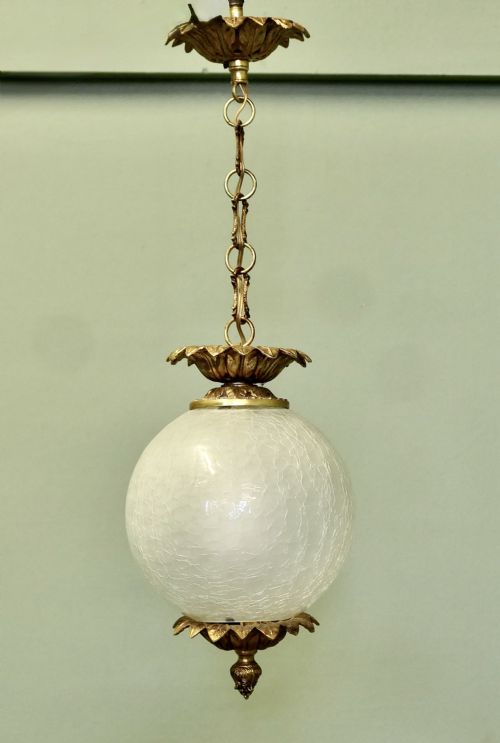
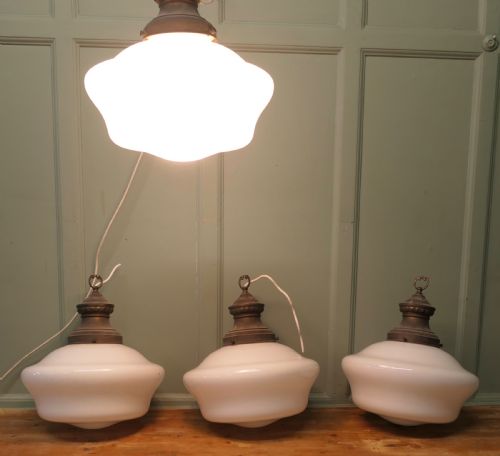
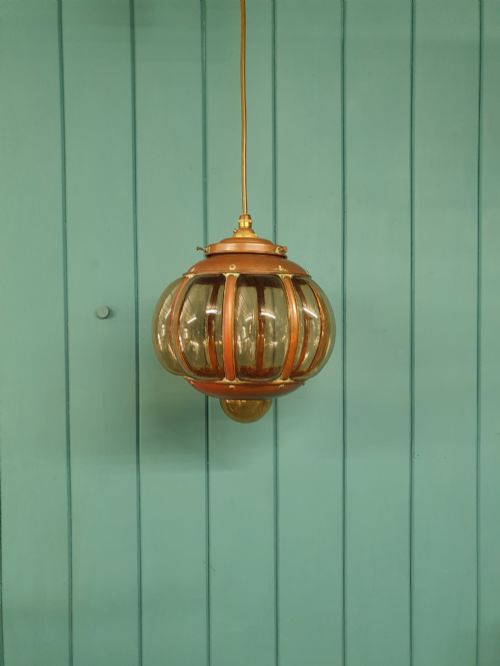
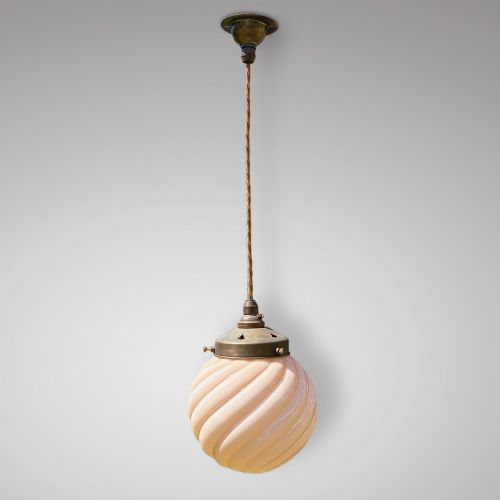
These brass globe pendant lamp fixtures offer genuine period character, bringing warm downward illumination and distinct historical materials to any interior.
Brass Globe Pendant Lamp
When you search for a brass globe pendant lamp, you encounter overhead ceiling fixtures suspended on fabric flex or chain that combine metal mounts with spherical or rounded glass shades. The examples seen here span the Victorian, Edwardian, and Art Deco eras, alongside industrial and nautical utilitarian designs.
You are most likely to meet pieces from the 1920s and 1930s featuring opaline, moonstone, or prismatic glass paired with brass, copper, or gilt bronze metalwork. These range from diminutive hallway shades to large pharmacy and chapel lights intended for high ceilings.
How they were made
The construction of these pendants relies upon spun or cast brass and copper paired with blown, moulded, or pressed glass shades. Metal galleries secure the globes using screw fitments, while internal wiring historically utilised fabric-covered flex hanging from matching ceiling roses.
Specialised glass techniques define the era, from acid-etched opaline and smoked glass to double-prismatic Holophane surfaces engineered to diffuse harsh light evenly across a room.
The selection includes Edwardian, Victorian, and 1930s designs utilising opaline glass, brass, and copper.
What varies in quality
Quality in these pendant lights rests upon the weight of the metal components and the optical depth of the glass. Substantial cast brass or gilt bronze frames retain crisp casting detail, whereas lighter spun elements feel utilitarian and thinner in the hand.
The presence of maker attribution, such as work by Perry & Co, elevates a piece alongside specialised glass treatments like heavy prismatic ribbing or deep-toned opaline layers that create a richer ambient glow when illuminated.
Perry And Co
The Brass Globe Pendant Lamp Glossary
- Opaline glass
- A milky, semi-translucent glass that diffuses light softly without harsh glare. It gained widespread popularity during the Victorian and Art Deco periods for interior lighting.
- Holophane
- A brand of scientific prismatic glass designed to refract and distribute light efficiently. The ribbed exterior pattern controls glare while maximising illumination.
- Gallery
- The metal ring or fitting at the top of a pendant light shade that holds the globe in place. It connects the glass to the suspension flex or chain.
- Fabric flex
- Flexible electrical cable covered in a woven textile sheath. It is commonly found on period lighting to replicate historical installation methods.
Brass Globe Pendant Lamp: Frequently Asked Questions
How high should I hang my pendant?
Hang your pendant light high enough to clear head height in walkways, typically leaving substantial clearance from the floor. Over a dining table or kitchen island, position the lower edge closer to the surface for focused task lighting.
Consider the scale of the globe and the ceiling height of your room to determine the ideal drop. Larger chapel and pharmacy lights require more clearance than diminutive hallway fixtures.
How do I clean opaline glass shades?
Wash opaline and milk glass shades gently in warm soapy water using a soft cloth or sponge. Avoid harsh abrasive scourers that can scratch the delicate surface or damage historical finishes.
Dry the glass thoroughly before reattaching it to the brass gallery. Polish the metal components separately with a suitable non-abrasive cleaner if you wish to reduce tarnish.
What is the difference between Art Deco and Edwardian lights?
Edwardian lighting tends to feature softer floral motifs, clear or lightly tinted glass, and ornate brass or gilt bronze metalwork. Designs from this era often lean towards traditional lantern shapes and formal hallway arrangements.
Art Deco fixtures embrace geometric symmetry, streamlined opaline spheres, and industrial utility. These later pieces prioritise clean lines and functional glass diffusion suited to modernist interiors.