






Art Deco Glass Lantern
An art deco glass lantern brings geometric clarity and warm illumination to an entrance hall, combining metal frames with textured or frosted panes.
Art Deco Glass Lantern
An art deco glass lantern is a hanging or wall-mounted lighting fixture primarily designed for hallways, stairwells, and exterior porches. The selection here spans pendant lights, ceiling lights, and exterior wall lights originating mainly from the 1920s and 1930s, alongside a few pieces from the Edwardian era, the nineteenth century, and the 1940s.
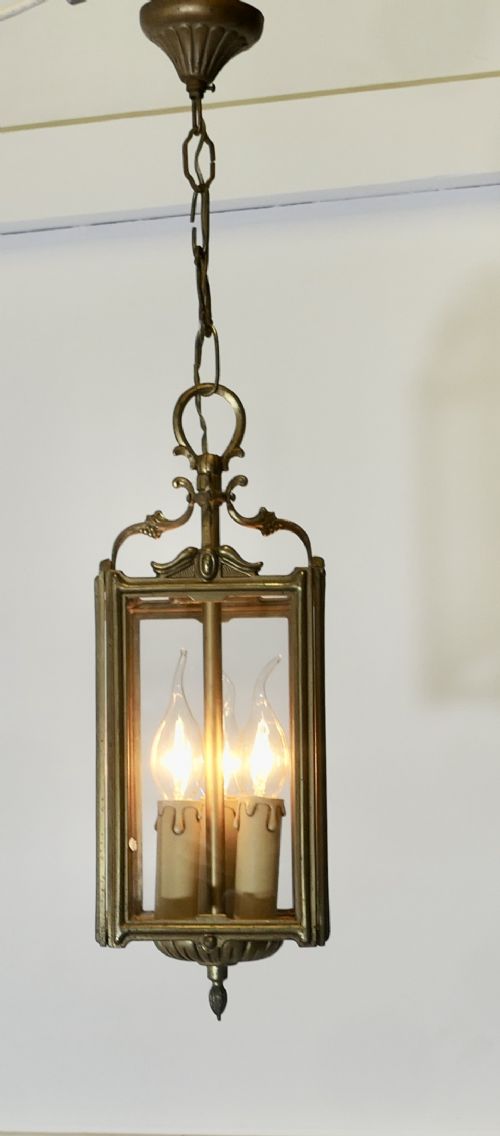
Buyers will frequently encounter French and American designs featuring robust metal frames combined with various glass treatments. These range from simple frosted globes to complex etched and panelled configurations suited to both period and modern interiors.
How they were made
Makers constructed the structural frames of these lanterns using durable metals such as brass, copper, bronze, chrome, and wrought iron. These metals were cast, forged, or spun to create the geometric shapes characteristic of the period.
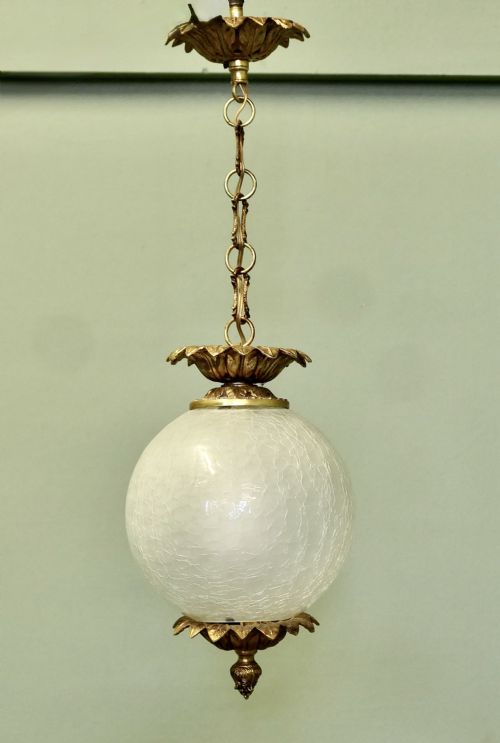
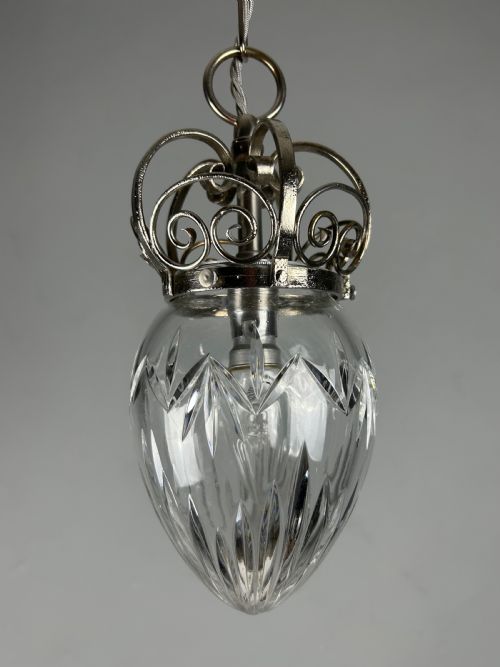
The glass elements were then hand-blown, moulded, or cut to fit securely within the metal armature. Frosted, etched, crackle, and bevelled glass finishes were utilised to diffuse light softly while highlighting the distinct patterns on the panels.
Listings for this phrase frequently feature brass and frosted glass, alongside rarer examples incorporating crackle glass and wrought iron.
What varies in quality
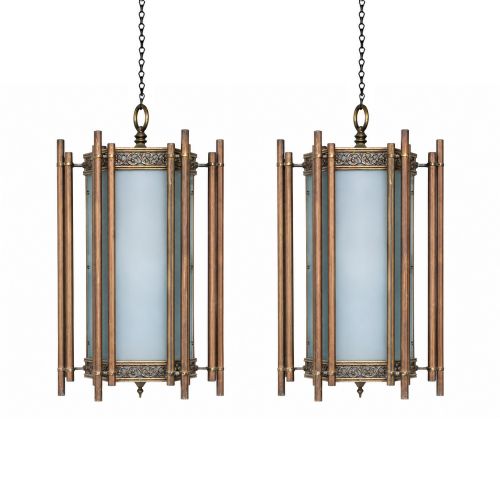
The distinction between standard examples and finer pieces lies in the substance of the metalwork and the complexity of the glass. Heavier gauge brass and bronze frames paired with deeply etched or bevelled glass panels demonstrate superior craftsmanship compared to lighter, plain constructions.
Proportion and scale also define the hierarchy, as monumental pairs and large hall lanterns require more intricate engineering to support heavy glass panes within balanced, symmetrical frameworks.
The Art Deco Glass Lantern Glossary
- Frosted glass
- Glass that has been rendered translucent through acid-etching or sandblasting to diffuse light evenly. This technique softens harsh glares while emphasising the clean lines of the lantern frame.
- Hall lantern
- A ceiling-hung lighting fixture specifically scaled for narrow entrance spaces and corridors. These fixtures usually feature enclosed or semi-enclosed glass panels to direct illumination downward.
- Wrought iron
- Iron that is heated and hammered into shape by hand, resulting in a textured, durable material. It provides a strong, dark contrast against clear or frosted glass panes.
- Bevelled glass
- Glass panes featuring angled edges cut and polished to a specific angle around the perimeter. This process creates decorative prismatic effects when light passes through the glass.
- Pendant light
- A solitary light fixture suspended from the ceiling by a chain, cord, or metal rod. In this category, pendants often take the form of enclosed lanterns or hanging glass globes.
Art Deco Glass Lantern: Frequently Asked Questions
Where should I hang an art deco glass lantern?
These lanterns suit entrance halls, high-ceilinged stairwells, and landings where their distinctive geometric profiles can be viewed from multiple angles. Exterior wall versions work well mounted beside front doors.
Ensure you measure the drop height carefully to allow adequate clearance below the fixture, particularly in narrow hallways.
Are these lanterns suitable for modern electrical systems?
Many period lanterns are updated with modern wiring to meet current safety standards while retaining their original metal and glass components. Rewired fixtures allow for straightforward installation with standard domestic electrical supplies.
Consult a qualified electrician to verify the weight capacity of your ceiling junction box before hanging heavier brass or iron models.
How do I clean frosted and etched glass?
Use a soft microfiber cloth and a mild glass cleaner to remove dust and fingerprints from textured surfaces without scratching the material. Avoid abrasive pads that might damage delicate etched patterns.
Take care when removing glass panels from their metal frames for deep cleaning, ensuring all retaining clips are securely fastened afterward.
How can I tell a 1920s lantern from a later reproduction?
Original pieces display authentic casting imperfections, period-appropriate metal patina, and traditional assembly methods such as slotted screws or hand-soldered joints. The weight and thickness of the glass also reflect the manufacturing standards of the early twentieth century.
Examine the construction details closely, as older lanterns show honest wear consistent with decades of use.