

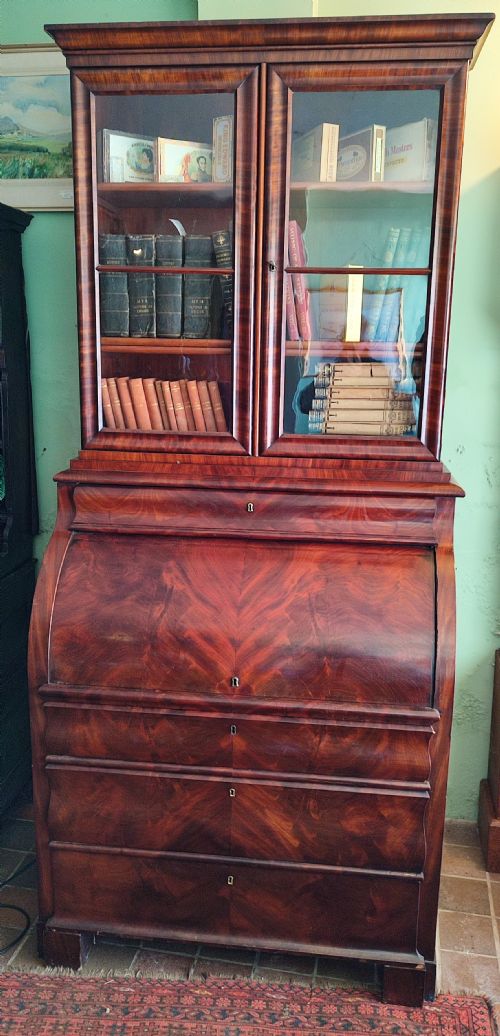


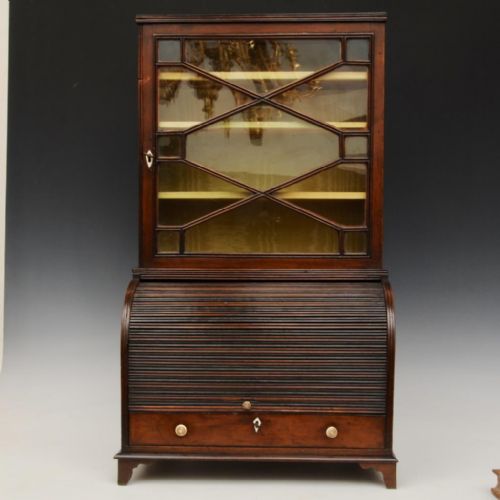
Glazed Top Cylinder Bureau
These glazed top cylinder bureau pieces combine a practical writing surface with display shelving, offering a smart storage solution for the home.

Glazed Top Cylinder Bureau
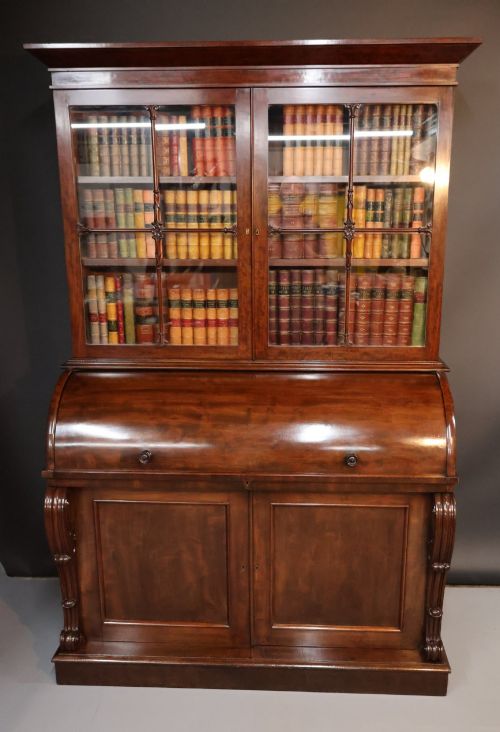
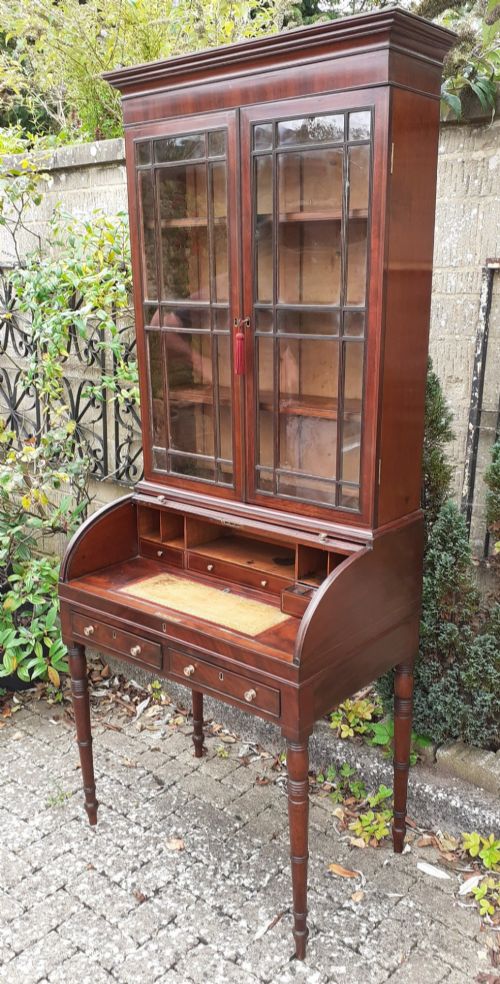
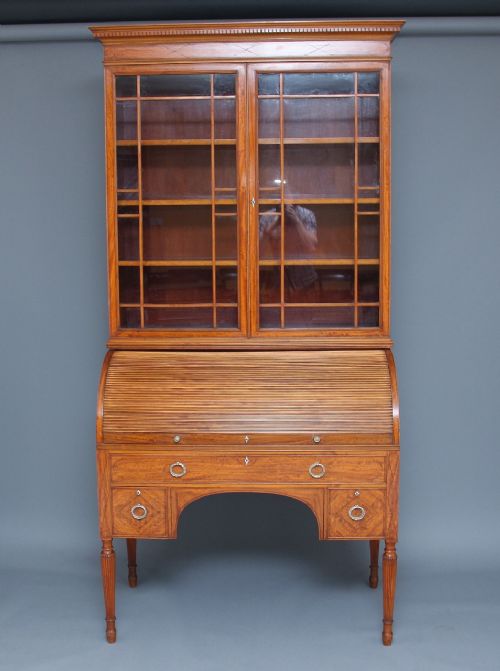
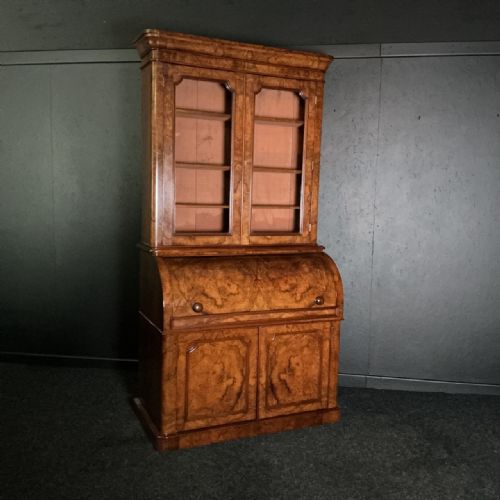
A glazed top cylinder bureau pairs a curved rolling cylinder desk mechanism with an upper bookcase section enclosed by glass doors. These dual-purpose writing cabinets appear across multiple eras, with nineteenth-century and Georgian examples forming the core of the selection.
The layout typically integrates fitted internal pigeonholes and small drawers behind the roll top, topped by adjustable shelving behind glazed doors. Mahogany, satinwood, and walnut versions dominate the selection, often featuring classical proportions and fine timber grain.
Makers and cabinet-makers from the Georgian period through to the Edwardian Sheraton Revival period produced these multi-functional desks. Collectors encounter both full-sized library cabinets and compact or miniature formats designed for smaller rooms.
Materials and construction
Cabinet-makers constructed the primary carcasses using dense hardwoods like mahogany and walnut, frequently applying fine veneers of satinwood or burr walnut across the principal surfaces. Selected pieces incorporate contrasting inlay work and brass mounts to accentuate the geometry of the cylinder and the glazed doors.
The cylinder roll top relies on narrow wooden slats glued to a flexible canvas backing that slides smoothly within recessed tracks. Glass panes within the upper doors are held by timber glazing bars, protecting the volumes stored within from dust.
Periods represented span from the 18th century and Georgian eras through to the Victorian, Edwardian, and Regency eras.
Judging quality in a glazed top cylinder bureau
Quality rests upon the selection of timber veneers and the precision of the joinery within the internal writing compartment. Smooth operation of the curved cylinder mechanism and well-fitted interior drawers indicate superior workshop execution.
The refinement of the glazing bars on the upper cabinet and the crispness of any brass inlay or stringing differentiate standard production from finer pieces. Cohesion in the grain pattern across the fall and drawer fronts marks out the better examples.
Tudor & Burrey·Edwards & Roberts
The Glazed Top Cylinder Bureau Glossary
- Cylinder bureau
- A writing desk featuring a curved, rolling wooden shutter that conceals the desk interior when closed. This mechanism covers the writing slide and internal stationery compartments.
- Glazed bookcase
- An upper display cabinet featuring glass panels set into wooden doors. It allows the safe storage and viewing of books.
- Satinwood
- A light yellowish timber prized for its lustrous grain and used extensively for veneering during the Georgian and later revival periods. It frequently forms the contrasting panels on inlaid cabinets.
- Secretaire
- A cabinet or desk specially equipped for writing and correspondence. These units often feature a pull-down writing flap or a sliding writing surface.
- Biedermeier
- A Central European style dating from the nineteenth century characterised by utilitarian comfort and clean lines. Pieces from this tradition emphasise polished timber surfaces over excessive ornamentation.
Glazed Top Cylinder Bureau: Frequently Asked Questions
How do I operate the cylinder roll top?
The curved wooden shutter slides smoothly along tracks recessed into the sides of the desk carcass. Pushing the handle down or pulling it forward reveals the interior writing surface and pigeonholes.
Ensure the internal writing slide is pushed fully home before attempting to close the cylinder mechanism. This prevents the roll top from jamming against extended boards.
Are the upper shelves adjustable?
Many period glazed bookcase sections feature traditional fixed wooden supports or small adjustable notches carved into the interior sides. This allows the owner to alter shelf heights for different book sizes.
When adjusting the shelves, take care not to force timber that has settled over the decades. Gentle handling preserves the original lining and interior finish.
How do I care for satinwood and mahogany?
Keep these timber surfaces away from direct sunlight and heat sources to prevent the veneers from drying out or splitting. Regular dusting with a soft, dry cloth maintains the natural lustre of the polish.
Apply a light wax sparingly when the wood appears dry, buffing it gently with a clean cloth. Avoid silicone-based polishes which can damage historic finishes.
Where should I place this cabinet?
Position the piece against a stable interior wall away from damp exterior masonry and fluctuating temperatures. Adequate clearance in front of the desk is necessary to pull out the writing slide comfortably.
Ensure the floor beneath is level so the glazed doors hang true and close evenly within their frames. Uneven flooring can cause the tall upper section to warp over time.