



Glazed Terracotta Basin
A glazed terracotta basin brings honest, tactile utility into a modern room, offering warm earthenware tones and centuries of domestic craft.
Glazed Terracotta Basin
A glazed terracotta basin encompasses robust utilitarian vessels shaped from porous clay for practical service in the dairy, kitchen, and washhouse. When you search for a glazed terracotta basin, you encounter substantial bowls, tian bowls, and salters designed for heavy agricultural and domestic tasks.
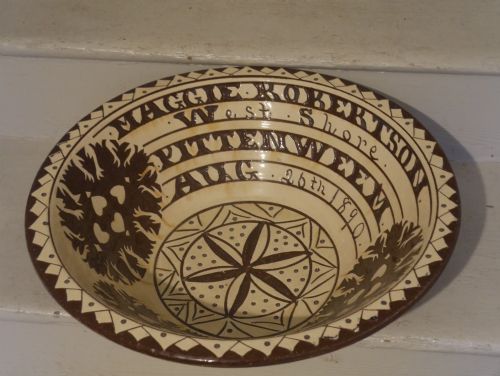
The pieces available span the nineteenth century, including specific dates such as 1850, 1890, and 1920. These domestic objects emerge from regional traditions across England, Scotland, and the South of France.
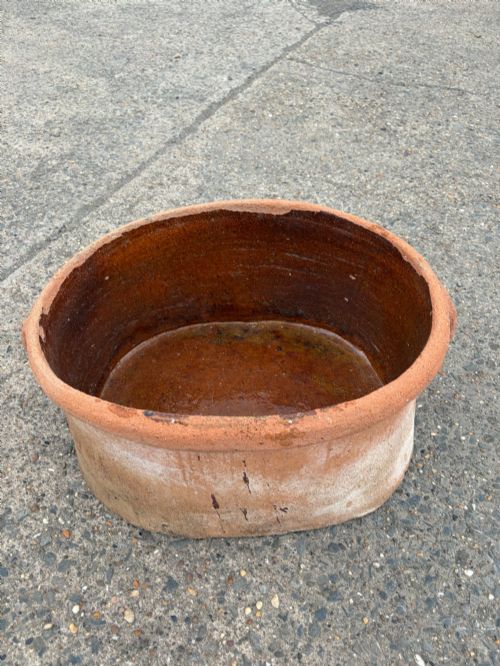
Common forms on this page include dairy bowls with glazed interiors, large tian bowls, wash bowls, and cooking dishes. Each vessel reflects the utilitarian needs of rural households before industrial metal and plastic vessels replaced earthenware.
Materials and construction
Potters shaped these vessels from local terracotta, earthenware, and stoneware clays using traditional throwing and forming techniques. The resulting bodies provide a heavy, durable foundation suited to rigorous daily work in dairies and kitchens.
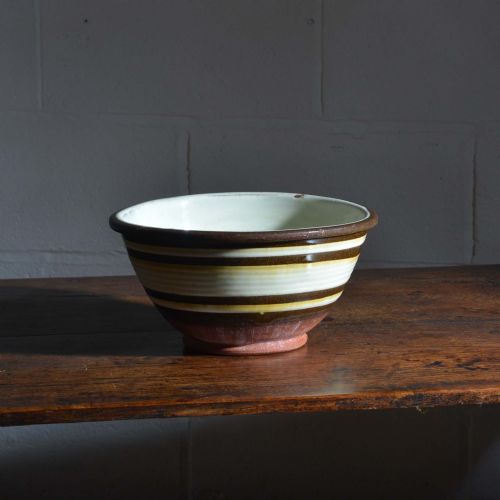
Craftspeople applied lead glaze and slip glaze primarily to the interior surfaces to create a functional, liquid-resistant barrier. This practical coating protected the porous clay from absorbing milk, water, and food while leaving the exterior raw and earthy.
Listings feature eighteenth and nineteenth-century forms including dairy bowls, salters, wash bowls, and tian bowls made from terracotta, earthenware, and stoneware.
Judging quality and character
Quality in these utilitarian pots lies in the harmony between proportion, throwing skill, and the lively application of the glaze. A superior basin displays a confident, balanced profile shaped by an experienced hand rather than rigid industrial moulding.
The visual appeal depends heavily on the interaction between the fired clay body and the pooled glaze within. Variations in the slip or lead coating create rich surface textures and deep colour pools that elevate simple farmyard utility into folk art.
Scottish Seaton Pottery·North Devon
The Glazed Terracotta Basin Glossary
- Terracotta
- A porous, iron-rich fired clay that ranges in colour from pale buff to deep reddish-brown. It forms the structural body for the majority of these utilitarian vessels.
- Lead glaze
- A traditional silica and lead oxide coating fired onto earthenware to render the surface impermeable to liquids. This glossy interior layer made porous clay practical for dairy and kitchen use.
- Slip glaze
- A liquid clay suspension mixed with colourants and applied to pottery before firing to create a smooth, decorative surface. It provides both colour and a functional seal.
- Tian bowl
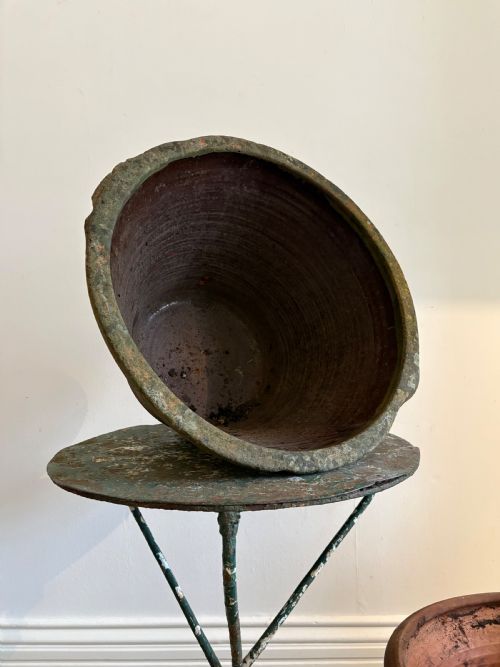
- A large, deep French earthenware vessel traditionally used for agricultural tasks such as rising bread dough or setting milk. These generous bowls feature characteristic interior glazes.
- Dairy bowl
- A wide, shallow earthenware vessel specifically designed for settling milk to allow the cream to rise to the surface. Their broad rims facilitated skimming.
Glazed Terracotta Basin: Frequently Asked Questions
What were glazed terracotta basins used for?
These robust vessels served primarily functional roles in rural homes, dairies, and farmhouses across Britain and France. Dairy bowls held milk for skimming cream, while larger tian bowls handled heavy kitchen preparation and washing.
Over decades of daily service, their durable construction and impermeable interior glazes proved essential for food storage and general domestic housekeeping.
How do I date a 19th-century basin?
Dating relies on observing throwing marks, glaze characteristics, and regional potting traits recorded across the nineteenth century. Pieces often exhibit the distinct hand-thrown ridges and local clay signatures typical of specific British and French production centres.
Exact dates appear occasionally, while broader spans reflect the enduring traditional methods employed by rural potteries before industrial standardisation took over.
Are these basins safe for modern food use?
Historic lead glazes on nineteenth-century earthenware can contain materials that leach when in contact with acidic foods or liquids. It is therefore wise to treat older utility pottery as decorative or for dry storage rather than daily culinary service.
Enjoying them as sculptural centerpieces or planters allows you to appreciate their tactile surfaces safely in a contemporary interior.
How do I style a large terracotta bowl at home?
A large basin commands attention when placed on a sturdy wooden table, kitchen island, or floor pedestal. Their generous proportions and earthy exterior tones anchor a room with a sense of honest, historic craft.
Leave them empty to showcase the interior glaze and thrown clay rings, or fill them simply with dried botanicals, seasonal fruit, or textiles.