


Rustic Country Kitchen Bowl
A rustic country kitchen bowl brings utility and character to a home, bridging centuries of practical domestic craft.
Rustic Country Kitchen Bowl
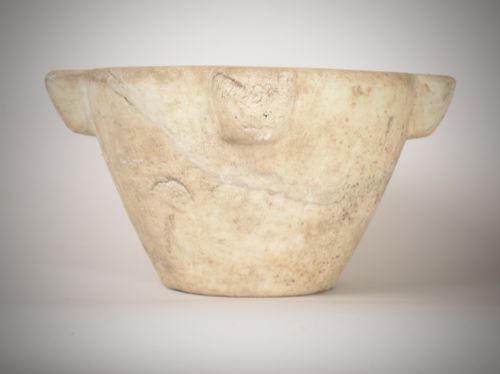
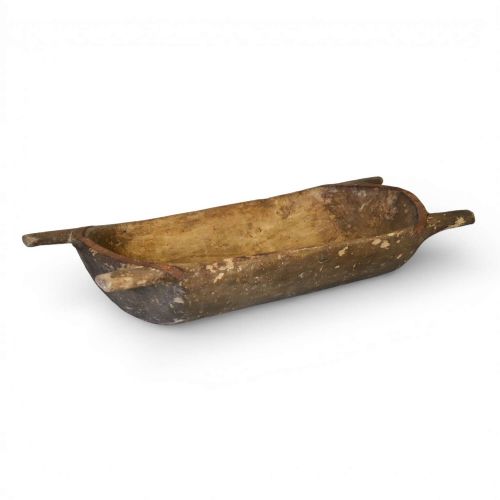
A rustic country kitchen bowl encompasses utilitarian vessels shaped by domestic and agricultural daily life across the eighteenth and nineteenth centuries. You find heavy dairy bowls, kneading dough bowls, and sturdy mortars designed for rigorous preparation in English and French interiors.
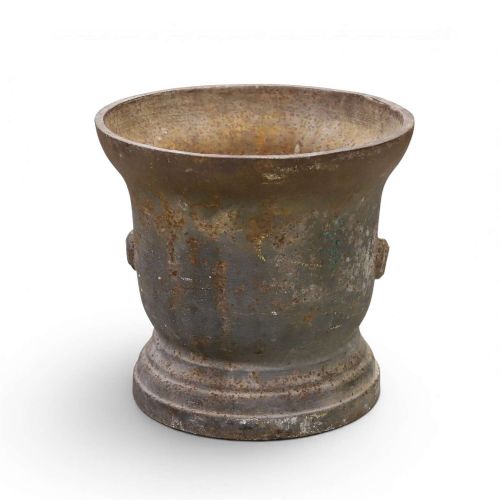
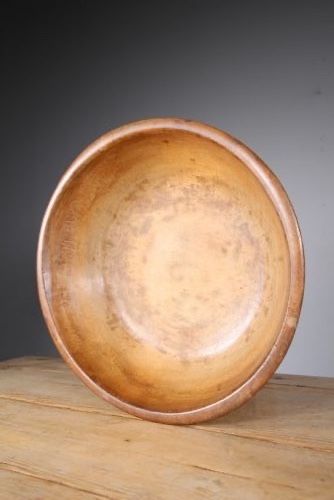
The versions most common on this page are large wooden dairy bowls carved from sycamore, alongside heavy cast iron mortars and glazed terracotta vessels. These forms reflect a vernacular tradition where function dictated every curve and rim.
How they were made
Makers fashioned wooden bowls from solid sycamore, turning or carving the timber to withstand the constant friction of dairy work and kneading. Iron mortars emerged from foundry casting, producing thick walls meant to endure heavy pestle strikes.
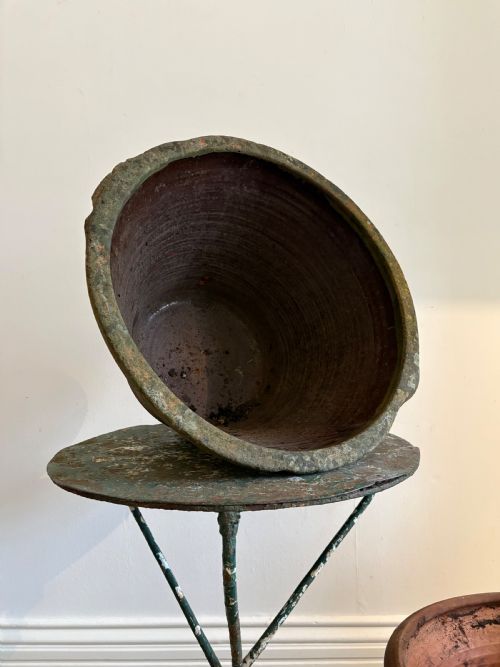
Terracotta and earthenware vessels relied on local clays, frequently finished with a partial glaze to seal the interior against liquids while leaving the exterior raw. Each technique prioritised resilience above ornamentation, resulting in robust domestic tools.
What varies in quality
Quality rests in the harmony of proportion and the integrity of the material used by the original maker. A heavy sycamore bowl with deep, honest wear reveals superior turning and selection of dense heartwood.
The depth of the patina and the survival of an intact glazed interior on terracotta or iron surfaces define the finer examples. Lesser pieces show unsympathetic repairs or excessive thinning from decades of vigorous scouring.
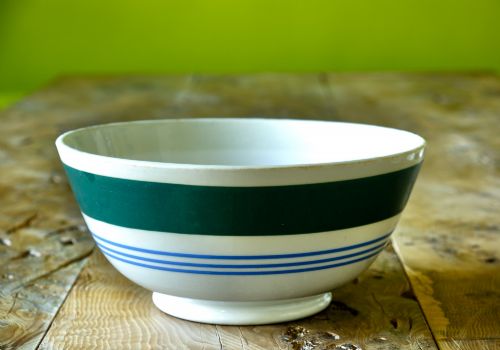
T G Green Pottery
The Rustic Country Kitchen Bowl Glossary
- Dairy bowl
- A wide, shallow vessel historically used for setting milk and skimming cream. These items usually feature flat bases and generous diameters.
- Dough bowl
- A long wooden trough utilised for mixing and proving bread dough in farmhouses. Their elongated forms allowed bakers to work large quantities of flour.
- Sycamore wood
- A dense, pale hardwood favoured for dairy utensils because it resists splitting and does not taint foodstuffs. Antique examples acquire a warm tone through decades of washing.
- Patina
- The surface sheen and colour acquired through years of handling, use, and cleaning. A rich patina indicates genuine age and regular domestic service.
- Mortar
- A heavy bowl designed to hold ingredients while a pestle crushes or grinds them. These objects appear in stone, marble, cast iron, and earthenware.
Rustic Country Kitchen Bowl: Frequently Asked Questions
What were dairy bowls used for?
Dairy bowls held freshly milked cow's milk so the cream could rise to the top for skimming.
Housewives and dairymaids relied on these wide vessels daily before mechanical separators changed farm production.
How can I tell an eighteenth century bowl apart from a nineteenth century one?
Earlier pieces often display tool marks and proportions dictated entirely by regional handcraft traditions.
Later nineteenth century versions show more standardised turning methods while retaining heavy utility.
Can I use an old mortar for cooking?
Cast iron and marble mortars remain structurally robust enough for crushing herbs and spices today.
Inspect the interior surface to ensure it is clean and free from harmful residues before culinary use.