
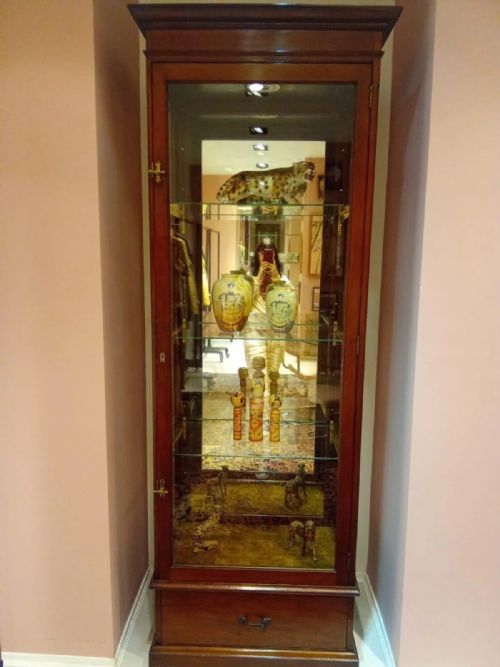
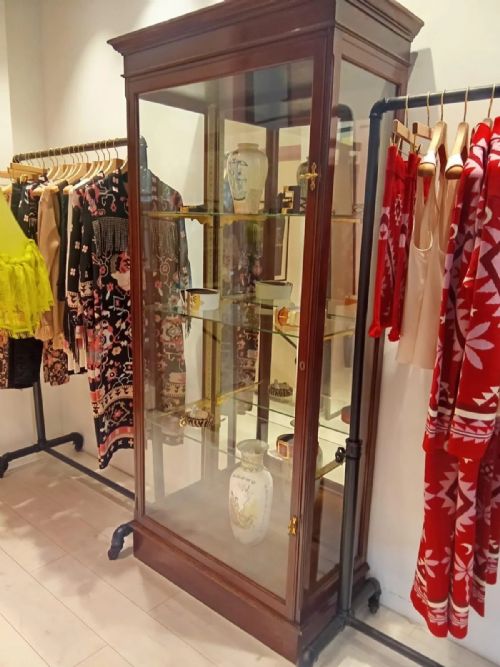


Glazed Shop Fitting Cabinet
These glazed shop fitting cabinet pieces turn commercial timber and glass into serious display furniture for the home.
Glazed Shop Fitting Cabinet
A glazed shop fitting cabinet serves as a display vessel, originating from Victorian, Edwardian, and 1930s commercial interiors. You will frequently encounter mahogany or oak frames designed for counter tops, serving counters, or tall floor storage.
The selection ranges from haberdashery cabinets and jewellers showcases to advertising units bearing names such as Fry and Rowntree. These pieces reflect specific trades, functioning as retail furniture repurposed for domestic display.
The forms span from large floor-standing towers and triple cabinets to compact table-top showcases and bow top designs. Each type offers extensive glass viewing areas intended originally to catch the eye of the customer.
Materials and Construction
Makers built these commercial units primarily in solid mahogany, oak, and walnut, housing large panes of glass to maximise visibility. Brass hardware, mirrored interiors, and occasional gold leaf detailing reinforced the structural and visual appeal of the retail display.
Commercial joinery prioritised durability under heavy daily use, resulting in sturdy frames, adjustable glass shelving, and secure glazed doors. Sign writing, painted finishes, and ebonised treatments were applied to brand the cabinets for specific shops.
Chocolate and fishing gear once vied for attention inside these exact glass panes.
Quality and Distinction
Quality rests upon the integrity of the timber frame and the proportion of the glazing, distinguishing standard utilitarian counters from high-end jewellers showcases. Original glass panes, uncompromised mirrored interiors, and authentic maker details elevate a piece above standard workshop output.
The degree of original commercial signage, such as hand-painted confectionery or gunsmith lettering, alters the character and interest of the cabinet. Finer examples retain their original brass fittings, adjustable shelves, and untarnished surfaces without extensive timber replacement.
Siegel·E. Pollard And Co. Ltd.·Jenners Of Edinburgh
The Glazed Shop Fitting Cabinet Glossary
- Haberdashery cabinet
- A specialised storage unit featuring multiple shallow drawers or glass fronts designed for small dry goods and textiles. These items are prized for their compartmentalised layout.
- Countertop cabinet
- A small display case built to sit upon a shop service counter for close customer inspection of goods. They provide high visibility at eye level.
- Ebonised
- Timber treated with a chemical or finish to imitate ebony wood. This dark, formal surface treatment appears frequently on commercial display pieces from the early twentieth century.
- Bow top
- A cabinet featuring a rounded or curved upper glazed section. This style softens the rigid geometry typical of commercial shop fittings.
Glazed Shop Fitting Cabinet: Frequently Asked Questions
How were these cabinets used?
Merchants utilised these glazed units on counters and floors to protect delicate merchandise while keeping goods visible to shoppers. Confectioners, jewellers, and outfitters relied on them for daily trade.
Today, the same glass panels and adjustable shelves serve to display private collections within domestic rooms. Their commercial origins lend them a robust utility uncharacteristic of standard household furniture.
What woods do these cabinets use?
Makers predominantly selected solid mahogany and oak for their strength and resistance to heavy retail use. Walnut and ebonised timber also appear across nineteenth and early twentieth-century examples.
Internal elements frequently incorporate mirror glass to amplify light, alongside brass hardware and occasional gold leaf accents. The choice of material usually reflects the status of the original shop.
How do I date a shop cabinet?
Dating relies upon stylistic markers such as Victorian proportions, Edwardian mouldings, or clean Art Deco lines. Commercial hardware, construction methods, and maker plaques offer further chronological clues.
Sign writing and advertising text often point to a specific era of retail history. Comparing the timber joints and glass thickness helps confirm the manufacturing period.
Are the shelves usually adjustable?
Many surviving display units feature adjustable glass or timber shelving to accommodate varying heights of merchandise. This original commercial flexibility makes them practical for modern collections.
Buyers should verify shelf support systems within the listing details. Fixed shelves are more common in smaller countertop or specialised advertising units.