
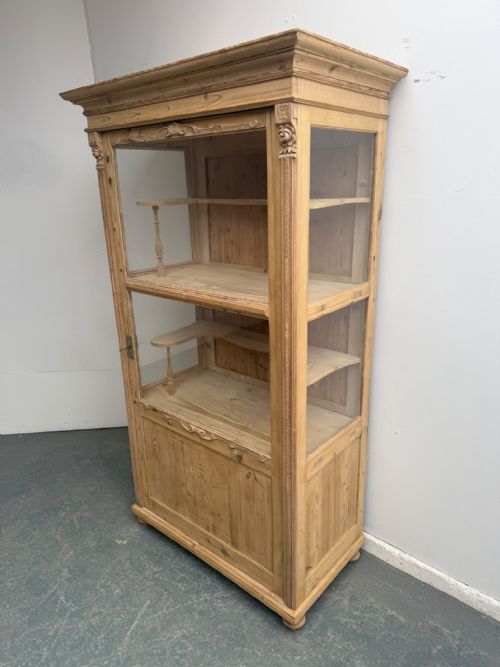


Glazed Shop Display Cabinet
These glazed shop display cabinets bring authentic retail history into domestic spaces, offering clear visibility and protection for collections.
Glazed Shop Display Cabinet
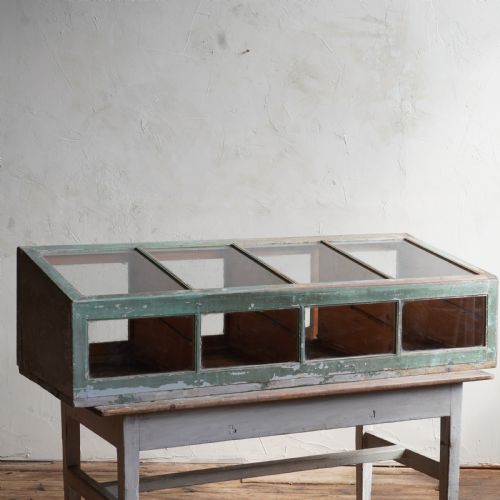
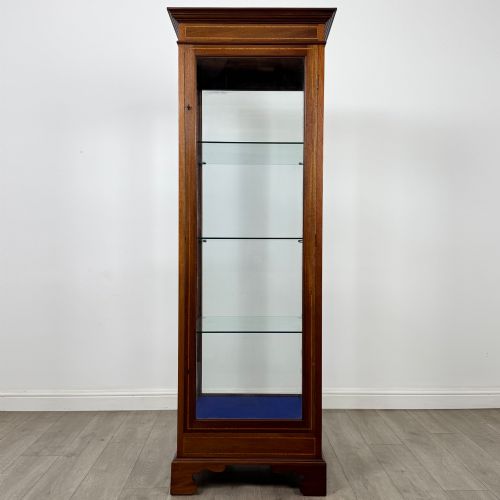
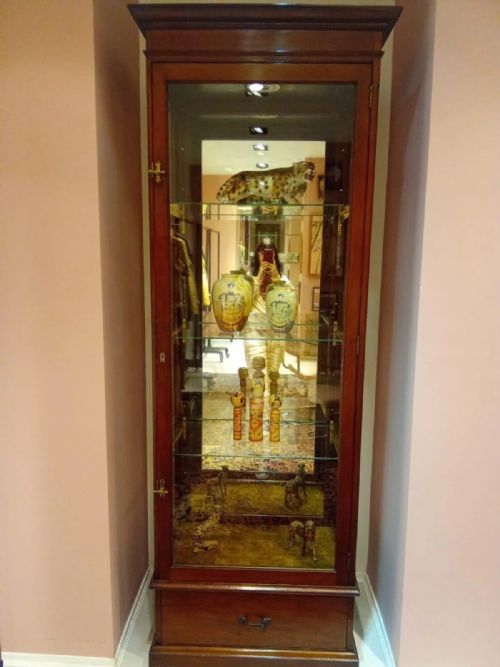
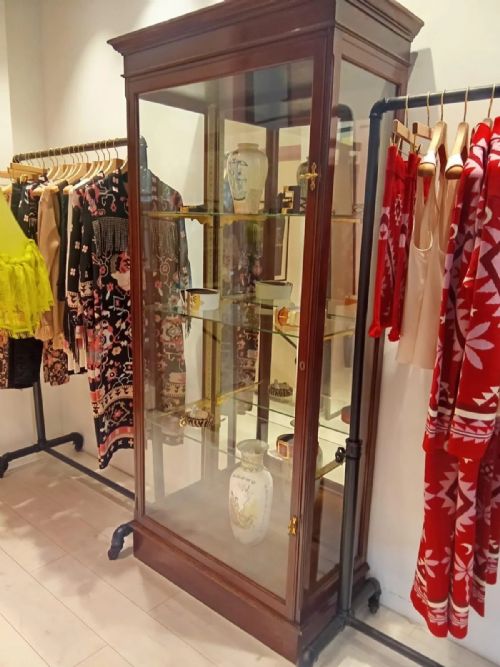
A glazed shop display cabinet serves to showcase retail goods or private collections while keeping items secure behind glass. When searching this phrase, buyers encounter various forms designed for commercial interiors, ranging from compact countertop units to large freestanding towers.
The pieces on this page span the Victorian, Edwardian, and Art Deco periods, alongside 1920s commercial designs. Mahogany and oak dominate the selection, appearing alongside ebonised wood, brass, mirror glass, and occasional steel frames.
Countertop variants and haberdashery units represent the most common formats, alongside taller freestanding display cases and dedicated shop counters. These items originated in chemists, jewellers, and sweet shops before finding a place in modern homes.
How They Were Made
Cabinet makers utilised timber frameworks of solid mahogany and oak to construct the main structural bodies. Glass panels were fitted into rebated frames to provide maximum visibility from multiple angles.
Internal components relied on adjustable glass shelving supported by brass hardware, complemented by mirrored interiors to reflect light through the displayed objects. Ebonisation and specialised paint finishes were applied to achieve specific aesthetic effects for high street merchants.
Several sweet shop cabinets still whisper past allegiances to Fry's and Rowntree's chocolates through surviving hand sign-written advertisements.
What Varies In Quality
The distinction between standard commercial units and superior examples rests on timber selection and joinery detail. Fine specimens exhibit dense, well-figured mahogany or quarter-sawn oak with tight, precise corner joints.
Original hardware, including brass mounts, operational locks, and intact mirrored backs, elevates a piece significantly. Retained maker attribution or authentic period sign-writing adds historical depth that separates utilitarian items from premier examples.
F. Sage & Co.
The Glazed Shop Display Cabinet Glossary
- Haberdashery cabinet
- A multi-drawer retail unit featuring glass fronts intended for viewing small drapery items and accessories.
- Ebonised
- Timber treated with a chemical stain or finish to imitate expensive ebony wood.
- Countertop display
- A smaller scale glass case designed to sit upon a shop service counter for point-of-sale merchandising.
- Adjustable glass shelves
- Internal shelves resting on movable brackets that allow custom spacing for varied objects.
- Mirror glass
- Silvered glass fitted to the rear interior panel to brighten the display and create depth.
Glazed Shop Display Cabinet: Frequently Asked Questions
What were glazed shop display cabinets originally used for?
Merchants utilised these glazed enclosures on high street counters and shop floors to protect valuable merchandise from dust and handling while permitting clear customer visibility.
Chemists, jewellers, and confectioners employed specific formats such as countertop cases and tall wall cabinets to market chocolates, remedies, and small wares.
How do I identify an Edwardian display cabinet?
Edwardian examples typically display lighter mahogany framing, refined brass hardware, and slender proportions compared to heavier Victorian counterparts.
Many incorporate adjustable glass shelving and mirrored backs designed to maximise light diffusion within early twentieth-century retail environments.
Can I use a commercial shop cabinet at home?
These cabinets integrate smoothly into modern domestic interiors as storage for collections, glassware, books, or curated objects.
Countertop models sit easily on sideboards, while taller freestanding towers and haberdashery units function as standalone storage focal points.
What is the difference between Victorian and Art Deco cabinets?
Victorian display cabinets generally feature rich, dark mahogany or walnut timbers with traditional mouldings and substantial proportions.
Art Deco units shift towards geometric lines, utilising alternative materials like steel, brass framing, and ebonised finishes characteristic of the interwar period.