


Glazed Pottery Pitcher
When you search for a glazed pottery pitcher, you find salt glaze, tin glaze, and lustre vessels shaped for pouring liquids across centuries of ceramic traditions.
Glazed Pottery Pitcher
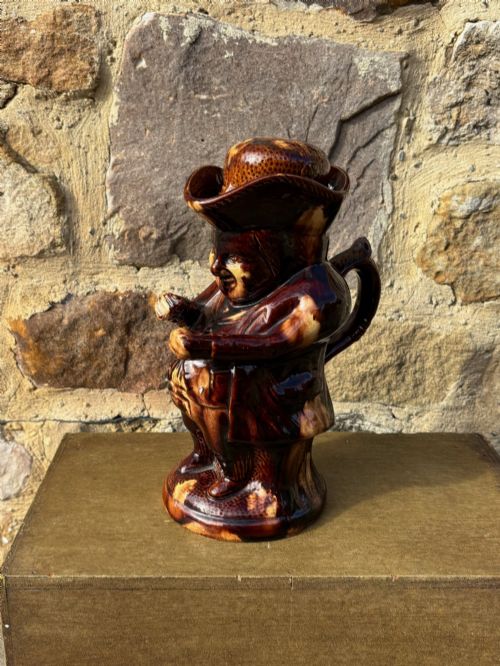
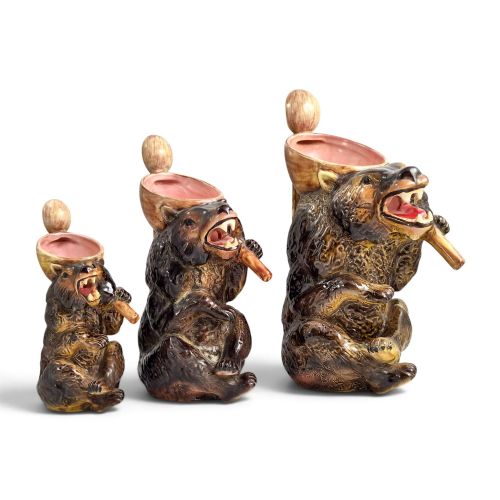
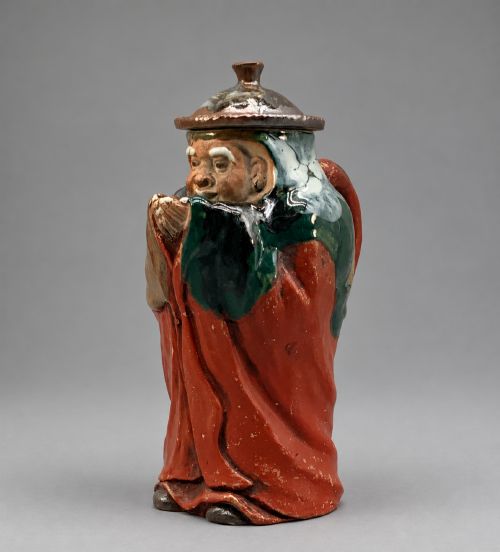
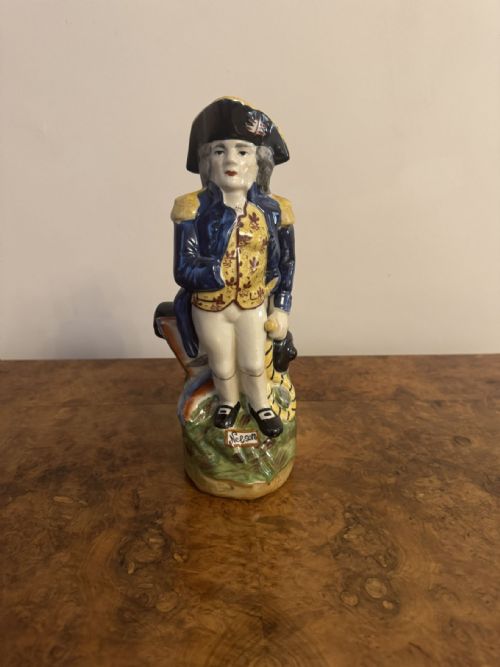
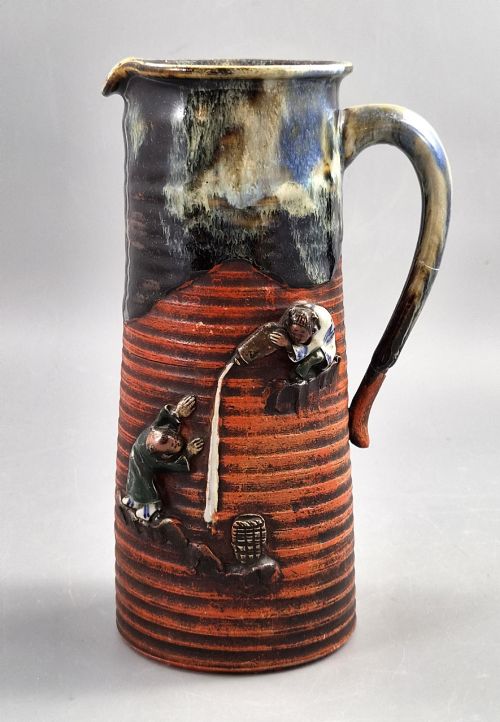
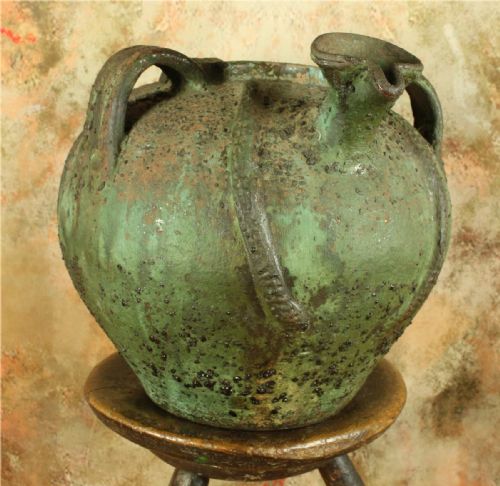
A glazed pottery pitcher is a hollow ceramic vessel designed with a handle and a spout for serving liquids, appearing in forms ranging from tavern jugs and pharmacy jars to sculptural toby jugs. These pieces surface frequently from the nineteenth century, alongside earlier examples originating from seventeenth and eighteenth century kilns in England, Germany, and the Netherlands.
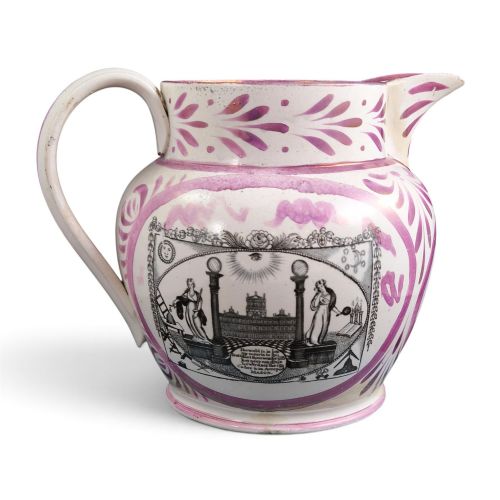
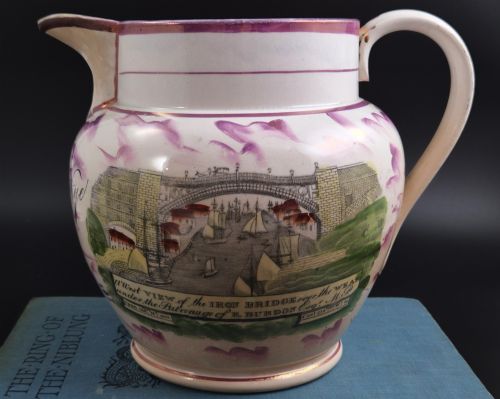
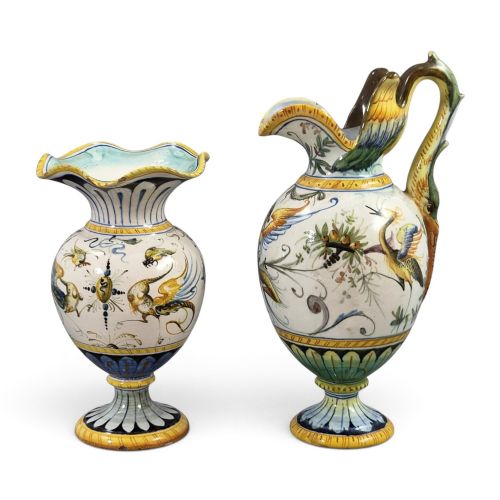
The material body varies considerably across these periods, encompassing heavy stoneware, porous earthenware, and tin-glazed delftware decorated in cobalt blue, polychrome enamel, or metallic lustre. Collectors encounter utilitarian ale pitchers alongside decorative ewers and figural vessels carrying historical ciphers or transfer-printed scenes.
Materials and construction
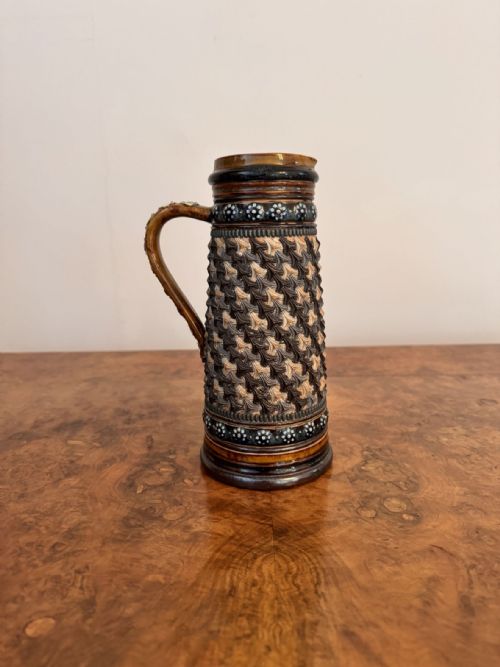
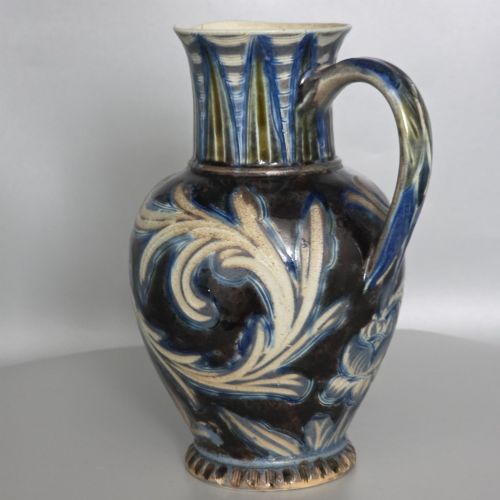
Makers utilised earthenware and stoneware as primary bodies, throwing vessels on the wheel or pressing them into moulds to achieve relief ornamentation. Stoneware pieces underwent high-temperature firing where salt was introduced to the kiln, creating a dense, vitrified surface with an orange-peel texture.
Earthenware items received an opaque tin-glaze or lead-based glaze to seal the porous clay body before painters applied cobalt blue, manganese, or enamel pigments. Subsequent second firings fixed these surface colours and lustres, sometimes incorporating applied metal collars or pewter lids.
Glazed Pottery Pitcher Retail Price Guide 2026
Typical asking prices for glazed pottery pitcher among the pieces listed under this phrase on Sellingantiques today, from the lower quarter to the upper quarter. They describe what is for sale here now, not the wider market.
Nineteenth-century Staffordshire potters modelled cheerful ceramic cows into functional creamers with whimsical expressions.
Judging execution and finish
Quality rests in the crispness of the moulded relief, the stability of the handle attachment, and the depth of the glaze application. Finer pieces demonstrate control during high-temperature firing, resulting in even salt-glaze textures or smoothly registered transfer prints without blurring.
Art pottery examples rely on the individuality of experimental studio glazes and incised hand-carving by named practitioners. The articulation of painted details, such as facial expressions on figural toby jugs or botanical motifs on delftware, separates standard production ware from superior studio output.
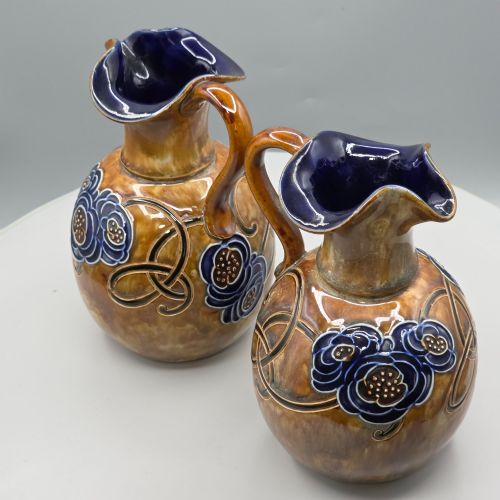
Pieter Verburg·Royal Doulton·Doulton Lambeth·Sir Edmund Elton
The Glazed Pottery Pitcher Glossary
- Salt glaze
- A vitreous coating formed by throwing common salt into the kilns at high temperatures during the firing process. This creates a pitted, durable texture resembling orange peel upon the stoneware body.
- Tin-glazed earthenware
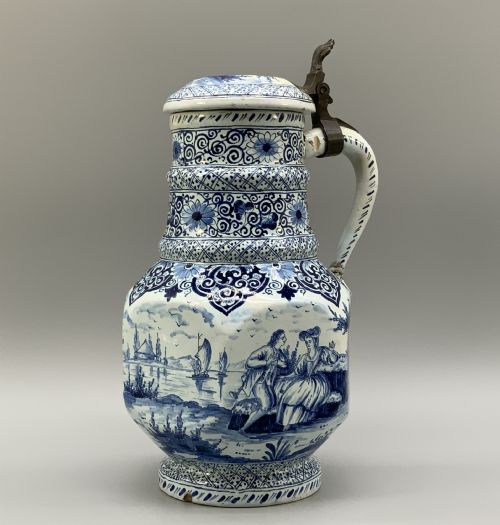
- Pottery covered with a white tin-oxide glaze that provides an opaque background for painted enamel decoration. This technique defines traditional Dutch Delftware and French faience.
- Lustreware
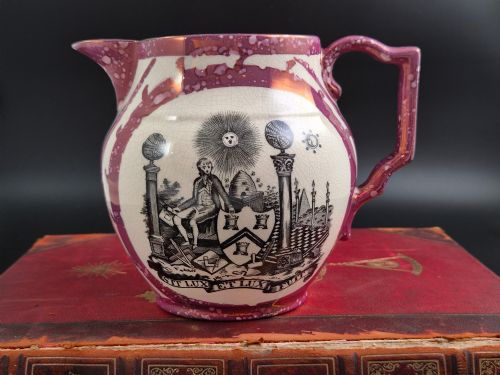
- Earthenware finished with a metallic film that produces an iridescent sheen. Sunderland pieces frequently display pink splash or copper lustre effects.
- Toby jug
- A pottery jug modelled in the form of a stout, cheerful person, usually seated and holding a mug or glass. These figural pieces date prominently from the eighteenth and nineteenth centuries.
- Tyg
- A large drinking vessel featuring three or more handles, designed to be passed around a table. Early examples appear in English stoneware and earthenware.
Glazed Pottery Pitcher: Frequently Asked Questions
How do I clean an antique pitcher?
Dust surfaces gently with a dry microfibre cloth to protect aged glazes and historic repairs.
Avoid submerging porous earthenware or pieces with metal collars in water, as moisture penetrates old clay bodies and corrodes mounts.
Can I still use these pitchers for serving liquids?
Historic pitchers function primarily as decorative objects or dry display pieces rather than everyday tableware.
Micro-fissures in ancient earthenware or lead-containing glazes mean modern beverages can leach harmful elements or damage the ceramic structure.
How do I distinguish stoneware from earthenware?
Stoneware fires at higher temperatures until the clay vitrifies completely, rendering the body non-porous and extremely hard.
Earthenware remains softer and more porous beneath the glaze, requiring an opaque tin or lead coating to hold liquids.
What is a puzzle jug?
A puzzle jug is an interactive drinking vessel featuring perforated necks and misleading spouts that spill liquid if not manipulated correctly.
Drinkers had to discover the secret path of internal tubes through the handle to consume the contents without spilling.