


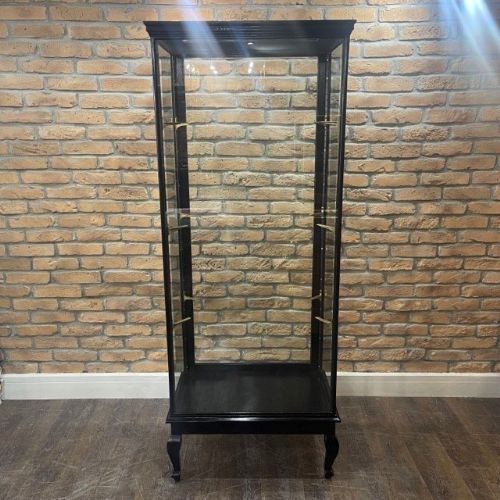


Glazed Museum Case
These glazed museum case pieces are timber and glass enclosures built to show and protect objects, drawing collectors and institutions alike.
Glazed Museum Case
A glazed museum case combines timber frames with glass panels to display items securely while keeping dust at bay. When you search for glazed museum case, you encounter varying formats designed for commercial trade, institutional display or private study.
The pieces on this page span the Victorian era, the Edwardian period and the 1920s, with revivalist currents such as Louis XVI and Adam styles appearing frequently. Forms range from table top cabinets and shop counters to tall ebonised towers and expansive bookcases.
Commercial shop displays and domestic collector cabinets form the backbone of these listings. Originating from distinct retail and architectural contexts, they provide enclosed visibility through large glass panes and timber structures.
Materials and construction
Mahogany serves as the predominant timber across these cases, often paired with ebonised wood or cedar for structural framing and visual contrast. Brass hardware, including hinges, locks and decorative mounts, secures the opening sections and adds metallic detail.
Interior display surfaces frequently incorporate velvet, felt or other fabrics to cushion delicate objects and provide a contrasting backdrop. Glass sheets form the primary viewing areas, held within glazed doors and top panels to maximise light entry.
Some nineteenth-century collectors built cabinets so large they required their own room, turning casual browsing into an indoor architectural expedition.
Assessing quality in display furniture
The standard of a glazed museum case rests upon the precision of its timber joinery and the clarity of its glass panels. Finer examples display meticulous framing, balanced proportions and high-grade cabinet timbers that endure decades of handling.
Makers known for commercial shopfitting apply robust construction methods to large counters and towers, ensuring stability under heavy use. Decorative flourishes, from gold leaf accents to refined brass fittings, separate standard utility pieces from exceptional showroom commissions.
F. Sage & Co.·Siegel·E. Pollard & Co. Ltd.
The Glazed Museum Case Glossary
- Vitrine
- A glass-sided cabinet designed specifically for the display of porcelain, curiosities or fine objects. The term derives from the French word for glass.
- Ebonised
- Timber treated with a dark finish to imitate expensive ebony wood. This technique appears widely on cabinet frames from the late nineteenth century onwards.
- Pedestal
- A structural support base elevating a cabinet body above the floor. Twin pedestal configurations feature two supporting columns or cupboards beneath the main display section.
- Showcase
- A commercial display enclosure featuring extensive glass viewing areas. These pieces were historically utilised in retail shops to present merchandise to customers.
- Revival
- A stylistic movement adopting historical design vocabulary from earlier centuries. Pieces in this register borrow classical motifs associated with Adam or Louis XVI aesthetics.
Glazed Museum Case: Frequently Asked Questions
What were glazed museum cases originally used for?
These enclosures served primarily in retail shops, libraries and private homes to exhibit merchandise, books and delicate collections safely. They kept dust and handling away from valuable items while offering clear visibility from multiple angles.
Commercial examples displayed goods to customers across counters and inside tall towers, whereas domestic versions housed personal collections of curiosities, medals and specimens.
How do I clean and maintain the glass and wood?
Maintenance involves dusting the timber regularly with a dry, soft cloth and using appropriate wood care products sparingly to preserve the finish. Glass panels require gentle cleaning with standard glass cleaner applied to a cloth rather than sprayed directly onto the surface near the wood.
Care should be taken to protect interior fabric linings, such as velvet or felt, from moisture and prolonged direct sunlight to prevent fading and deterioration over time.
Where do these display cabinets fit in a modern interior?
Table top cases sit comfortably on sideboards or desks to showcase small collections, while larger tower cabinets and counters function as standalone focal points in a room. Their transparent glass panels allow them to hold objects without visually crowding the surrounding floor space.
Living rooms, studies and hallways provide ideal settings where books, ceramics or sculptural items can be displayed securely inside the glazed framing.
How can I tell the Victorian pieces from the 1920s ones?
Victorian examples often feature rich mahogany timbers with heavier classical proportions and traditional joinery methods suited to domestic or early institutional use. Pieces from the 1920s frequently reflect commercial shopfitting requirements, including ebonised finishes, metal frames and specialised maker signatures.
Examining the internal construction, lock mechanisms and hardware styles helps clarify the manufacturing era alongside the recorded period details.