
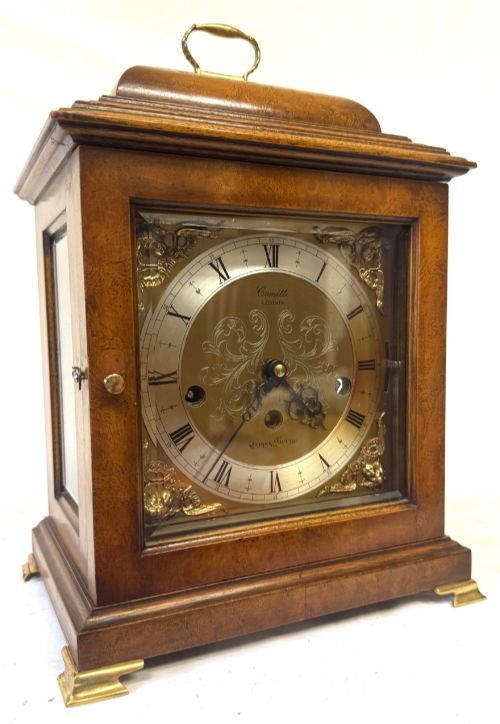
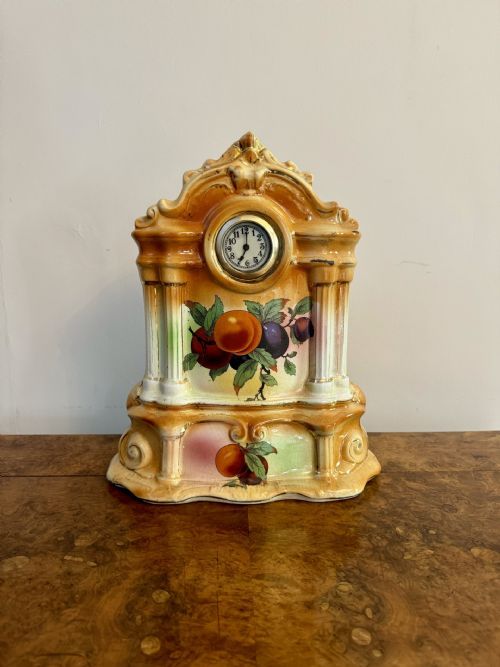


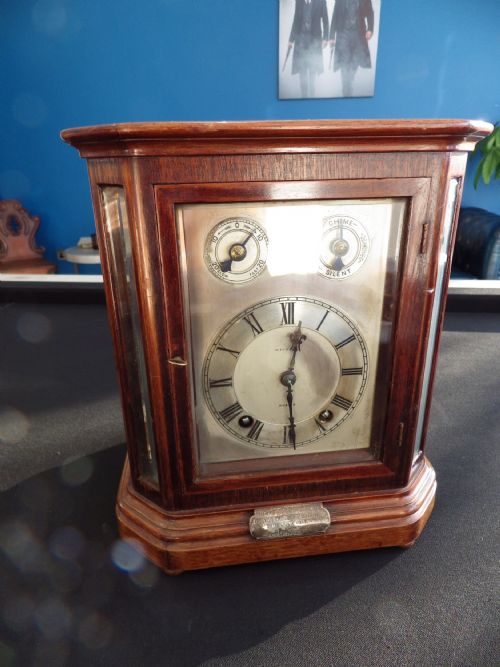


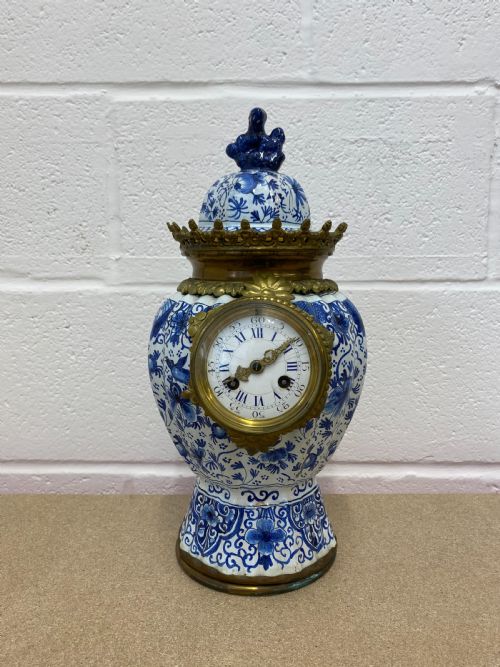


Glazed Mantel Clock
These glazed mantel clock examples bring together mechanical precision and protective housing, offering a functional centrepiece for the home.
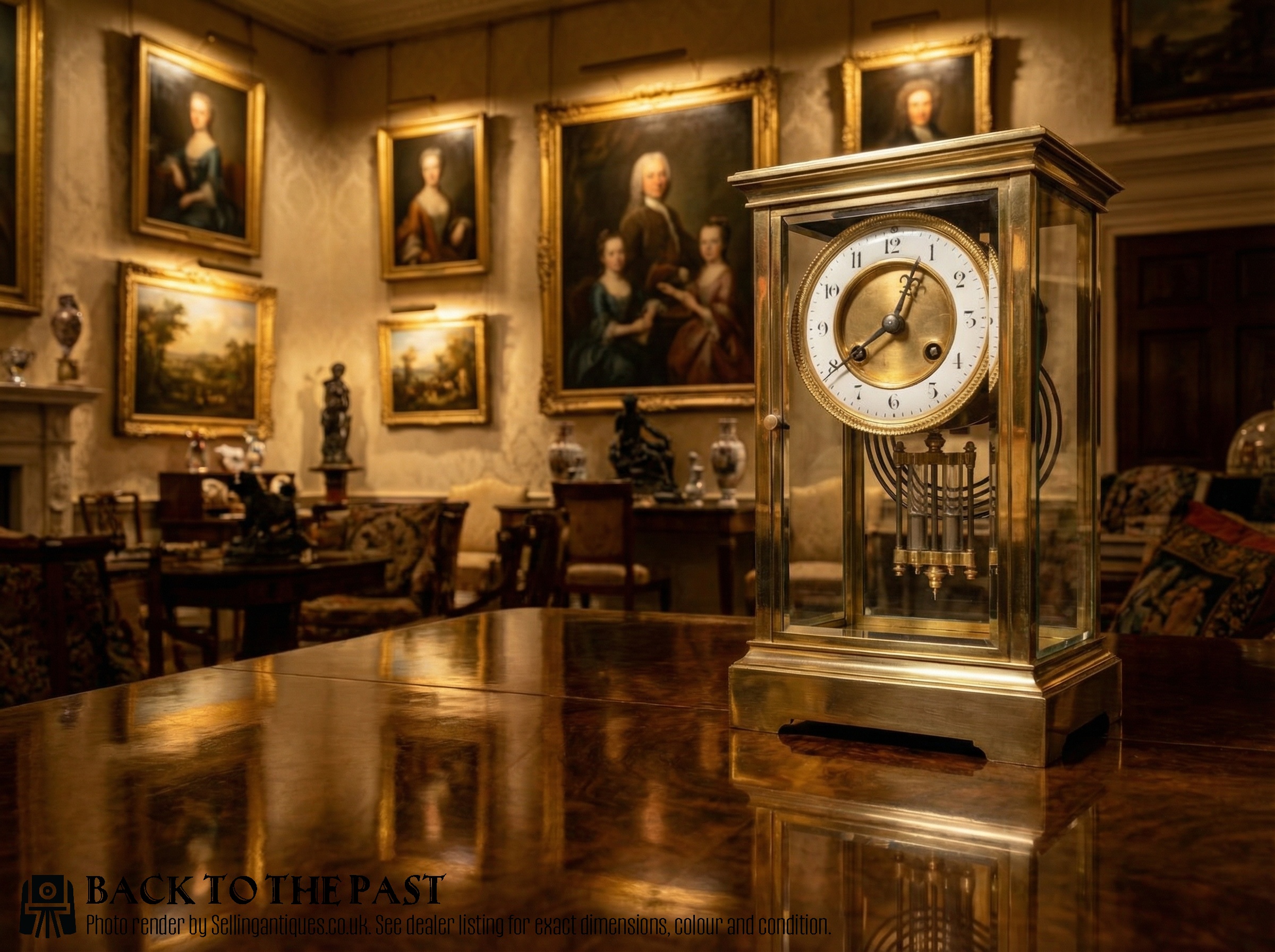
Glazed Mantel Clock
A glazed mantel clock combines a timekeeping movement with transparent panels or ceramic casings, creating a clear view of the dial and internal mechanics. When you search for a glazed mantel clock, you encounter forms ranging from traditional French carriage designs to heavy Victorian brass housings and Staffordshire earthenware figures.
The pieces on this page span several decades and styles, including Edwardian examples, mid-century productions, and mid-nineteenth-century earthenware. You are most likely to meet carriage clock configurations featuring bevelled glass panels alongside ceramic variants housing clock faces.
Origins vary across English workshops, French makers, and Dutch Delftware traditions, reflecting regional preferences in cabinetry and ceramic glazing. These objects served domestic utility in libraries, parlours, and mantelpieces, blending horology with decorative sculpture.
Judging quality and execution
Quality rests in the weight of the brass housing, the clarity of the bevelled glass panels, and the fineness of the enamel dial painting. Finer examples display crisp casting details on the metalwork and well-figured burr walnut or mahogany grain on the timber cases.
The sophistication of the internal movement distinguishes superior pieces, particularly those featuring multiple tune mechanisms or compensated pendulums. In ceramic pieces, the uniformity of the glaze and the crispness of the hand-painted decoration indicate the standard of production.
Some clocks disguise their timekeeping purpose inside ceramic dogs and miniature Delft houses.
Comitti Of London·Latshea & Sons Edinburgh·L Epee·Jaeger Le Coultre
The Glazed Mantel Clock Glossary
- Carriage clock
- A portable spring-driven timepiece originally designed for travelling, enclosed in a brass frame with glass panels. These typically feature a carrying handle on top.
- Delftware
- Tin-glazed earthenware originating from the Netherlands and England, often decorated in blue on a white background. Pieces take various ornamental forms including miniature clock cases.
- Mercurial pendulum
- A temperature-compensated pendulum using columns of mercury to maintain consistent timekeeping despite thermal expansion. This mechanism appears in substantial Victorian library clocks.
- Staffordshire
- Earthenware produced in the English potteries, frequently moulded into figural groups incorporating clock faces. These display traditional hand-painted or sponged coloration.
- Ting tang
- A striking mechanism using two different pitches or bells to sound the quarters and hours. This movement indicates domestic horological complexity.
Glazed Mantel Clock: Frequently Asked Questions
What is a glazed mantel clock?
A glazed mantel clock is a timekeeping device housed within a protective case featuring glass panels or ceramic glazing. These pieces allow a direct view of the dial and interior mechanics while resting on a shelf or mantelpiece.
They encompass diverse styles ranging from heavy brass carriage clocks to earthenware animal figures and wooden cabinet designs produced across the nineteenth and twentieth centuries.
How do I wind a mechanical clock?
Mechanical clocks require a specific key to tension the mainsprings via winding squares located on the dial or backplate. Care must be taken not to overwind the movement, stopping as soon as resistance is felt.
Different movements control timekeeping, striking, or musical tunes, each requiring separate attention during the winding process to maintain correct operation.
Where should I place my clock?
Place your clock on a stable, level surface such as a mantelpiece, sideboard, or library shelf away from direct sunlight and drafts. A stable base ensures the pendulum or balance wheel operates evenly.
Heavy brass and glass pieces require sturdy support due to their substantial weight, particularly carriage clocks and four-glass library models.
How do I identify the period?
Period identification relies on material combinations, case styles, and mechanical signatures such as escapement types or dial materials. Victorian pieces often use heavy brass framing, while later mid-century examples show distinct minimalist tendencies or updated movement technology.
Examining maker signatures, dial typography, and construction methods helps narrow down the decade of production.