
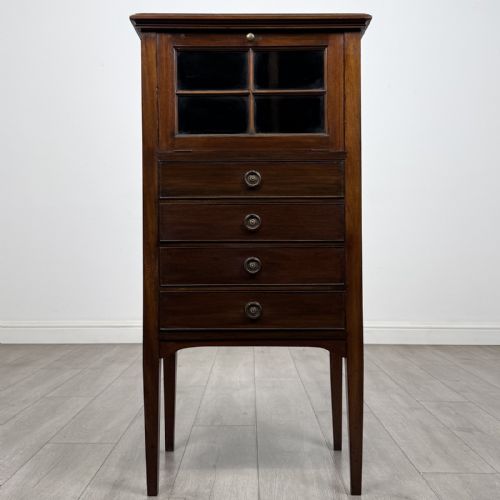
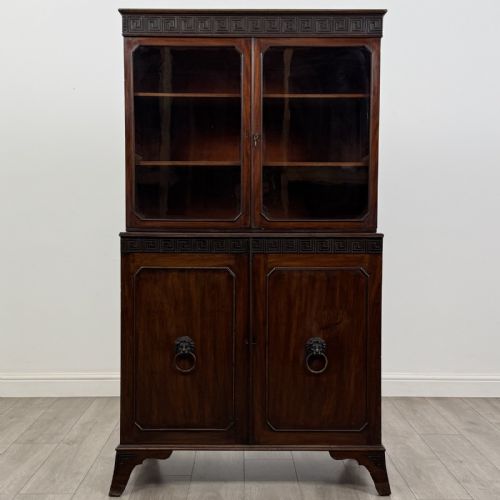
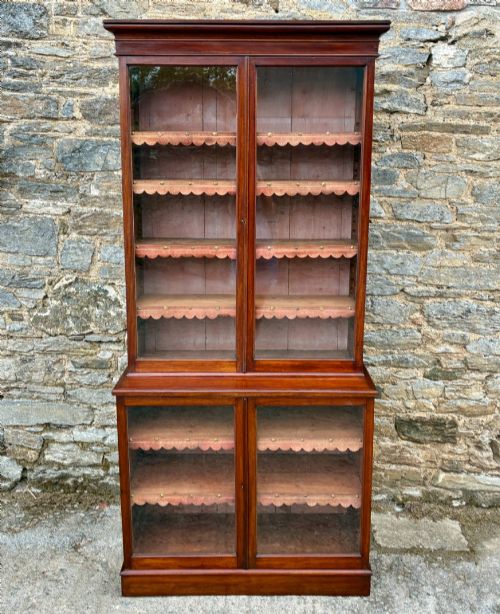
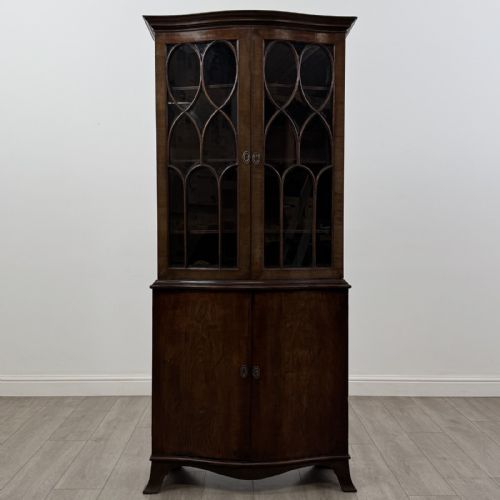
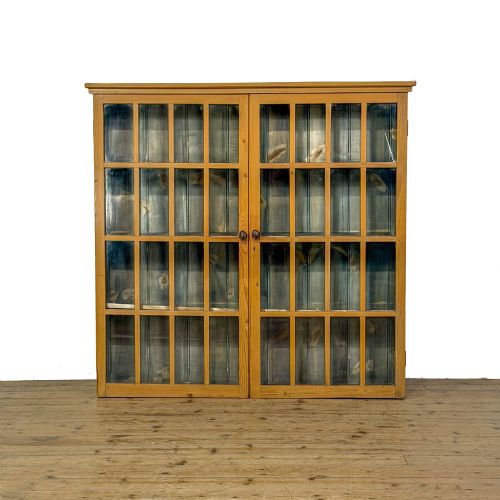
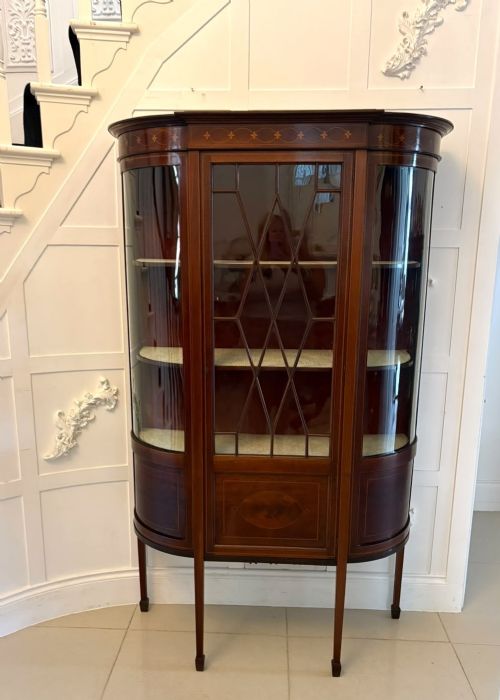
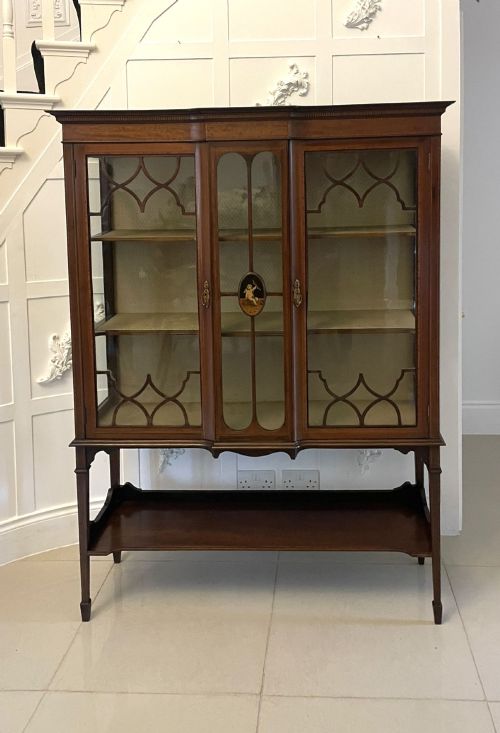
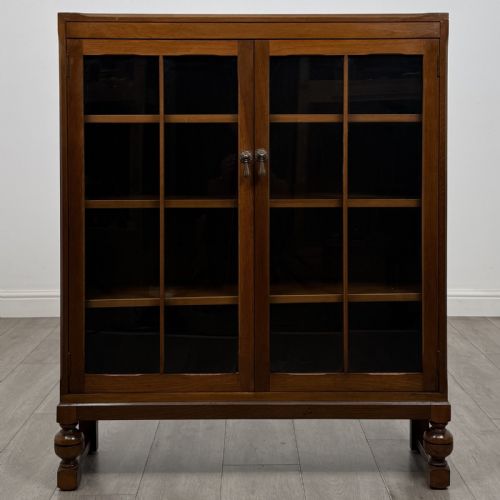
Glazed Front Cupboard
These glazed front cupboard examples bring together centuries of timber work and clear glass to house books and display valuables.
Glazed Front Cupboard
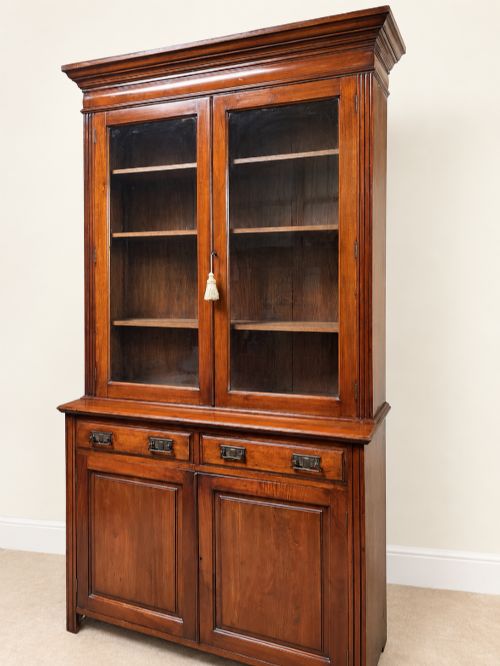
A glazed front cupboard covers a wide variety of furniture designed to show and store possessions behind transparent panels, ranging from tall libraries to compact pier cabinets.
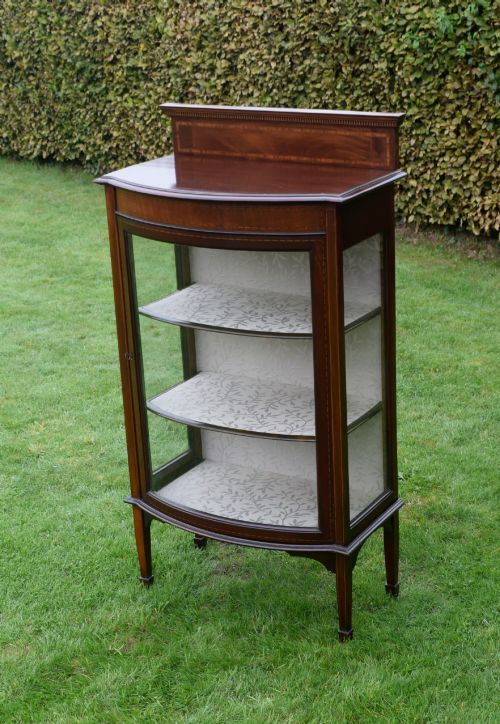
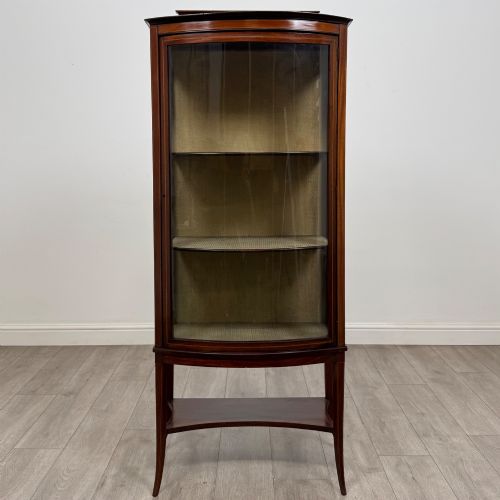
Buyers searching for a glazed front cupboard most frequently encounter Edwardian and Victorian forms in mahogany, walnut, and satinwood.
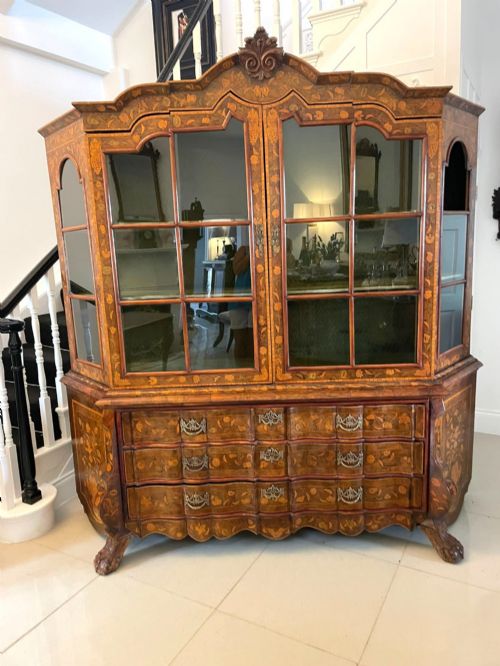
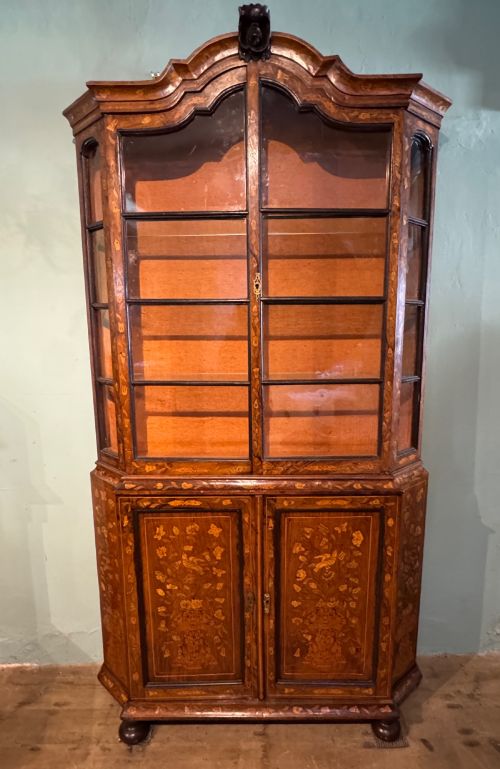
The selection ranges from corner units and breakfront bookcases to elaborate marquetry vitrines originating from English and Dutch workshops.
Materials and construction methods
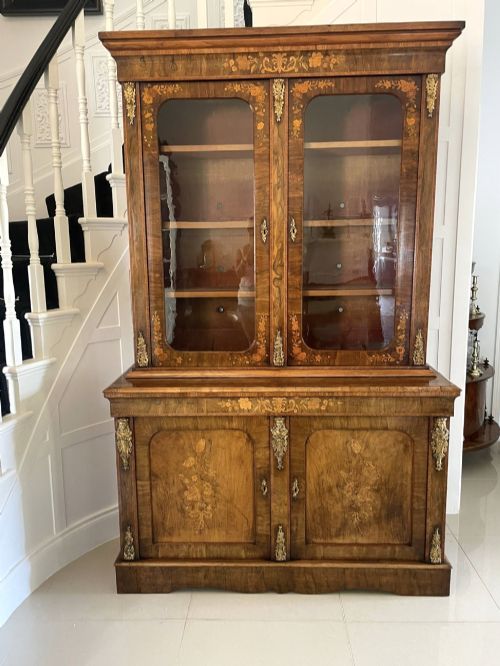
Cabinet makers relied primarily on solid timbers and veneers such as mahogany, walnut, and burr walnut, often enhanced with contrasting satinwood or floral marquetry inlay.
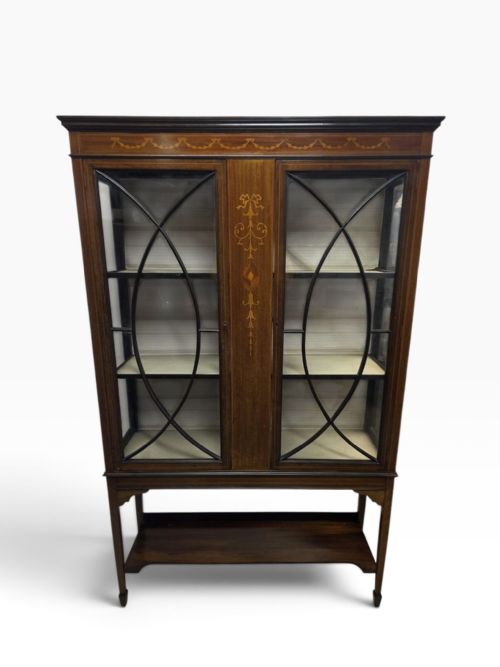
Glazing bars divided the glass panels into geometric or arched patterns, while brass hardware, ormolu mounts, and fabric linings completed the interiors.
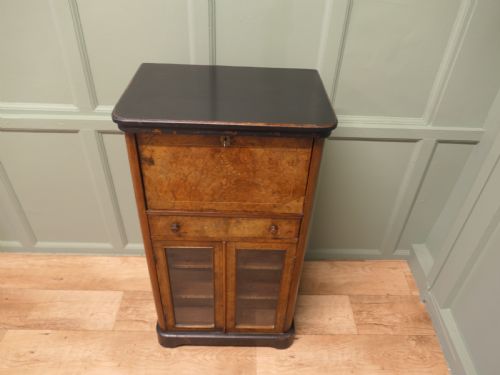
Some nineteenth-century walnut cabinets were dedicated entirely to filing sheet music.
Factors that distinguish quality
The sophistication of the timber figure and the precision of the floral marquetry inlay set superior examples apart from standard production pieces.
Execution of decorative details, from ormolu mounts to painted satinwood surfaces, indicates the level of craftsmanship invested in the construction.
Maple & Co.
The Glazed Front Cupboard Glossary
- Vitrine
- A glass-fronted cabinet designed specifically for the display of fine porcelain, curiosities, or decorative objects. These pieces often feature glazed sides to maximise light penetration.
- Marquetry
- The art of applying decorative veneer pieces in wood, metal, or shell to form intricate pictorial designs. This technique frequently appears on Dutch and Sheraton Revival furniture.
- Breakfront
- A piece of furniture where the central section projects forward from the flanking wings. This architectural arrangement creates depth and shadow across the facade.
- Pier cabinet
- A low display cabinet designed specifically to fit the narrow wall space between windows. Victorian examples often incorporate burr walnut veneers and gilt bronze mounts.
- Bijouterie cabinet
- A glazed display table or cabinet intended for small precious items and jewellery. They typically feature glazed lids or fronts and lined interiors.
Glazed Front Cupboard: Frequently Asked Questions
What is a glazed front cupboard?
A glazed front cupboard is a piece of furniture featuring glass doors designed to keep dust away from books and collections while keeping them visible.
These items span several centuries and styles, including Edwardian display cabinets and nineteenth-century bookcases.
How were these cabinets used?
Historically, these pieces served multiple domestic purposes, acting as libraries for treasured volumes or vitrines for displaying porcelain.
Drawing rooms and morning rooms commonly housed them to exhibit household refinement and reading interests.
How do I date a cabinet?
Dating relies on observing structural characteristics, timber choices, and decorative motifs associated with specific periods like the Regency or Edwardian eras.
Mahogany and satinwood usage, alongside marquetry styles, often provide clear clues to the decade of manufacture.
Where should I place one?
These cabinets suit living areas, studies, or hallways where natural light can illuminate the contents behind the glass panels.
Corner units and slim pier cabinets work particularly well in rooms with limited floor space.