





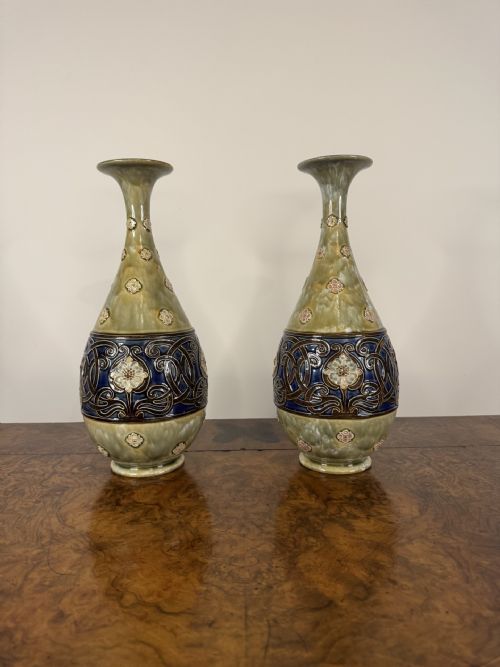
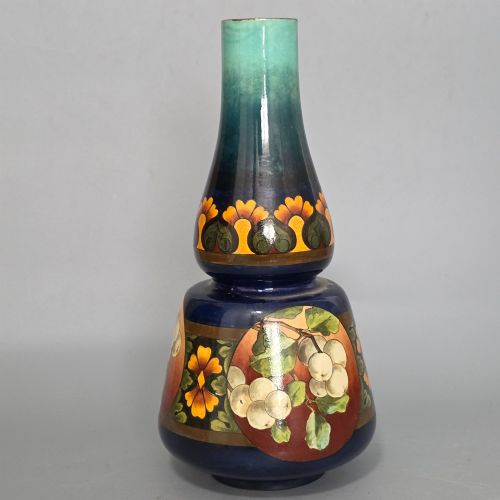


Glazed Doulton Vases
Glazed doulton vases bring tactile salt-glaze and faience surfaces into domestic spaces, prized for their rich studio pottery designs.
Glazed Doulton Vases
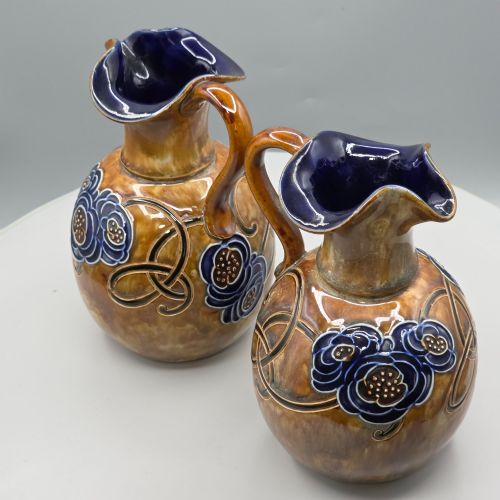
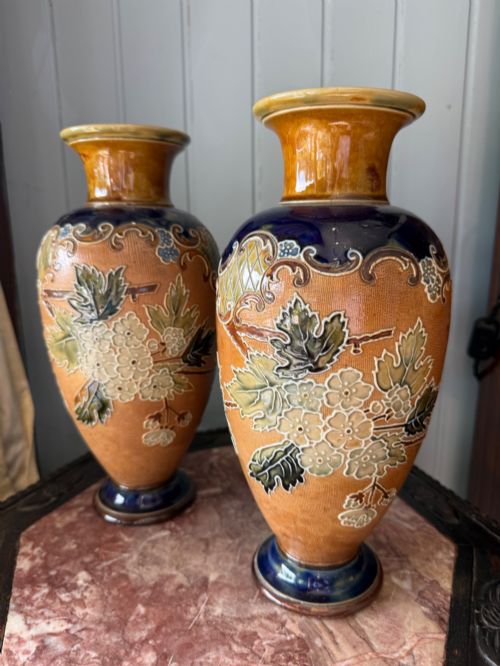
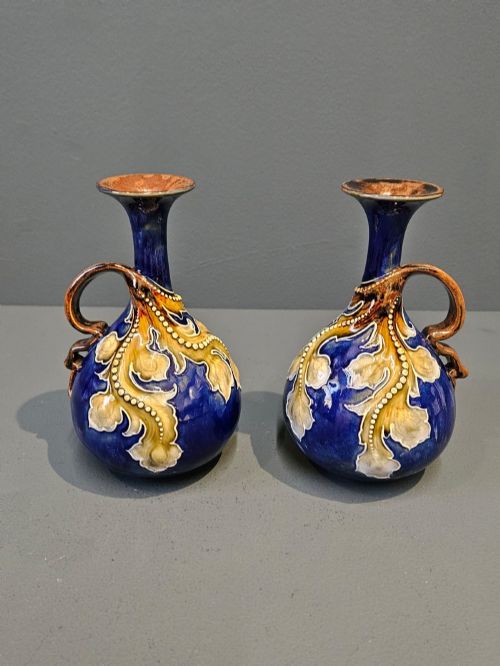
When searching for glazed doulton vases, collectors encounter sturdy ceramic vessels spanning the Victorian, Edwardian, and Art Nouveau periods. These pieces originate primarily from the Lambeth pottery works, taking forms such as baluster vases, jugs, decorative ewers, and planters.
How they were made
Potters shaped these vessels from stoneware and earthenware, applying specialised glazes that reacted during firing to create textured or glossy finishes. Many items incorporated delicate enamel work and occasional details in gold leaf to highlight the incised patterns.
Makers utilised techniques such as salt-glazing and faience painting, allowing individual artists to decorate the clay body directly. This hand-finished approach ensured that each vessel received distinct surface treatments before entering the kiln.
Glazed Doulton Vases Retail Price Guide 2026
Typical asking prices for glazed doulton vases among the pieces listed under this phrase on Sellingantiques today, from the lower quarter to the upper quarter. They describe what is for sale here now, not the wider market.
Listings span several distinct movements, from Victorian Arts & Crafts and Aesthetic style jugs to fluid Art Nouveau floral vases.
What varies in quality
The distinction between standard production items and exceptional pieces rests on the complexity of the hand-decoration and the reputation of the specific artist involved. Vases bearing signatures from notable Lambeth decorators command greater attention from experienced collectors.
Execution of the form also dictates the standing of a piece, with balanced proportions and crisp incised detailing elevating certain baluster shapes and ewers above simpler factory outputs.
Alice Euphemia Thatcher·Louisa Wakely·Eliza Simmance·Emma Shute·Emily Edwards·Emily Stormer·Ethel Beard·Florence Barlow·Charles Noke
The Glazed Doulton Vases Glossary
- Lambeth stoneware
- A dense, impermeable ceramic produced at the London works, often featuring salt-glazed surfaces and intricate incised ornament. This material forms the foundation of many traditional Doulton pieces.
- Faience
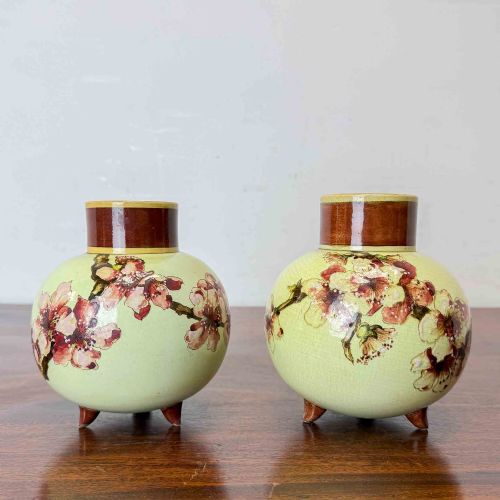
- A tin-glazed earthenware technique that allowed artists to paint detailed floral and figurative scenes directly onto the pottery body before firing. It yields a smooth, painted finish distinct from raw stoneware.
- Intarsio
- A specialised underglaze printing and painting process introduced by Doulton that created rich, multi-coloured earthenware vessels resembling inlaid wood or mosaics. Pieces utilising this method display remarkable depth of colour.
- Slater's Patent
- A texturing technique where lace or fabrics were pressed into the wet clay surface before glazing, leaving intricate patterns that caught the shifting tones of the finish.
- Baluster
- A traditional vase shape characterised by a rounded body that tapers toward the neck, frequently seen across Victorian and Art Nouveau pottery.
Glazed Doulton Vases: Frequently Asked Questions
How do I identify a Lambeth mark?
Lambeth pieces typically carry impressed factory stamps on the base that indicate the London pottery location alongside specific date or model numbers. These marks often include the monogram initials of the individual artist who decorated the vessel.
Examining the base helps separate genuine Doulton studio output from later commercial reproductions, providing clear confirmation of the period of manufacture.
What is Intarsio pottery?
Intarsio is a specialised earthenware style developed by the Doulton factory that mimics the appearance of intricate inlaid wood or textiles. The technique relies on detailed surface printing combined with hand-applied colour.
These pieces stand out for their vibrant palettes and complex decorative schemes, representing a distinct departure from standard salt-glazed stoneware.
How should I display these vases?
Stoneware and faience vessels suit placement on sturdy wooden surfaces where natural light can highlight their textured glazes and incised patterns. Pairing matching baluster vessels creates a balanced focal point on a mantelpiece or sideboard.
Keeping the pieces away from direct, harsh sunlight preserves the subtle tones of the enamel work and the integrity of any gold leaf details.
Who was Florence Barlow?
Florence Barlow remains one of the most celebrated artists associated with the Doulton Lambeth works during the nineteenth century. She specialised in applying raised paste 'pate-sur-pate' decoration, frequently depicting birds and foliage.
Her signed pieces are readily identifiable by their meticulous feathered textures, which set them apart from standard floral pattern work.