

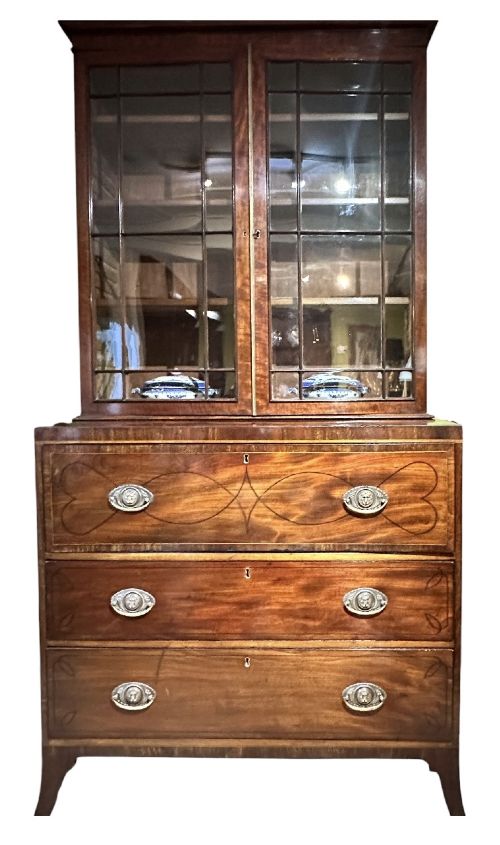
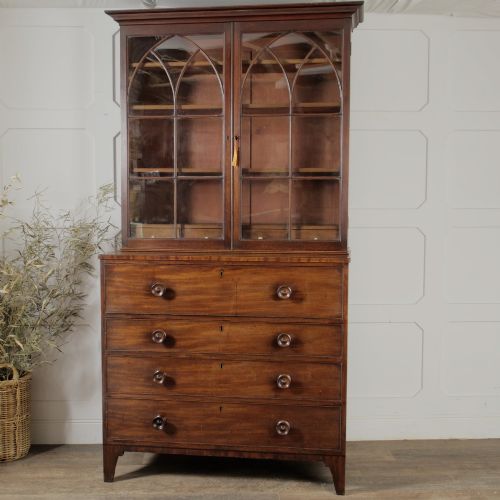
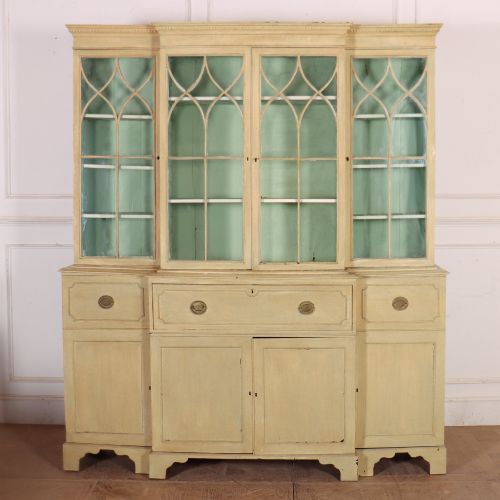
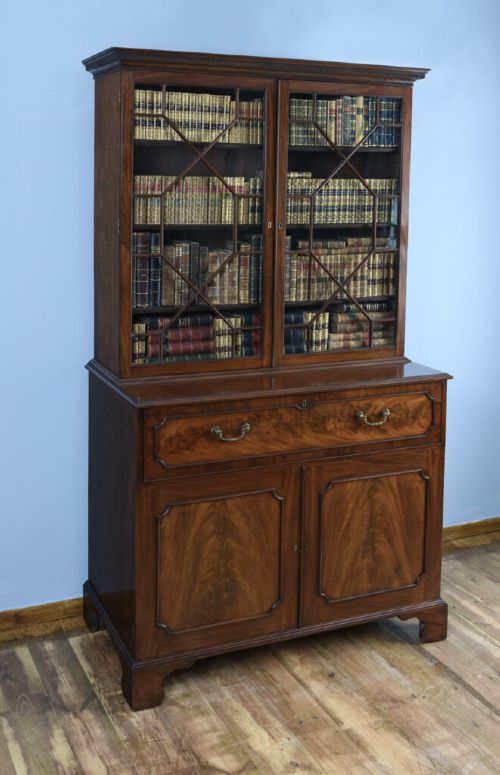


Glazed Door Secretaire
A glazed door secretaire combines a display cabinet with a pull-out writing drawer, offering functional workspace and book storage in one handsome piece of furniture.
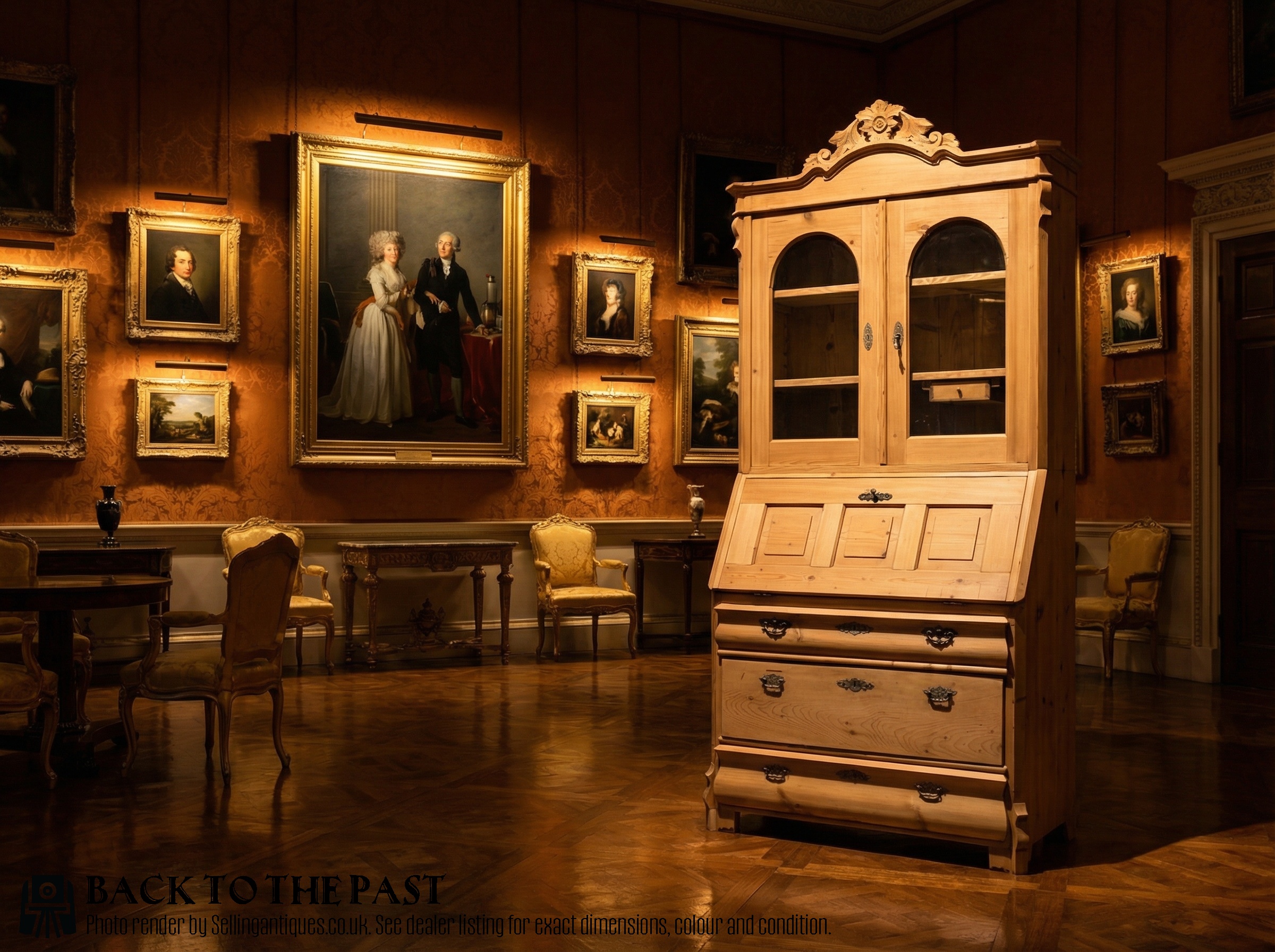
Glazed Door Secretaire
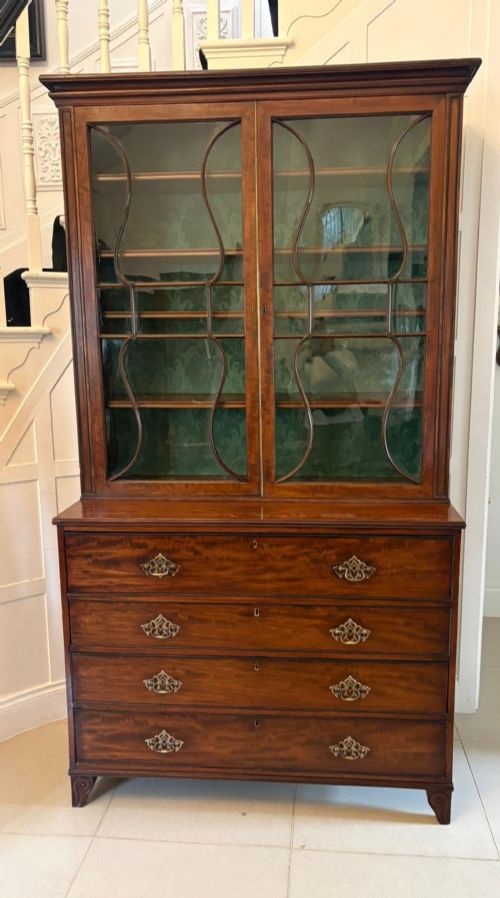
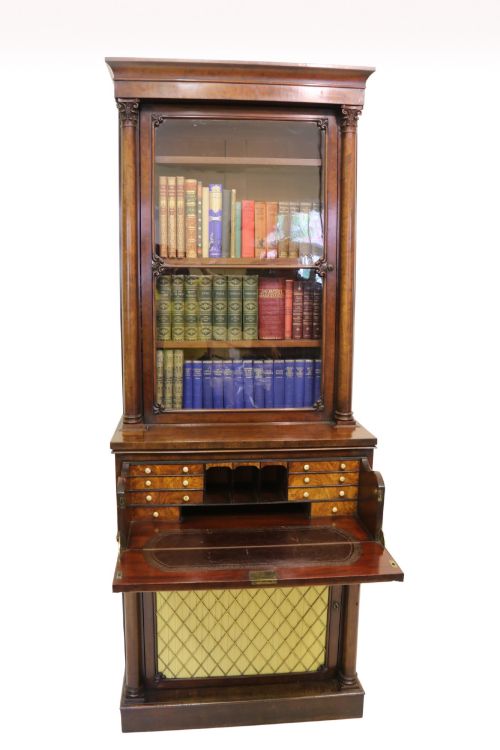
A glazed door secretaire serves as a combination of bookcase and writing desk, designed with upper glass doors and a central drop-front drawer fitted with pigeonholes and small drawers. These pieces appear primarily in Georgian, Regency, and Victorian styles, reflecting the domestic needs of households from the eighteenth century into the early twentieth century.
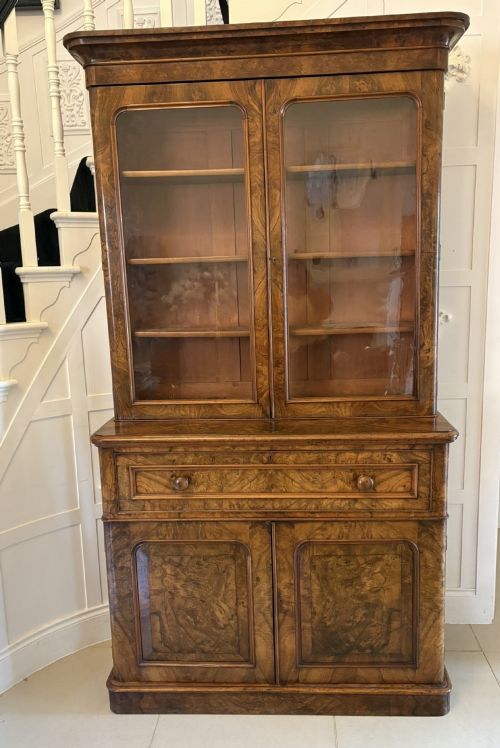
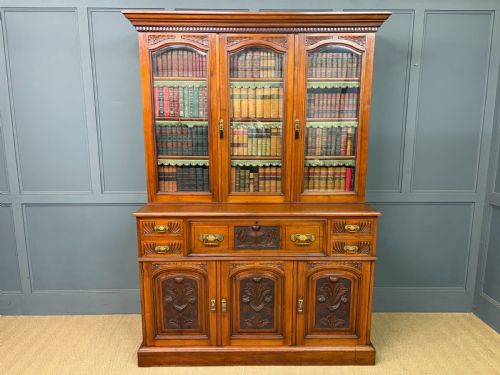
The most common form on this page is the tall secretaire bookcase constructed from mahogany or walnut, featuring glazed upper sections to display volumes alongside lower wooden cupboards or drawers. Variations include cylinder top cabinet bookcases, bureau bookcases, and occasional painted wood examples from later decades.
Makers and cabinet makers across these periods produced substantial library furniture alongside more domestic variants in oak, pine, and rosewood. The core architectural format remains consistent, uniting a secure desk surface with a prominent glazed upper display.
How they were made
Construction relies heavily on dense hardwoods such as mahogany and walnut, frequently utilising figured veneers over secondary woods to achieve rich exterior surfaces. Cabinet makers employed mortise and tenon joinery for the main carcasses, ensuring structural stability for heavy book collections.
Glass panels are traditionally held within wooden framing bars, known as glazing bars or astragals, creating geometric or Gothic patterns across the upper doors. Brass handles, escutcheons, and occasional ormolu mounts provide functional hardware and decorative contrast to the timber.
Glazed Door Secretaire Retail Price Guide 2026
Typical asking prices for glazed door secretaire among the pieces listed under this phrase on Sellingantiques today, from the lower quarter to the upper quarter. They describe what is for sale here now, not the wider market.
Many secretaire drawers include hidden miniature compartments for secret letters, waiting patiently for a curious modern owner to discover them.
What varies in quality
Quality in a glazed door secretaire depends heavily on the selection of timber veneers and the intricacy of the interior writing compartment. Pieces utilising finely figured mahogany or burr walnut with coordinated grain patterns demonstrate superior craftsmanship.
The execution of the fitted interior inside the secretaire drawer reveals the skill of the maker, distinguishing simpler utilitarian boxes from those featuring secret compartments, inlaid woodwork, and finely turned small drawers.
The Glazed Door Secretaire Glossary
- Secretaire
- A writing cabinet or desk featuring a pull-out drawer with a hinged drop-front. This folding flap conceals a fitted interior of small drawers and pigeonholes.
- Astragal
- A moulding used to hold glass panes within a doorframe. In these pieces, intersecting astragals form decorative lattice patterns across the upper glazed doors.
- Cylinder top
- A desk or cabinet fitted with a quarter-cylinder rolling shutter of wood that slides back to reveal the writing surface and interior fittings.
- Ormolu
- Gilded bronze used for decorative mounts and furniture trim. It appears alongside inlaid details on specific Victorian walnut examples.
Glazed Door Secretaire: Frequently Asked Questions
What is a glazed door secretaire?
A glazed door secretaire is a hybrid piece of furniture combining a glass-fronted bookcase with a pull-down writing drawer.
It provides a secure, concealed desk space alongside visible shelving for book storage.
How do I use the secretaire drawer?
The secretaire drawer pulls forward like a standard drawer before the front hinges downward to form a horizontal writing surface.
Inside, you will find small drawers, pigeonholes, and sometimes hidden compartments designed for stationery and correspondence.
How can I tell the period?
Dating relies on timber selection, hardware, and stylistic details such as Georgian proportions or Victorian Gothic Revival ornamentation.
Earlier pieces often feature solid mahogany and simple astragal designs, while later examples incorporate burr walnut or golden oak.
Where should I place it in a room?
These tall cabinets suit studies, libraries, or living rooms where vertical wall space is available for display.
Ensure adequate clearance in front of the cabinet for the writing drawer to open fully.