
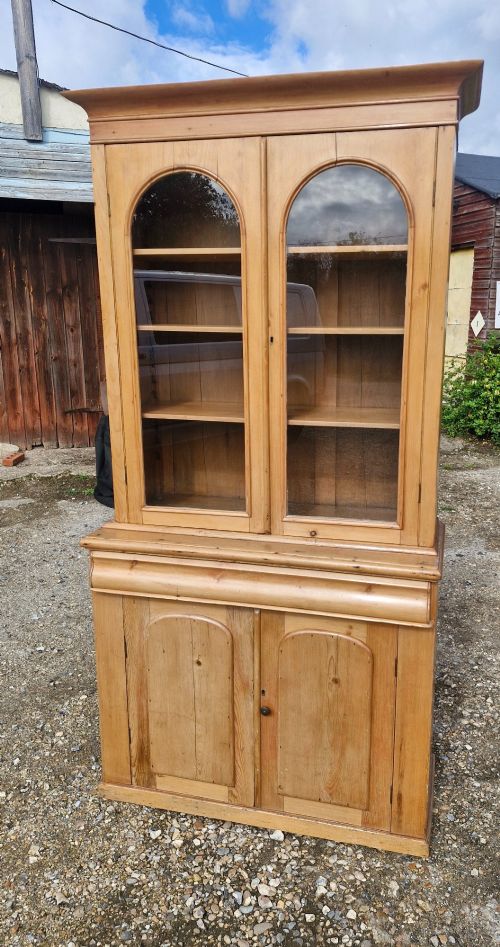
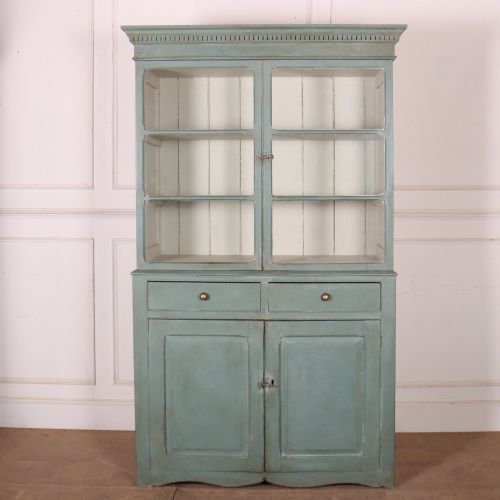
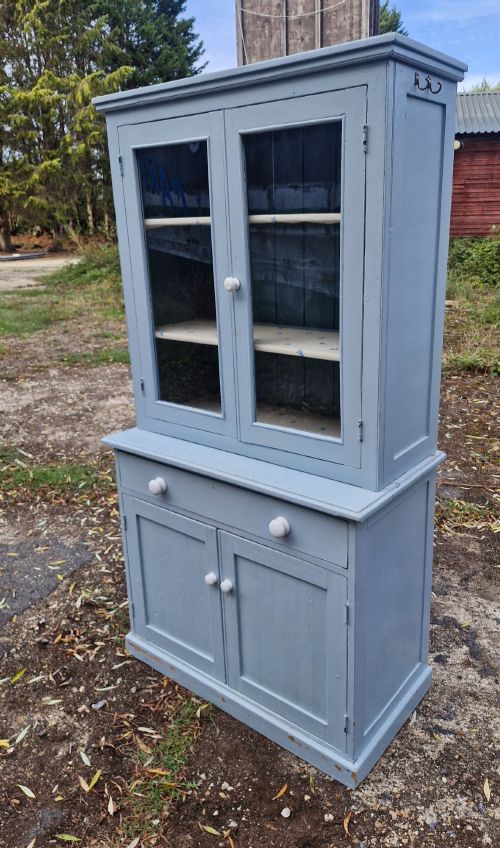
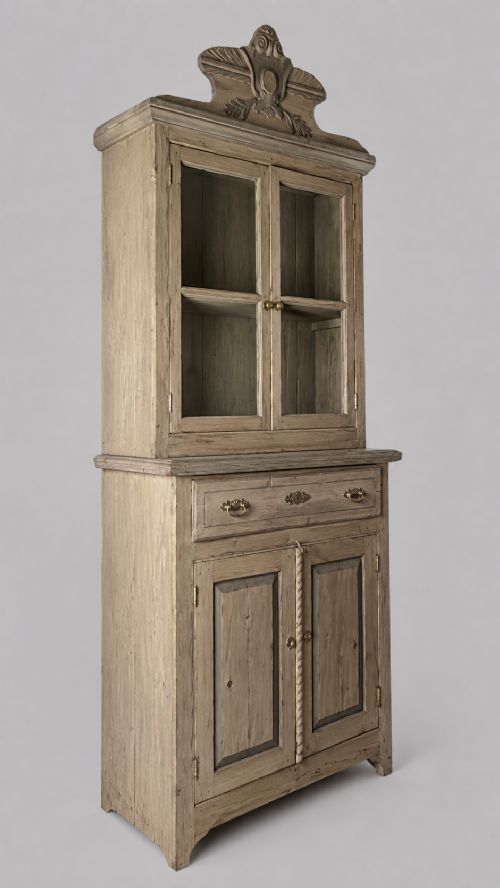
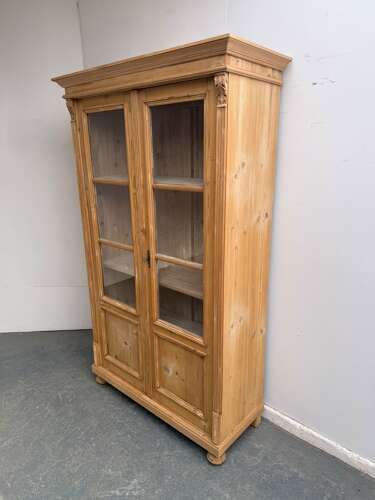
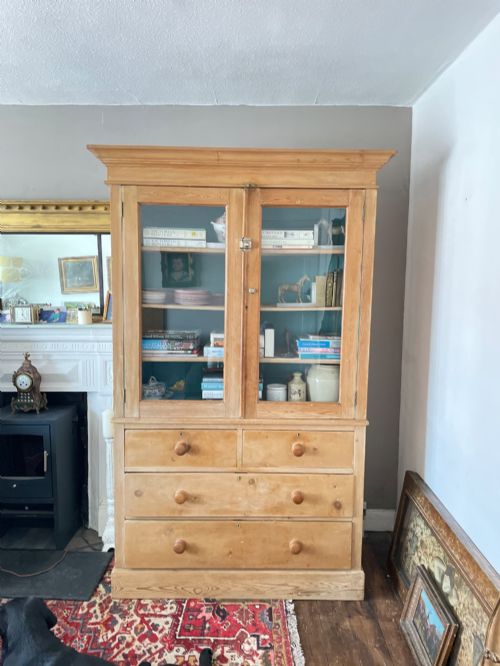
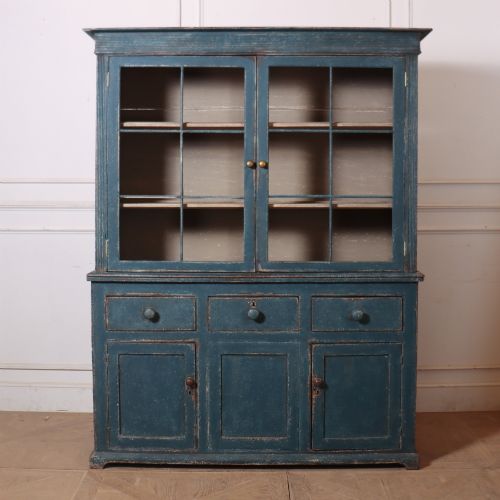
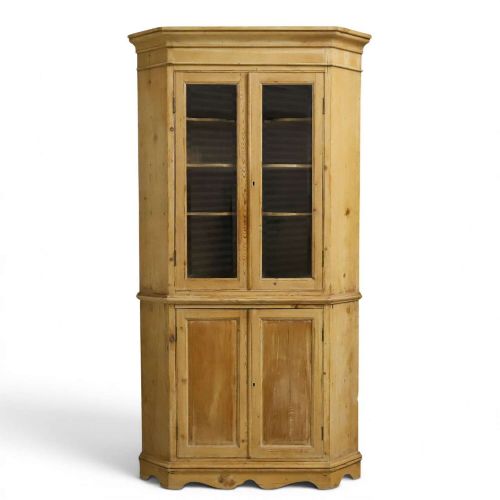
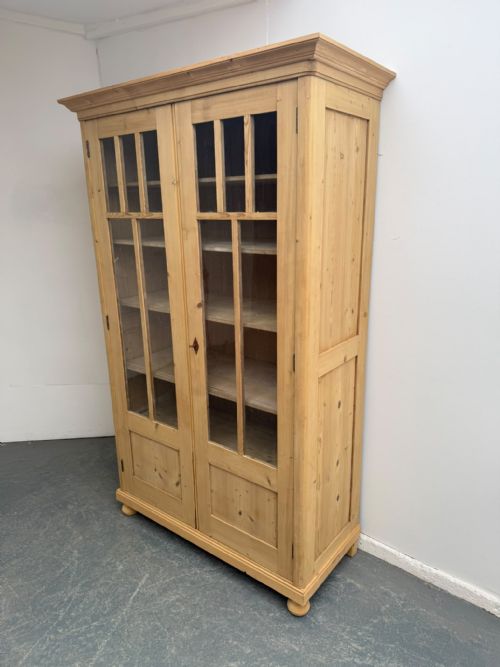
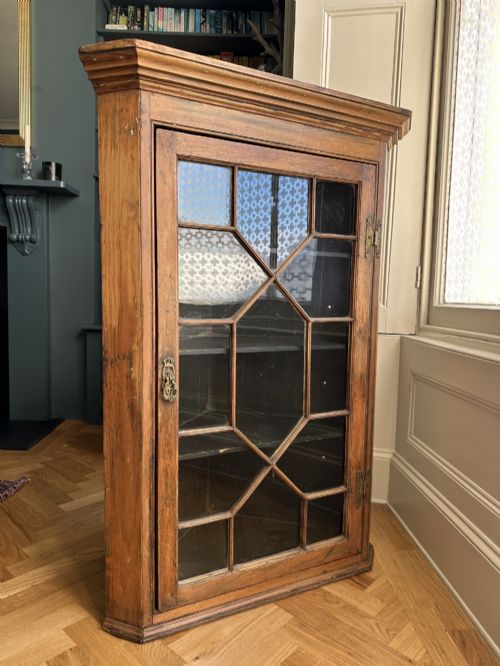


Glazed Door Pine Cupboard
A glazed door pine cupboard brings utilitarian warmth to a room, offering functional display space through glass panels.
Glazed Door Pine Cupboard
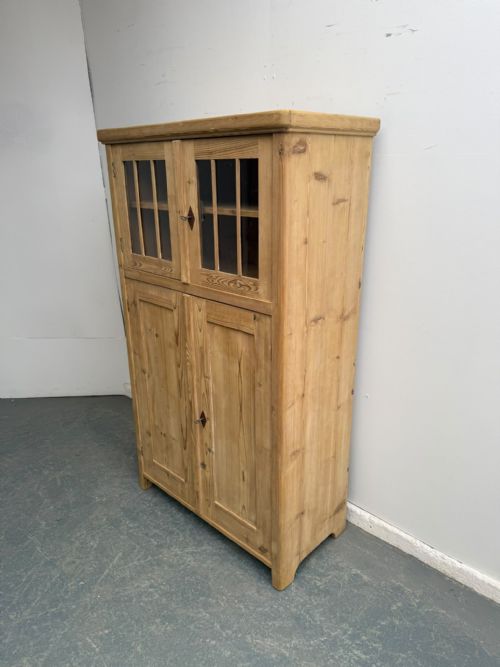
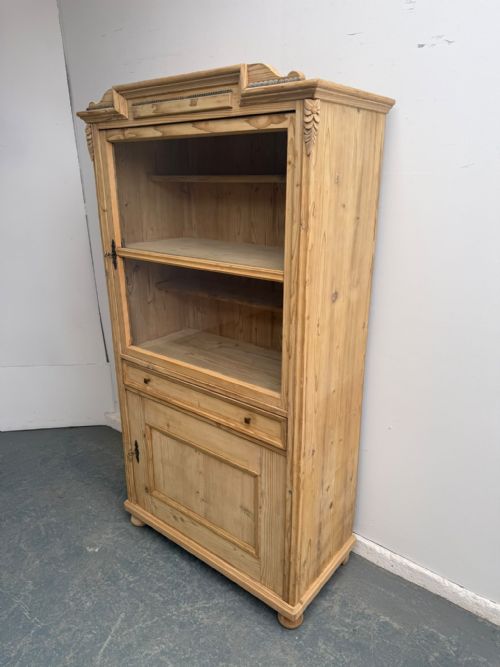
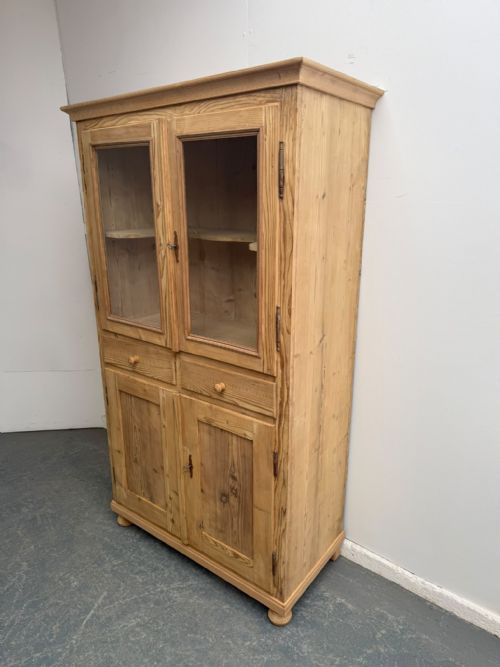
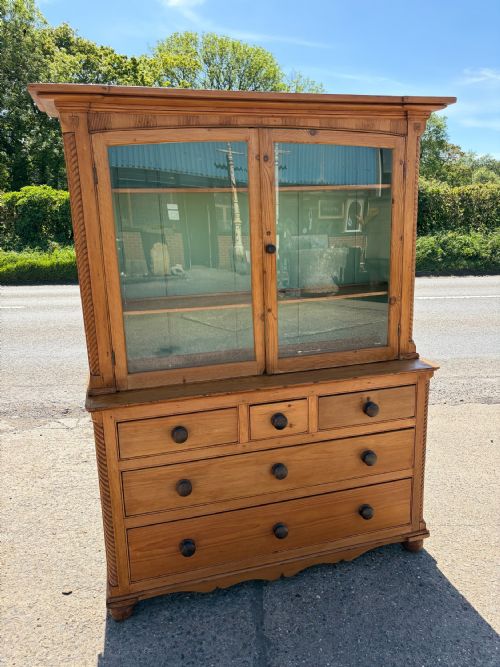
A glazed door pine cupboard is a storage piece constructed primarily from pine, featuring glass-fronted upper sections designed for display and enclosed lower storage. These pieces bridge the gap between kitchen utility and parlour presentation, serving variously as kitchen dressers, corner cabinets, and library bookcases.
The versions most commonly met span the Victorian era and the nineteenth century, reflecting both English country workshops and continental European traditions. Formats range from compact single-door corner units to substantial two-part breakfront cabinets with multiple glazed doors.
Originating largely from regional workshops across Britain, Ireland, France, Denmark, and Hungary, these cupboards display the robust construction typical of domestic utilitarian furniture. Buyers encounter everything from scrubbed pine finishes to painted surfaces showing traces of original colour.
How they were made
Construction relies primarily on solid pine timbers, joined using traditional methods suited to domestic workshops. Glass panels are fitted into wooden frames for the upper doors, allowing visibility while protecting the interior contents from dust.
Hardware elements such as brass or iron hinges, latches, and pulls provide structural support and functional operation. Many pieces incorporate separate upper and lower sections, known as two-part forms, facilitating transport and placement in domestic settings.
Surface finishes vary significantly across the evidence, utilising wax, applied paint, or stripped pine surfaces. Interiors frequently retain original painted schemes, contrasting with waxed or painted exterior carcases.
Some spacious examples feature six sliding glazed doors alongside matching rows of drawers and cupboards for maximum household organisation.
What varies in quality
Quality differences lie in the scale, architectural ambition, and integrity of the original construction rather than simple execution. Larger four-door configurations and breakfront forms represent more substantial commissions than standard single or double door units.
The survival of original surface treatments, including early painted interiors and period hardware like brass and iron fixtures, elevates the integrity of a piece. Proportional balance and regional cabinet-making characteristics further distinguish standard utility cupboards from finer domestic display cabinets.
The Glazed Door Pine Cupboard Glossary
- Breakfront
- A cabinet design where the central section projects forward from the flanking wings. This configuration adds architectural depth to larger library bookcases and display cabinets.
- Two-part form
- A piece constructed in two distinct stacked sections, typically a glazed upper cabinet sitting upon a lower base or cupboard. This facilitates movement through domestic doorways.
- Scrubbed pine
- Timber that has been repeatedly washed and scrubbed to a clean, pale, raw finish. This treatment is typical of utilitarian kitchen furniture.
- Glazed door
- A door fitted with glass panes to permit visibility of the interior shelving. These are characteristic of display cabinets and bookcases.
- Corner cupboard
- A specialised storage unit built with an angled footprint to fit neatly into room corners. They maximise space utilisation in domestic interiors.
Glazed Door Pine Cupboard: Frequently Asked Questions
Where were glazed door pine cupboards used?
These cupboards served primarily in kitchens, pantries, and dining spaces for the storage and display of chinaware and provisions. Larger library and bookcase variants functioned within studies and parlours for book storage.
Their practical construction suited domestic environments where durable daily storage was required alongside display capacity.
How do I care for a waxed pine finish?
Maintain waxed pine surfaces by applying a traditional beeswax polish sparingly and buffing with a soft cloth. Avoid placing timber furniture near direct heat sources to prevent shrinkage.
Keep glass panels clean using standard non-abrasive window solutions applied to a cloth rather than sprayed directly near the wood.
What is a two-part cupboard?
A two-part cupboard consists of a separate upper glazed section resting upon a lower base cabinet. This modular construction aided transportation and installation in older homes.
The horizontal dividing line sits at counter height on kitchen dressers or lower desk levels on bookcases.
Are painted interiors original?
Many cupboards retain original painted interiors, contrasting with exterior waxed or painted finishes. These coatings were applied to protect the softwood and brighten the display space.
Examination of the paint layers and underlying timber wear helps determine whether the finish dates to the period of manufacture.