
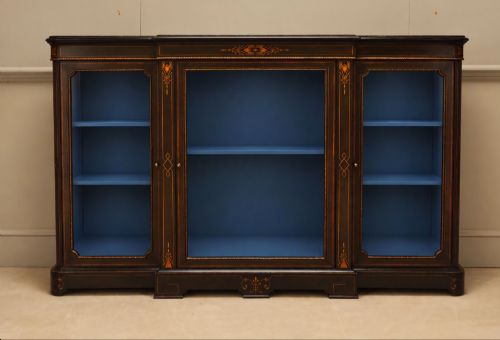
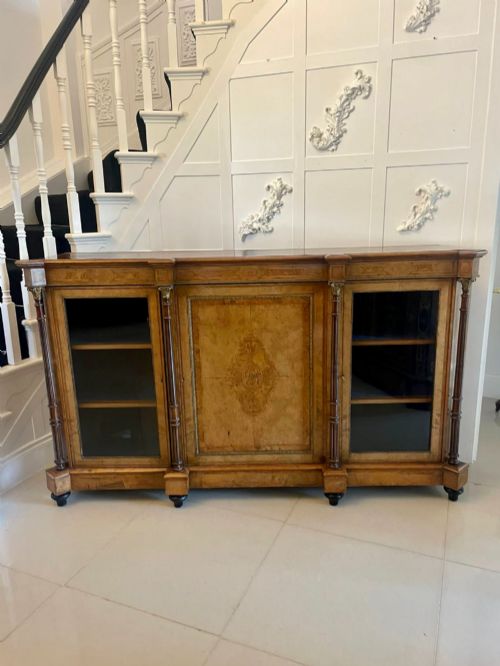
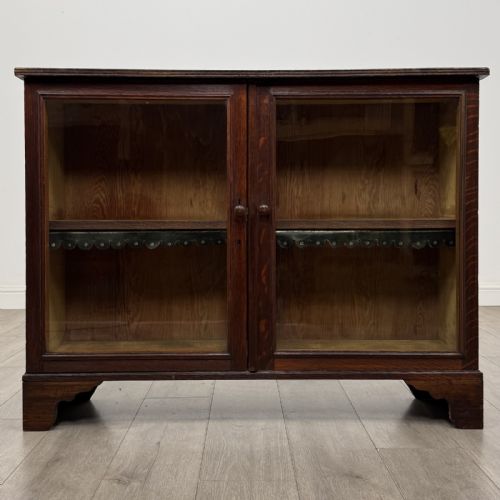
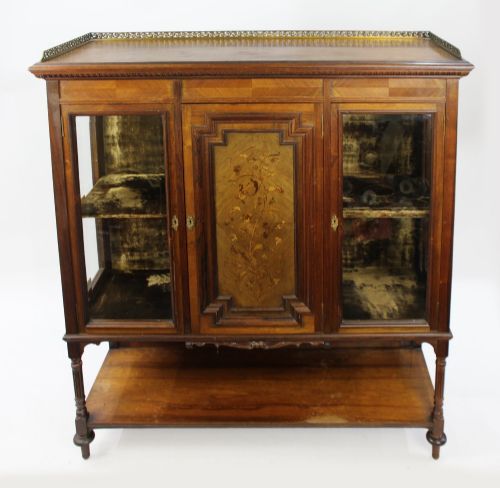
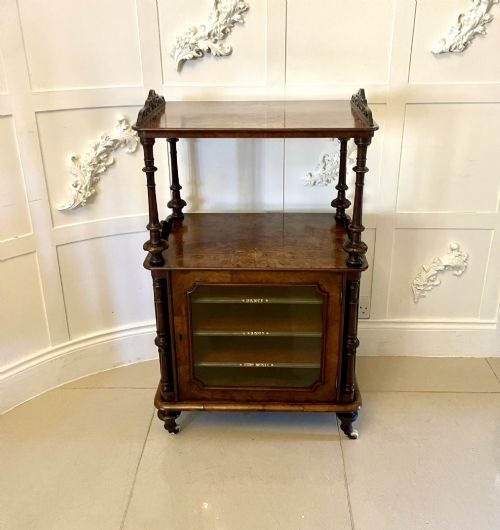
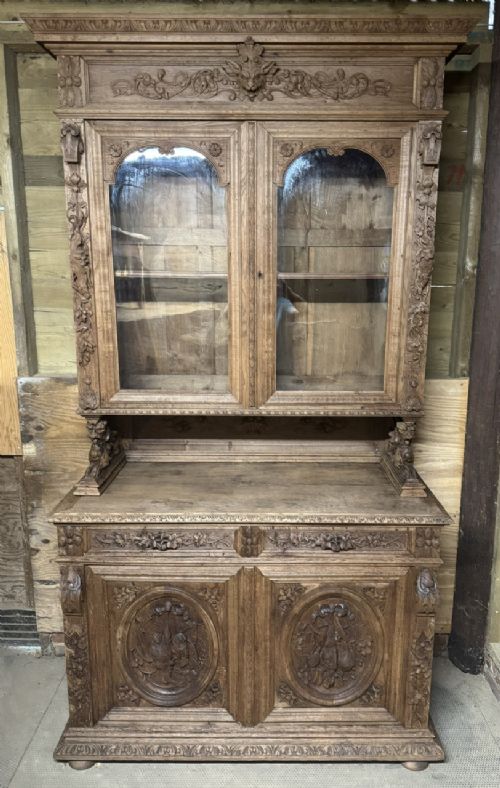
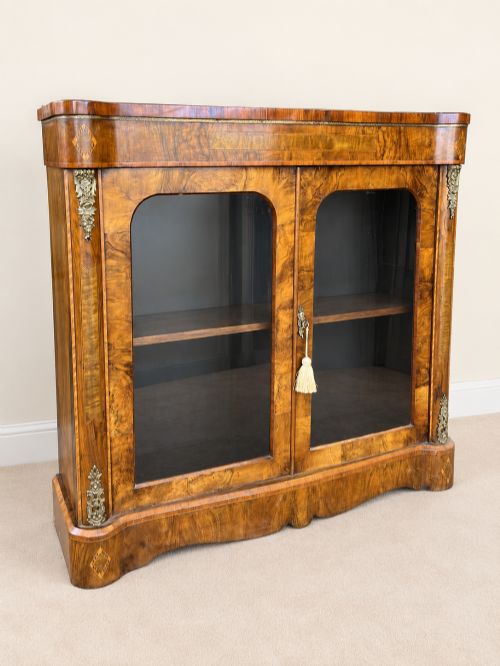
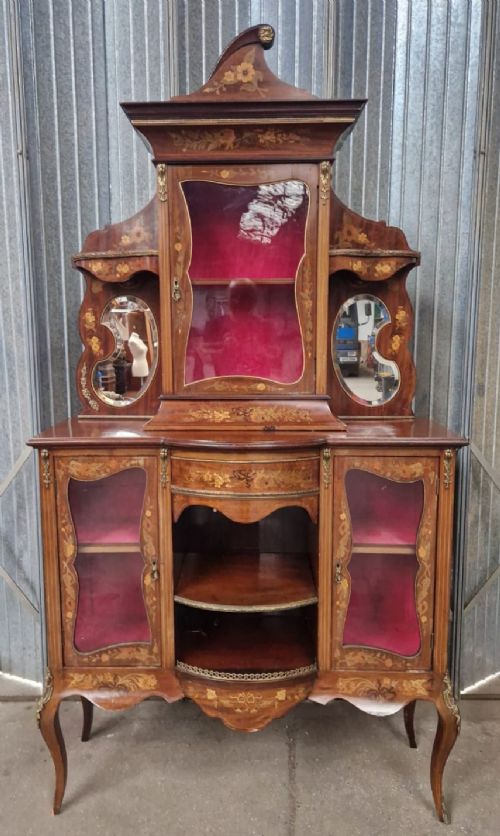
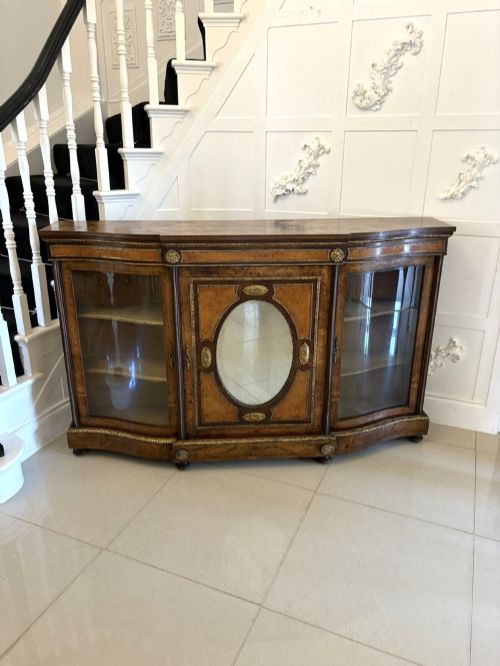
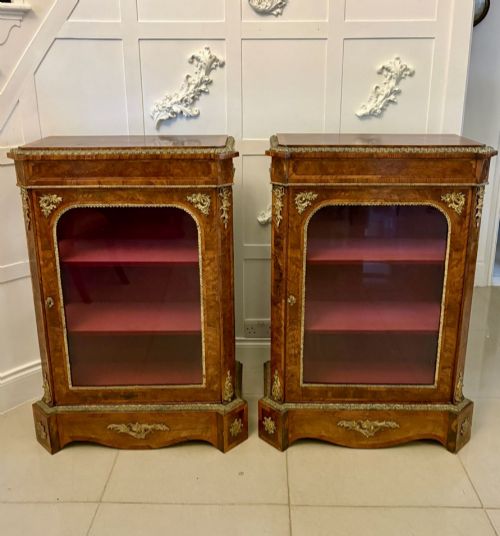
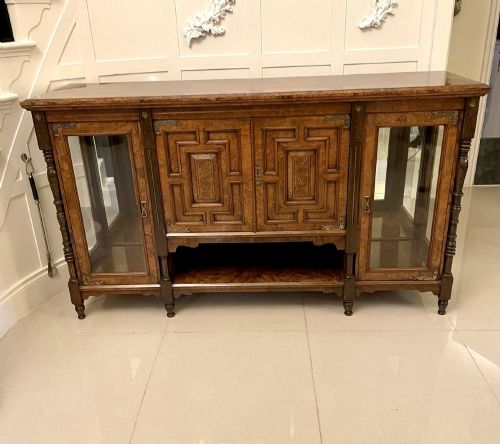
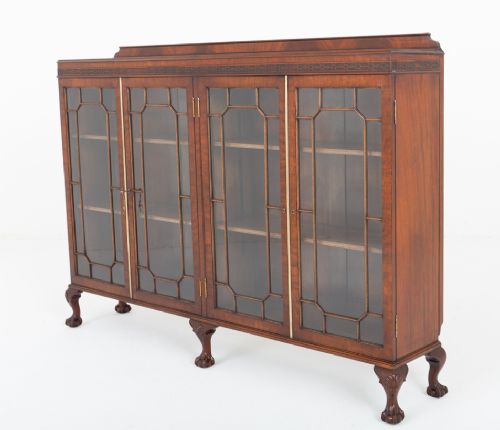
Glazed Credenza Cabinet
A glazed credenza cabinet brings together timber, glass and metal mountings to display books and porcelain.
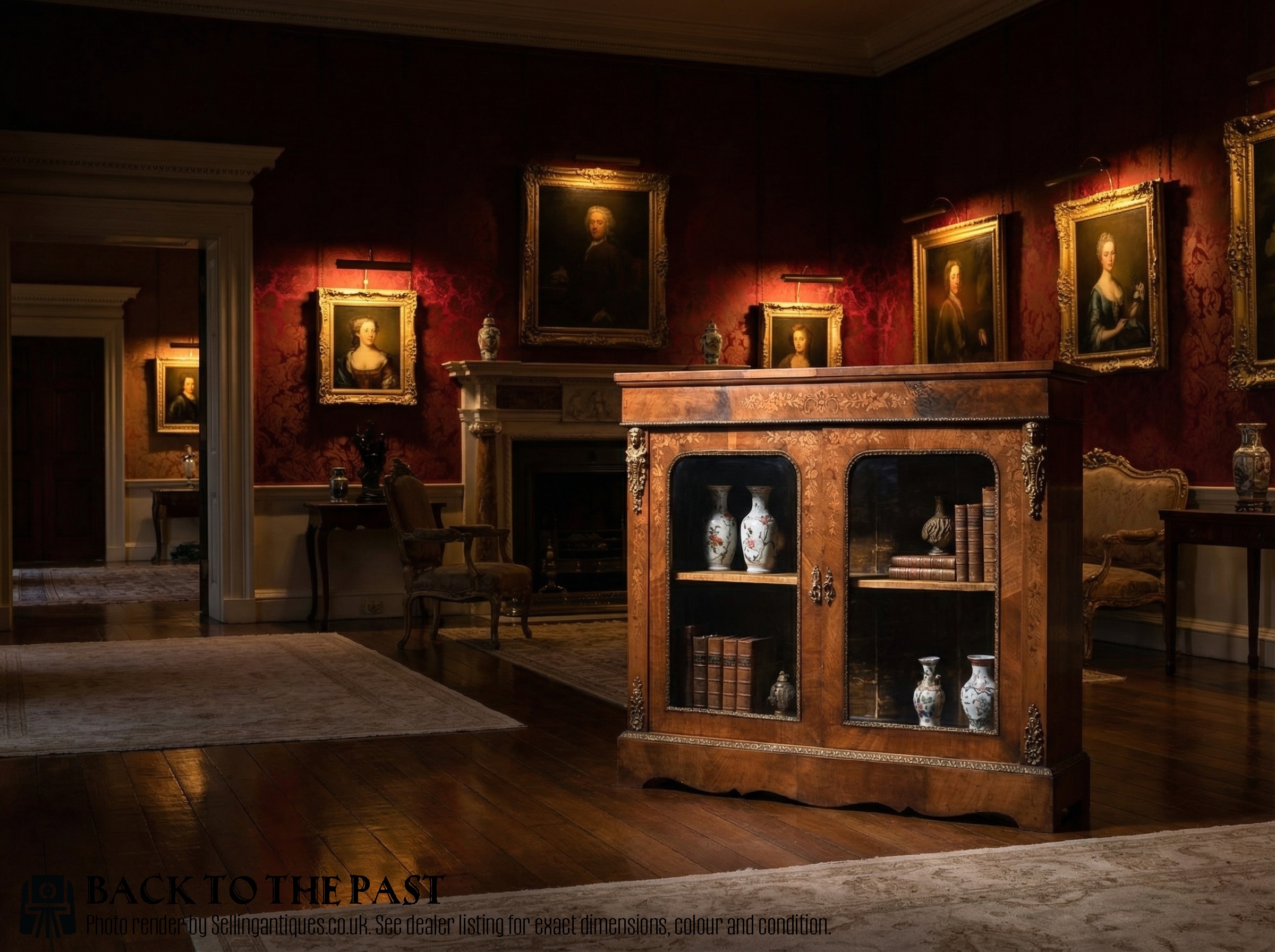
Glazed Credenza Cabinet
When searching for a glazed credenza cabinet, buyers encounter low-profile furniture designed for display and storage in nineteenth-century interiors. The most frequent pieces on this page stem from the Victorian period, alongside Regency and Edwardian examples.
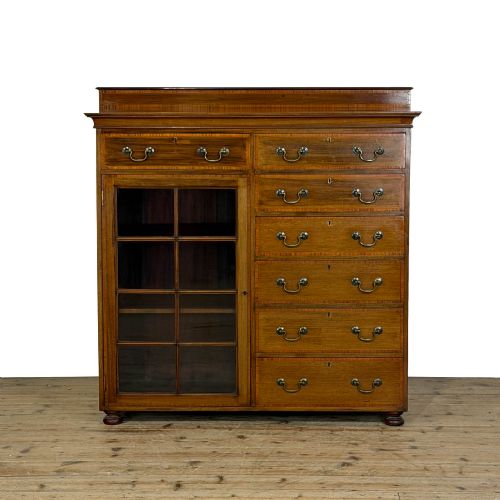
Makers and workshops constructed these items in forms that span side cabinets, pier cabinets, chiffoniers and bookcases. Walnut, mahogany and rosewood dominate the listings, frequently paired with glass doors and metal mounts.
How they were made
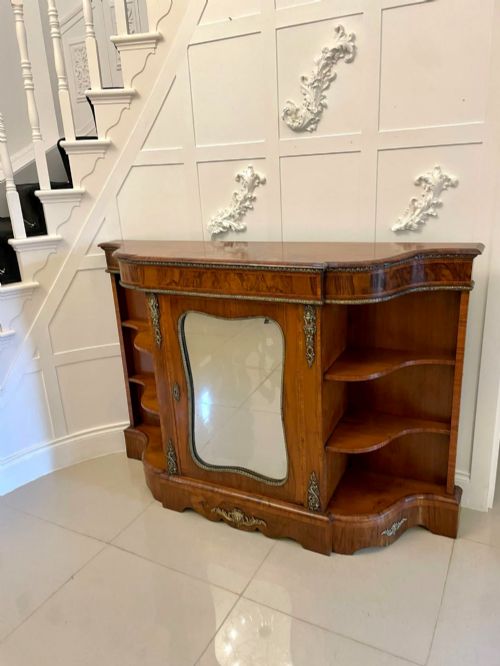
Cabinetmakers utilised dense hardwoods such as mahogany, rosewood and walnut as the primary structural body. They frequently veneered surfaces with burr walnut, amboyna or kingwood to create figured grain patterns across the front.
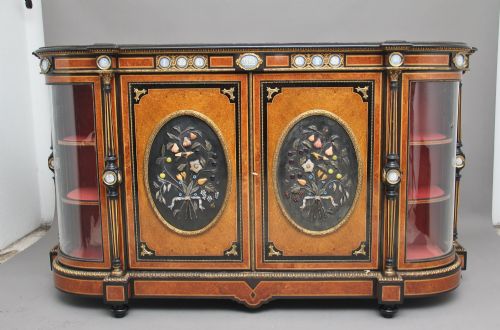
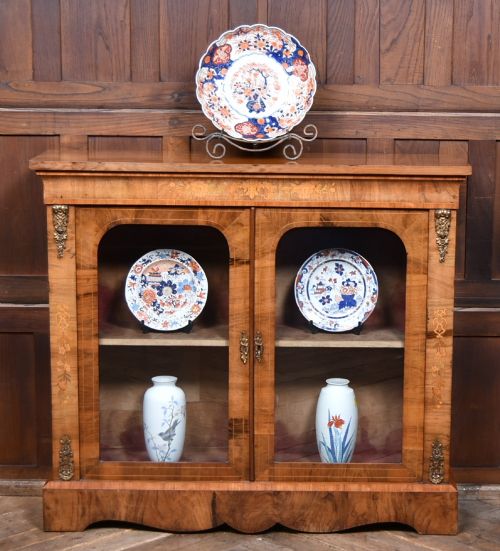
Workshops integrated glass panels into doors for display purposes, mounting the woodwork with cast or chased ormolu and brass. Intricate floral marquetry and inlaid strings in ebony or boxwood decorate many panels.
Listings span the Regency, Victorian and Edwardian periods, utilising burr walnut, rosewood, mahogany and ebonised wood.
What varies in quality
Quality rests upon the selection of timber veneers and the intricacy of the marquetry inlay across the doors and panels. Higher-tier examples display crisply cast ormolu mounts and careful proportions.
Subtlety in the secondary timbers and the precision of the joinery distinguish standard production from exceptional cabinet work.
Collinson and Lock·Lamb of Manchester
The Glazed Credenza Cabinet Glossary
- Ormolu
- Gilded bronze mounts applied to furniture. Makers used them to accent corners, friezes and door frames.
- Marquetry
- Fitted wood veneers forming decorative patterns or floral scenes. Craftsmen cut contrasting timbers together to achieve tight joints.
- Pier cabinet
- A narrow display cabinet built to stand against the wall space between windows. These pieces often feature glass doors and velvet-lined interiors.
- Burr walnut
- Timber taken from the growth excrescences of walnut trees. It yields complex, swirling grain patterns highly prized for cabinet veneers.
Glazed Credenza Cabinet: Frequently Asked Questions
Where did these cabinets sit?
These cabinets occupied formal reception rooms, dining rooms and drawing rooms in nineteenth-century houses. They held porcelain collections, books and glassware behind glass doors.
Shorter pier cabinets stood in narrow wall spaces between tall windows, while longer credenzas anchored main walls.
How do I spot Victorian pieces?
Victorian examples rely heavily on burr walnut veneers, ebonised finishes and applied ormolu mounts. Marquetry floral motifs frequently decorate the central doors.
Construction methods involve machine-sawn timbers alongside hand-cut dovetails, shifting across the nineteenth century.
What is a chiffonier?
A chiffonier is a low sideboard featuring enclosed cupboards below, sometimes combined with shelving or a glazed cabinet top. They served similar storage functions to credenzas.
Mahogany and rosewood versions appear frequently in Regency and Victorian periods.
How do I care for wood?
Keep wooden cabinets away from direct sunlight and heat sources to prevent veneer shrinkage and splitting. Maintain stable indoor humidity levels.
Dust surfaces regularly with a dry cloth and apply appropriate wax sparingly.