

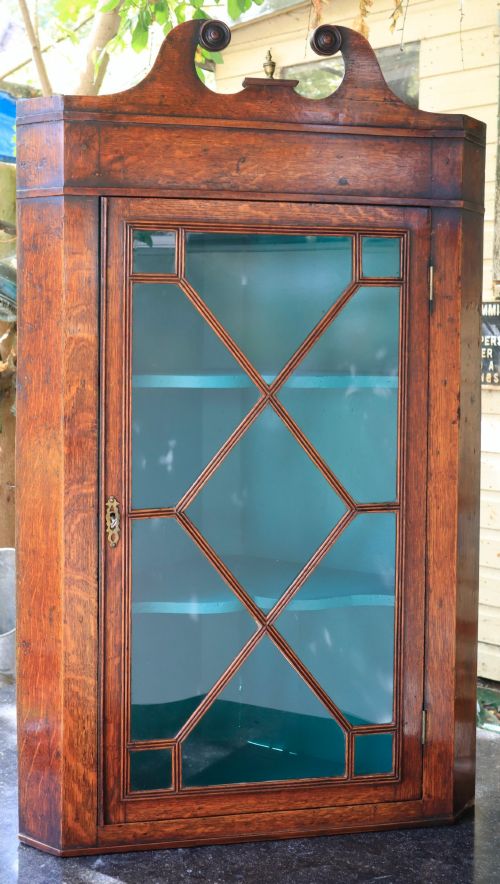
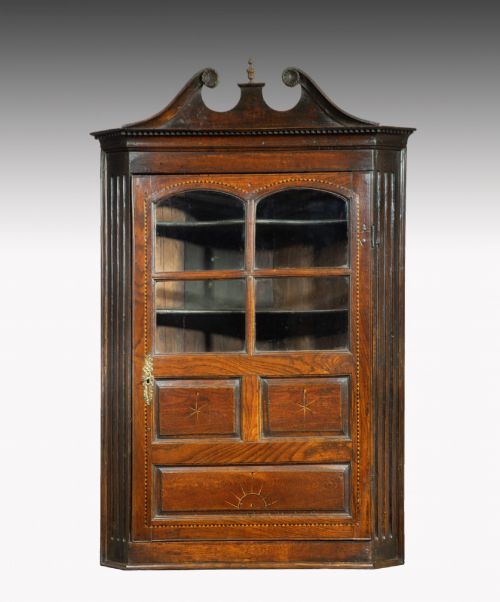

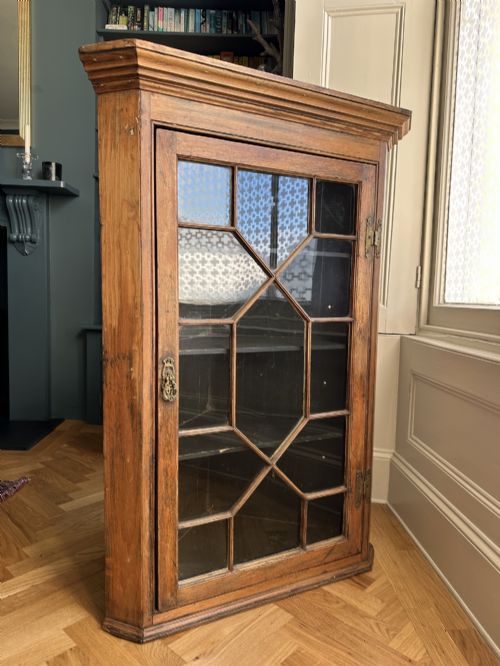


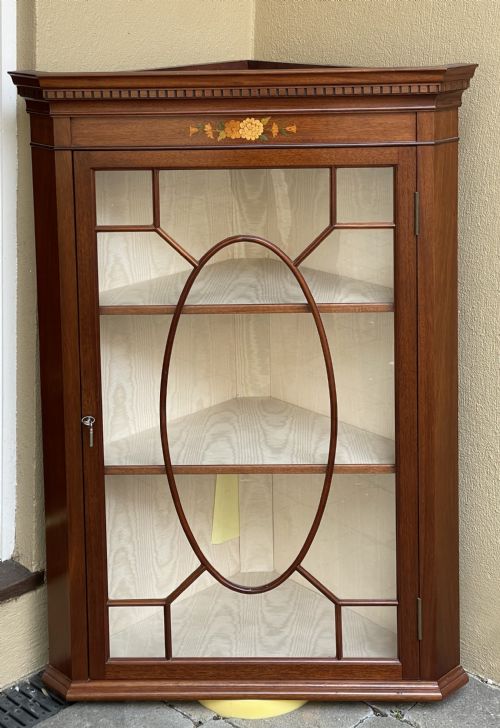


Glazed Corner Wall Cupboard
A glazed corner wall cupboard transforms a neglected room angle into a focal point for display and storage.
Glazed Corner Wall Cupboard
A glazed corner wall cupboard occupies domestic angles that standard rectangular furniture ignores, using wall space efficiently while softening the hard geometry of a room. These hanging cabinets lift storage off the floor, presenting precious ceramics, glassware and books behind glass doors.
The pieces appearing here span centuries from the eighteenth through to the mid-twentieth, crossing Georgian, Victorian and Edwardian eras. Buyers encounter formats ranging from simple provincial pine and oak to refined mahogany and satinwood-inlaid models.
Materials and construction
Cabinetmakers built these corner fixtures primarily in timbers such as oak, mahogany, walnut and pine, often selecting figured veneers for principal surfaces. Inlay work in satinwood and brass details ornament the better examples, framing glazed doors that protect the interior contents.
Carpenters joined the carcase to withstand wall hanging, utilising traditional dovetail joints for drawers and framing the glass panes with wooden glazing bars, known as astragals, to form geometric or arched patterns.
Glazed Corner Wall Cupboard Retail Price Guide 2026
Typical asking prices for glazed corner wall cupboard among the pieces listed under this phrase on Sellingantiques today, from the lower quarter to the upper quarter. They describe what is for sale here now, not the wider market.
One tiny Georgian survivor comes equipped with a working key and a sneaky bottom drawer for hiding the good biscuits.
Assessing quality
Quality rests upon the selection of timber and the crispness of the joinery rather than mere age. Pieces featuring well-figured mahogany grain, fine string inlay and balanced proportions demonstrate superior craftsmanship from their period.
The delicacy of the glazing bars and the preservation of original glass panes, brass hinges, and working locks with keys elevate an example above standard utility cabinets.
The Glazed Corner Wall Cupboard Glossary
- Astragal glazed
- A method where wooden bars divide the glass window into smaller panes. These delicate mouldings form grids or Gothic arches across the door front.
- Bow front
- A convex curved cabinet face that projects outward from the corner. This curved design softens the rigid ninety-degree angles of the room.
- Hanging cabinet
- A wall-mounted piece designed to be secured directly to structural studs. These units leave the floor beneath completely clear.
- Inlay
- Contrasting woods or brass embedded into the primary surface timber to create decorative patterns. Satinwood and darker veneers often provide this visual contrast.
- Serpentine front
- A cabinet front featuring a gently undulating contour with convex curves meeting a central concave curve. This intricate shaping requires skilled woodworking.
Glazed Corner Wall Cupboard: Frequently Asked Questions
How do I hang a heavy antique corner cabinet?
These cabinets require secure fixing into solid masonry or direct attachment to timber wall studs using heavy-duty brackets. Professional installation ensures the wall supports the weight of the timber carcase and glass.
Older pieces often feature original hanging brackets or reinforced internal corners designed for this exact purpose. Distributing the load prevents strain on the ancient joints.
What were corner cupboards originally used for?
Georgian and Victorian households utilised these wall cabinets to display prized china, porcelain tea sets, and glassware. Placing them in dining rooms or parlours kept valuable tableware protected yet visible.
Some later variants incorporate small drawers beneath the main cupboard for storing cutlery or documents. This dual function maximised utility in compact domestic spaces.
How can I tell a Georgian cupboard from a Victorian one?
Georgian examples often display cleaner architectural lines, denser mahogany timbers, and simpler brass H-hinges. Cabinetmakers of that era favoured straightforward astragal glazing patterns and subtle proportions.
Victorian pieces frequently introduce richer walnut veneers, more elaborate boxwood stringing, and heavier overall ornamentation. Edwardian revivals later mirrored these earlier aesthetic traits with lighter framing.
Do these cabinets fit standard modern room angles?
Most rooms possess roughly ninety-degree wall corners, which accommodates the standard triangular footprint of these cabinets. Historic homes occasionally feature walls that diverge slightly from true right angles.
Checking the exact back dimensions against the intended room corner prevents installation issues. Minor wall irregularities can often be shimmed during mounting.