

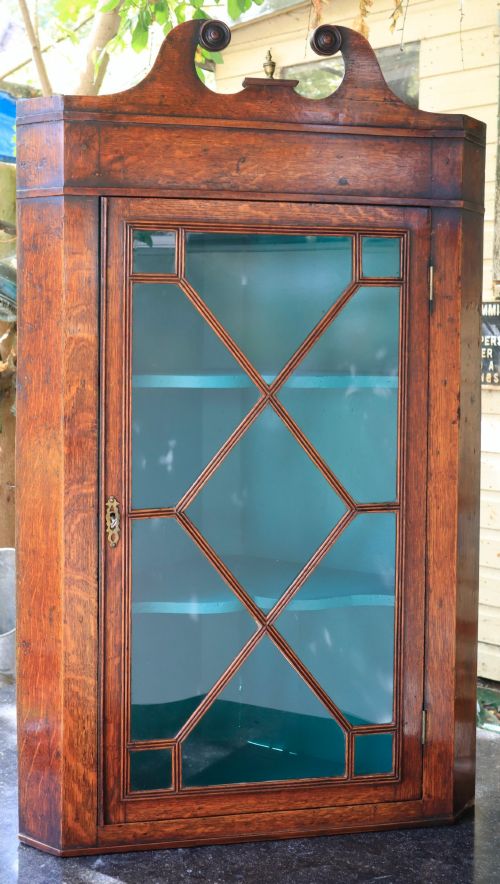
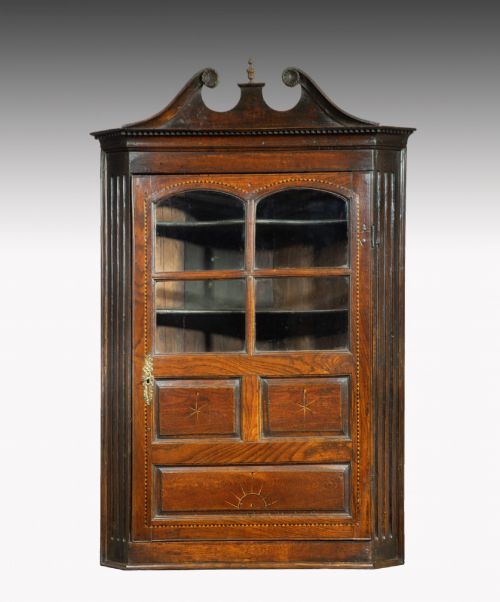

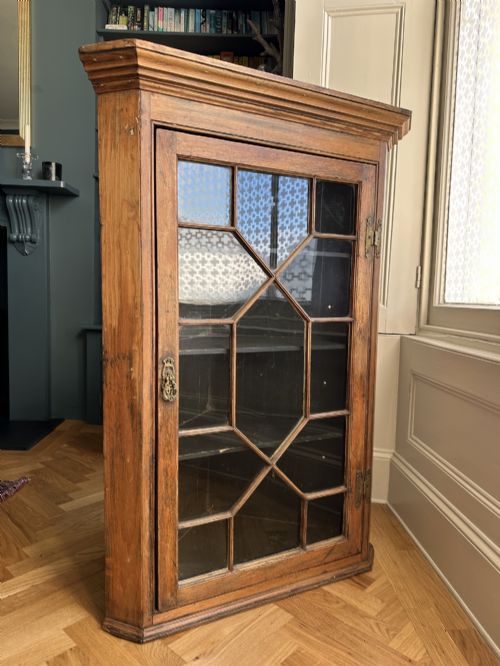


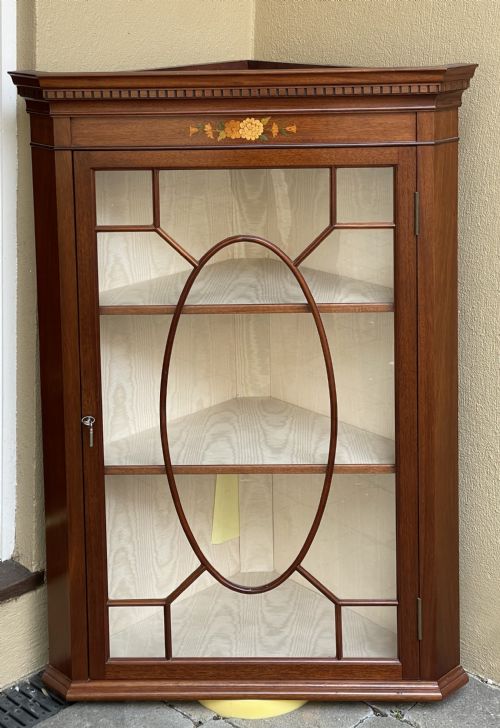


Glazed Corner Wall Cabinet
A glazed corner wall cabinet turns neglected room angles into display space for glassware and china.
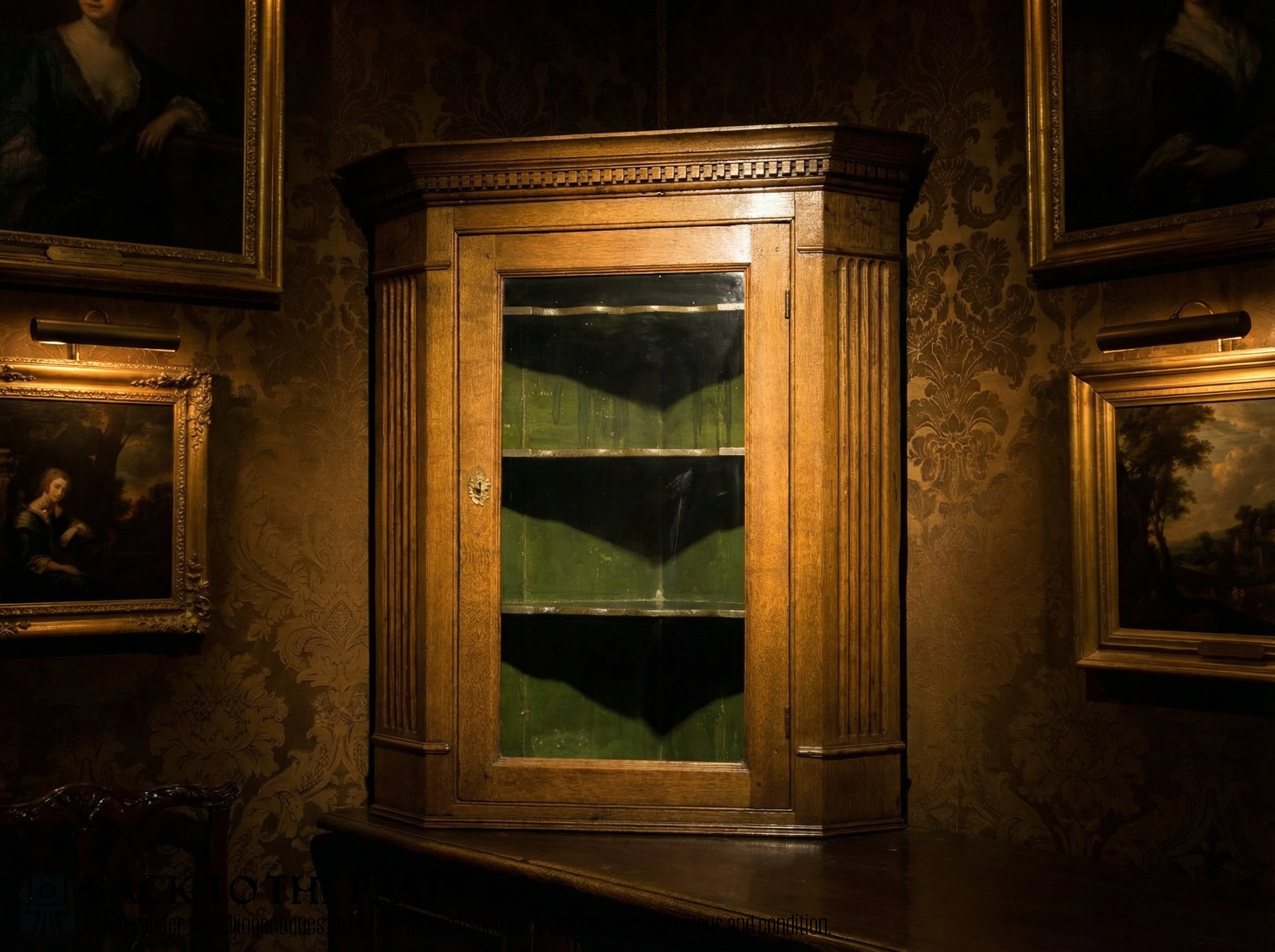
Glazed Corner Wall Cabinet
When you search for a glazed corner wall cabinet, you find wall-hanging and display cupboards designed to fit snugly into room angles. The most common examples on this page are mahogany and oak pieces dating from the Georgian and Edwardian periods.
These architectural fittings maximise awkward spaces while showcasing contents behind glass doors. Variants range from bow-fronted and serpentine shapes to plain provincial models in pine and walnut.
Originating largely from English, Scottish, and Welsh workshops, these cabinets serve both utilitarian storage and refined interior display. Their wall-hanging design keeps floor space free while elevating objects to eye level.
Materials and Technique
Cabinetmakers constructed these pieces primarily using solid timbers like mahogany, oak, and walnut, often accentuating the facades with satinwood inlay or brass hardware. Glass panels are held within wooden frames, sometimes featuring astragal bars to divide the glazing into smaller geometric panes.
Joinery techniques relied on traditional dovetailed joints and pegged frames to ensure rigidity when hung from walls. Backboards typically consist of thin vertical pine or oak planks, whilst interiors occasionally retain original painted finishes or shaped shelving.
Glazed Corner Wall Cabinet Retail Price Guide 2026
Typical asking prices for glazed corner wall cabinet among the pieces listed under this phrase on Sellingantiques today, from the lower quarter to the upper quarter. They describe what is for sale here now, not the wider market.
Some Georgian drink cabinets retain their tiny original brass locking keys, proving that ancestors guarded their spirits just as fiercely.
Markers of Distinction
The standard of a glazed corner wall cabinet depends heavily on the choice of primary timber and the delicacy of its inlay work. Finely figured mahogany veneers and precise satinwood stringing separate superior pieces from plain utilitarian pine or heavy oak examples.
Glazing construction also dictates calibre, with slender, well-proportioned astragal bars indicating finer workmanship than thick, clumsy wooden framing. Original brass hinges, functioning locks with keys, and untouched interior paint further elevate a piece's standing.
The Glazed Corner Wall Cabinet Glossary
- Astragal glazed
- A glass door divided into multiple small panes by narrow wooden mouldings called glazing bars. These create a decorative geometric grid across the front of the cabinet.
- Bow front
- A convex, outwardly curved cabinet facade that projects forward from the corner angles. This shape became popular during the Georgian and Regency periods.
- Serpentine front
- A cabinet front featuring a gentle undulating curve, convex at the centre and concave at the sides. It requires advanced woodworking skill to execute properly.
- Satinwood inlay
- Contrasting blonde timber inserted into recesses on a darker wood surface to form decorative lines or motifs. It is frequently seen on Edwardian and late Georgian pieces.
- Wall hanging
- Designed to be secured directly to room walls via internal brackets or screw fixings rather than standing on the floor. This format is typical of smaller corner cupboards.
Glazed Corner Wall Cabinet: Frequently Asked Questions
How do I hang a heavy antique corner cabinet?
These cabinets require secure fixing to solid wall studs or masonry using appropriate heavy-duty brackets. Because historical hanging points can wear, modern internal reinforcement is often necessary to bear the weight safely.
Professional installation ensures the cabinet remains level and secure, protecting both the antique timber and the glass panes from stress.
What were corner cupboards originally used for?
Georgian and Victorian households used these cabinets primarily to store and display tea wares, ceramic plates, and drinking glasses. Placing them in dining rooms or parlours kept valuable tableware accessible yet protected from dust.
Over time, their role shifted towards general decorative display, housing collections of small ornaments and porcelain.
How can I tell a Georgian cabinet from an Edwardian copy?
Examination of the secondary timbers, nail types, and backboards usually reveals the true age of a cabinet. Georgian pieces typically feature hand-sawn oak or pine boards and older joinery methods.
Edwardian reproductions and adaptations often display more uniform machine sawing and modern adhesives, even when utilising older reclaimed wood.
Can these cabinets fit modern room corners?
Most standard corner cabinets are built to fit a ninety-degree wall junction. However, room angles in older properties can vary slightly, so checking the exact depth and wall-side measurements is essential.
Their triangular footprint makes them remarkably adaptable for filling dead space in hallways, studies, and dining rooms.