




Glazed Casing Wall Clock
These glazed casing wall clock pieces combine precision timekeeping with architectural wood cases, and a buyer wants one for its striking mechanical movement and dial.
Glazed Casing Wall Clock
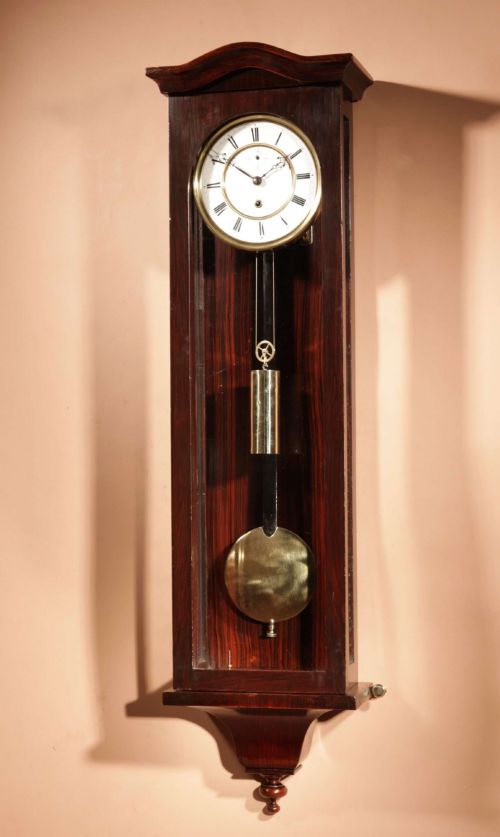
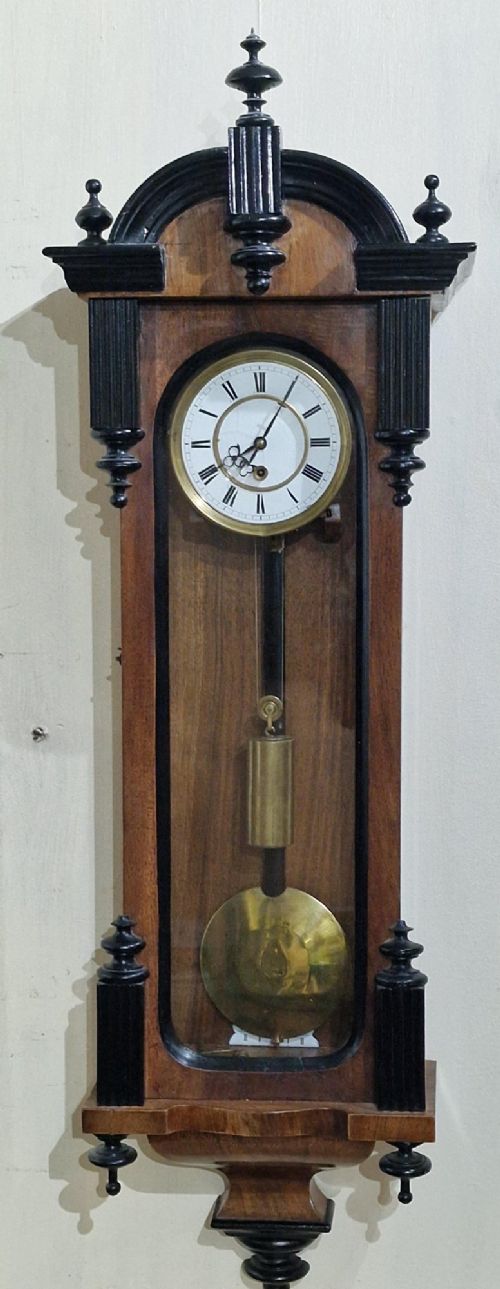
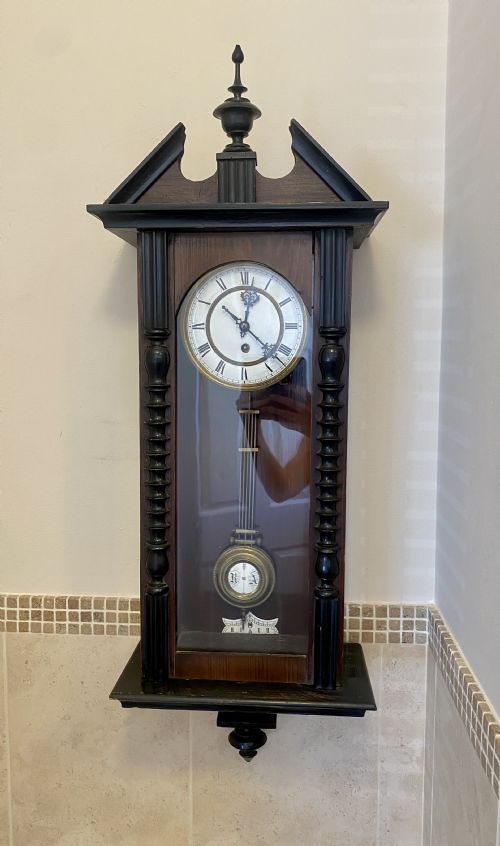
When you search for glazed casing wall clock, you encounter regulated timepieces housed within protective wooden frames featuring glass panels that reveal the pendulum and weights. The examples appearing on this page span the Victorian era, the Biedermeier period, and the Art Deco style, running from the mid-nineteenth century into the twentieth century.
The dominant forms originate from Austrian and Vienna regulator traditions, alongside Black Forest and electric master clock designs. These wall clocks utilise walnut, mahogany, oak, ebonised wood, and brass to build robust enclosures designed to hang securely in domestic or institutional interiors.
How they were made
Makers shaped cases with carved details and ebonised wood accents, housing mechanical systems that range from month duration movements to double fusee configurations and electric systems.
The periods represented on this page span the Victorian era, nineteenth century Biedermeier, and twentieth century Art Deco.
What varies in quality
The standard of a glazed casing wall clock depends upon the architectural ambition of the timber case and the sophistication of the movement inside. Elaborately carved walnut enclosures and complex mechanisms such as double weights or month duration gear trains indicate higher grade production.
Finer pieces demonstrate meticulous joinery in the mahogany or walnut framing and superior finish on the enamel dials and brass fittings. Simpler construction and standard movements distinguish the more utilitarian examples from the masterworks.
AG Lenzkirch·Charvet
The Glazed Casing Wall Clock Glossary
- Regulator
- A precision pendulum clock designed to keep exceptionally accurate time. These movements often feature long drops and clear dials.
- Vienna Regulator
- A high quality wall clock style originating in Austria during the nineteenth century. These pieces typically feature walnut cases and visible pendulums behind glass doors.
- Double Fusee
- A mechanical system utilising cones and chains or cords to equalise the force of the mainspring. This mechanism improves timekeeping accuracy as the power winds down.
- Grande Sonnerie
- A striking clock complication that sounds both the hours and the quarters automatically. It represents a high level of horological craftsmanship.
- Ebonised Wood
- Timber treated to resemble ebony through staining and polishing. This dark finish provides contrast against brass dials and lighter wood veneers.
Glazed Casing Wall Clock: Frequently Asked Questions
How do Vienna regulators work?
Vienna regulators use precision pendulum movements driven by weights or springs suspended inside a glazed wooden case.
The glass panels protect the delicate mechanical components while allowing a clear view of the swinging pendulum and falling weights.
What materials make up the cases?
The cases are constructed primarily from timber such as walnut, mahogany, oak, and ebonised wood. Brass and glass are incorporated to house the dial and reveal the internal movement.
Enamel is commonly used for the clock face to provide a durable, legible surface for the numbers and hands.
Where should I hang a wall clock?
These clocks require a sturdy wall capable of supporting the weight of timber cases and metal movements. Placement should avoid direct sunlight and damp environments to protect the wood and enamel.
Ensure the wall is plumb so the pendulum swings evenly and keeps accurate time.