


Glazed Cabinet Table
A glazed cabinet table brings together the protected display of a vitrine with the useful surface of a table.
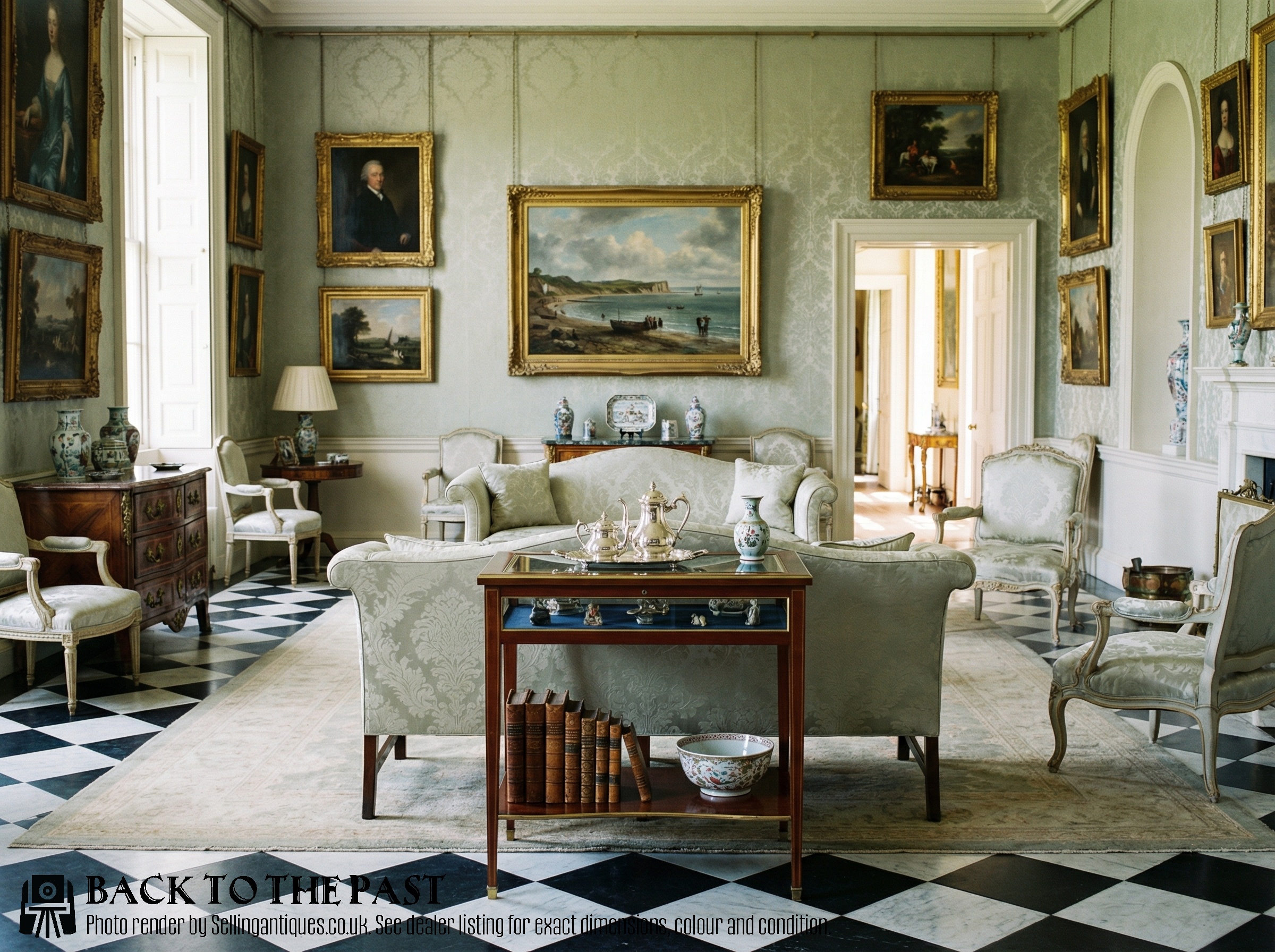
Glazed Cabinet Table
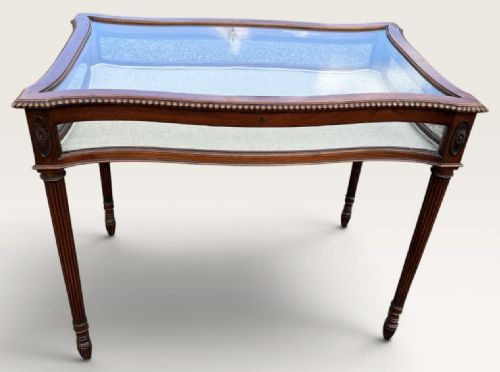
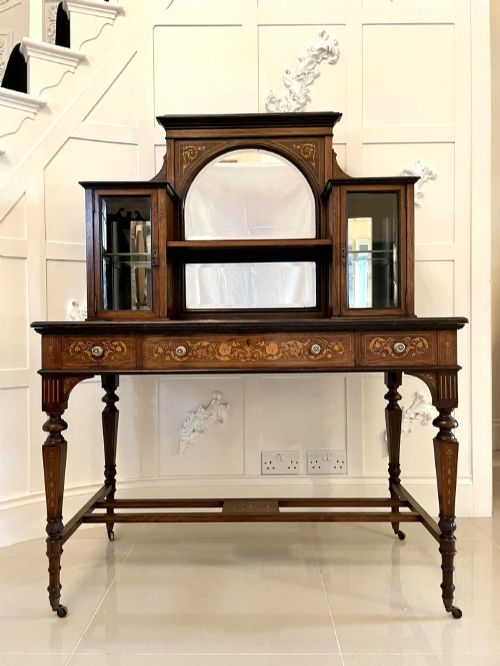
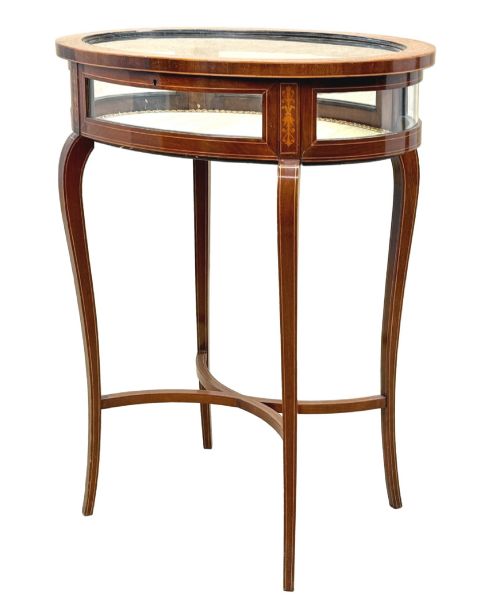
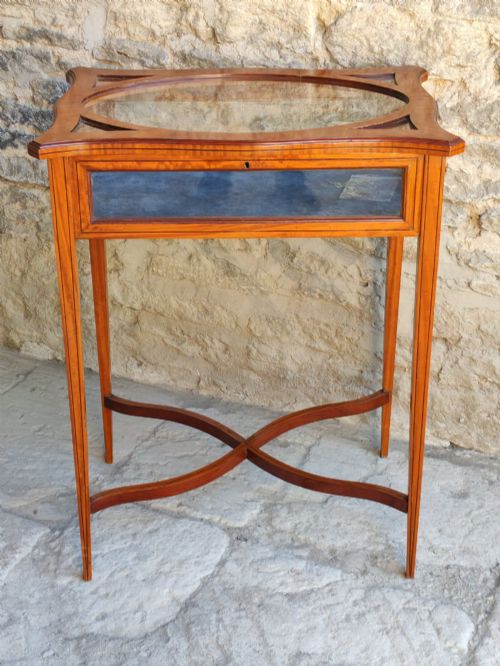
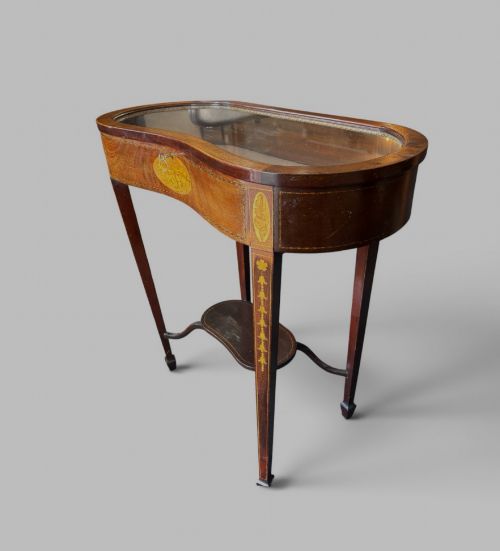
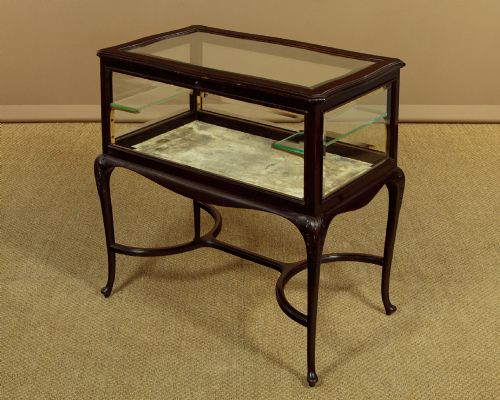
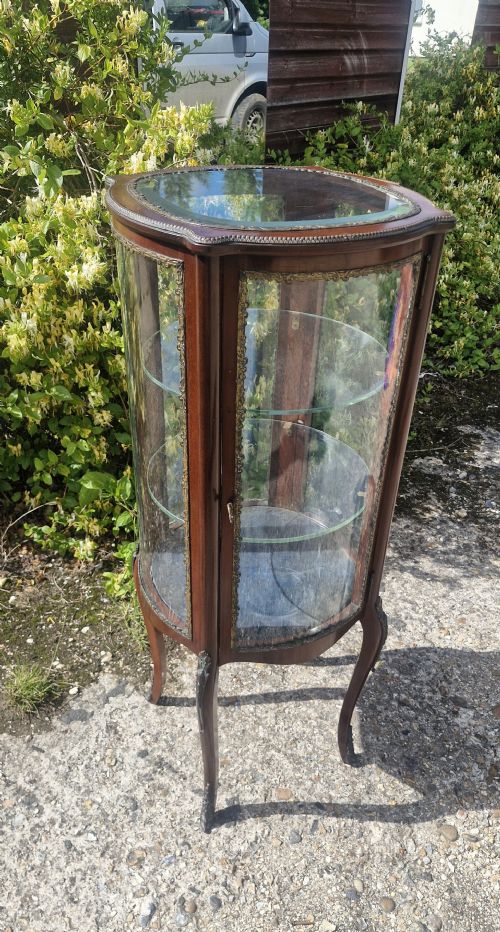
When searching for a glazed cabinet table, a buyer encounters pieces designed to exhibit small treasures, jewellery, or curiosities beneath glass while functioning as a display table, bijouterie table, or vitrine. The inventory spans several decades, with Edwardian and Victorian examples appearing frequently alongside 19th-century French and English variants.
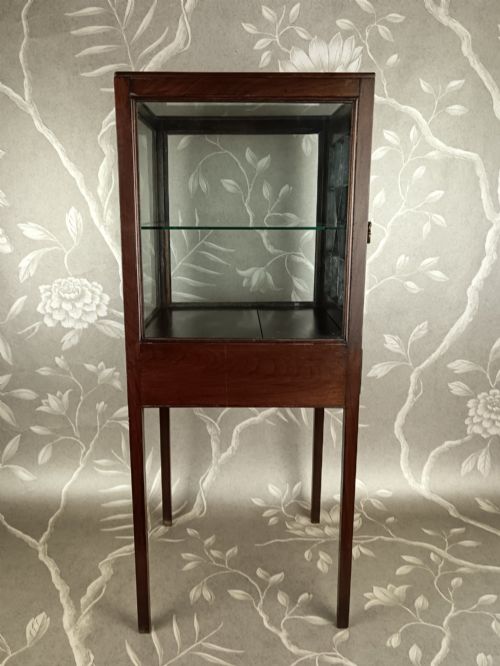
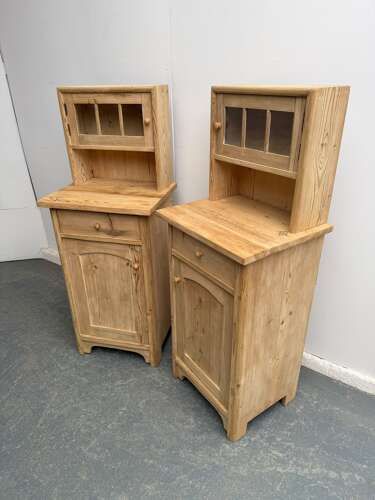
Forms on this page range from serpentine, oval, kidney-shaped, and octagonal freestanding bijouterie tables to tabletop display cases, writing desks, and occasional bedside cabinets. Mahogany, satinwood, and kingwood bodies dominate, often elevated on slender legs with glazed lids or doors that invite a close look at the contents within.
How they were made
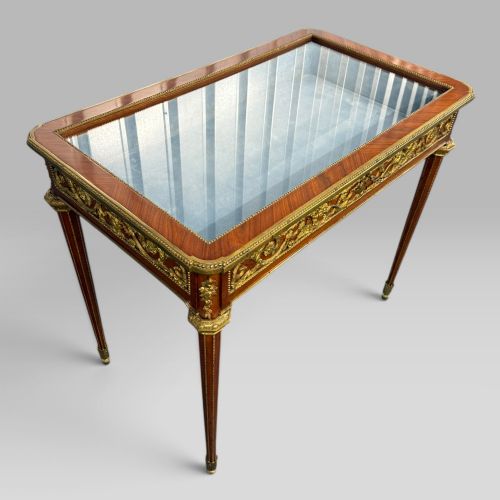
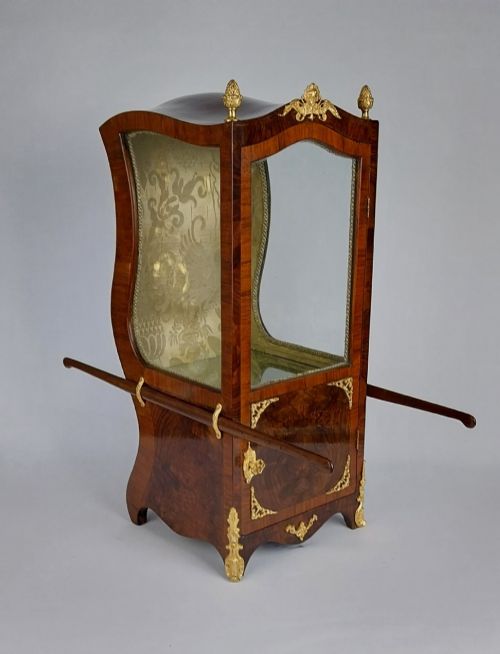
Cabinet makers utilised dense hardwoods such as mahogany, satinwood, rosewood, and kingwood as the structural foundation, frequently applying intricate marquetry, inlay, or burr walnut veneers. Ormolu mounts, brass fittings, and glass panes were carefully fitted to secure the glazed display compartments.
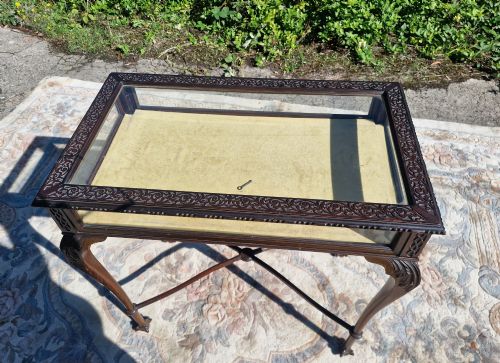
Linings of velvet or fabric were commonly added to the interior trays of bijouterie tables to cushion displayed items. Joinery techniques from the Victorian and Edwardian eras ensured the hinged glass lids and delicate legs remained stable while supporting the weight of the glazed frames.
The listings on this page span the Victorian, Edwardian, and Georgian periods, utilising mahogany, satinwood, glass, and brass.
What varies in quality
The degree of hand craftsmanship in the cabinetwork and mountings dictates the standing of each piece, distinguishing simple utility furniture from finely finished salon pieces. Crispness in the mahogany carving, precision in the wood inlay, and the weight of the ormolu or brass mounts separate standard items from exceptional ones.
Proportion and material selection also define the tier of the piece, with choice timbers like kingwood and satinwood paired with refined glass bevelling and intact original fabric interiors. The integrity of the structure, particularly around hinged glazed lids and delicate table legs, marks the distinction between workshop levels.
François Linke·EDWARDS and ROBERTS
The Glazed Cabinet Table Glossary
- Bijouterie table
- A glass-topped table specifically designed for displaying small valuables, medals, or jewellery. These pieces usually feature a hinged glazed lid above a fabric-lined interior well.
- Vitrine
- An enclosed glass cabinet used for exhibiting porcelain, curiosities, or decorative objects. They appear in both freestanding formats and table-top variants across the inventory.
- Ormolu
- Gilded bronze mounts applied to furniture for decorative accent. Makers during the nineteenth century used this technique extensively on French-influenced cabinets and tables.
- Marquetry
- Decorative woodwork where thin pieces of veneer are fitted together to form geometric or floral patterns. This technique frequently decorates the surfaces of satinwood and mahogany tables.
- Satinwood
- A durable, light-coloured timber prized for its lustrous grain. Cabinet makers utilised it for detailed stringing and contrasting panels on Edwardian furniture.
Glazed Cabinet Table: Frequently Asked Questions
What is a bijouterie table?
A bijouterie table is a low display table featuring a glazed top and a shallow, fabric-lined interior designed for showing off jewellery, coins, or small collections.
Cabinet makers produced these pieces primarily for Victorian and Edwardian drawing rooms where guests could inspect delicate curiosities at close range.
How do I use a glazed cabinet table at home?
These tables work well in sitting rooms or hallways as display surfaces for collections of small silver, pocket watches, or natural history specimens.
The glazed compartment protects items from dust while keeping them visible, and the top surface remains available for lamps or small decorative objects.
Are French and English styles different?
French models often incorporate elaborate ormolu mounts, kingwood veneers, and serpentine or kidney shapes inspired by Louis XVI and Rococo revivals.
English pieces tend to focus on restrained mahogany frames with subtle satinwood inlay, clean geometric lines, and practical proportions.
How do I care for the interior fabric?
The velvet or fabric lining inside a display table requires gentle maintenance using a soft brush or low-suction vacuum attachment to remove dust.
Keeping the table away from direct sunlight prevents the textile colours and delicate wood veneers from fading over time.