
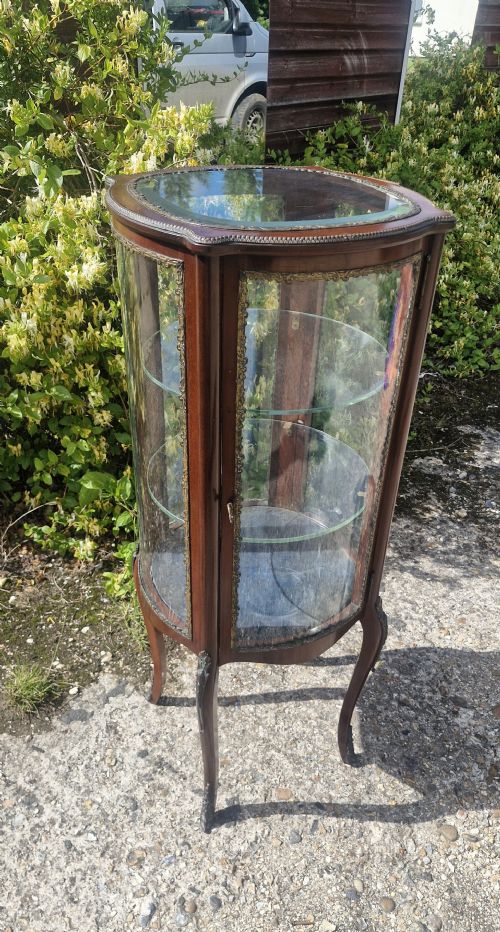
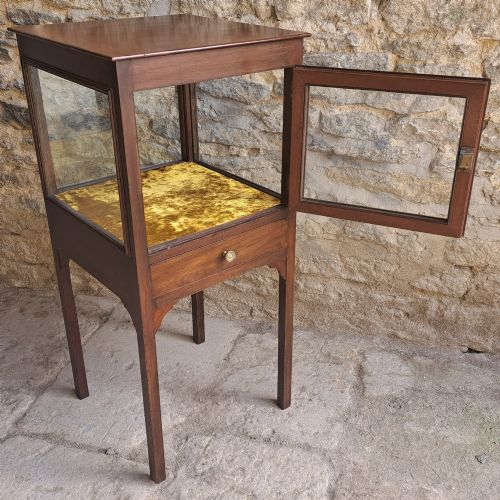


Mahogany Display Case Table
A mahogany display case table brings precious items to eye level, combining timber structure with glazed compartments for domestic display.
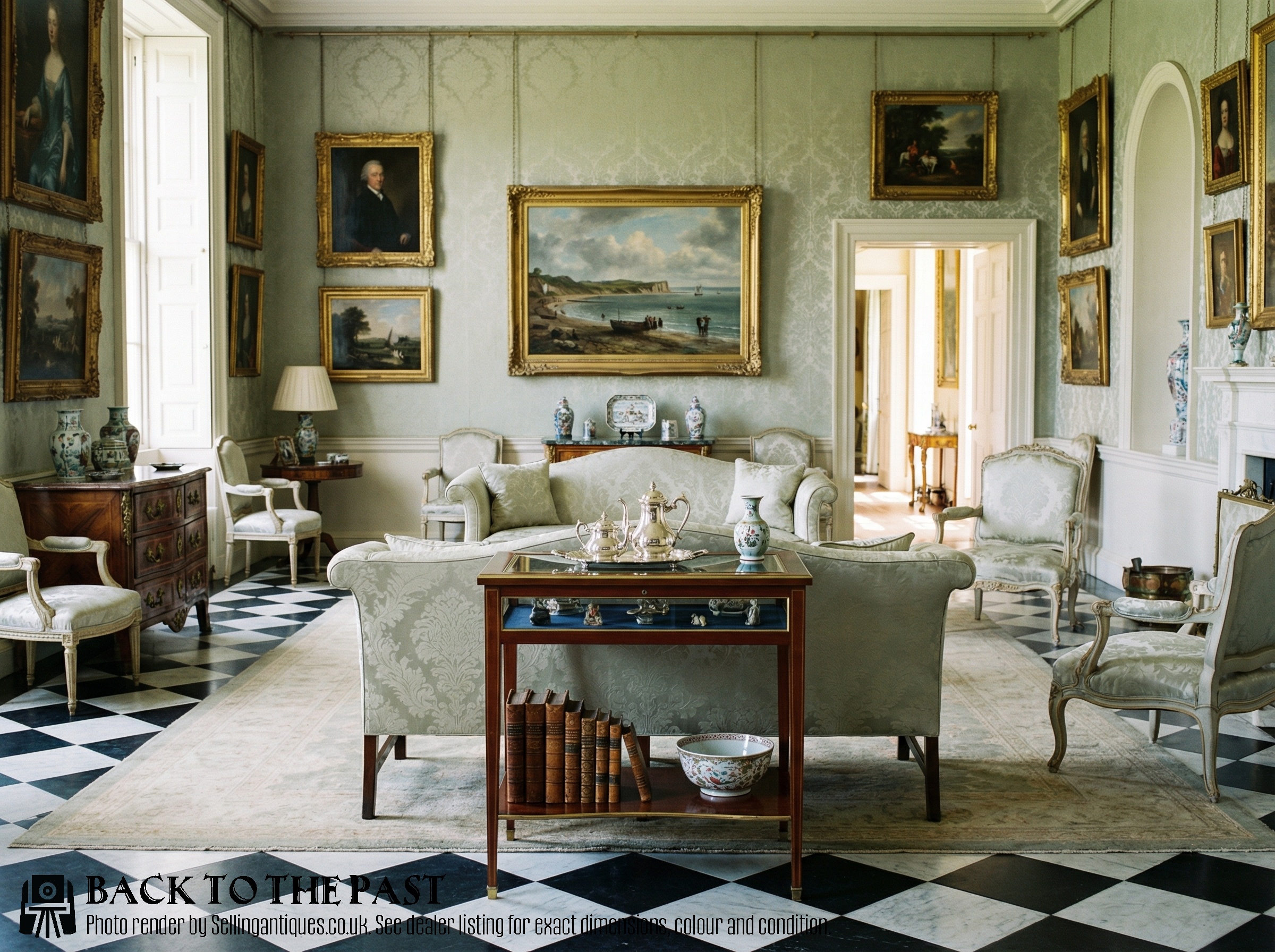
Mahogany Display Case Table
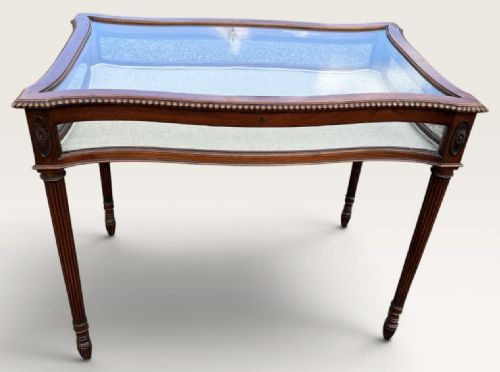
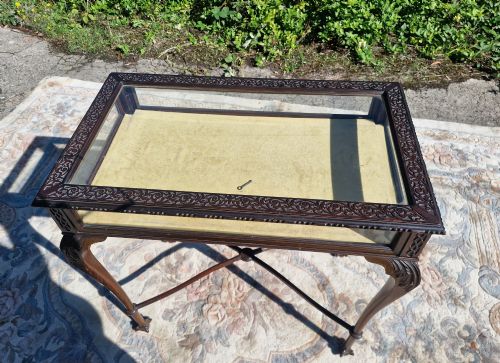
A mahogany display case table serves as a functional surface with an integrated glazed compartment for showing small treasures, medals, or jewellery. These items appear primarily from the Edwardian period, alongside examples spanning the eighteenth, nineteenth, and early twentieth centuries.
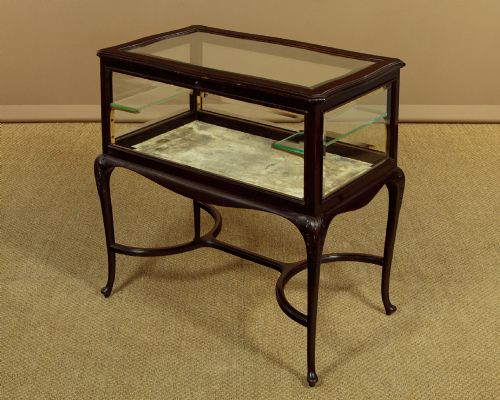
The form shifts between freestanding bijouterie tables with slender legs and tabletop display cases designed for placement on existing furniture. Buyers frequently encounter Edwardian inlaid versions alongside Georgian and Victorian iterations utilising rich timber framing and transparent glass lids.
How they were made
Cabinet makers constructed the primary frame in solid mahogany or utilised veneers over secondary timbers, often incorporating satinwood and boxwood stringing for decorative contrast. Brass hinges, locks, and ormolu mounts secure the glazed top and provide structural highlights to the timber chassis.
Interiors frequently feature lined compartments finished in velvet or fabric to cushion displayed objects. Glazing panels are secured with timber glazing bars or metal framing, creating dust-resistant enclosures for delicate collections.
One vintage bijouterie table carries later sign-written detail for Breitling watches, hinting at commercial life past.
What varies in quality
The refinement of the timber selection and the precision of inlaid marquetry define the upper tier of these pieces. Subtle hand-carved details and substantial cast brass hardware distinguish finer workshops from simpler commercial production.
Structural integrity relies on the tightness of timber joints and the smooth operation of glazed lids and locking mechanisms. Original velvet linings and well-preserved glass panes maintain the historical authenticity and visual appeal of the piece.
EDWARDS and ROBERTS
The Mahogany Display Case Table Glossary
- Bijouterie table
- A low glazed table designed specifically for displaying small valuable items, medals, or jewellery beneath a glass top.
- Ormolu
- Gilded bronze mounts applied to furniture for decorative effect, common on fine nineteenth-century examples.
- Marquetry
- Decorative veneer patterns formed by fitted pieces of various coloured woods applied to the primary mahogany surface.
- Astral glazing
- Fine timber bars holding individual panes of glass within a door or lid frame.
- Inlay
- Contrasting timber such as boxwood or satinwood set flush into the mahogany ground to create geometric or floral borders.
Mahogany Display Case Table: Frequently Asked Questions
What is a bijouterie table used for?
These tables were designed in the nineteenth and early twentieth centuries to display personal collections, small trinkets, jewellery, and curiosities under glass while keeping them dust-free.
They allowed hosts to share their collections with guests in drawing rooms and parlours without handling fragile objects directly.
How do I date a mahogany display table?
Dating relies on stylistic markers such as Edwardian inlaid boxwood stringing, Georgian proportions, or Victorian carved detailing, alongside construction methods visible inside the frame.
Cabinetry techniques and secondary timbers inside the structure also help narrow the decade of manufacture.
Are tabletop display cases different from bijouterie tables?
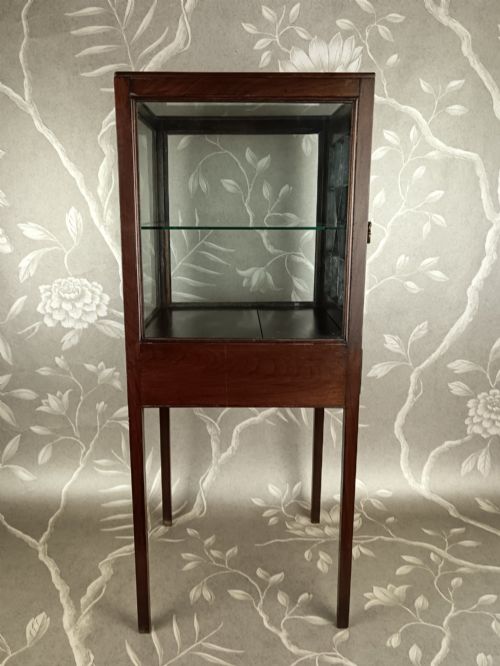
Tabletop display cases are smaller glazed boxes built to sit on top of existing cabinets, desks, or counters rather than standing on their own legs.
Bijouterie tables incorporate the display compartment directly into a four-legged table frame designed to stand independently on the floor.
What interior fabrics are original?
Original interiors typically feature silk velvet or closely woven display fabrics chosen to provide a soft contrasting background for small items.
Over the decades, many examples receive replacement linings to restore a clean surface for modern exhibiting.