

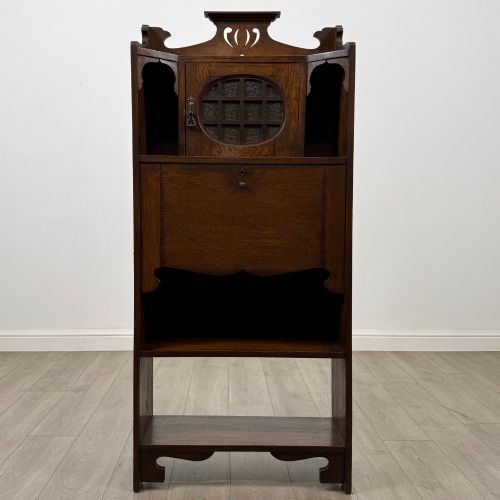
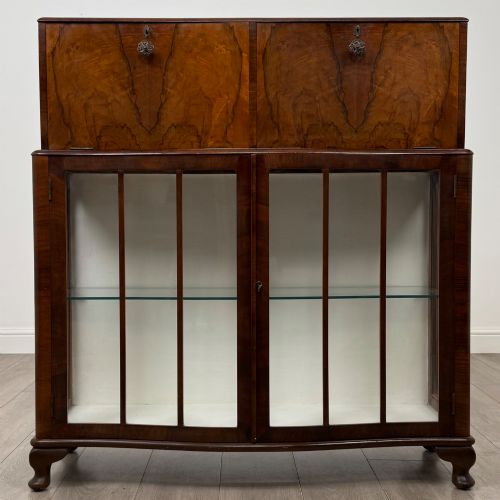
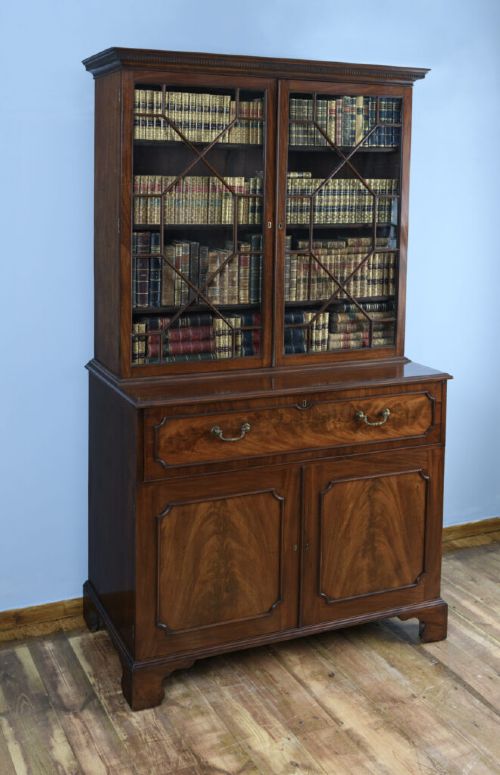


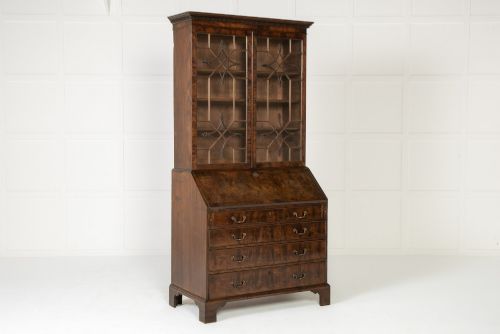

Glazed Bookcase with Drop Front
A glazed bookcase with drop front combines display space with a fall-front writing desk, offering practical storage for books and papers.
Glazed Bookcase with Drop Front
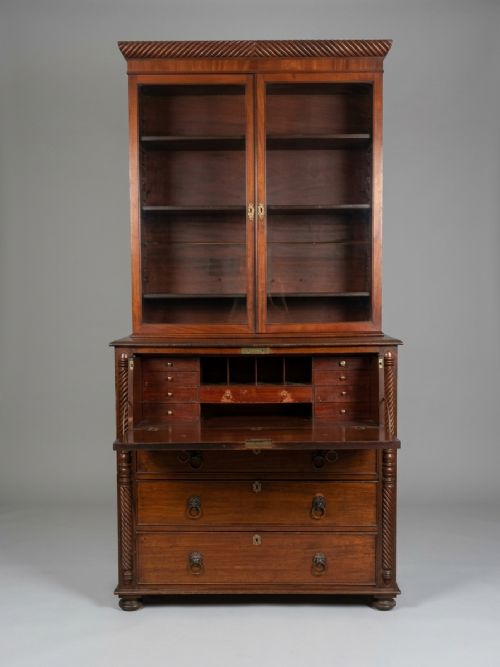
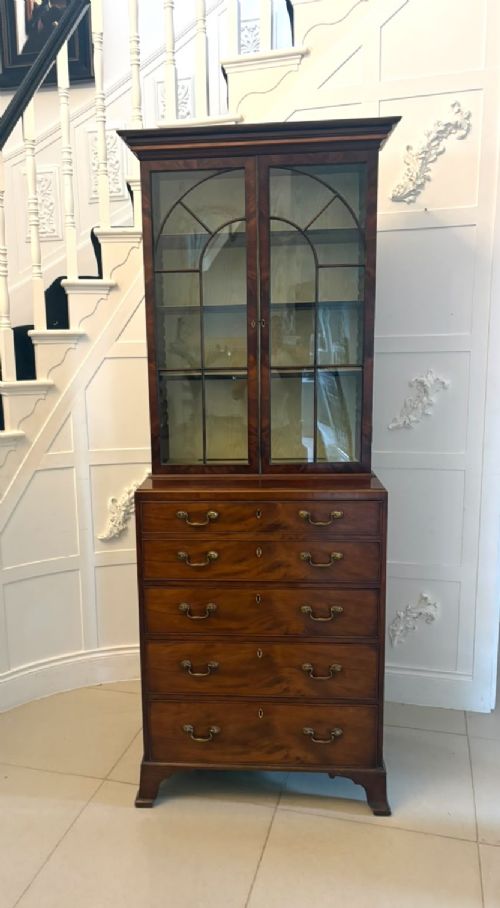
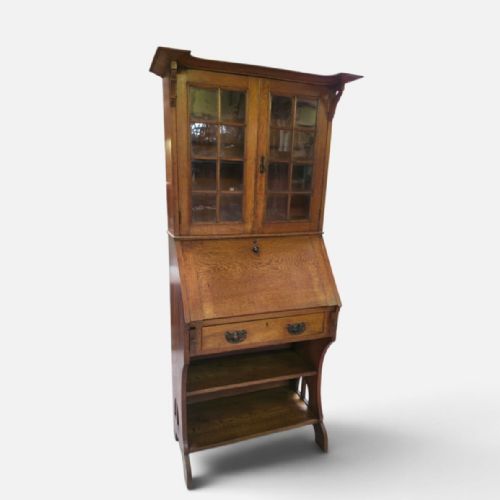
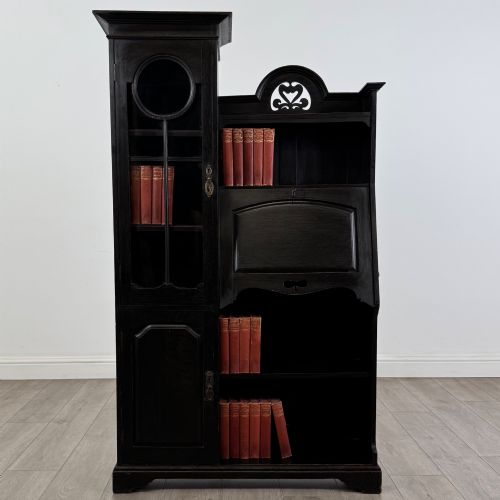
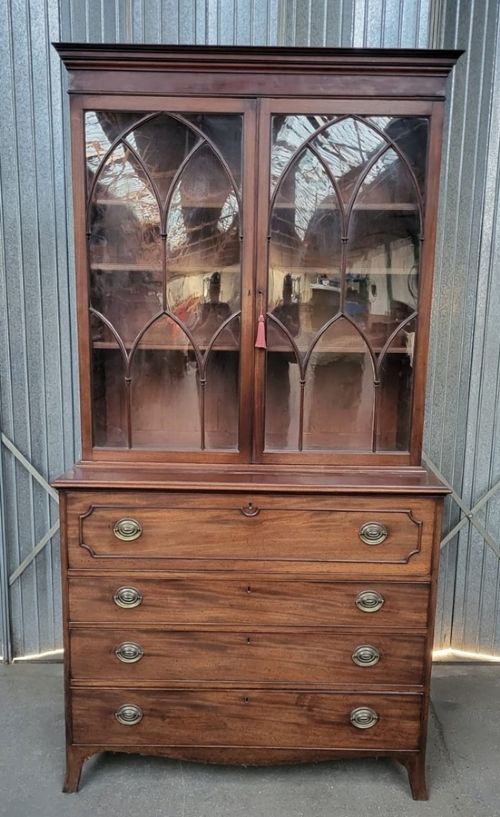
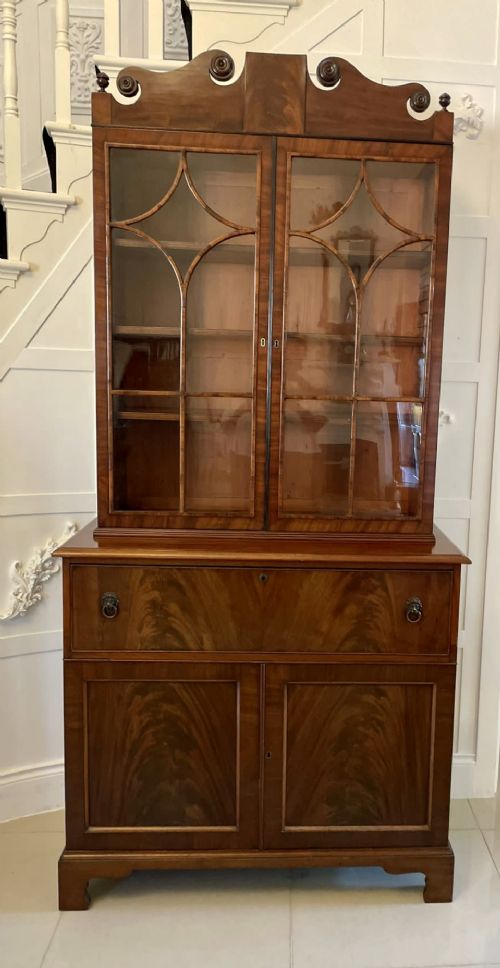
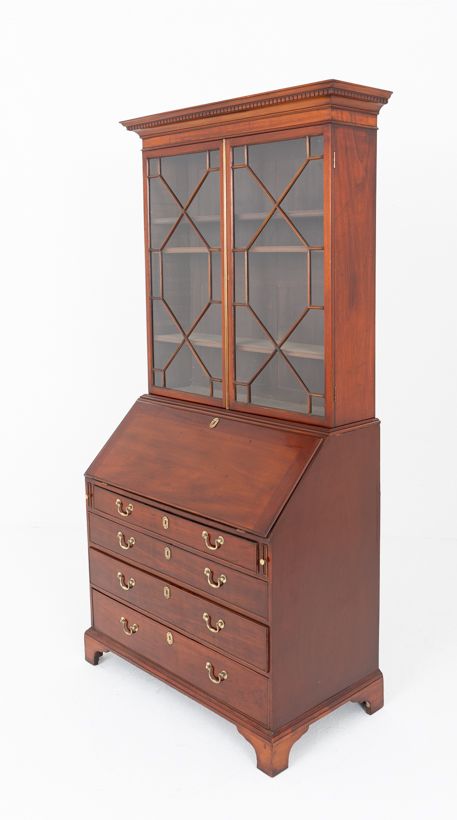
A glazed bookcase with drop front serves as a dual-purpose item of furniture, housing books behind glass upper doors while providing a fold-down writing surface at the centre. Most examples encountered here date from the Georgian period through to the Edwardian era, constructed primarily in mahogany or walnut.
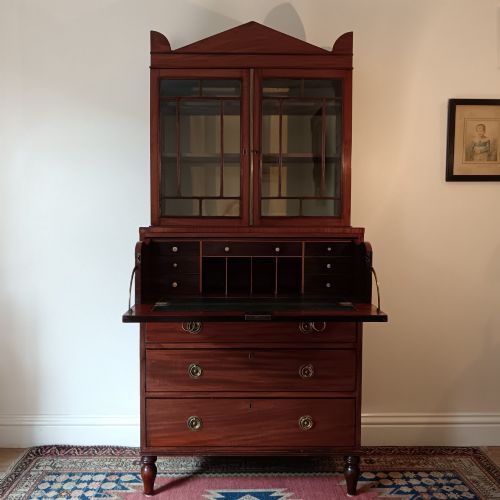
Makers designed these cabinets to function as both library storage and compact writing desks for domestic use. The drop-front section typically conceals small drawers and pigeonholes for correspondence, whilst lower cupboards or drawers provide additional enclosed storage beneath.
How they were made
Cabinet makers utilised solid timbers alongside veneers, particularly figuring mahogany and walnut across the main facades and writing flaps. Glazing bars divide the upper glass doors into geometric panes, while brass hardware secures the doors and drop-front mechanisms.
Interior fitments of the drop-front section involve intricate small-scale joinery, creating fitted compartments and secret drawers. Inlaid details such as satinwood bands appear on later revival pieces from the Edwardian and Sheraton periods.
Many drop fronts hide secret compartments behind dummy drawers, designed for stashing private correspondence or small valuables.
What varies in quality
Quality depends upon the choice of timber figurations and the precision of the cabinet work within the internal bureau section. Superior pieces display finely matched wood grain across the fall front and drawer facades, alongside well-executed glazing bars and original brasses.
The Glazed Bookcase with Drop Front Glossary
- Secretaire
- A desk or cabinet with a writing drawer or drop front. This term is frequently used interchangeably with bureau in the titles of these bookcases.
- Drop front
- A hinged flap that pulls down to form a horizontal writing surface. It conceals an internal arrangement of small drawers and pigeonholes.
- Glazing bar
- A wooden strip that holds individual panes of glass in position within a door frame. Finer bars are narrower and shaped with delicate mouldings.
- Pediment
- The decorative structure crowning the top of a bookcase. Examples include swan neck designs with curved scrolls meeting at a central finial.
- Satinwood inlay
- Contrasting light-coloured timber inserted into the primary wood surface for decorative effect. This technique appears often on Edwardian and Sheraton Revival pieces.
Glazed Bookcase with Drop Front: Frequently Asked Questions
How do I use the drop front?
The hinged flap pulls down towards you to create a writing desk surface, supported by internal brass arms or fall-front brackets.
When closed, it secures the internal letters and stationery compartments out of sight behind a locked panel.
What is inside the bureau section?
The interior houses an arrangement of small drawers, pigeonholes for sorting papers, and occasionally hidden compartments.
This fitted interior sits directly behind the drop front, making it accessible as soon as the writing flap is lowered.
How do I date these bookcases?
Dating relies upon timber choices, stylistic details, and construction methods. Georgian examples often feature straight lines and rich mahogany, whilst Edwardian pieces may show lighter timbers and satinwood inlay.
Cabinet hardware and the design of the glazing bars also provide clear indicators of the period of manufacture.
Where should I place this cabinet?
These pieces suit studies, libraries, or living rooms where both book storage and a writing surface are useful. Ensure adequate floor space in front of the cabinet so the drop front can open fully.
Keep the timber away from direct heat sources to prevent the veneers from drying out.