


20th Century Walnut Bookcase
A 20th century walnut bookcase brings rich timber grain and practical library storage to a room, ranging from open shelving to glazed display cabinets.
20th Century Walnut Bookcase
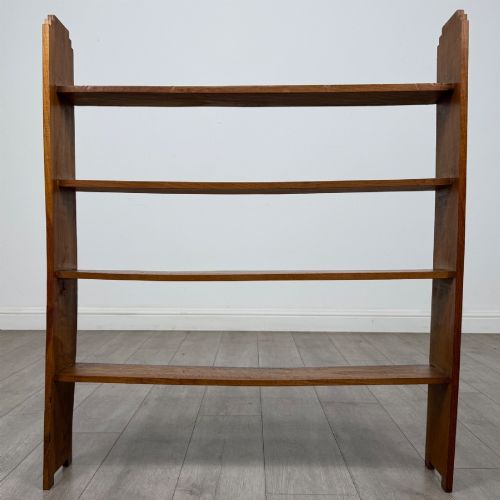
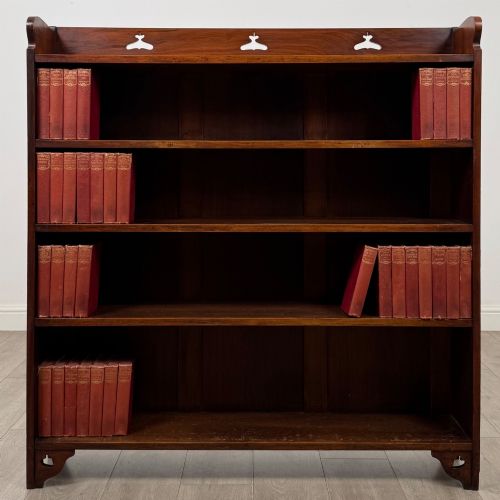
When you search for a 20th century walnut bookcase, you encounter a variety of forms including open bookshelves, bureau bookcases, and glazed display cabinets. These pieces originate primarily from the Edwardian period through to the 1920s, drawing on traditional cabinet-making forms.
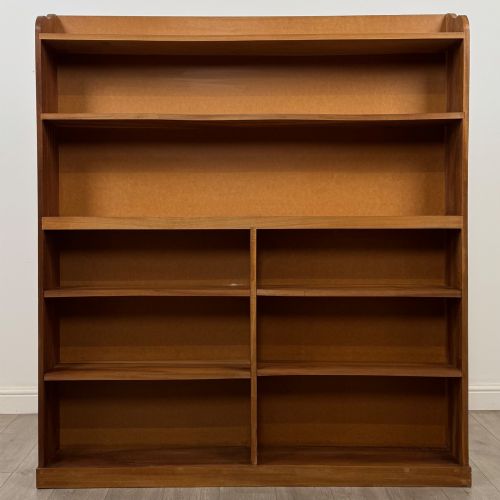
The selection frequently includes open bookcases in walnut alongside enclosed display cabinets and two-part corner units. Workshops across Britain, France, Austria, and America produced these pieces, adapting historical timber furniture for early twentieth-century domestic interiors.
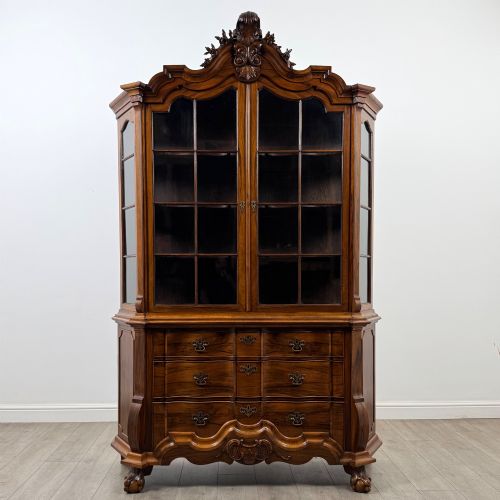
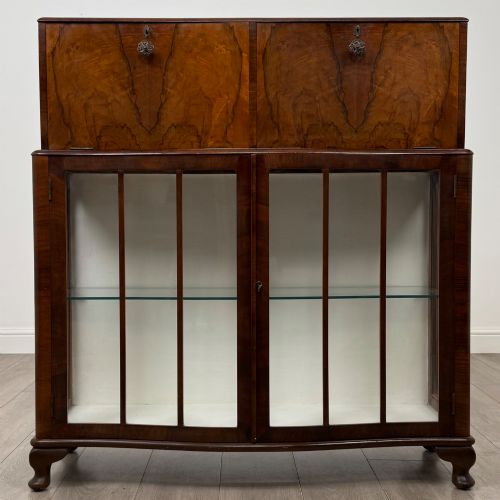
Revival styles dominate the selection, spanning Queen Anne, Georgian, and Dutch Rococo interpretations alongside Arts and Crafts and Art Deco designs. Bureau bookcases with fitted interiors appear regularly among both current listings and archive records.
Materials and Construction
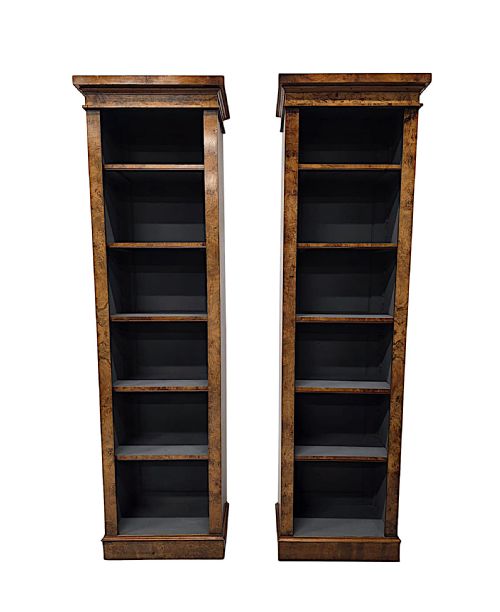
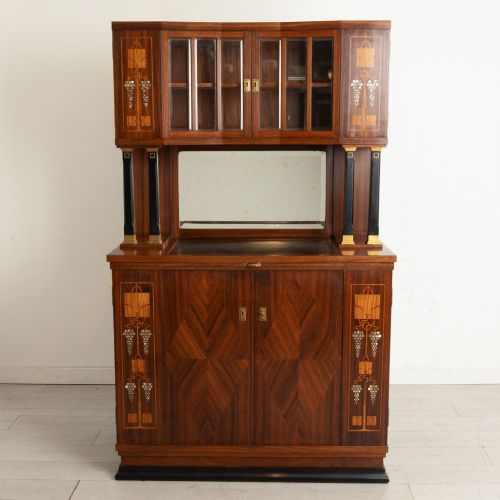
Makers utilised solid walnut, burr walnut, and figured walnut veneers over secondary timbers such as oak, creating surface patterns through careful timber selection. Glass panels feature in the doors of display cabinets and glazed bookcases, occasionally framed in walnut or ebonised wood.
Brass fittings such as handles, hinges, and escutcheons accent the timber structures, while interior components often incorporate adjustable wooden shelving and fitted bureau compartments.
Styles represented include Queen Anne Revival, Art Deco, Arts and Crafts, and Dutch Rococo.
Defining Quality
The standard of a 20th century walnut bookcase rests upon the selection and matching of timber veneers, particularly figured and burr walnut figures across the primary surfaces. Finer examples display harmonious grain patterns that wrap around doors and drawers.
Construction methods such as dovetail joinery in drawers, solid timber carcases, and the original integrity of brass hardware and glass panes separate standard production pieces from finer workshop outputs.
August Ungethüm
The 20th Century Walnut Bookcase Glossary
- Burr walnut
- Timber taken from the wart or growth on a walnut tree, yielding complex, swirling grain patterns. Cabinet-makers used burr walnut veneers on prominent surfaces like bureau falls and cabinet doors.
- Breakfront
- A cabinet design where the central section projects forward from the flanking wings. This architectural arrangement creates depth and shadow on larger bookcases.
- Bureau bookcase
- A piece combining a sloping desk flap that opens to reveal fitted pigeonholes with shelving or cabinet space above. These hybrid forms offered writing and storage facilities within a single footprint.
- Ebonised wood
- Timber treated with a dark stain or finish to imitate ebony. This technique provided sharp contrast on mouldings and decorative details.
20th Century Walnut Bookcase: Frequently Asked Questions
What styles are common?
Queen Anne and Georgian revival styles appear frequently, alongside Arts and Crafts and Art Deco interpretations. Dutch Rococo influences also shape certain display cabinets.
Makers frequently looked to earlier centuries for proportion and decorative vocabulary while adapting the furniture for modern homes.
Are the shelves adjustable?
Many bookcases feature adjustable wooden shelving supported by rack systems or traditional wooden fillets. This allows users to alter shelf heights to accommodate different book sizes.
Open bookshelves and enclosed cabinet interiors alike often utilise this flexible storage arrangement.
How do I identify burr walnut?
Burr walnut exhibits intricate, swirling grain patterns filled with small knot clusters and circular figures. It appears as a decorative veneer on drawer fronts and door panels rather than solid construction timber.
This distinct figuring marks out the more decorative examples in the range.
Where were these made?
Production spans British workshops as well as continental European centres such as France and Austria. American walnut pieces also feature in the broader selection.
Regional preferences influenced whether a piece took the form of a revolving bookcase, a corner cabinet, or a breakfront library unit.