


Art Deco Walnut Fitted Cabinet
An art deco walnut fitted cabinet brings striking grain patterns and practical storage into a room, combining 1930s style with serious craftsmanship.
Art Deco Walnut Fitted Cabinet
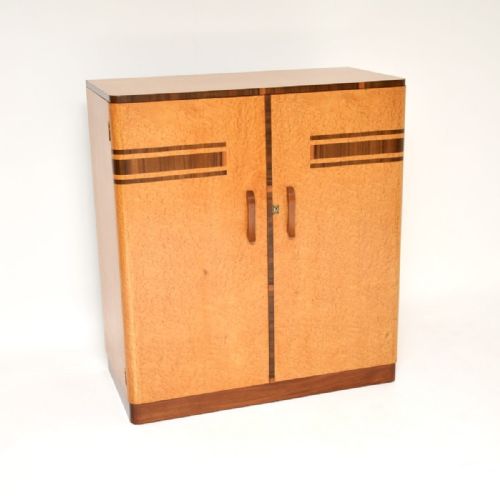
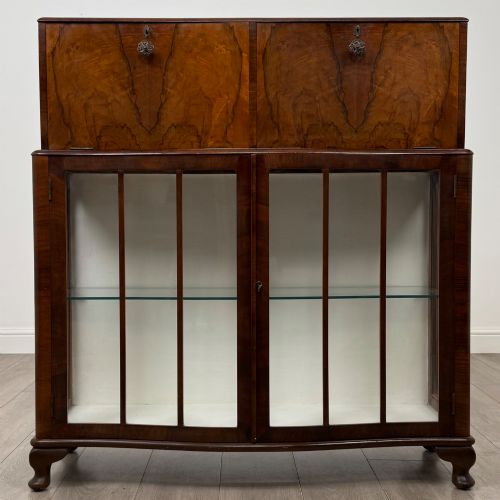
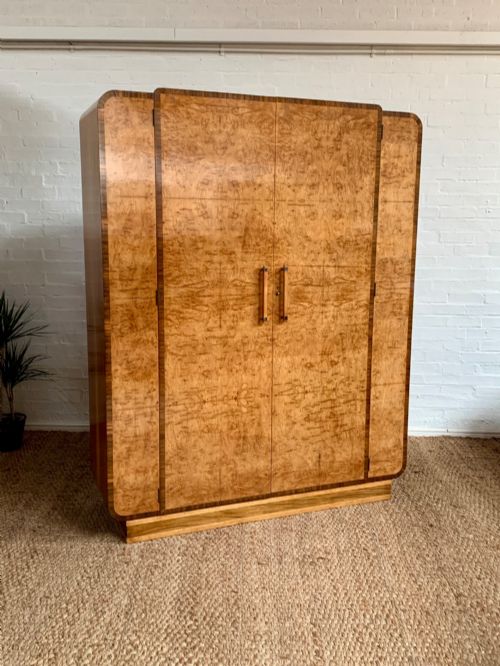
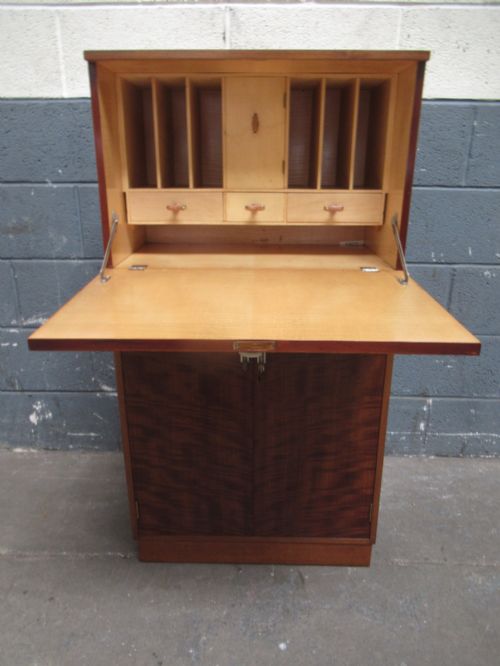
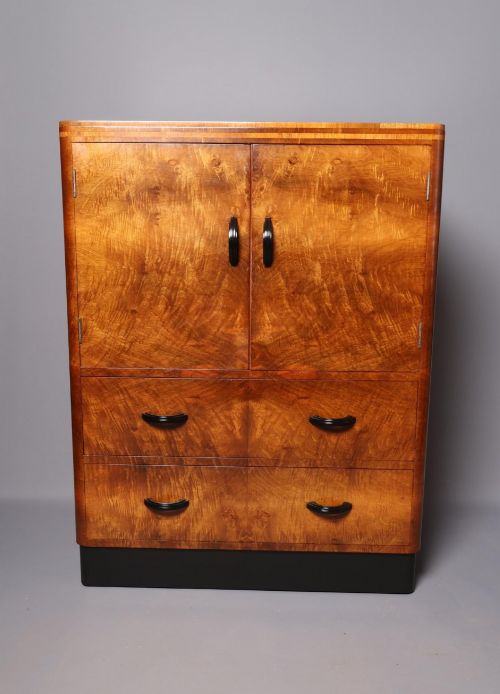
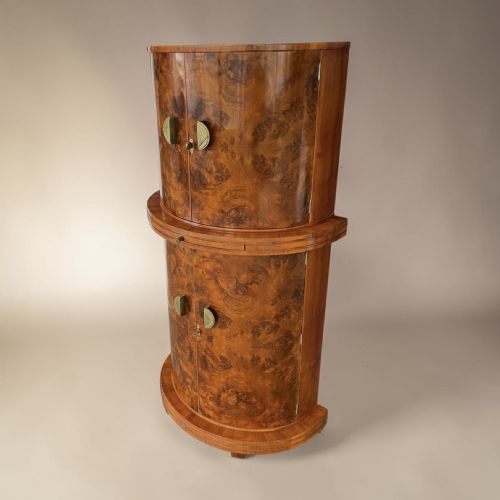
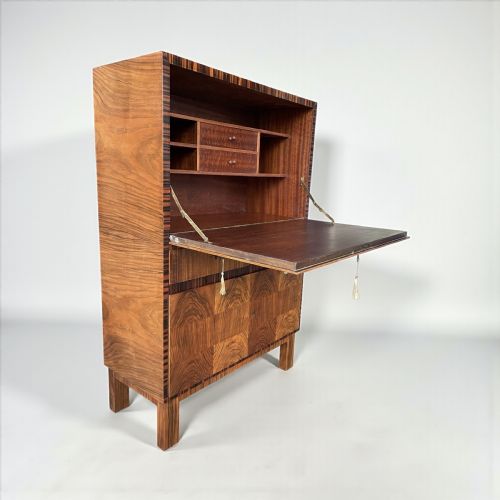
When you search for an art deco walnut fitted cabinet, you encounter a focused selection of pieces primarily dating from the 1930s, alongside items from the 1920s and Edwardian era. The most common forms on this page include cocktail and drinks cabinets, compactums, tallboys, and wardrobes designed with dedicated interior fittings.
The aesthetic leans heavily into the clean lines and geometric forms characteristic of the Art Deco period, though Queen Anne Revival and Art Deco Revival influences also appear. These pieces serve both as statement furniture and functional storage solutions for modern living spaces.
Materials and construction
The primary woods utilised across these pieces are walnut and burr walnut, frequently applied as a veneer to create striking, symmetrical grain patterns across large surfaces like doors and panelled fronts. Birds eye maple occasionally appears as a contrasting timber inside the cabinets.
Hardware and decorative details rely on materials such as brass, chrome, glass, mirror, and bakelite to provide the characteristic metallic sheen and tactile handles typical of the era. Construction methods combine solid secondary timbers with expert veneering techniques to achieve the smooth curves and angular profiles.
Walnut veneer dominates the material list, accompanied by supporting details in brass, chrome, bakelite, and mirrored glass.
Distinctions in quality
The standard of an art deco walnut fitted cabinet is determined largely by the choice and matching of the walnut veneer, where book-matched burr patterns display superior decorative ambition. Pieces produced by notable makers exhibit a higher level of internal cabinetry and hardware selection.
Structural integrity and the survival of original glass, mirrors, and internal fittings without replacement separate fine examples from standard production items. The precision of the joinery and the condition of the polished finish dictate where a piece sits within the range.
Harry and Lou Epstein·Waring and Gillow
The Art Deco Walnut Fitted Cabinet Glossary
- Burr walnut
- A prized timber cut from the abnormal growth of a walnut tree, yielding swirling, knotty grain patterns that decorators use for dramatic visual impact.
- Compactum
- A large wardrobe or cabinet combining multiple internal compartments, drawers, and hanging space designed for comprehensive clothes storage.
- Cocktail cabinet
- A specialised storage unit featuring a drop-down prep shelf, mirrored interior, and glass holders intended for mixing drinks.
- Tallboy
- A case piece of furniture standing taller than a chest of drawers, often incorporating cupboards or multiple small drawers.
- Book-matching
- A veneering technique where adjacent slices of timber are opened like a page to mirror each other's grain pattern.
Art Deco Walnut Fitted Cabinet: Frequently Asked Questions
What is inside an art deco cocktail cabinet?
These drinks cabinets typically include a mirrored back panel, glass shelving, slide-out preparation trays for mixing, and dedicated holders for bottles and glassware.
Many examples also incorporate internal lighting or small drawers for accessories, making them remarkably well-organised for entertaining.
How do I care for walnut veneer surfaces?
Walnut veneer requires protection from direct sunlight and excessive heat to prevent the wood from fading or the glue beneath from lifting over time.
Dusting with a soft, dry cloth and occasionally applying a suitable quality furniture wax maintains the natural lustre of the polish.
Where should I place a compactum wardrobe?
A compactum works well in a bedroom or dressing room where its combination of hanging space and internal drawers provides efficient storage.
Because these pieces feature decorative burr walnut grain, placing them on a wall with good ambient light allows the wood patterns to stand out.
How do I distinguish 1920s pieces from 1930s ones?
Pieces from the 1920s sometimes retain transitional Edwardian or revival elements like Queen Anne styling alongside early walnut veneers.
By contrast, 1930s items lean further into pure Art Deco geometry, streamlined profiles, and the widespread use of chrome and bakelite accents.