


Glass Vitrine Counter Case
A glass vitrine counter case puts merchandise on prime display, bringing historic retail craftsmanship directly into domestic or commercial interiors.
Glass Vitrine Counter Case
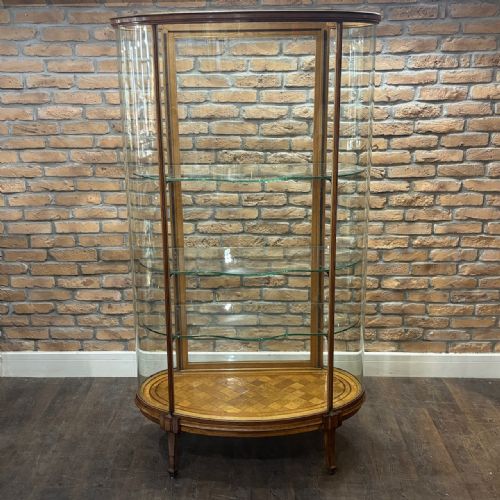
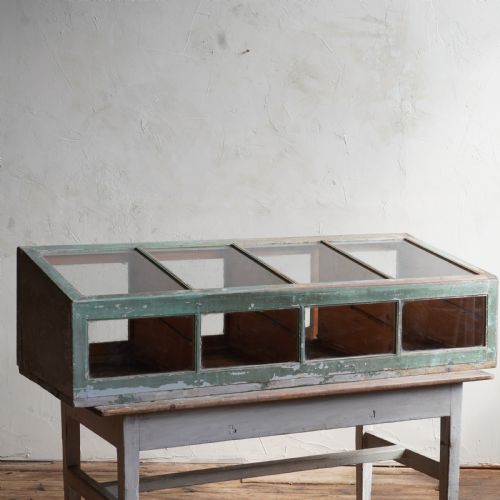
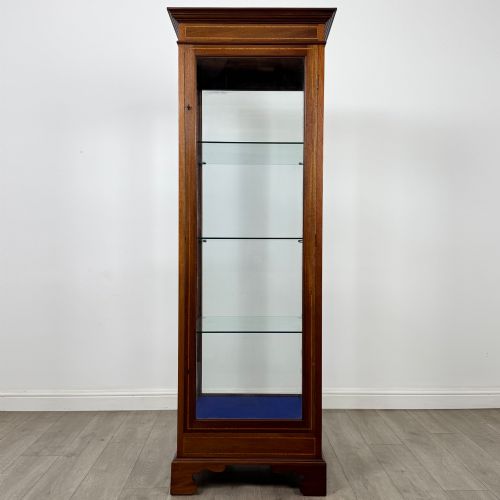
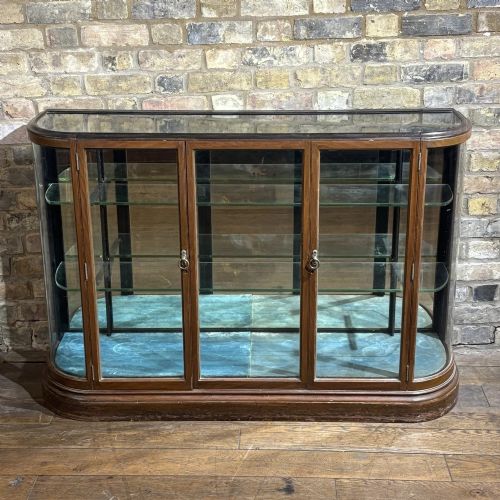
A glass vitrine counter case spans commercial display furniture produced from the late nineteenth century through to the art deco period. Buyers encounter tabletop models, substantial freestanding cabinets, and low counters designed specifically to present retail goods.
Makers and merchants utilised these glazed fixtures in chemist shops, confectioners, and high street emporiums. Today, collectors use them to display small antiques, natural curiosities, and personal collections within modern spaces.
How they were made
Carpenters constructed the primary framework using dense timber species such as mahogany and oak, frequently adding brass hardware and mirror glass backs to enhance interior light. Selected pieces incorporate ebonised wood or distressed painted finishes applied during their working lives.
Large sheets of plate glass were set into glazed wooden frames to protect merchandise while maintaining full visibility from all angles. Velvet linings were often fitted to the interior bases to cushion delicate items placed inside.
Materials appearing across the inventory include brass hardware, mirrored backs, velvet inserts, and ebonised wood surfaces.
What varies in quality
Construction methods distinguish standard commercial joinery from exceptional workshop production. Pieces produced by established shopfitters display refined timber selection, precise glazing mitres, and robust structural framing designed for heavy retail use.
The sophistication of the timber moulding and the integrity of the original glass panes separate utilitarian utility pieces from decorative salon vitrines. Retained maker signatures or specialist brass fittings elevate the historic standing of individual examples.
F. Sage & Co·John Stow Ltd of Bradford·E. Pollard & Co. Ltd·Quincy Showcase Works
The Glass Vitrine Counter Case Glossary
- Vitrine
- A glass display cabinet used primarily for showing precious objects or curated collections. These cases rely heavily on glazed panels to maximise interior illumination.
- Bow front
- A convex curved cabinet front that projects outward toward the viewer. This curved glazing technique requires specialised joinery to match the radius of the timber frame.
- Ebonised
- Timber treated with a chemical stain or finish to imitate true ebony wood. This dark surface treatment gained popularity during the late nineteenth century for display furniture.
- Apothecary
- A historical term relating to pharmacists and chemists who dispensed medicinal preparations. Cabinets from this context frequently feature small drawers or specialised compartments alongside display space.
Glass Vitrine Counter Case: Frequently Asked Questions
How do I clean the glass safely?
Use a soft microfiber cloth and a mild ammonia-free glass cleaner sprayed onto the cloth rather than directly onto the cabinet.
Avoid letting moisture seep into vintage timber frames or antique brass hinges during the cleaning process.
Can these counters support heavy items?
Most countertop and floor-standing cases were built for light retail merchandise like chocolates or small artefacts.
Heavier objects should be distributed carefully across the wooden base rather than relying solely on historic glass shelves.
How do I distinguish Edwardian from Victorian examples?
Victorian cases generally display heavier timber mouldings and darker mahogany tones consistent with nineteenth-century interior aesthetics.
Edwardian and later nineteen-twenties pieces often introduce lighter oak framing or streamlined art deco geometric lines.
Are the interior velvet linings original?
Many display cases retain their worn fabric inserts, while others have received sensitive modern textile replacements during restoration work.
Inspect the edges where the fabric meets the wood frame to assess whether the lining matches the age of the cabinet.