



Glass Stopper Apothecary Bottles
Glass stopper apothecary bottles are practical pharmacy containers that bring rich colour and historic utility into a modern interior.
Glass Stopper Apothecary Bottles
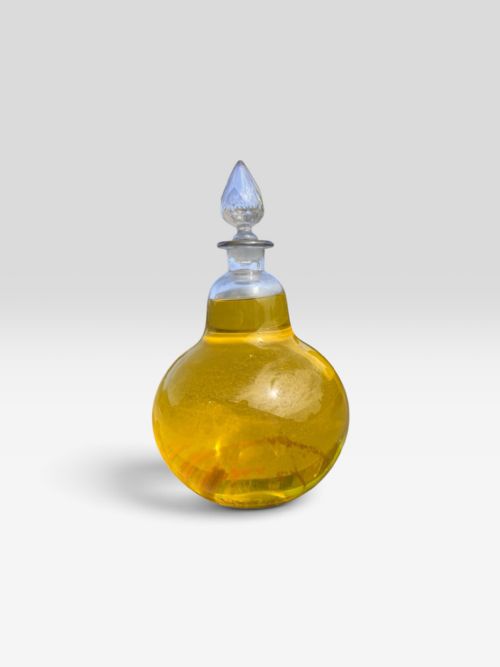
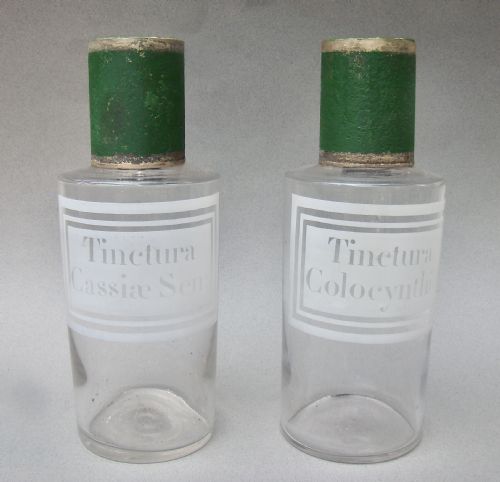
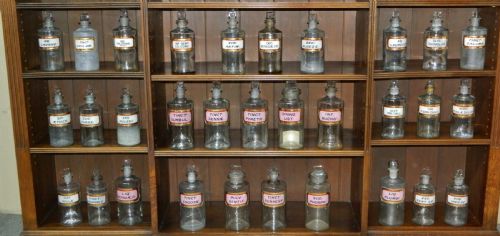
Glass stopper apothecary bottles are functional vessels designed to hold chemical preparations, tinctures and drugs in a medical or commercial setting. When you search for glass stopper apothecary bottles, you encounter items originating from the Georgian, Victorian and Edwardian eras, spanning the nineteenth and early twentieth centuries. These pieces appear as single items, matched pairs, or larger sets intended for pharmacy shelves or fitted campaign boxes.
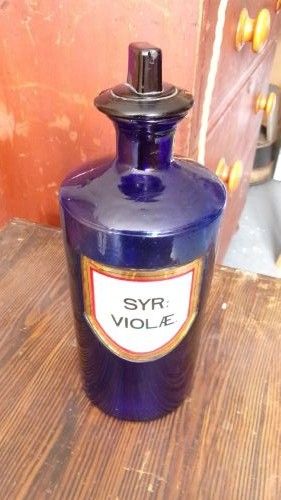
The forms vary from large carboys and chemist jars down to miniature tincture bottles equipped with ground glass stoppers. The examples on this page encompass English and French origins, featuring clear glass alongside deep cobalt and Bristol blue hues. Many retain their original paper labels, gold leaf lettering, or painted details denoting the contents they once stored.
Materials and construction
The manufacture of these vessels relies primarily on hand blown glass, often manipulated into robust forms to withstand daily pharmacy use. Makers utilised clear, green, and coloured glass such as Bristol blue and cobalt, sometimes finishing the surface with delicate etching or painted decoration.
Label details incorporate paper, gold leaf, and paint directly applied to the glass body or set within recessed cartouches. Fitted enclosures like the miniature campaign boxes involve secondary materials including mahogany and metal hardware.
At least one nineteenth-century chemist clearly felt twenty-nine matching jars were simply the bare minimum required for a productive Tuesday.
Assessing quality and character
The distinction between ordinary utility containers and superior examples rests on the depth of the glass colour and the crispness of any hand-blown irregularities. Intact stoppers that match the exact mouth of the bottle elevate a piece, as do complete sets and original paper or gold leaf labels that survive in legible condition.
Context adds further distinction, particularly when bottles retain their fitted mahogany campaign boxes or bear French etching from the nineteenth century. The presence of large carboys or unusual blue and green hues separates standard pharmacy stock from more decorative display pieces.
The Glass Stopper Apothecary Bottles Glossary
- Carboy
- A large glass bottle with a narrow neck, traditionally used for holding corrosive liquids or large volumes of distilled water in a dispensary. These substantial vessels often served as window displays in nineteenth-century chemists.
- Tincture
- A medicine made by dissolving a drug in alcohol, requiring secure storage in a dedicated bottle. Tincture bottles are typically smaller vessels designed for frequent handling by the apothecary.
- Campaign box
- A portable fitted case containing medicine bottles and scales for travel. These compact wooden chests were utilised by officers and physicians on the move.
- Bristol blue
- A deep cobalt-coloured glass produced in Bristol during the eighteenth and nineteenth centuries. This striking pigment protected light-sensitive contents while offering a decorative appearance.
- Lollipop stopper
- A glass closure featuring a flat, circular disc top resembling a lollipop above a ground-glass stem. This design provided a secure seal for chemical jars.
Glass Stopper Apothecary Bottles: Frequently Asked Questions
What were apothecary bottles used for?
These bottles served to store dry drugs, liquid tinctures, and chemical compounds safely within dispensaries and chemists' shops.
The ground glass stoppers kept volatile ingredients sealed and protected from moisture and air contamination.
How do I date an apothecary bottle?
Dating relies on observing the manufacturing techniques, such as hand-blown pontil marks on nineteenth-century glass versus later machine moulding.
Stylistic cues like Victorian Bristol blue colouration, Georgian proportions, or Edwardian labels also help narrow the period.
Are the glass stoppers original?
Many bottles retain their matching ground glass stoppers, which were individually hand-ground to fit each specific neck.
Collectors look for matching numbers or shared wear patterns that indicate the stopper has remained with the bottle since its manufacture.
How should I display them at home?
These vessels look particularly striking placed on windowsills where natural light can pass through the cobalt, green, or clear glass.
Groups of matched chemist jars or a single large carboy create an arresting focal point on open shelving or within a cabinet.