




Glass Silver Liquor Flask
A glass silver liquor flask is a portable vessel combining glass and precious metal designed to carry spirits on the move.
Glass Silver Liquor Flask
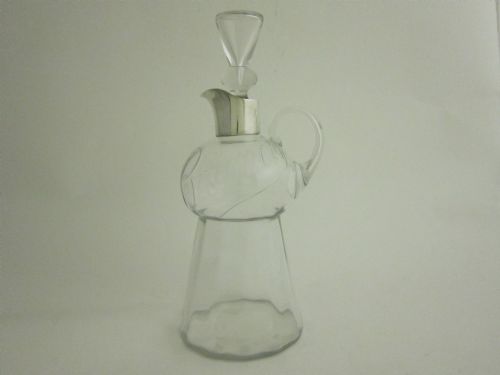
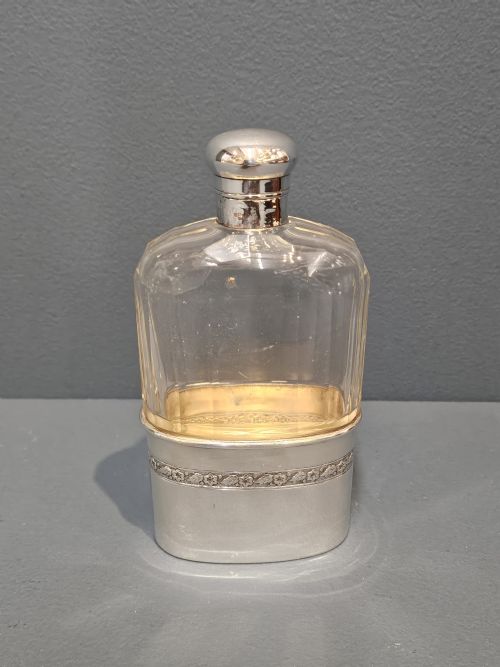
A glass silver liquor flask is typically encountered in forms such as pocket hip flasks, pocket-sized miniature bottles, and spirit decanters intended for portable refreshment or table service. These pieces span the Victorian, Edwardian, and later periods up to the 1930s, combining transparent bodies with protective metal caps and cups.
The varieties seen on this page range from plain clear glass and cut crystal to coloured Mary Gregory glass and examples partially clad in crocodile style leather. Buyers encounter items fitted with removable base cups, spirit labels, and heavy sterling silver mounts hallmarked across English cities.
How they were made
Makers formed the body of each glass silver liquor flask using blown or cut glass, often shaping crystal and coloured glass into cylindrical or flattened profiles suited for pockets and trays. Glasscutting techniques created faceted surfaces that caught the light, whilst leather covering was sometimes wrapped around the upper body.
Silversmiths then mounted the vessels with sterling silver or silver plate, constructing screw caps, hinged tops, and detachable drinking cups. Hallmarks stamped into the metal indicate the assay office, year, and maker, anchoring the production dates firmly in the late nineteenth and early twentieth centuries.
Some Edwardian flasks arrived wrapped in crocodile style leather, ensuring the gentlemanly grip remained firm during bumpy carriage rides.
What varies in quality
The distinction between standard examples and finer items rests upon the weight of the metal and the depth of the glass cutting. Heavier gauge sterling silver mounts and fully integrated removable cups indicate superior original manufacture compared to lighter silver plate.
Subtleties in the glass body also set pieces apart, such as the clarity of cut crystal, the inclusion of scarce coloured glass, or the execution of detailed leather work. Well-preserved hallmarks and crisp engraving on the silver mounts elevate the standing of a flask.
Elkington·James Dixon
The Glass Silver Liquor Flask Glossary
- Hallmark
- An official stamp applied to precious metals indicating the standard of purity, the assay office, and the date of manufacture. These small punches are essential for dating British silver accurately.
- Sterling silver
- An alloy of silver containing 92.5 percent pure silver and 7.5 percent other metals, usually copper. This standard was universally adopted by British silversmiths.
- Cut crystal
- Glass that has been decoratively carved and polished with geometric facets using a wheel. It provides high refractive brilliance and substantial weight.
- Silver plate
- A base metal substrate coated with a thin layer of silver through electroplating or mechanical bonding. It offered an accessible alternative to solid silver during the Victorian era.
- Removable cup
- A metal drinking vessel fitted to the base of a hip flask that slides off for use. It protects the lower glass and provides an immediate cup for spirits.
Glass Silver Liquor Flask: Frequently Asked Questions
What is a glass silver liquor flask?
A glass silver liquor flask is a portable container made from glass and fitted with silver mounts, designed to carry spirits safely in a pocket or bag. They frequently include screw caps and detachable cups.
These pieces date predominantly from the Victorian and Edwardian eras through to the 1930s. They survive as practical items that combined durable materials with elegant design.
How do I date a silver mounted flask?
Dating relies primarily on the hallmarks stamped into the silver mounts by official assay offices. These marks indicate the specific year of testing and the silversmith responsible.
Stylistic indicators such as cut glass patterns and leather coverings also help assign pieces to periods like the Victorian era or the 1930s.
Are these flasks safe to use?
Most antique flasks are structurally sound for carrying spirits, provided the glass and silver mounts remain intact. The internal corks or washers in the caps may require modern replacement to ensure a tight seal.
Careful hand washing preserves the historic glass and silver surfaces without damaging the original materials.
What is the difference between crystal and glass?
Crystal contains mineral additives like lead oxide that increase the weight, clarity, and refractive index of the material. This allows for deeper, sharper decorative cutting.
Standard glass lacks these additives, resulting in a lighter feel and simpler optical qualities.