
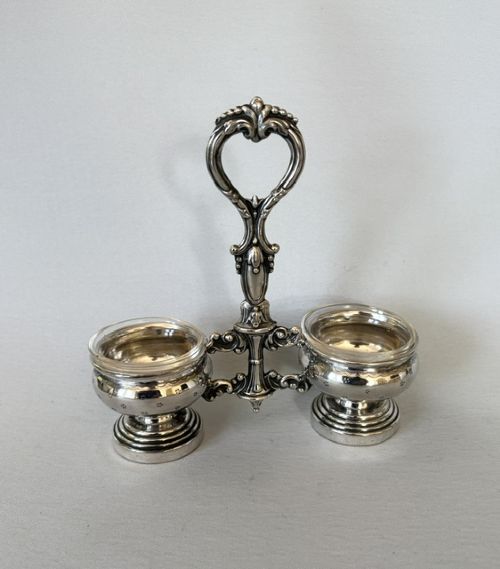
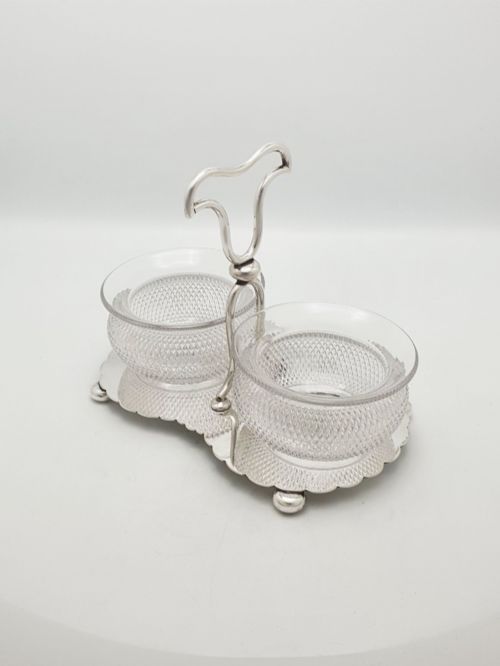
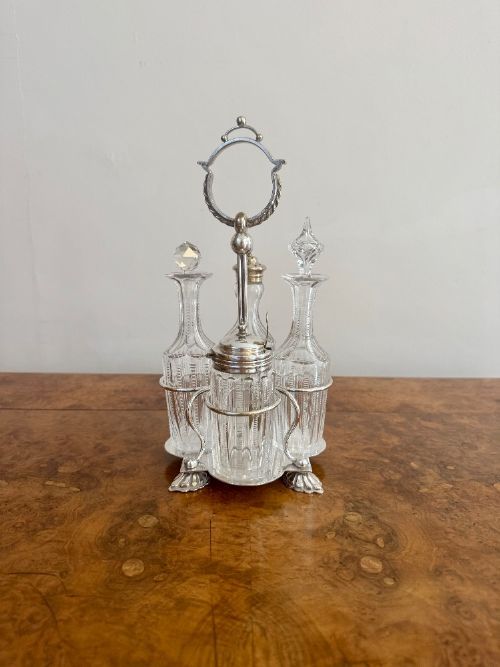
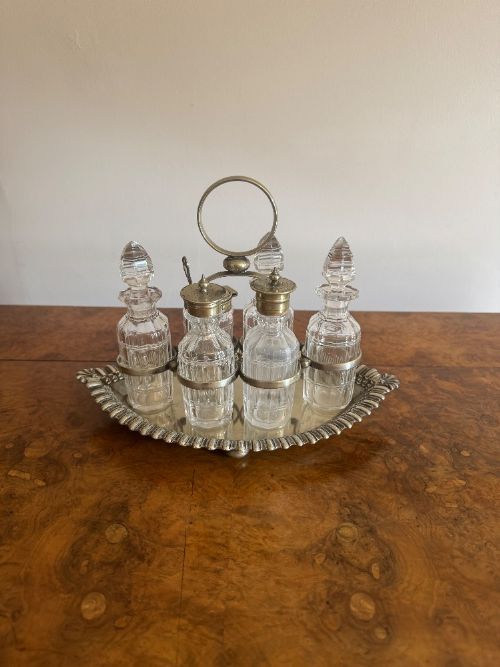
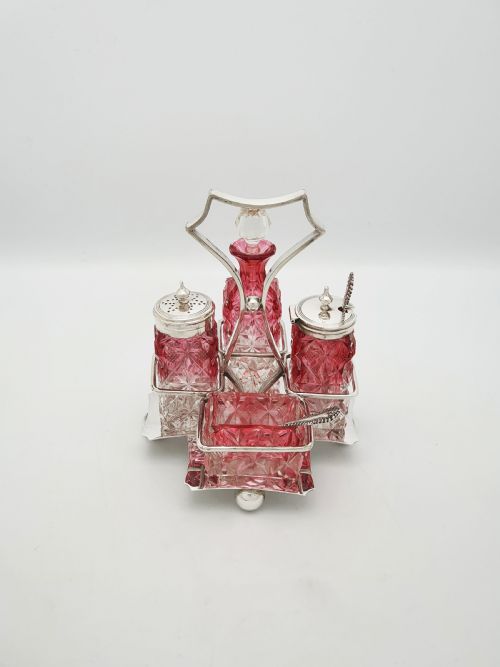
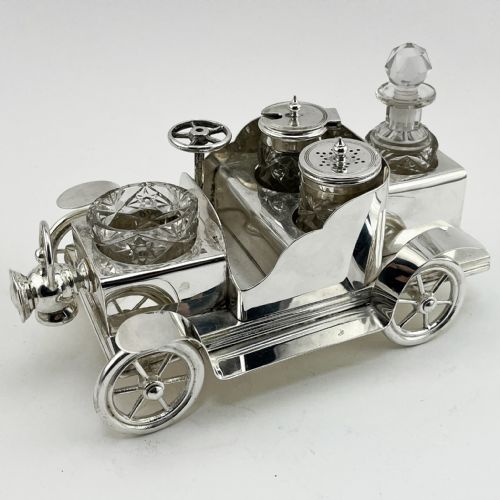


Glass Silver Cruet Stand
These pieces are a glass silver cruet stand, combining fitted frames with glass bottles to hold table seasonings.
Glass Silver Cruet Stand
When you examine a glass silver cruet stand, you are looking at a table accessory designed to hold bottles of oil, vinegar, mustard and other seasonings. The form dates across multiple eras, with Edwardian silver plate examples appearing frequently alongside Victorian and Georgian pieces.
The objects take various configurations, from small bachelor sets holding two or three bottles up to large frames containing six or seven cut glass containers. Some examples incorporate novelty designs such as carriage or car cruets, while others follow formal French Rococo or Grand Regency styles.
Originating primarily from English and French workshops, these items served dining rooms by keeping condiments organised and portable. The materials combine transparent or flashed glass with silver, sterling silver, silver plate, or Old Sheffield Plate frames.
How they were made
The frames are constructed from sterling silver, silver plate, or Old Sheffield Plate, often shaped through casting, stamping, and soldering. Silversmiths formed handles, rims, and bottle rings to secure the glass vessels firmly within the stand.
The glass components utilise cut glass techniques, producing facets and patterns that catch the light. Certain pieces employ cranberry glass or cobalt blue glass to add colour contrast against the metallic frame.
The inventory spans the eighteenth, nineteenth, and twentieth centuries, including Georgian, Victorian, and Edwardian eras.
What varies in quality
Quality separates through the weight of the metal frame and the precision of the glass cutting. Heavier silver mounts and deeply cut glass bottles indicate superior craftsmanship compared to lighter, pressed alternatives.
The presence of matching, original bottles marked by the same period adds considerably to the integrity of the object. Detail in cast mounts, such as floral motifs or handle execution, distinguishes standard production items from master silversmith output.
Mappin Brothers·Walker & Hall·Charles Thomas Fox·Elkington & Co·Wade Wingfield Wilkins·William Hutton & Sons·Heath And Middleton
The Glass Silver Cruet Stand Glossary
- Cruet stand
- A frame or stand fitted to hold glass bottles or castors containing table condiments like vinegar, oil and pepper.
- Silver plate
- A base metal, often copper or Britannia metal, coated with a thin layer of silver through electroplating or fusion.
- Old Sheffield plate
- An early method of fusing a thin sheet of sterling silver to a thicker copper core before shaping.
- Cranberry glass
- A type of transparent red glass produced by adding gold chloride to the molten batch during manufacture.
- Bachelor set
- A smaller scale cruet stand containing fewer bottles, intended for single households or intimate dining.
- Cut glass
- Glassware decorated by grinding patterns into the surface using rotating wheels.
Glass Silver Cruet Stand: Frequently Asked Questions
What holds the bottles in place?
The frames feature custom rings and shaped metal galleries designed to cradle each individual glass bottle securely.
These holders keep the containers upright during carriage to the dining table.
How were these sets used?
Dinners relied on them to present essential condiments like vinegar, oil, mustard and pepper directly to guests.
Servants placed the stand centrally on the table or sideboard for easy access during meals.
Are all bottles original to the stand?
Many pieces retain their matched glass bottles, though replacements accumulated over centuries of active use.
Matching cut patterns and exact fit within the frame help identify original glass.
How do I date a cruet stand?
Hallmarks on silver mounts provide precise assay office marks and date letters for sterling items.
Plate marks, frame styles, and glass cutting techniques help establish the period for unmarked silver plate.