

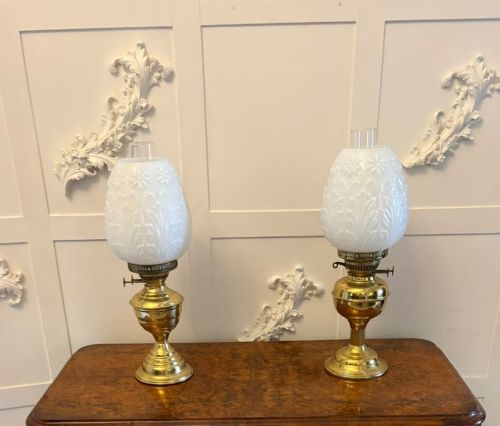
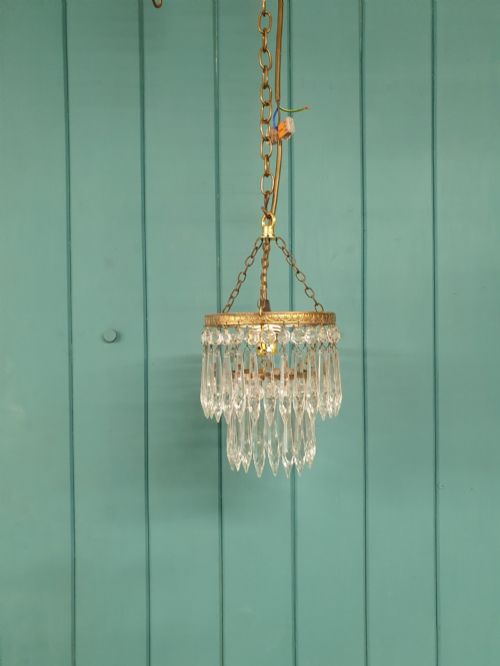
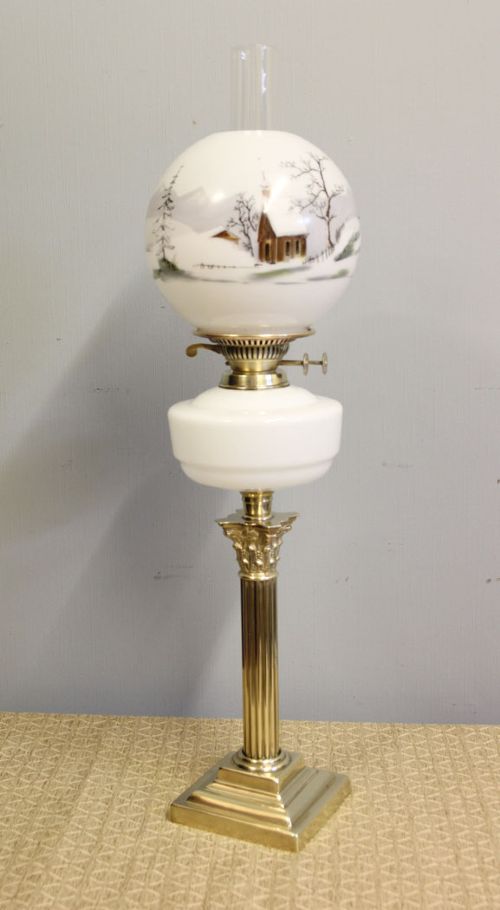
Glass Shade Brass Lamps
Glass shade brass lamps bring together heavy metalwork and luminous coloured glass to light a room with genuine period character.
Glass Shade Brass Lamps
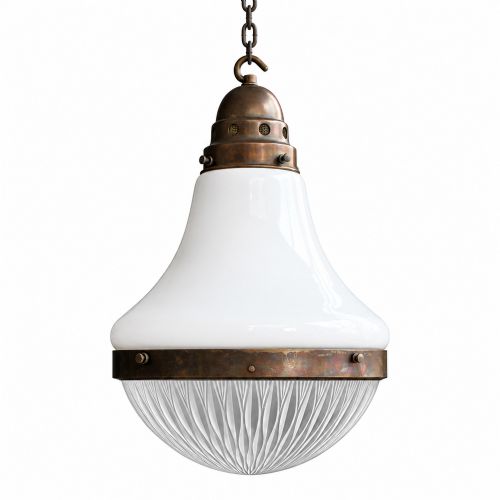
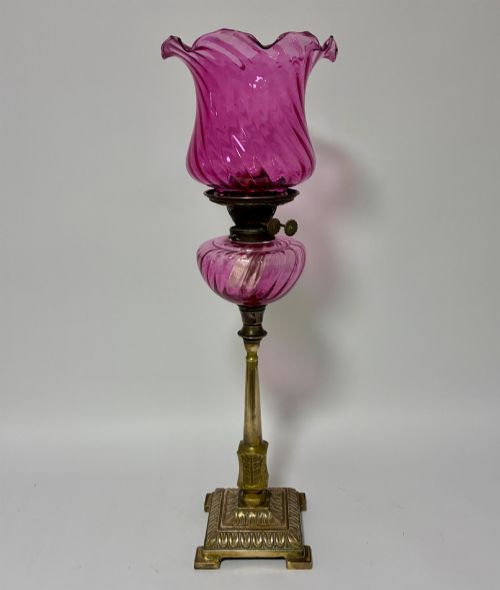
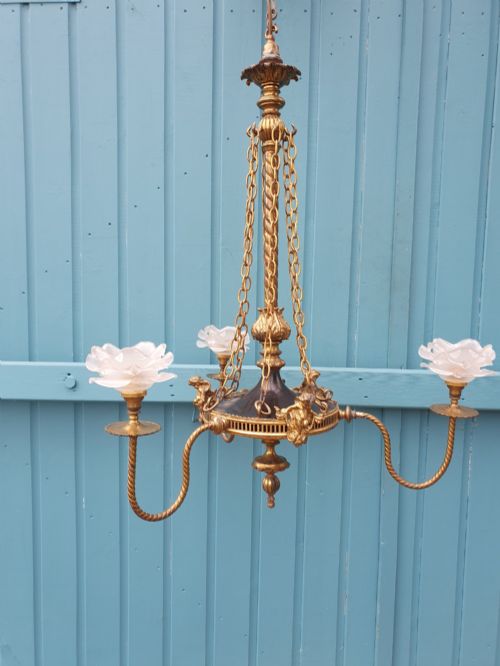
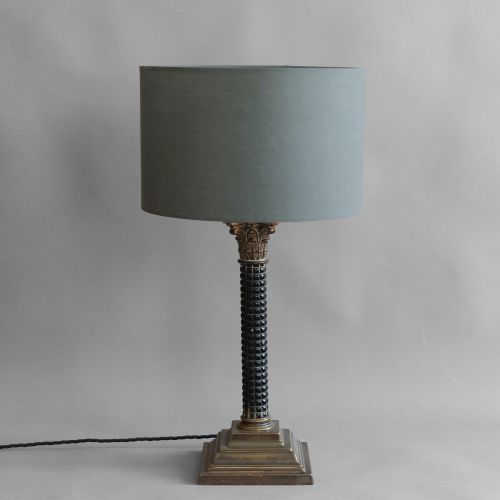
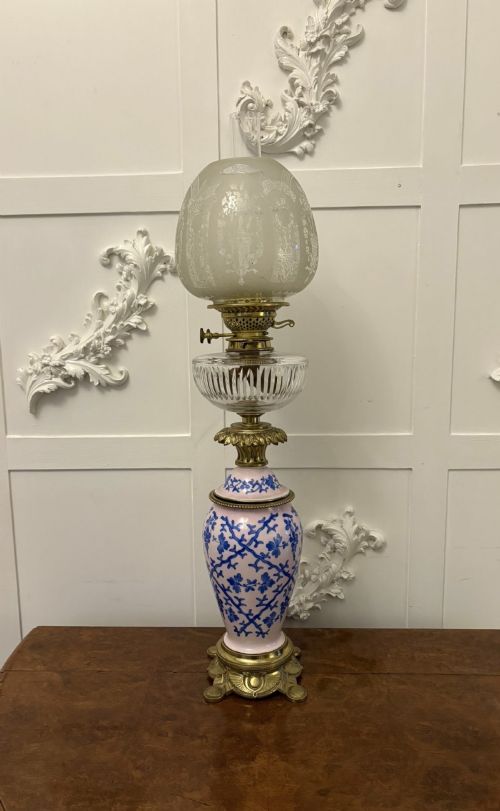
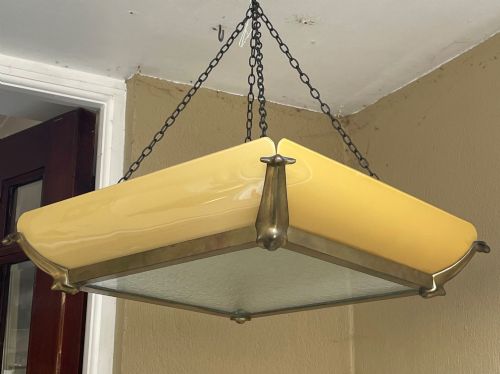
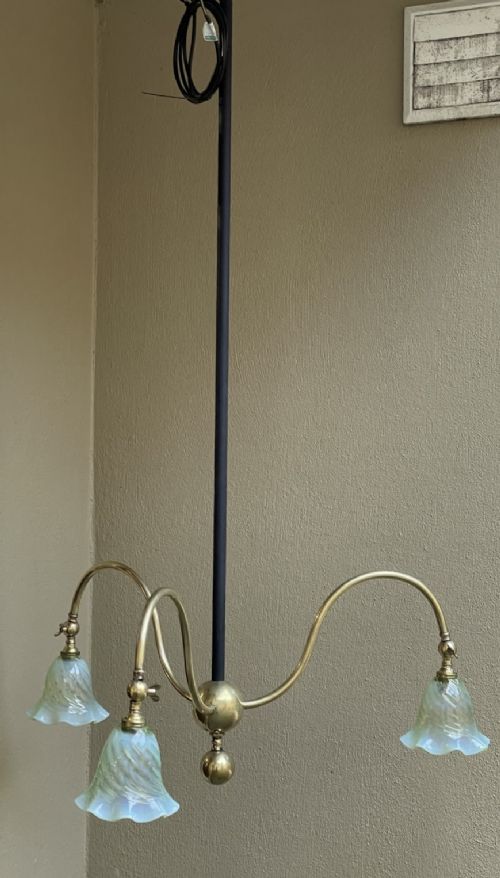
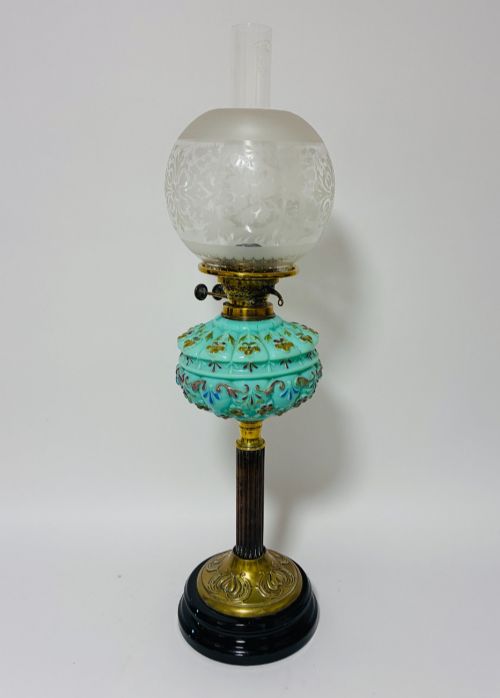
These pieces combine brass frames with glass shades to form functional lighting fixtures suited for domestic settings. When exploring glass shade brass lamps, buyers encounter diverse forms ranging from oil lamps and table lamps to chandeliers, pendant lights, and ceiling lights.
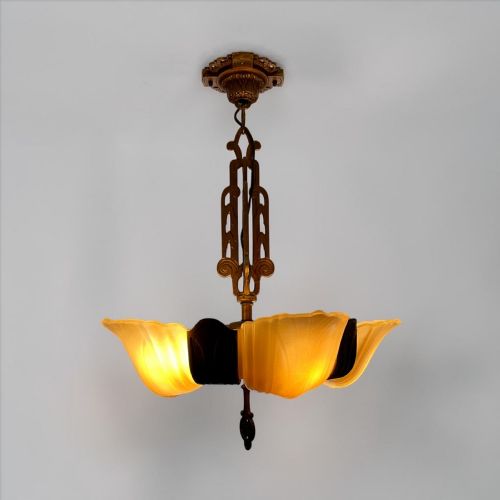
The selection spans several distinct eras, drawing heavily from Victorian, Edwardian, and Art Deco periods, alongside Industrial and Arts and Crafts examples. Oil lamps from the nineteenth century often feature prominently alongside early twentieth-century pendant lights and ceiling fixtures.
Origins include English, French, and American workshops, reflecting varied regional aesthetic priorities in metal casting and glass production. Many items retain their original configurations, whether configured as reading lamps, desk lamps, or multi-burner table lamps.
How they were made
Makers utilised cast, spun, or sheet brass to construct the structural bodies, columns, and mounting brackets of these lamps. Metal components frequently demonstrate detailed hand-finishing, turning, and structural joining.
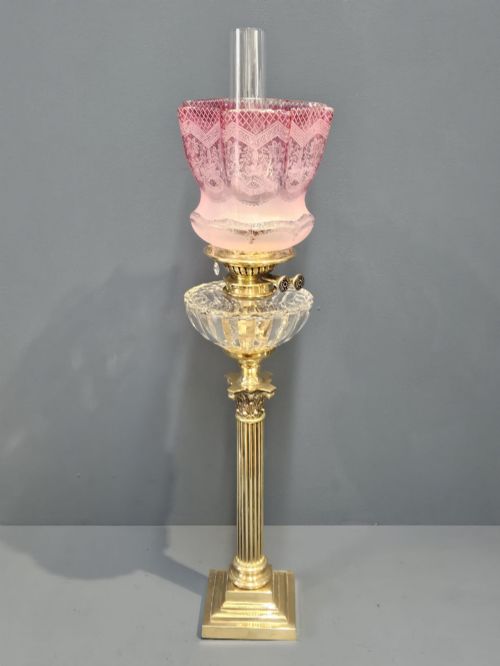
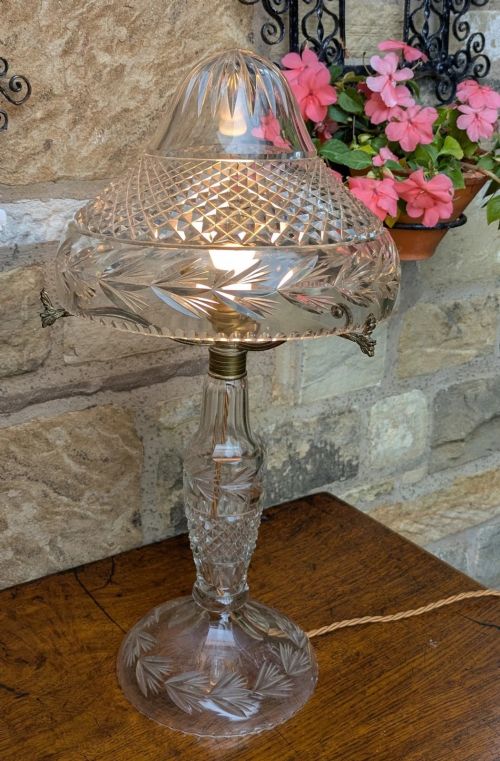
Glass elements were produced through specialist techniques including hand-blowing, cutting, moulding, and slip casting. Artisans created varied finishes such as cranberry glass, opaline glass, frosted glass, vaseline glass, and cut crystal to manipulate light output.
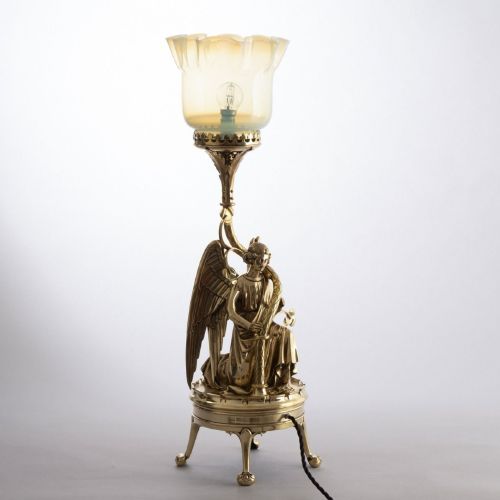
Combinations of ceramic, copper, and leaded glass occasionally supplemented the primary brass and glass materials, particularly in figural or architectural designs.
Materials recorded include cranberry glass, opaline glass, cut crystal, and solid brass.
What varies in quality
The distinction between standard items and exceptional examples lies in the weight of the brass casting and the precision of the metalwork detail. Heavier columns, crisper leaf or Corinthian detailing, and robust mounting hardware indicate superior workshop production.
Quality also rests significantly on the glass shade itself, with hand-blown, deeply cut, or finely coloured glass commanding greater attention than plain moulded alternatives. Original matching components, such as burners paired with their correct period shades, elevate the integrity of the piece.
Gustave Serrurier Bovy·Taylor Tunnicliff·Hinks
The Glass Shade Brass Lamps Glossary
- Cranberry glass
- A rich red-pink glass coloured with gold chloride during manufacture. This type is frequently seen on Victorian oil lamp shades.
- Opaline glass
- An opaque or translucent pale glass with a milky appearance. It diffuses light softly across Edwardian and Victorian interiors.
- Plafonnier
- A ceiling-mounted bowl light or pendant fixture positioned close to the ceiling. These often feature cut glass or frosted panels set in brass mounts.
- Vaseline glass
- A yellowish-green glass containing uranium dioxide that glows under ultraviolet light. It appears distinctively in late nineteenth-century and early twentieth-century lighting.
- Duplex burner
- A double-wick mechanism used on nineteenth-century oil lamps to increase illumination. It required larger brass fonts and dedicated gallery mounts.
Glass Shade Brass Lamps: Frequently Asked Questions
Were these lamps originally electric?
Many examples began as paraffin or oil-burning fixtures before being converted to electricity at a later date. Oil lamps frequently retain their original brass burners, fonts, and galleries beneath subsequent wiring.
Ceiling lights and pendants were typically designed for gas or early electric bulbs from the outset. Conversion work allows these antique forms to function safely in modern homes while retaining their original appearance.
How do I clean brass and glass?
Brass components benefit from gentle dusting and occasional cleaning with appropriate non-abrasive metal cleaners to preserve the natural patina. Avoid harsh chemical polishes that strip away age-related character.
Glass shades can be removed and washed carefully in warm soapy water to restore their transparency. Ensure all parts are completely dry before reassembling or reconnecting any electrical fittings.
Can I use modern lightbulbs?
Modern low-heat LED bulbs are generally suitable for use within vintage glass shades, provided they match the physical dimensions of the original fitting. Lower wattage options protect delicate antique glass from excessive heat buildup.
Check the lamp holder type to ensure compatibility with contemporary bulb bases. Consulting a qualified electrician is recommended when integrating older fixtures into modern domestic circuits.