







Glass Lily Vase
A glass lily vase captures slender botanical forms in blown material, bringing organic curves and vibrant hues into domestic spaces.
Glass Lily Vase
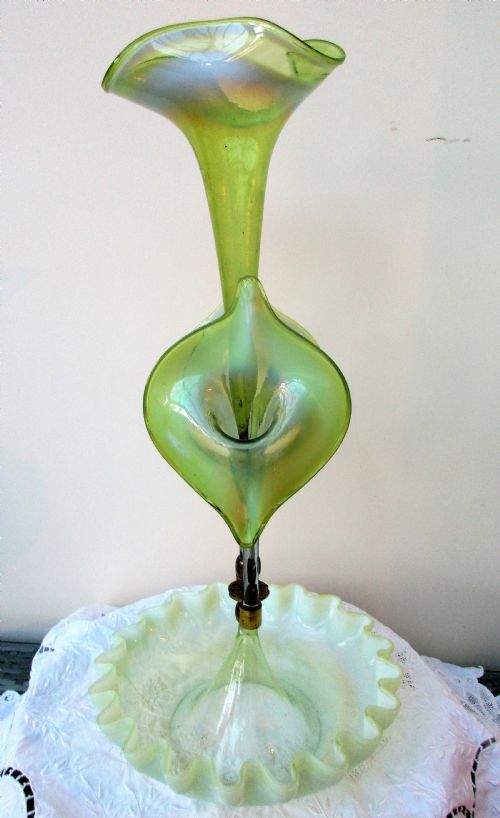
A glass lily vase takes the form of long, trumpet-like floral shapes, often elevated on slender stems or paired with brass and bronze mounts. These pieces emerge primarily from the nineteenth century, the Edwardian era, and the Art Nouveau period, capturing the curving lines popular in those decades.
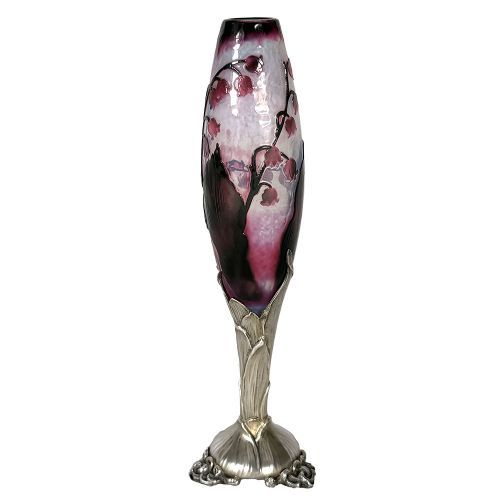
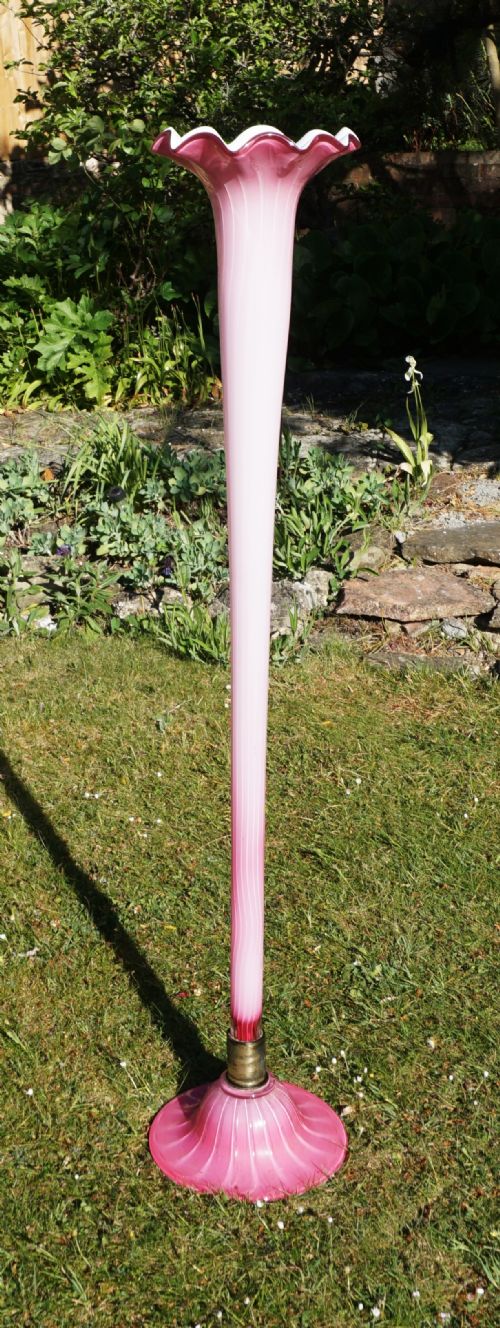
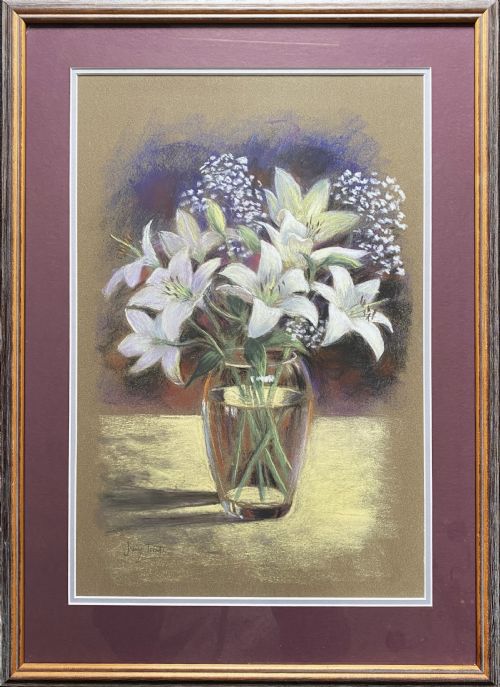
The selections on this page range from Victorian cranberry over crystal vessels to tall cased glass examples and cameo glass creations from French workshops. Alongside sculptural blown glass, the offerings include period oil paintings and pastels depicting floral subjects.
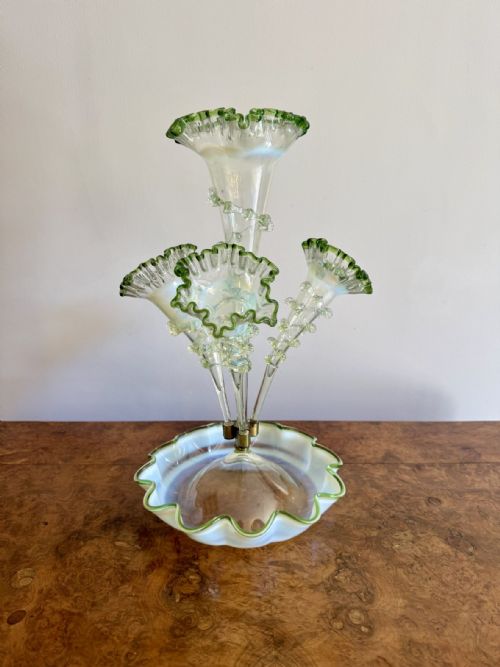
Buyers will encounter matched pairs as well as single table centrepieces, alongside green glass epergnes that incorporate trumpet holders. The materials span simple blown glass to complex layered cameo and acid-etched designs.
Materials and production methods
Makers utilised glassblowing techniques to shape molten material into elongated tubes and flared trumpet mouths, frequently employing cased glass methods to fuse contrasting layers of colour. White cane decoration and pink trails add linear surface detail to the blown vessels.
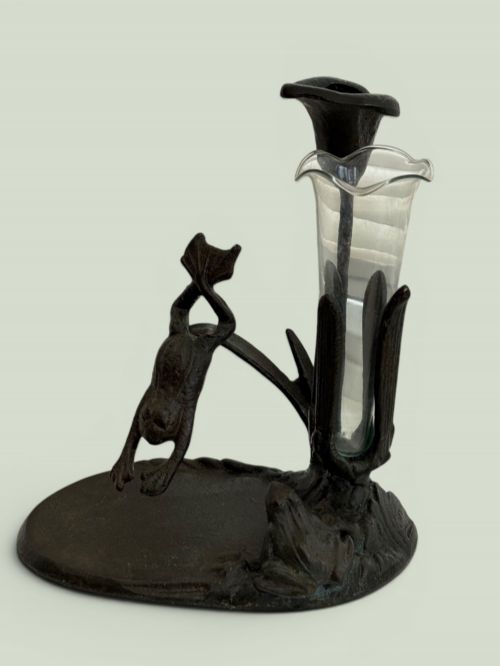
Cameo glass pieces involve acid-etching and carving through distinct coloured glass layers to reveal intricate aquatic or botanical motifs in relief. Bronze and brass fittings provide structural support for certain flower holders and centrepieces.
Glass Lily Vase Retail Price Guide 2026
Typical asking prices for glass lily vase among the pieces listed under this phrase on Sellingantiques today, from the lower quarter to the upper quarter. They describe what is for sale here now, not the wider market.
One oil painting on this page serves explicitly as a token of friendship and a lucky charm.
Assessing quality in these pieces
The distinction between standard production and superior examples lies in the depth of the cameo carving and the precision of the acid-etching on layered glass. Crisp details in floral or aquatic motifs indicate skilled execution by master glassmakers.
Proportion and colour saturation define the better vessels, particularly where cased cranberry glass or layered green tones create rich visual depth. The integration of metal mounts with the glass components also marks the standard of craftsmanship.
Emile Galle·Powell or Nazeing·Jennifer Toombs
The Glass Lily Vase Glossary
- Cased glass
- Glass formed of two or more distinct layers of different colours fused together during the blowing process. This technique allows artisans to cut through the outer layer to expose the contrasting colour underneath.
- Cameo glass
- A luxury vessel form created by carving or acid-etching through superimposed layers of coloured glass to produce a raised design. The method demands considerable technical precision.
- Acid-etched glass
- Glass decorated by applying acid to eat away specific areas of the surface, creating frosted patterns or recessed designs. It gained widespread popularity during the Art Nouveau period.
- Cranberry glass
- A rich red-pink transparent glass coloured by the addition of gold chloride to the molten batch. It appears frequently in Victorian tablewares.
- Epergne
- A large table centrepiece featuring multiple branching holders, often configured with detachable glass trumpets for holding cut flowers.
Glass Lily Vase: Frequently Asked Questions
How do I clean an antique glass lily vase?
Wash the vessel gently in lukewarm water using mild soap, avoiding harsh abrasives that might scratch the surface or damage delicate cameo layers.
Dry the glass thoroughly with a soft cloth to prevent water spots, and handle slender trumpet sections with care to avoid accidental fractures.
Where were these glass lily vases manufactured?
Production centres include British glasshouses in London, alongside notable French workshops associated with cameo glass creation.
Regional differences appear in the choice of colour palettes and the application of surface treatments like acid-etching and enamel.
Can I use these vases for fresh flowers?
Many of these vessels function well as table centrepieces for holding blooms, though some delicate cameo pieces see primary use as cabinet displays.
Check the interior for historical residue and fill carefully, ensuring the narrow stems support the weight of water and stems.
How do I distinguish Victorian from Art Nouveau pieces?
Victorian examples often feature vibrant cranberry or cased glass with symmetrical forms, reflecting mid-to-late nineteenth-century tastes.
Art Nouveau pieces embrace asymmetrical floral lines, organic aquatic motifs, and specialised cameo carving characteristic of the turn of the twentieth century.