




Glass Front Book Cabinet
A glass front book cabinet keeps your library dust-free while putting fine bindings on display.
Glass Front Book Cabinet
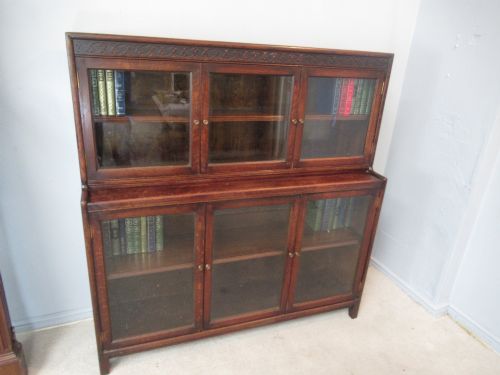
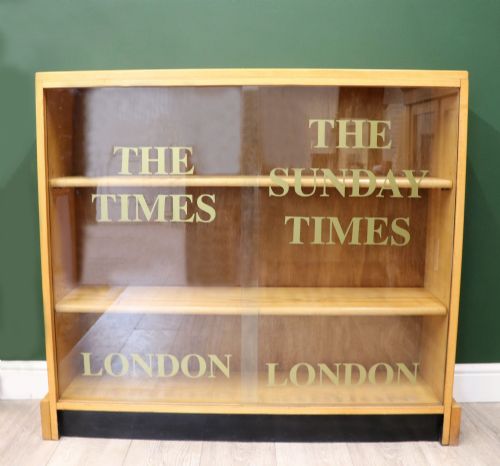
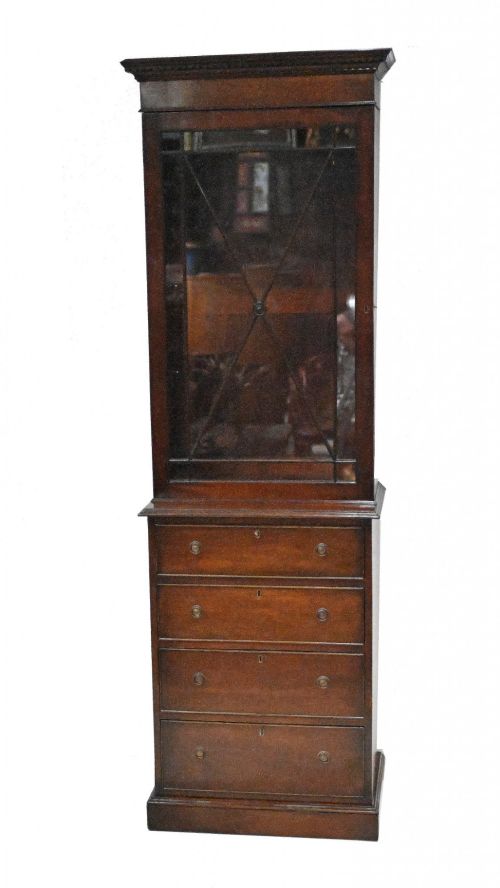
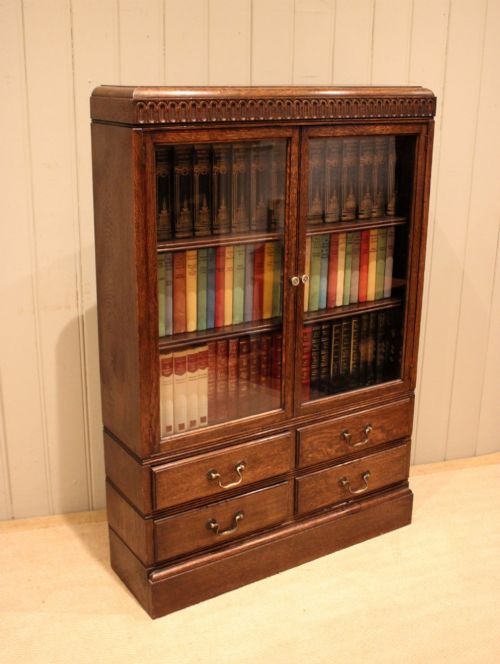
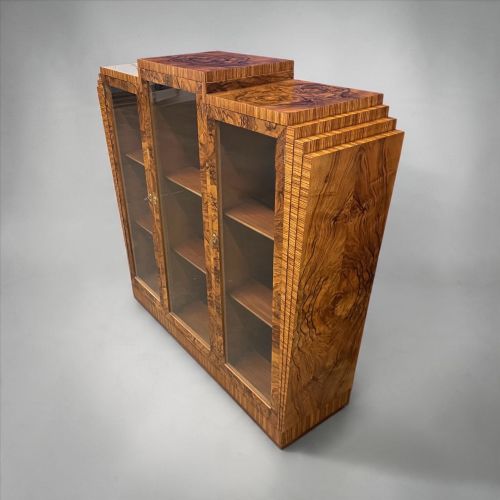
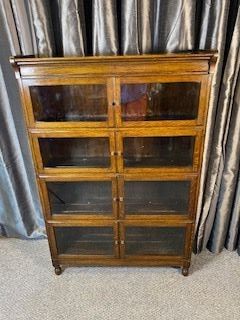
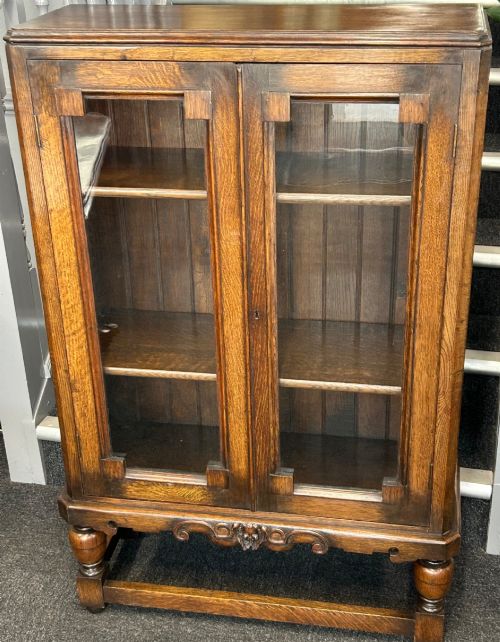
A glass front book cabinet provides enclosed shelving to protect volumes from dust and damage while keeping titles clearly visible. When you search for this phrase, you encounter forms ranging from sturdy oak examples to substantial library pieces in mahogany and walnut. The pieces span periods from the nineteenth century through the Edwardian era and into the twentieth century, taking the shape of standing bookcases, sectional units, and display cabinets.
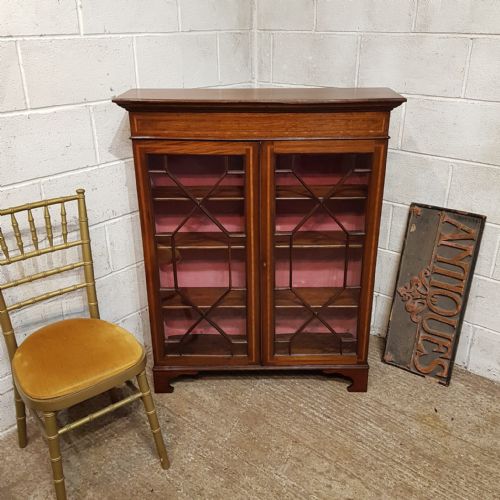
Most items you meet on this page favour timber construction with glazed doors, often reflecting revival styles such as Chippendale or Jacobean alongside straightforward Edwardian and Victorian designs. Some variations incorporate brass hardware, leaded glass, or integrated drawer sections alongside the primary shelving. The selection bridges utilitarian storage and formal display, suiting both working libraries and principal reception rooms.
Assessing quality and craftsmanship
Quality rests in the selection of figured timber veneers and the precision of the joinery used for both the outer carcass and the internal shelving. Cabinets with tight-fitting doors, smooth-running drawers, and well-balanced proportions demonstrate superior workshop practice.
The sophistication of the stylistic detailing, from astragal glazing bars to period revival motifs, distinguishes standard utility pieces from more ambitious cabinet work commissioned for substantial libraries.
Glass Front Book Cabinet Retail Price Guide 2026
Typical asking prices for glass front book cabinet among the pieces listed under this phrase on Sellingantiques today, from the lower quarter to the upper quarter. They describe what is for sale here now, not the wider market.
The selection spans the nineteenth century, the Victorian period, the Edwardian era, and the twentieth century.
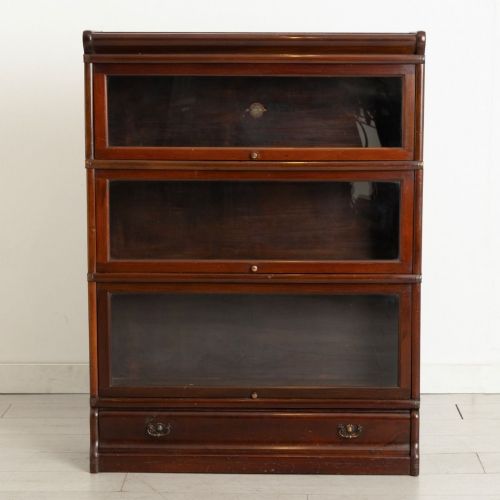
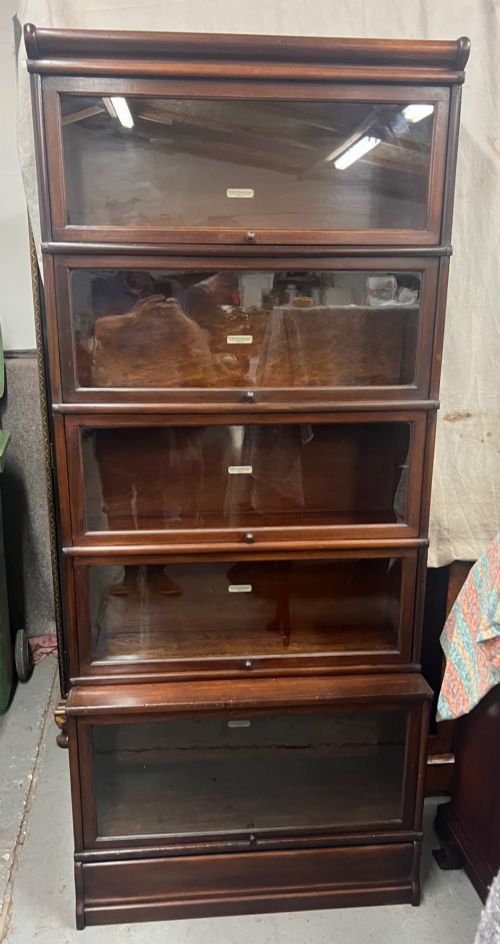
Globe Wernicke
The Glass Front Book Cabinet Glossary
- Astragal
- A narrow moulding used to divide glass panes within a glazed door frame. These bars create a multi-pane visual effect common in period cabinet work.
- Sectional bookcase
- A modular bookcase built in independent stacking tiers with glass doors that lift and slide inward. This design allows individual sections to be separated or reconfigured.
- Glazed
- Fitted with glass panels rather than solid timber doors. This term indicates a cabinet intended for display as well as storage.
- Breakfront
- A cabinet design where the central section projects forward from the flanking wings. This configuration adds architectural depth to large library bookcases.
Glass Front Book Cabinet: Frequently Asked Questions
How do I protect books inside a glazed cabinet?
Ensure the cabinet room maintains stable humidity and temperature to prevent paper degradation and warping of bindings.
Keep the glass clean using gentle methods that avoid spraying liquid directly onto vulnerable wooden frames.
What is the difference between a bookcase and a display cabinet?
Bookcase designs focus primarily on heavy shelving depths suited to vertical book storage.
Display cabinets often incorporate lighter shelves or interior lighting intended for porcelain and decorative objects.
How do I identify an Edwardian glazed bookcase?
Edwardian examples often feature lighter timbers like walnut or satinwood alongside simpler revival proportions.
Look for construction methods and hardware characteristic of the early twentieth century.