
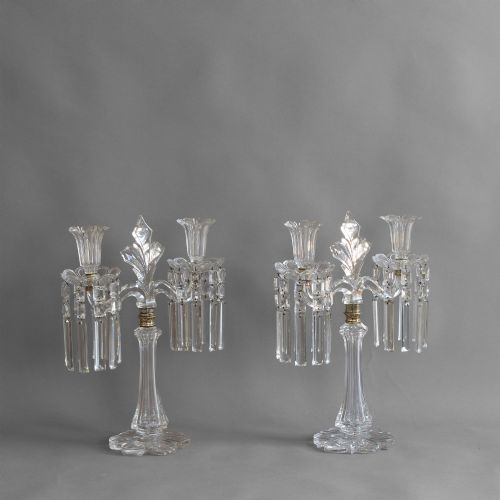
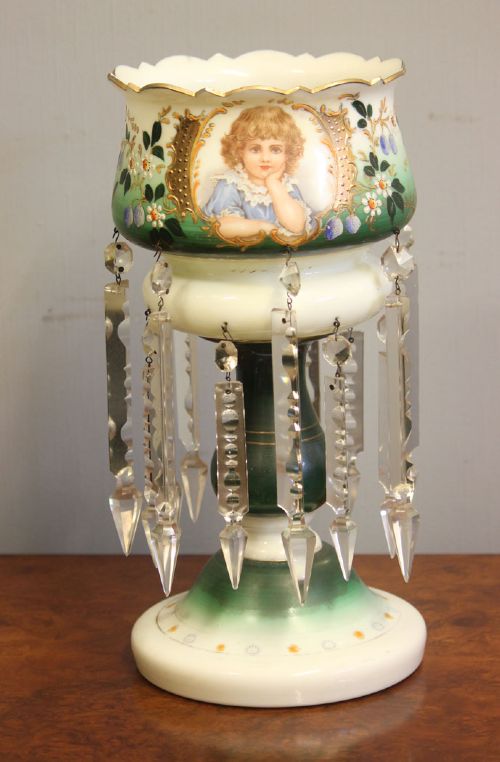
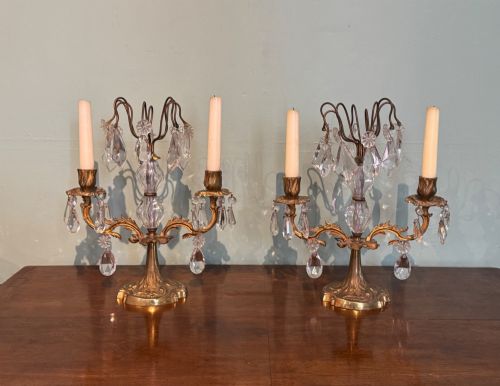
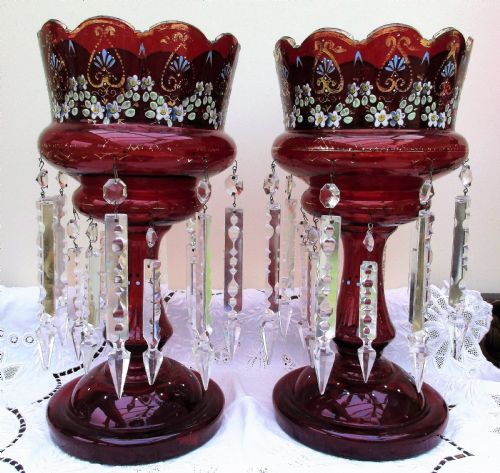




Glass Crystal Lustre Candlesticks
Glass crystal lustre candlesticks catch the flickering light of a room, bringing shimmer and height to a table or mantelpiece.
Glass Crystal Lustre Candlesticks
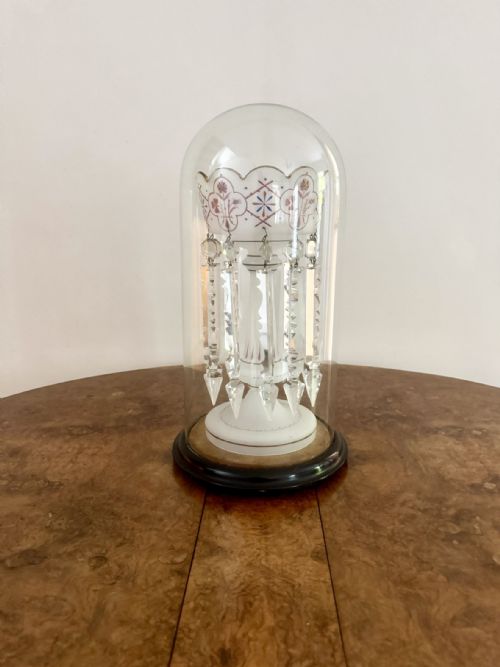
Glass crystal lustre candlesticks are decorative lighting forms designed to hold candles while dangling cut crystal pendants that refract the light. When you search for glass crystal lustre candlesticks, you find pieces spanning the eighteenth century through to the nineteen thirties, covering English and French origins. The most frequent examples on this page are Victorian pairs in ruby, cranberry, or clear cut glass, often paired with mantel lustres and table candelabras.
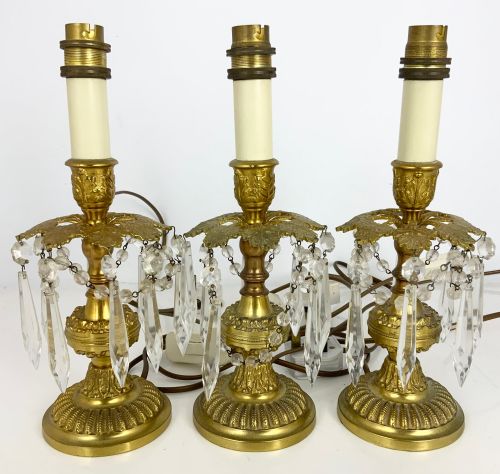
These items serve both functional and ornamental purposes, historically placed on dining tables, sideboards, and fireplace mantels. The selection includes single pieces as well as matched pairs and sets incorporating brass, bronze, ormolu, and gilt metal mounts. Stylistic influences range from Regency and William IV to French Rococo revival and French Empire, reflecting diverse European interior tastes across different centuries.
Evaluating the craftsmanship
Quality in these items rests upon the clarity and depth of the glass, the precision of the hand-cut facets, and the weight of the metal mounts. Finer examples display sharp, crisp cutting on the crystal bodies alongside unclouded transparency in the glass, whereas lesser pieces show softer moulded edges or internal bubbles. The retention of a complete and matching set of crystal drops significantly elevates a piece, as replacements often alter the overall harmony of the hanging fringe.
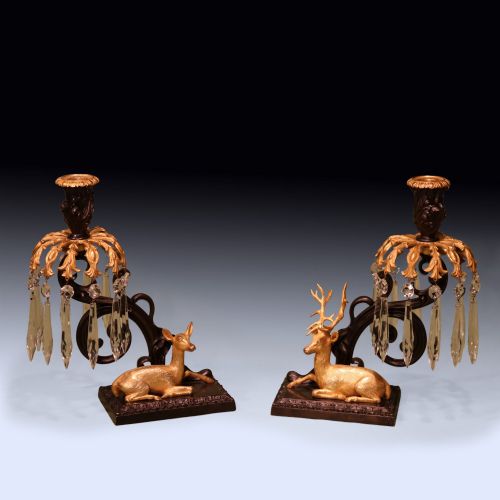
The integration of materials also defines the upper tier of manufacture, where heavy ormolu, gilt bronze, or cast brass mountings fit tightly against the glass components without slack. Superior specimens exhibit balanced proportions between the candle socket, the central stem, and the spreading base, often incorporating sculptural elements like stags or rococo scrollwork. The presence of rich coloured glass, such as deep ruby or cranberry tones, combined with crisp gilding, marks out the most accomplished work from this grouping.
Some nineteenth-century lustre pairs incorporate bronze stags and does standing steadfastly beneath the crystal fringe.
Clarkes
The Glass Crystal Lustre Candlesticks Glossary
- Lustre
- A decorative tabletop vessel or candlestick fitted with hanging glass prisms designed to reflect light. These objects became particularly popular during the Victorian and Regency periods for mantelpiece display.
- Ormolu
- Gilt bronze produced by applying a mercury and gold amalgam to a bronze base, then heating it to drive off the mercury. This technique imparts a rich, durable golden finish found on many nineteenth-century mounts.
- Cricklite
- A patented brand of table lamp and candelabra utilising specialised glass shades and candle arrangements. Clarkes produced these items during the late Victorian era for domestic illumination.
- Prism
- A cut glass pendant or drop hung from the rim of a lustre to refract candlelight. Prisms come in various shapes, including spears, buttons, and icicles.
Glass Crystal Lustre Candlesticks: Frequently Asked Questions
How do I clean glass lustre drops safely?
Remove each crystal drop individually by gently opening the wire suspension loop so the glass does not strike the main body.
Wash the pieces in lukewarm water with a mild detergent, dry them thoroughly with a lint-free cloth, and reattach them carefully.
Can I burn real candles in these candlesticks?
Many of these pieces are designed to hold traditional wax candles, but heat from a burning flame can occasionally stress older or repaired glass sockets.
It is often safer to use appropriately sized taper candles for short periods or display the items unlit to protect the antique material.
How can I tell a Victorian lustre from an earlier Regency one?
Regency examples often feature cleaner classical lines, heavy cut-glass pedestals, and restrained bronze or ormolu mounts influenced by neoclassical design.
Victorian pieces frequently embrace bolder colours like ruby and cranberry glass, heavier proportions, and ornate revival styles including Rococo and French Chateau motifs.