


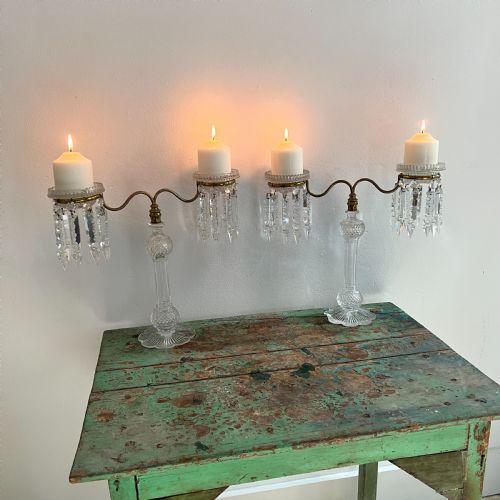


Victorian Cut Glass Candlestick
These victorian cut glass candlestick examples bring sparkling refraction to a room, catching daylight and candlelight alike with faceted brilliance.
Victorian Cut Glass Candlestick
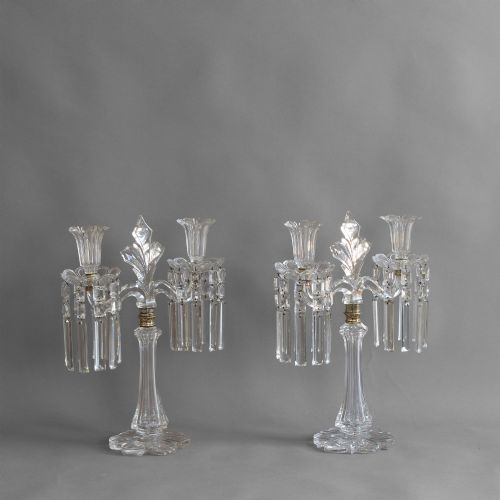
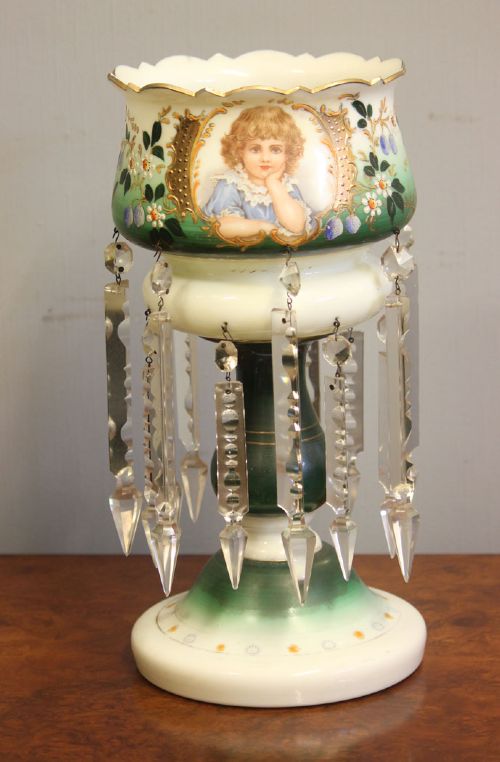
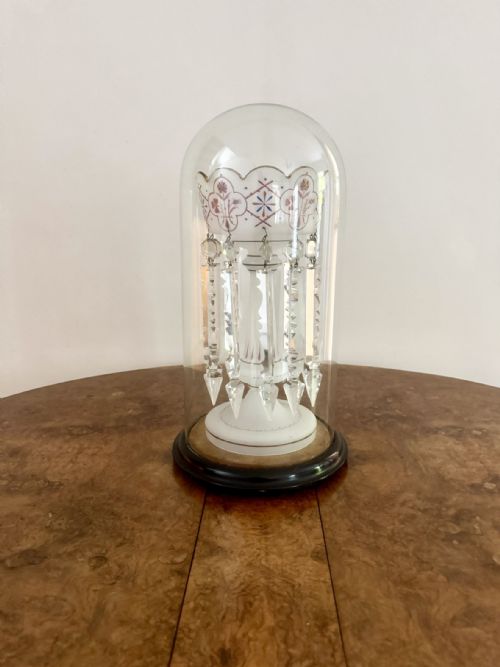
A victorian cut glass candlestick typically takes the form of a tall pillar or a decorative lustre adorned with hanging glass drops. You will frequently encounter matched pairs designed to sit symmetrically upon a mantelpiece or sideboard.
The selection ranges from standard pillar candlesticks to elaborate mantel lustres, candelabras, and desk accessories fitted with brass components or storm shades. While the Victorian period dominates the offerings, related pieces span from the eighteenth century through to the year nineteen hundred.
Makers and inventors also left their mark on these items, with specialised designs such as Clarke's patent Cricklite lamps appearing among the traditional forms. Buyers choose these objects to introduce period elegance and reflective sparkle into an interior.
How they were made
Glassmakers shaped molten material through blowing and moulding before cooling the blanks for deep hand-cutting. Artisans applied wheel-cutting techniques to create sharp facets, flutes, and geometric patterns that maximise light refraction.
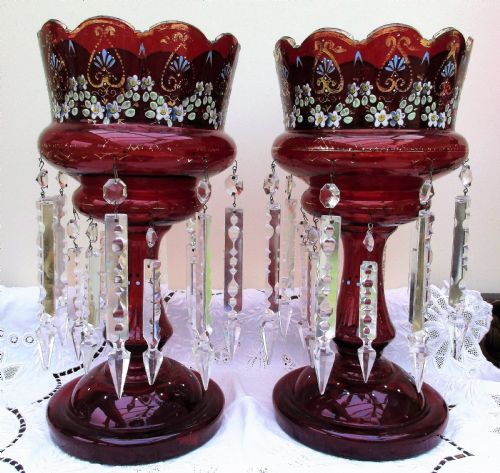
Many examples incorporate secondary materials, mounting the glass bodies onto brass bases or gilding them with gold leaf. Coloured variants like ruby glass and cranberry glass were achieved by introducing specific metallic oxides into the molten batch.
Some Victorian pieces come with horns of plenty, proving that nineteenth-century desks demanded an abundance of cornucopia inkwells.
What varies in quality
The clarity and weight of the crystal set the foundation, with heavier, more transparent glass producing superior brilliance. Crispness in the wheel-cut facets dictates the visual sharpness, where cleaner lines reflect light far more intensely than soft, rounded cutting.
Completeness alters the value significantly, particularly for lustres that rely on matching sets of hanging glass drops. The integration of quality secondary materials like chased brass or rich enamel detailing further elevates the status of a piece.
Clarkes
The Victorian Cut Glass Candlestick Glossary
- Lustre
- A decorative tabletop candlestick or vase fitted with a ring of hanging crystal prisms. These glass drops catch and scatter candlelight across the room.
- Cricklite
- A patented brand of night light and candlestick assembly often combining cut glass and brass. Clarke held the patent for these popular Victorian lighting arrangements.
- Faceting
- The process of grinding flat planes into the surface of glass. This technique creates numerous angles for light to bounce through.
- Ruby glass
- A deep red decorative glass created by adding gold or copper to the batch during melting. It appears frequently in nineteenth-century mantel ornaments.
- Storm shade
- A tall glass cylinder fitted over a candle to protect the flame from draughts. They are often paired with brass and glass bases.
Victorian Cut Glass Candlestick: Frequently Asked Questions
What is a mantel lustre?
A mantel lustre is an ornamental candlestick or vase adorned with hanging glass prisms designed to catch the light. They sat prominently on drawing-room mantelpieces during the nineteenth century.
Unlike standard lighting, their primary role was decorative display rather than functional illumination, glittering brightly when lit by surrounding candles.
Where should I place a candlestick?
These pieces look best positioned on mantelpieces, sideboards, or dining tables where natural light or candle glow can pass through the facets. Pairing them symmetrically enhances their formal period appearance.
Keep them away from high-traffic edges where trailing sleeves might catch hanging glass drops or delicate storm shades.
Are ruby glass items Victorian?
Coloured glass gained immense popularity during the Victorian era, resulting in numerous ruby and cranberry red decorative pieces. The evidence shows these vibrant hues appearing frequently across nineteenth-century examples.
Makers achieved this rich coloration through specific mineral additives in the molten glass mixture before shaping and cutting the final object.