
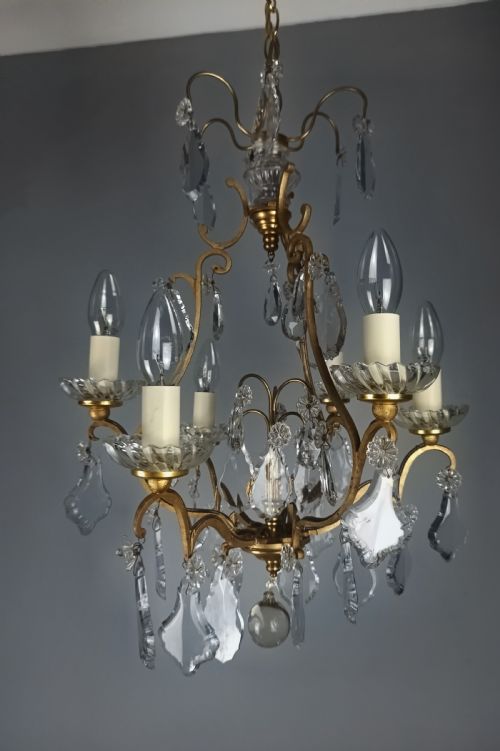
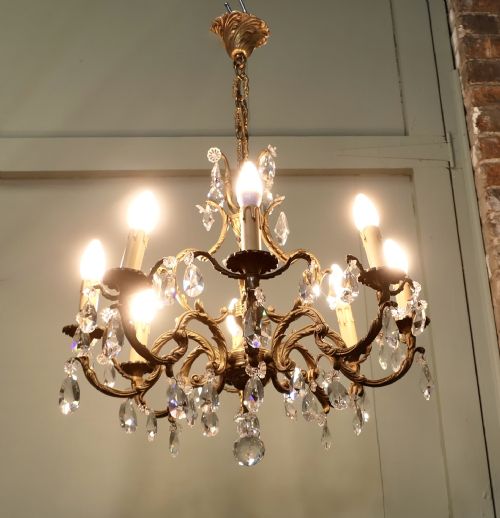
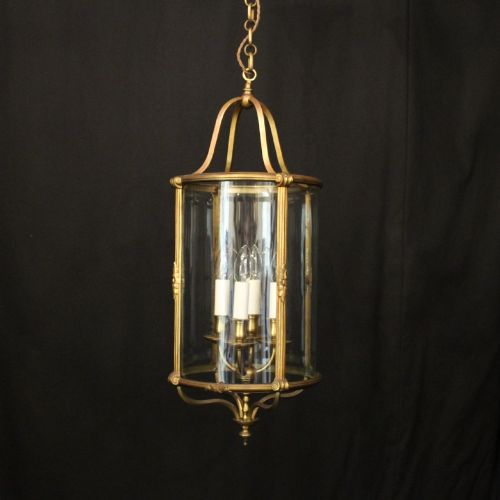
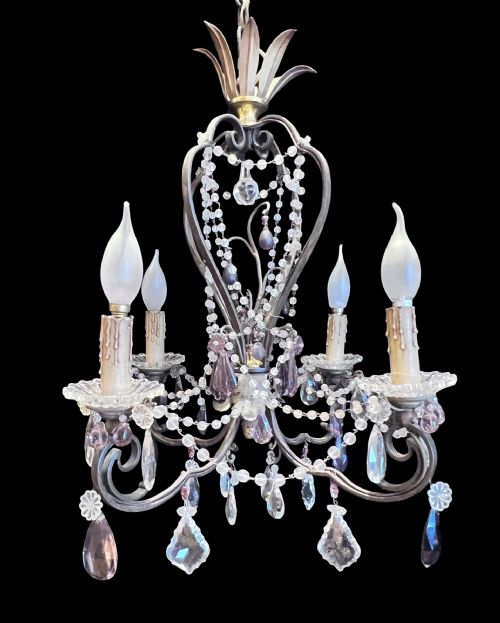
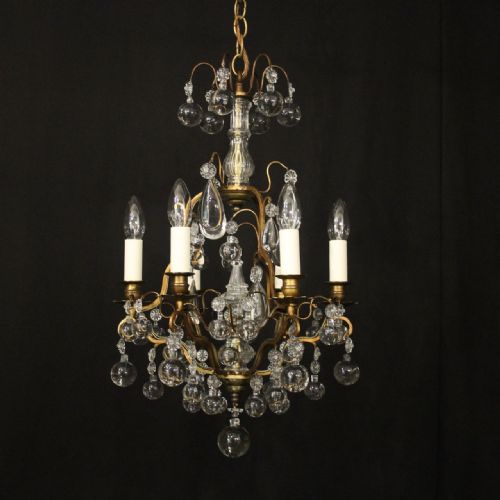


Glass Candle Arms
Glass candle arms are the branching supports of chandeliers and wall lights that direct illumination through crystal and metal.
Glass Candle Arms
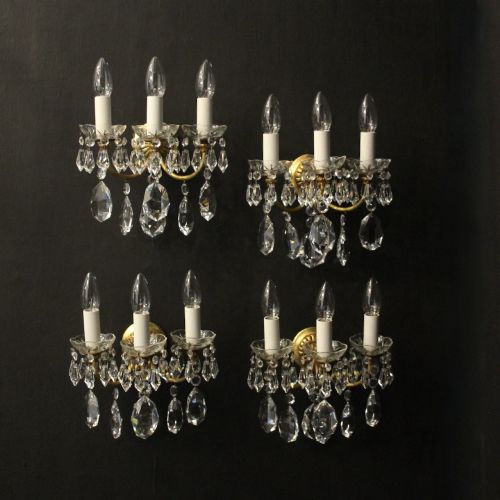
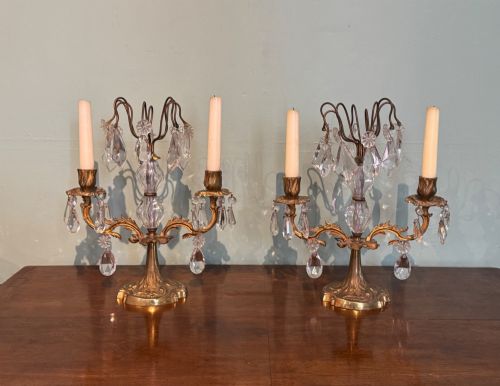
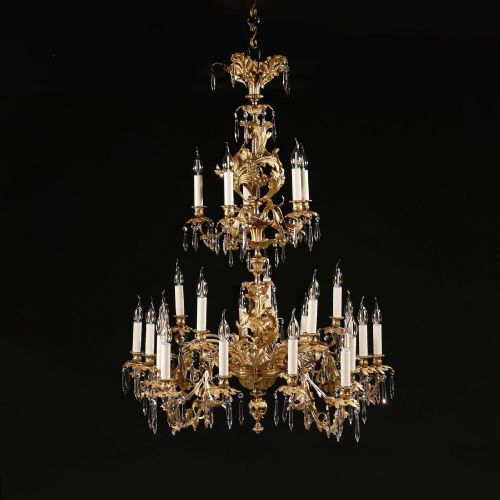
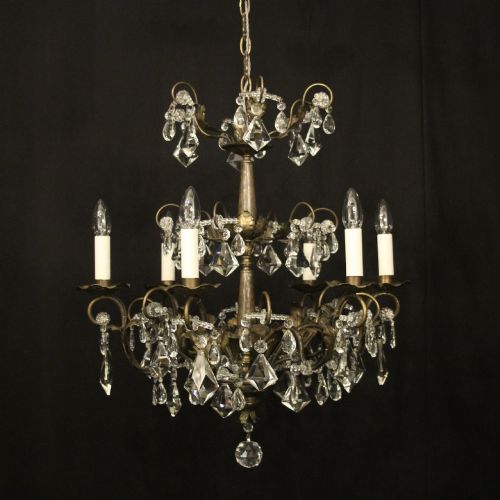
Glass candle arms form the curved branches that extend outward from the central stems of chandeliers, wall lights, and candelabras. When searching for glass candle arms, buyers encounter components salvaged from larger light fittings or matched pairs designed to hold candles or electric bulbs.
The selection on this page draws primarily from French, Italian, and English workshops spanning the nineteenth century through the 1930s. Forms range from twin-branch wall sconces to multi-branched arms intended for large crystal chandeliers.
Most items reflect periods such as the Edwardian era, the 1920s, and the 1930s, alongside nineteenth-century revivals of Louis XV and Louis XVI styles. These components display the decorative ambitions of domestic lighting from past centuries.
How they were made
Manufacturers combined moulded or blown glass and crystal with structural mounts in brass, gilt bronze, and wrought iron. Metal armatures provided the rigid internal support necessary to sustain heavy glass branches and suspended crystal drop pendants.
Glass elements underwent specialised cutting, polishing, and moulding to create faceted surfaces that dispersed light. Artisans pinned glass drops and teardrops to the arms utilising fine wire twists linked through drilled apertures.
Listings feature items spanning the nineteenth century through the 1930s, utilising brass, gilt bronze, and cut crystal materials.
What varies in quality
Quality rests upon the clarity and depth of the glass, determined by the purity of the material and the crispness of the hand-cut facets. Superior examples display precise moulding without distortion, while lesser pieces show bubbling and uneven thickness.
The refinement of the metal mounts and the retention of original mercury gilding or silvering distinguish higher grades. Cast bronze or brass components with sharp, chased ornamentation indicate skilled workshop output rather than mass production.
F. & C. Osler·Baccarat·Clarkes·La Mason Bagues
The Glass Candle Arms Glossary
- Crystal
- High-grade colourless glass containing lead oxide to increase brilliance and weight. It allows deep facet cutting that maximises light refraction.
- Girandole
- A decorative wall bracket with a mirror backplate holding candle branches. The reflective glass plate multiplies the illumination of the room.
- Lustre
- A cut glass or crystal pendant hung from a lighting fixture to catch and disperse light. These pieces range from simple teardrops to coloured fruit shapes.
- Candelabra
- A branched candlestick holding multiple lights. Examples in this inventory combine glass arms with brass or gilt bronze supports.
- Sconce
- A wall-mounted lighting fixture attached directly to a vertical surface. These units often feature twin or triple glass arms projecting forward.
Glass Candle Arms: Frequently Asked Questions
How do I mount glass candle arms?
Mounting requires securing the metal receiving socket or threaded pin into the central hub of a wall light or chandelier. Care must be taken to balance the weight evenly across opposing sides.
Professional installation is recommended to ensure the fragile glass components are not subjected to uneven torque or excessive tightening.
Can these arms hold electrical wiring?
Many period arms are solid glass or narrow channels originally designed exclusively for wax candles. Adapting them for internal wiring requires consultation with a specialist restorer.
External wiring channels or dummy candle sleeves are often utilised to electrify older wall lights without altering the original glass structure.
How do I clean antique glass arms?
Cleaning involves removing dust with a soft brush and wiping the glass with a damp cloth using mild soapy water. Rinsing with distilled water prevents mineral spotting.
Harsh chemical cleaners and abrasive cloths must be avoided to protect both the delicate glass surfaces and the original gilt metal finishes.
How do I date glass candle arms?
Dating relies on examining the manufacturing traits of the glass, such as pontil marks, mould seams, and lead content clarity. Metal components and mounting screws also offer chronological clues.
Stylistic motifs like French Rococo curves or 1930s geometric lines help align the pieces with specific manufacturing eras recorded in the evidence.