
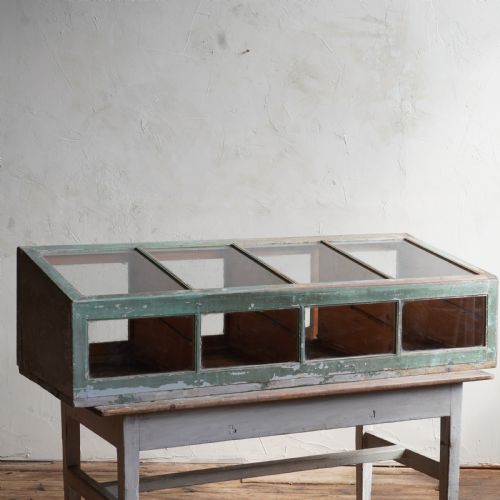


Glass Countertop Display
These glass countertop display pieces are practical shop fittings designed to present small wares clearly.
Glass Countertop Display
When you search for glass countertop display, you are looking at retail shop fittings created to showcase small merchandise securely on counters. The pieces on this page span the Victorian era, the Edwardian period, and the nineteen-twenties.
You will most commonly encounter glazed display cabinets and cases constructed to sit on shop counters. These range from plain wooden frames to specialist apothecary, haberdashery, and confectionery shop fittings.
The selection also includes specific countertop furniture such as jewellers' plateau mirrors, small shelving units, and perfume bottles. Form follows retail function, providing clear glass visibility for customers while protecting the stock within.
Materials and construction methods
These items rely on a combination of transparent glass panels and solid timber frames such as mahogany and oak. Makers joined the wooden elements using traditional cabinet-making techniques to support the weight of the glazed sections.
Metal components like brass appear regularly as structural framing or decorative hardware, while internal surfaces often feature felt or mirror linings. Retail advertising appears through hand sign-written lettering applied directly to the glass or wood surfaces.
Periods represented span from the nineteenth century through the Victorian, Edwardian, and Art Deco eras.
Assessing quality in shop fittings
Quality in a glass countertop display rests upon the integration of the timber frame and the clarity of the original glazing. Finer examples display precise joinery and well-figured mahogany or oak timbers that have aged with an even lustre.
The presence of original maker branding, whether etched, applied, or hand sign-written for firms, elevates the historical interest. Simpler utility pieces utilise basic construction methods intended strictly for daily commercial service.
John Stow Ltd of Bradford·F. Sage & Co. London
The Glass Countertop Display Glossary
- Countertop display
- A glazed cabinet or shelf unit built to sit upon a retail shop counter for customer viewing. These pieces protected small merchandise while keeping stock within arm's reach of the shopkeeper.
- Haberdashery cabinet
- A set of shallow drawers or a glazed case originally used in drapery shops for ribbons, buttons, and small sewing accessories. They often feature multiple glass-fronted compartments.
- Plateau mirror
- A mirrored tray or stand placed upon a table or counter surface to reflect light and display small objects like jewellery or perfume bottles. They frequently feature decorative brass or wooden frames.
- Sign-written
- Lettering painted by hand directly onto the glass or wood of a shop fitting to advertise confectionery, cocoa, or general goods. This historic lettering provides period context for the cabinet.
Glass Countertop Display: Frequently Asked Questions
What were these cabinets used for?
Shopkeepers utilised these glazed cases on sales counters to display small, high-value items like jewellery, chocolates, and apothecary goods. The glass kept dust away while allowing customers to inspect the merchandise.
Over time, merchants added painted advertising for popular brands to catch the eye of buyers standing at the counter.
How do I date an oak display case?
You can estimate the age by examining the timber grain, the style of the hardware, and the construction methods used in the frame. Victorian examples often feature rich mahogany, whereas Edwardian and nineteen-twenties pieces frequently utilise oak.
Original painted signage for brands active in specific decades also helps narrow down the period of manufacture.
Are the glass panels usually original?
Many surviving cabinets retain their early or original glass, which often displays subtle surface ripples and minor imperfections characteristic of older manufacture.
Replacement panes do occur due to the fragile nature of shop fittings, so checking the fit within the wooden rebate is standard practice.
How do I clean a brass and glass cabinet?
Maintenance requires gentle cleaning of the glass using standard solutions while avoiding harsh abrasives near painted advertising or sign-writing. Brass frames benefit from minimal intervention to preserve their natural age and patina.
Internal velvet or felt surfaces should be brushed lightly to remove accumulated dust without disturbing the fibres.