
Glass Column Table Light
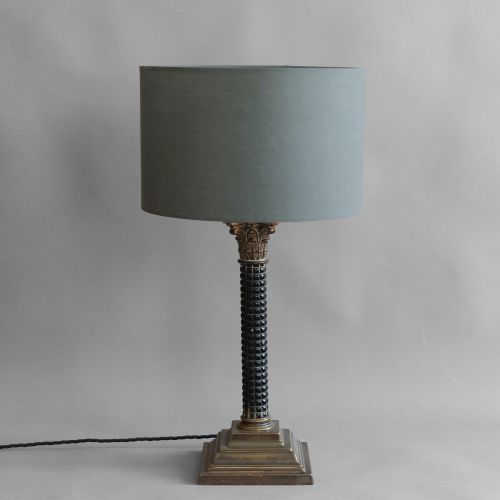
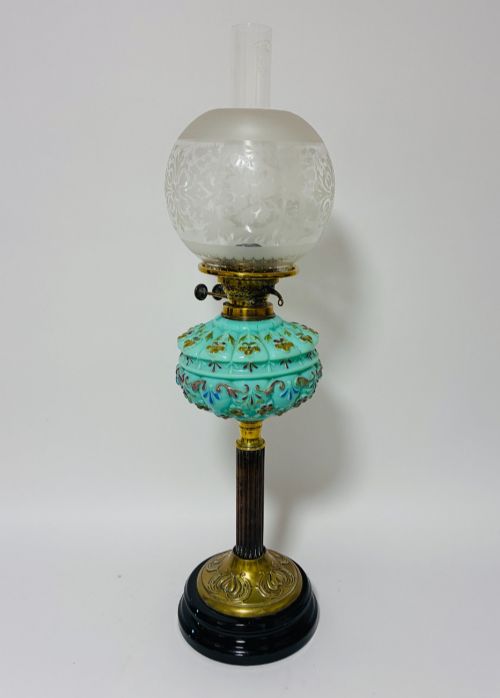
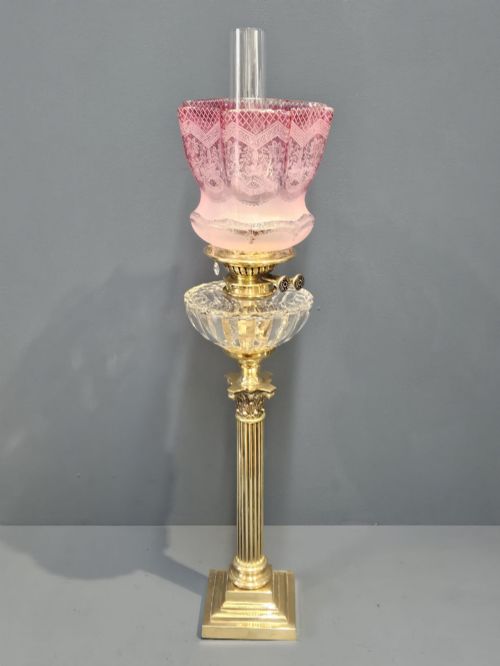
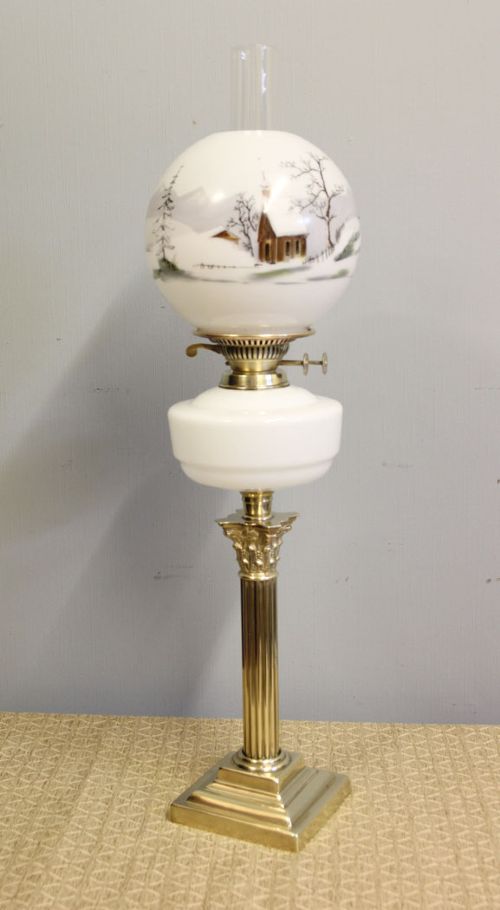
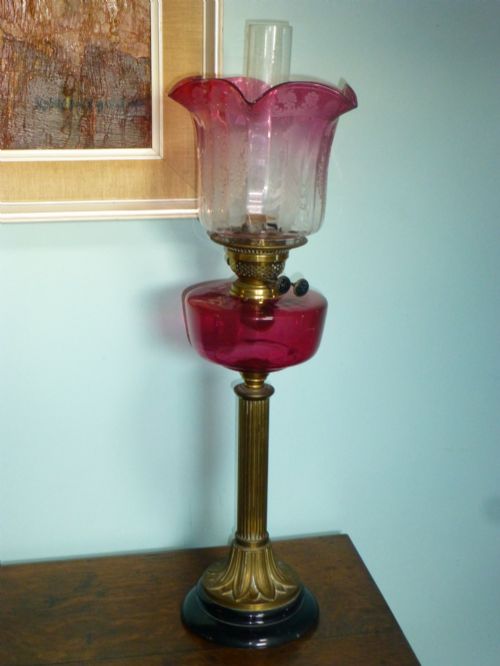
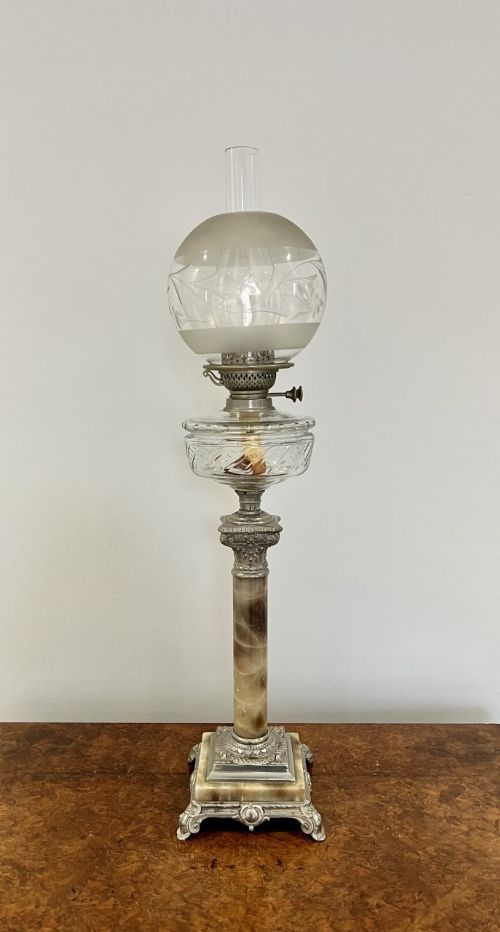
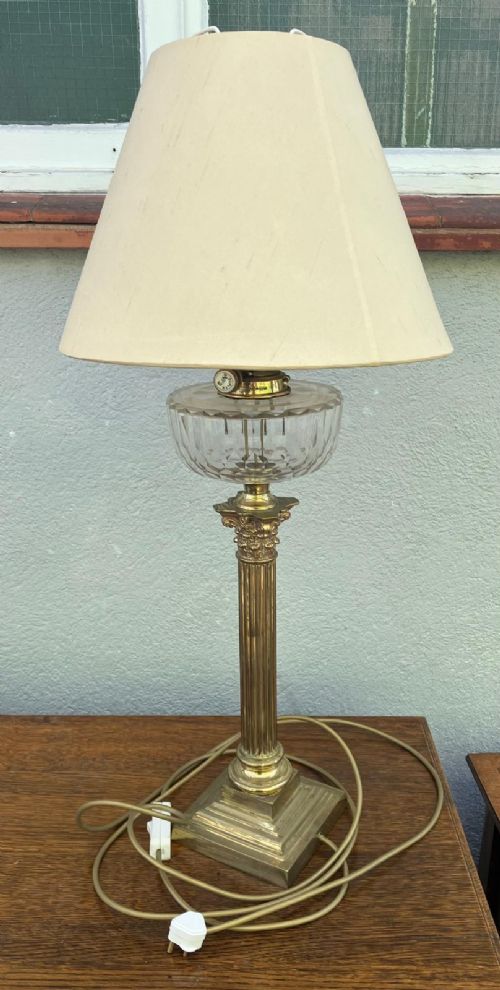
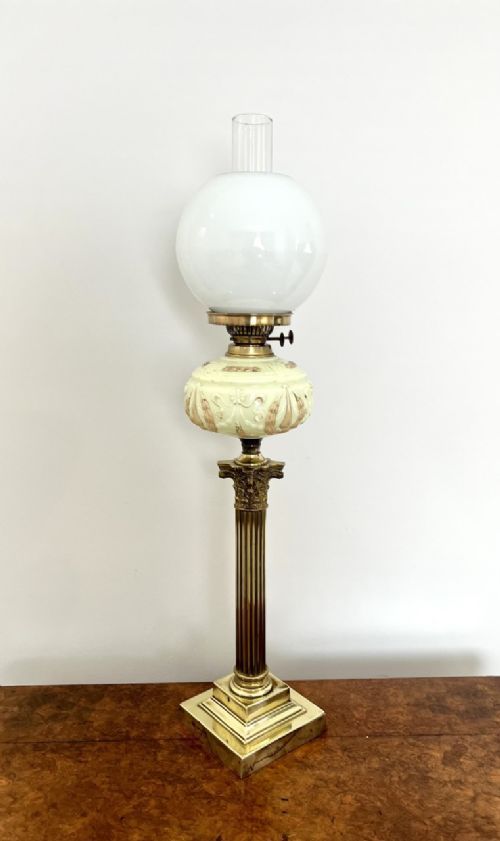
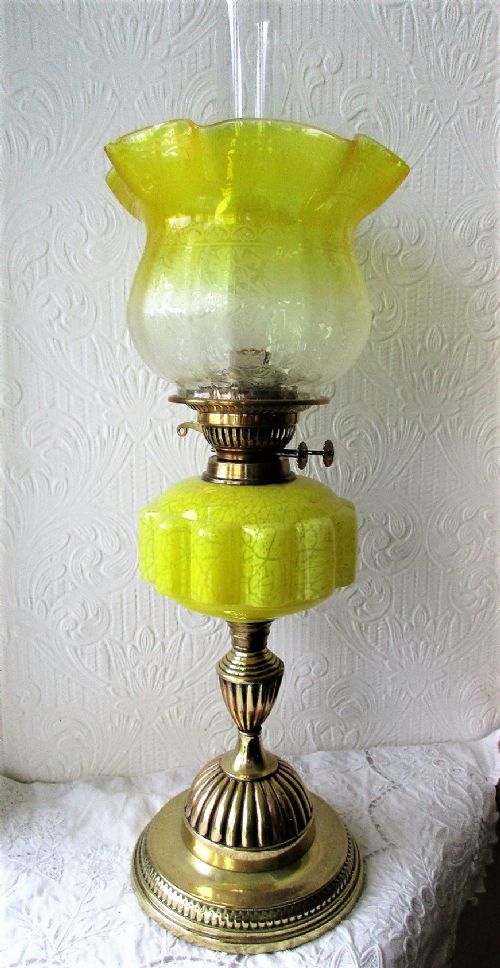
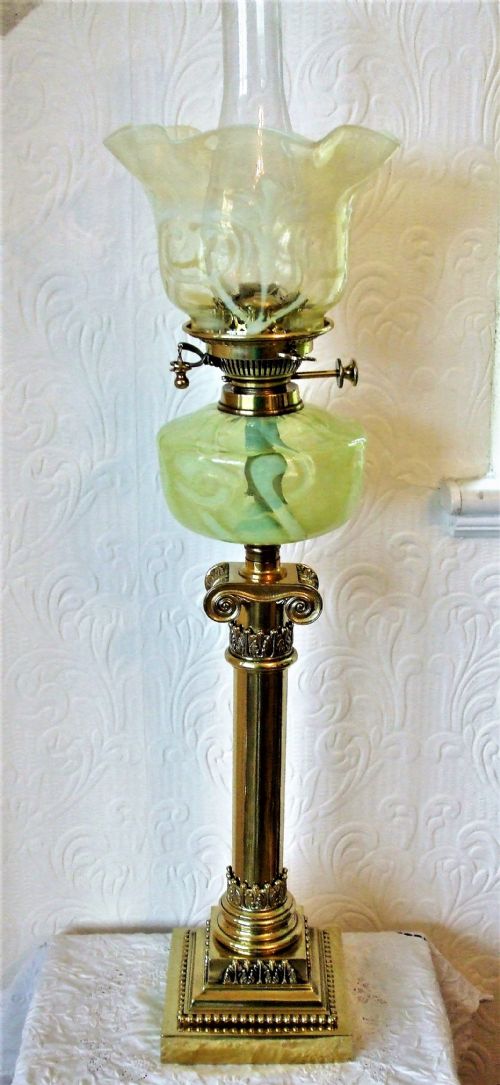
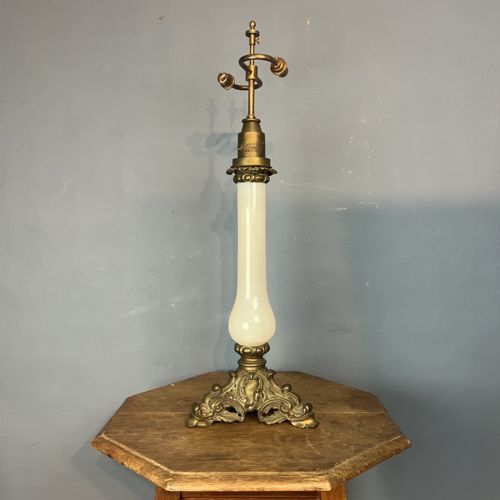
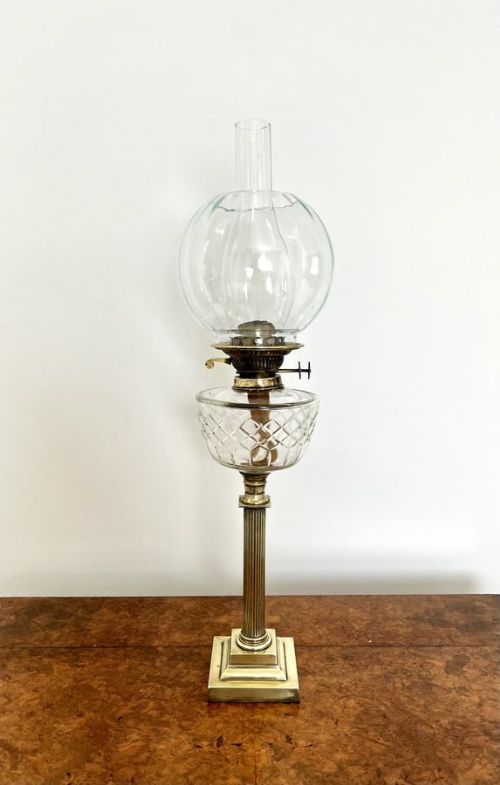
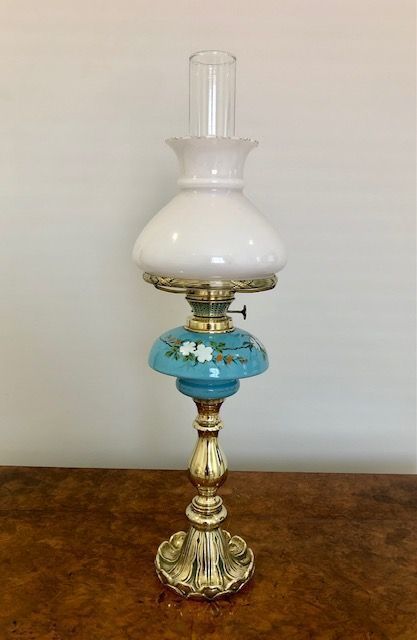
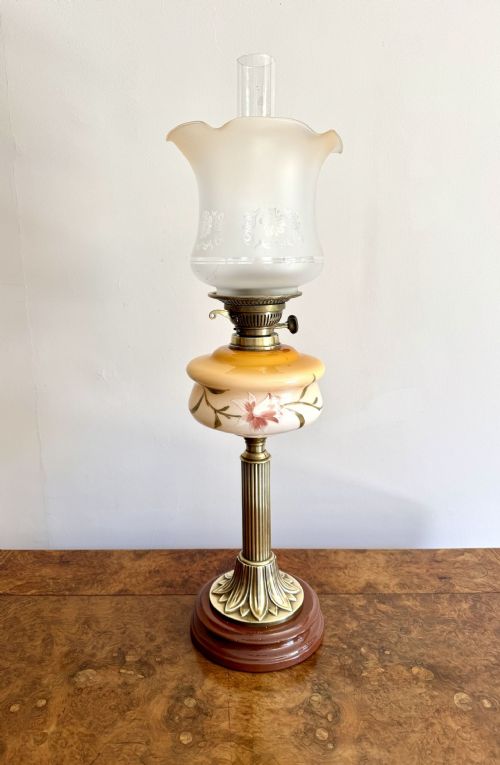
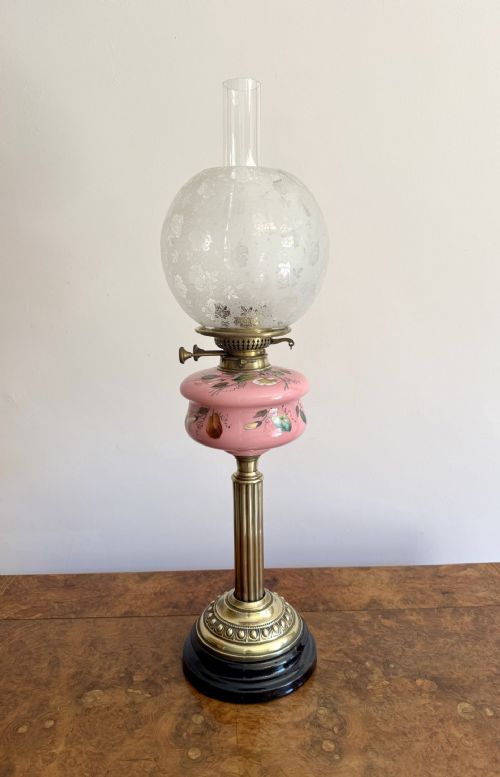
A glass column table light brings substantial Victorian or Edwardian weight to a room, combining brass capitals with patterned glass fonts.
Glass Column Table Light
When you search for glass column table light, you encounter tall domestic lighting fixtures originating from the Victorian and Edwardian eras. Most examples on this page began life as oil or paraffin lamps before conversion to electricity, retaining their heavy metallic bases and decorative reservoirs.
The architectural column format draws heavily on neoclassical design principles, featuring fluted or smooth glass shafts raised on stepped square bases. These pieces frequently incorporate brass or bronze Corinthian capitals at the top of the glass shaft, supporting either a matching glass font or a burner assembly.
Beyond standard domestic lamps, the selection includes distinct regional variations and paired items designed for symmetrical placement on sideboards or mantelpieces. The scale ranges from modest bedside examples to monumental floor-level or table-standing showpieces.
Materials and construction methods
Makers constructed these lamps by combining heavy cast brass or bronze components with blown and moulded glass reservoirs and columns. Metal parts were often polished, gilt, or silver plated, while the glass elements utilised techniques such as cranberry tinting, opaline layering, or deep cutting.
Mechanical hardware such as duplex burners and screw fittings required precise engineering in metal workshops. Glass fonts were frequently manufactured separately and mounted securely to the metal stems using threaded internal rods and plaster bedding.
Listings span the nineteenth and twentieth centuries, incorporating Victorian, Edwardian, and Art Deco design movements alongside Neoclassical revival styles.
Assessing quality and proportion
The distinction between ordinary and superior pieces rests on the crispness of the cast metal ornamentation and the weight of the glass body. Fine examples display sharply defined acanthus leaves on the Corinthian capitals and heavy, unclouded crystal or coloured glass components.
Proportion and scale also dictate the desirability of a lamp, with taller double-burner columns commanding greater visual presence than simpler single-burner versions. The presence of original etched or tinted shades matching the font height further elevates the integrity of the piece.
Hinks of Birmingham·Joseph Hinks·Goldsmiths and Silversmiths Company·Mc Gary
The Glass Column Table Light Glossary
- Corinthian column
- A classical architectural column style featuring an ornate capital decorated with acanthus leaves. This form was widely adopted by Victorian lamp makers for brass and glass table lights.
- Duplex burner
- A double-wick mechanism developed in the nineteenth century to provide brighter illumination from oil lamps. Many surviving table lights retain this heavy brass assembly even after electrical conversion.
- Opaline glass
- An opaque, milky-white glass popular during the Victorian period. It is frequently seen in the fonts and columns of nineteenth-century table lights.
- Font
- The oil reservoir portion of a lamp, typically positioned above the column and beneath the burner. In glass column lamps, this is often made of cranberry or coloured glass.
- Ormolu
- Gilt bronze mounted onto decorative objects and lamp bases. It provides a bright golden finish that contrasts against clear or coloured glass columns.
Glass Column Table Light: Frequently Asked Questions
Are these lamps still fitted for oil?
Most glass column table lights encountered on the market have been professionally converted to run on electricity for modern domestic use.
Original burners and fittings are frequently retained above the column to preserve the historic appearance of the lamp.
How do I identify a Victorian lamp?
Victorian examples typically display heavy cast brass bases, classical column motifs, and traditional fuel reservoirs made of opaline or cranberry glass.
Maker stamps on the brass thumb-turns or collar mechanisms also help confirm nineteenth-century production dates.
Can I find matching pairs?
Paired table lights do appear among late nineteenth and early twentieth-century stock, particularly in grander neoclassical designs.
These symmetrical pairs were originally intended for placement on opposite ends of a sideboard or grand mantelpiece.
What shades originally accompanied these lamps?
Period lamps were paired with blown glass tulip shades, etched glass globes, or fabric shades depending on the decade of manufacture.
Cranberry and frosted glass shades with winter or floral scenes remain characteristic of late Victorian lighting.