
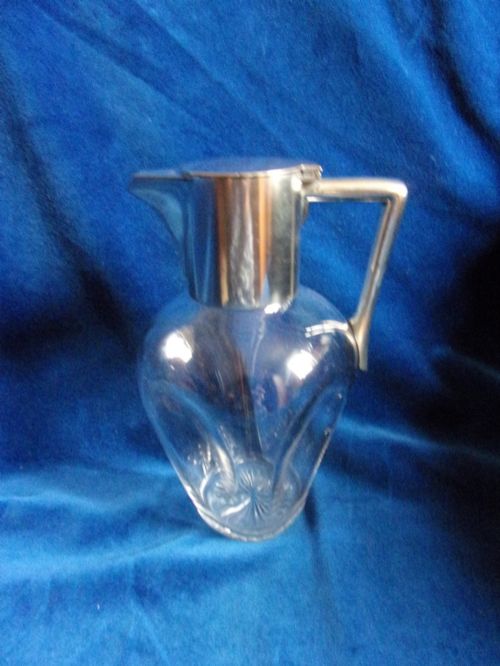
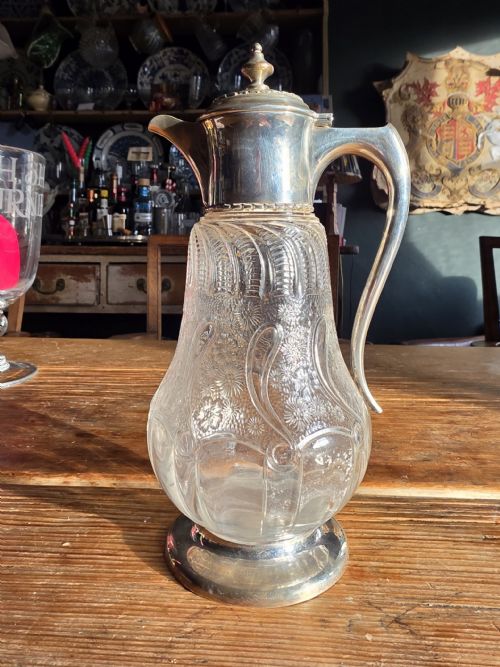

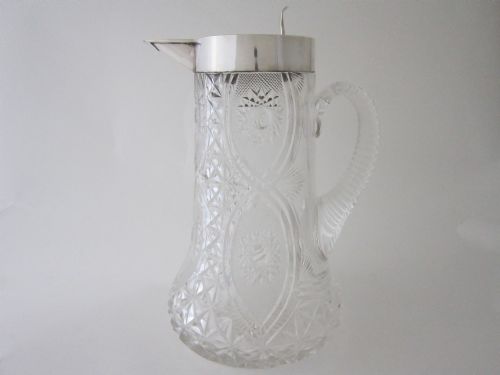
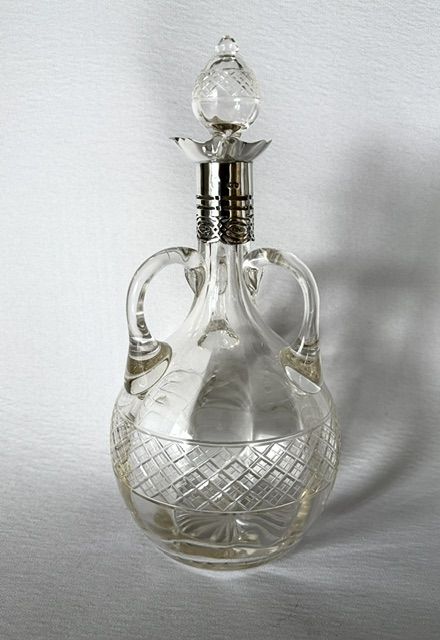
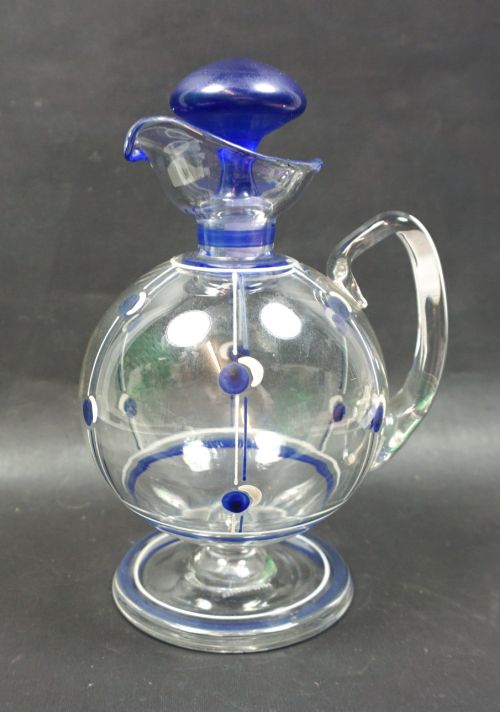
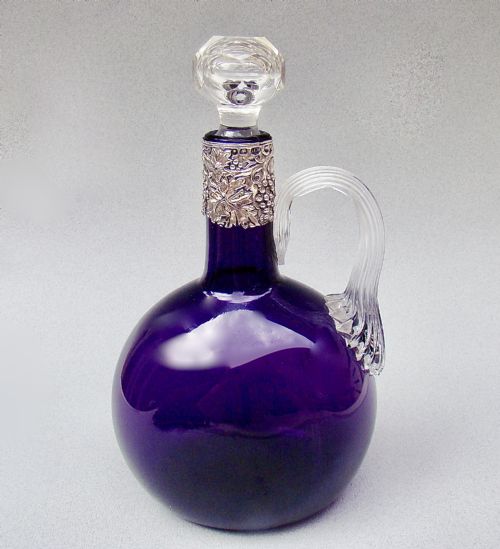
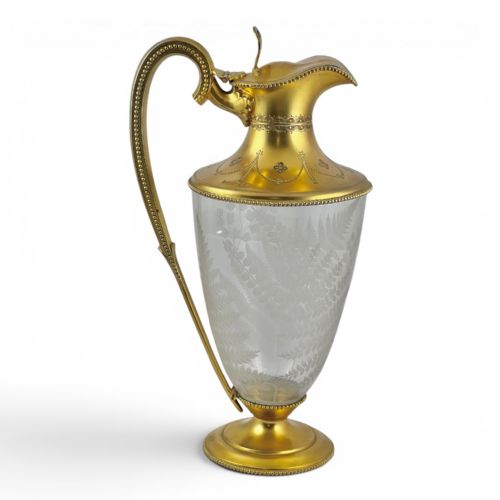
Glass Claret Decanter
When you choose a glass claret decanter, you acquire a vessel designed to serve wine with elegance on the dining table.
Glass Claret Decanter
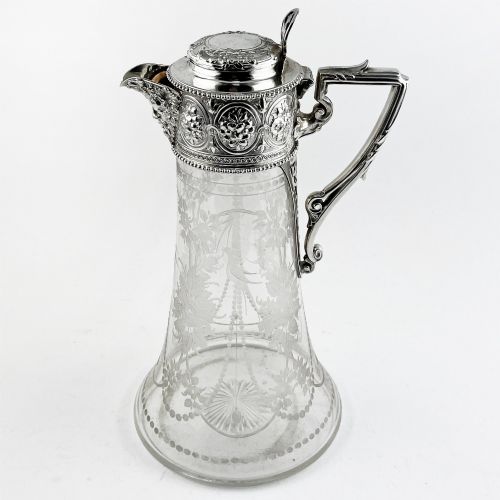
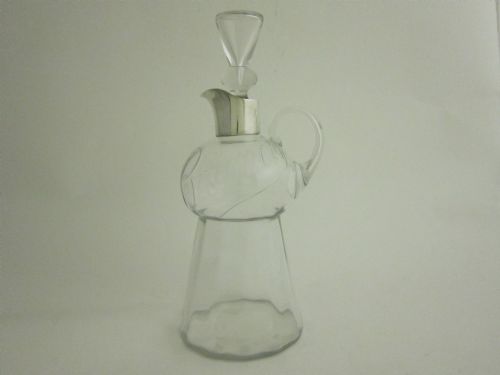
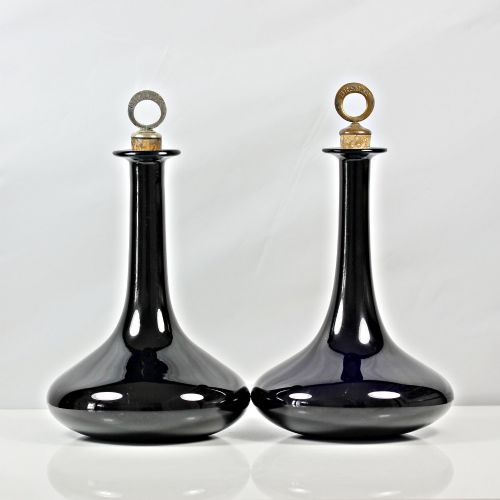
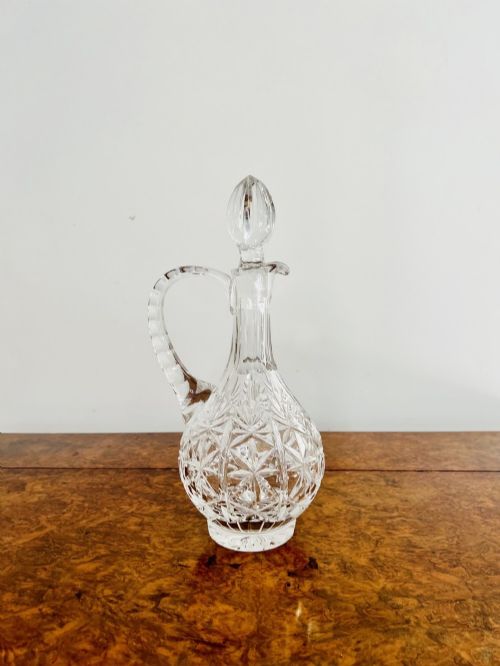
A glass claret decanter combines functional serving vessels with decorative glassware from periods spanning the nineteenth and early twentieth centuries. Buyers seeking these items will encounter Victorian, Edwardian, and George V examples alongside Georgian and Art Deco forms.
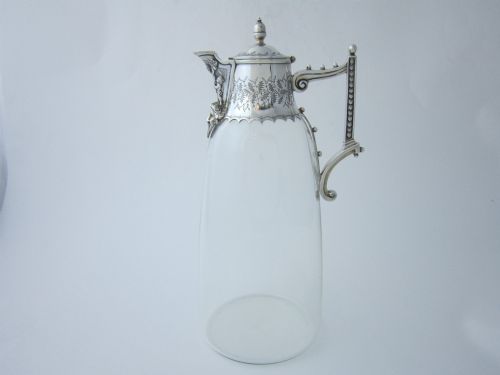
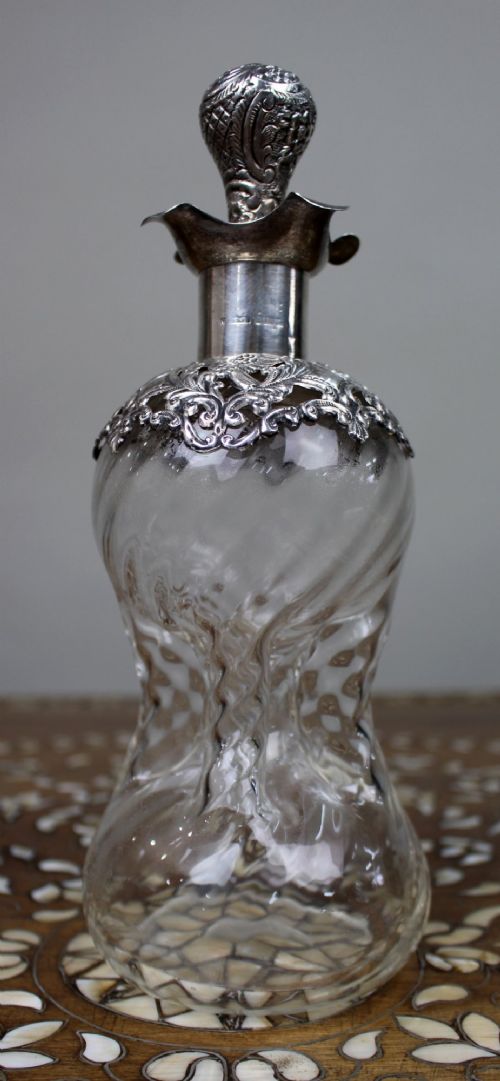
The selections on this page predominantly include nineteenth-century and Edwardian pieces, often mounted with sterling silver, silver plate, or pewter. Forms range from traditional jugs and pitchers to ewers and carafes designed specifically for wine and water.
How they were made
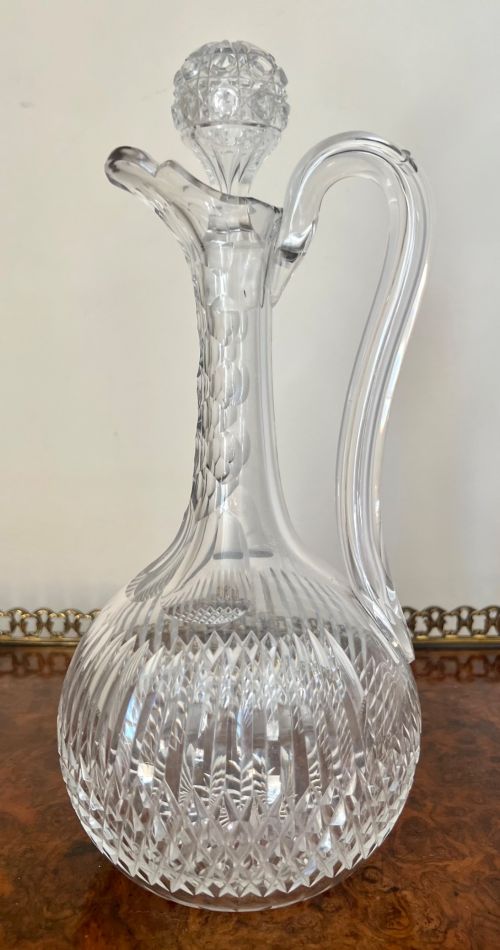
Maker's methods combined heavy glassblowing or crystal moulding with intricate wheel-cutting, pillar cutting, and prism cutting. Artisans applied coloured layers, enamelling, or etching to achieve distinct visual depth in green, cranberry, amethyst, and clear glass.
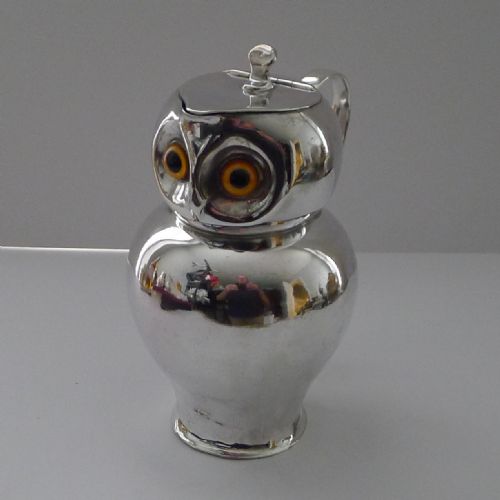
Metal mounts in sterling silver, silver plate, and pewter were cast, chased, or engraved to form hinged lids, collars, and handles. Silversmiths frequently incorporated sculptural details such as masks, serpents, or animal figures into the mounts.
Listings feature items from the Victorian, Edwardian, and George V periods, alongside nineteenth-century and Art Deco examples.
What varies in quality
Quality rests in the clarity and weight of the crystal or glass, combined with the crispness of the wheel-cut facets and engravings. Superior examples display precise symmetry and heavy, substantial metal mounts that fit the glass perfectly.
The distinction between standard production and exceptional work lies in the artistry of the metal framing and decorative motifs. Highly regarded pieces feature cast silver mounts, maker marks from established silversmiths, and unusual coloured glass bodies.
Asprey and Co. Ltd·Henry Matthews·Mappin and Webb·Martin Hall and Co·Archibald Knox for Liberty Co
The Glass Claret Decanter Glossary
- Claret jug
- A specialised vessel designed for serving red wine at the table. These pieces typically feature a handle and a hinged metal cover.
- Cranberry glass
- Transparent pinkish-red glass produced by adding gold chloride to the molten batch. It gained popularity during the Victorian era for decorative tableware.
- Silver plate
- A base metal, often copper or Britannia metal, coated with a thin layer of silver. This technique allowed makers to offer ornate mounts at a lower cost than solid sterling silver.
- Cut glass
- Glassware decorated by holding the vessel against a rotating abrasive wheel to carve geometric patterns. Deep cutting creates brilliant light refraction across the surface.
- Ewer
- A large jug with a wide spout and a curved handle, traditionally used for holding water or wine. Antique examples often feature decorative silver or pewter mounts.
Glass Claret Decanter: Frequently Asked Questions
What is the difference between a decanter and a claret jug?
A decanter generally refers to a stoppered bottle used for holding and serving spirits or wine. A claret jug incorporates a fitted handle and a hinged metal lid operated by a thumbpiece.
Claret jugs were specifically designed for pouring red wine directly at the dining table. Both forms appear frequently across Victorian and Edwardian dining collections.
How can I date my silver mounted glass jug?
Examine the metal mounts for British hallmarks, which typically include a date letter, a town mark, and a standard purity mark. These assay marks provide the exact year the metal component was tested and registered.
Style of cutting, glass colour, and handle design offer further clues when hallmarks are rubbed or absent. Victorian pieces often display heavier floral engraving, while Edwardian items lean toward lighter geometric cuts.
Were these jugs only used for wine?
While primarily created for serving claret and other red wines, similar vessels held water, lemonade, champagne, or spirits. Some specialised Edwardian examples even included internal ice tubes to keep beverages chilled without dilution.
Different forms like carafes, pitchers, and ewers served varied functions across the dining room and sideboard. The presence of a spout and handle accommodated any pouring beverage.