



Glass Chemist Jars
These glass chemist jars bring functional Victorian and Georgian pharmacy history directly into modern interiors through hand-blown vessel forms and original stoppers.
Glass Chemist Jars
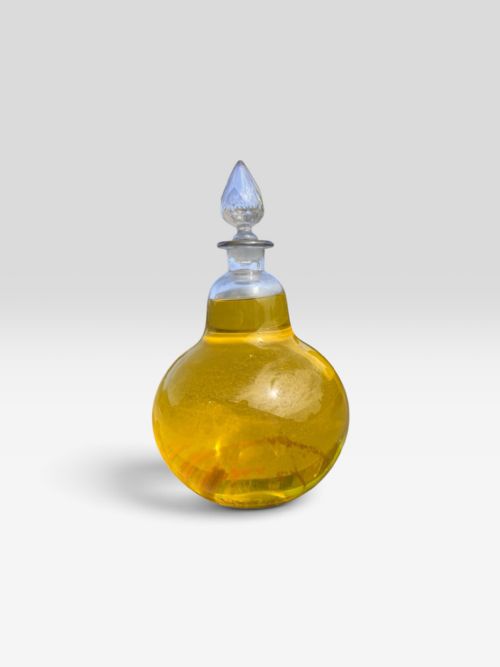
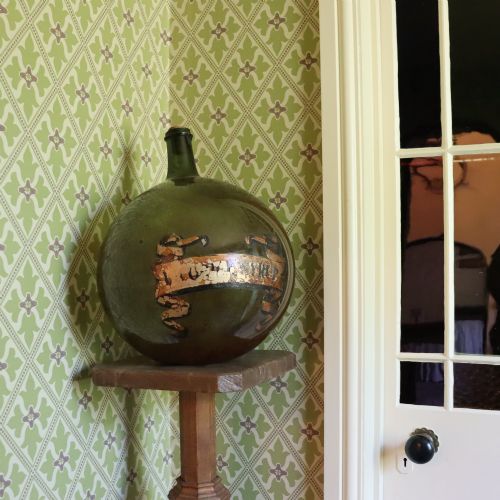
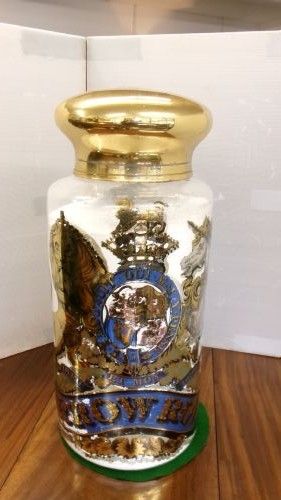
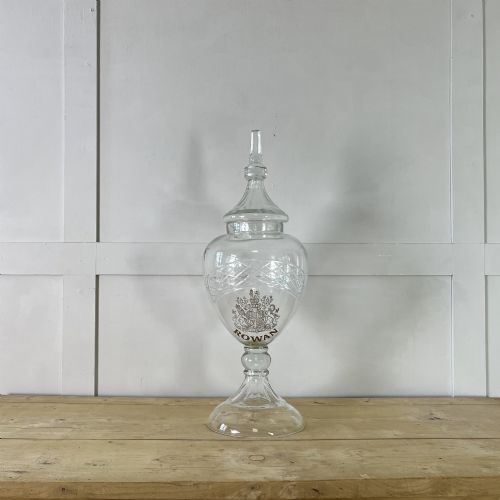
Glass chemist jars encompass functional apothecary bottles, display carboys, and covered vessels originating from 19th-century and early 20th-century dispensary settings. Buyers seeking this phrase encounter hand-blown vessels spanning Victorian, Edwardian, and Georgian periods, alongside French examples.
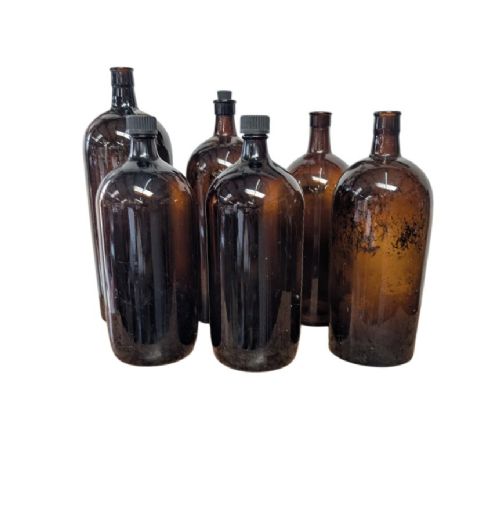
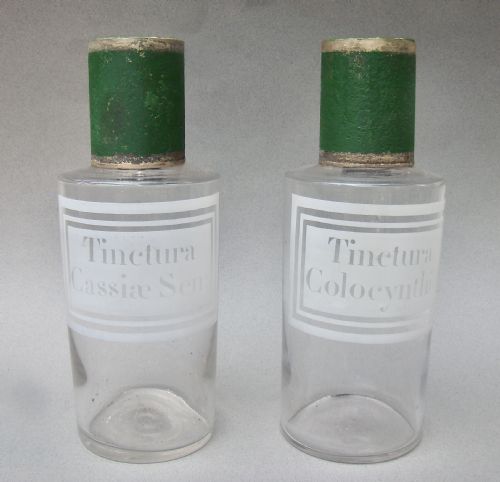
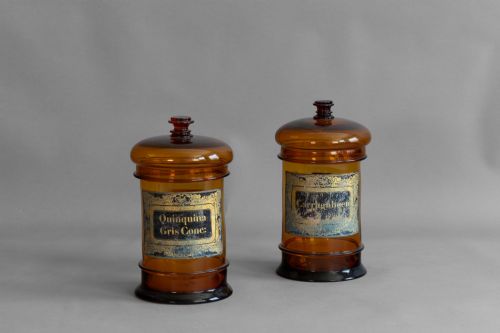
The selection ranges from large shop display carboys and amber winchesters to smaller tincture bottles with lollipop stoppers or paper labels. Many survive in matched pairs or curated sets, reflecting their original commercial pharmacy utility.
What varies in quality
Quality separates through the purity of the metal and the presence of original stoppers that match the specific collar of each vessel. Hand-blown clarity, bubble distribution, and the crispness of etched or gold-leaf lettering define superior execution.
The survival of original paper labels and intact painted pharmacy titles elevates certain examples above plain utility stock. Pairs and matched sets demonstrate greater desirability than isolated single bottles due to their original dispensary context.
Arrowroot once lived inside a grand display jar, proving Victorian pharmacies doubled as upscale grocery and spice emporiums.
The Glass Chemist Jars Glossary
- Carboy
- A large glass vessel with a narrow neck, traditionally used in laboratories and chemist shops for holding bulk liquids or display solutions. These large containers often feature heavy hand-blown bases.
- Tincture bottle
- A smaller glass jar specifically designed to store alcoholic plant or chemical solutions in a pharmacy. They typically include ground glass stoppers to prevent evaporation.
- Lollipop stopper
- A flat, rounded glass closure shaped like a confection, commonly found on Victorian and Edwardian apothecary bottles. This design allows pharmacists to grip and remove the lid easily during compounding.
- Winchester
- A standard heavy-duty glass bottle shape, frequently seen in amber glass, utilised for storing chemical reagents. The design provides stability on pharmacy shelves.
- Bristol blue
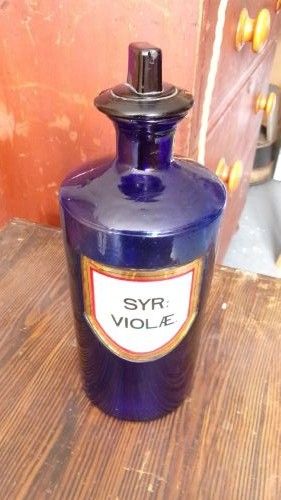
- A deep cobalt-coloured glass produced historically in the West of England, highly valued for protecting light-sensitive medicinal contents. Chemist jars in this hue command strong visual presence.
Glass Chemist Jars: Frequently Asked Questions
What were glass chemist jars used for?
Apothecaries and chemists utilised these vessels to store medicinal dry drugs, chemical powders, and liquid tinctures safely away from light and air.
Larger carboys also served as colourful window displays to advertise the presence of a pharmacy to the street.
How do I date an antique chemist jar?
Dating relies on examining the pontil mark on the base, the thickness of the hand-blown glass, and the style of any applied paper or gold-leaf labels.
Victorian and Georgian pieces generally show more irregular bubble formations and hand-finished stoppers compared to later 20th-century production.
Are the glass stoppers original to the jars?
Original stoppers were individually ground to fit the specific neck of each hand-blown vessel during manufacture.
Collectors look for matching internal numbers or subtle irregularities that confirm the stopper and jar have remained together since the nineteenth century.
How can I style glass chemist jars at home?
These jars integrate well into interior spaces when placed on windowsills where natural light can pass through clear, amber, or Bristol blue glass.
Pairs of tincture bottles or larger carboys work effectively as standalone decorative objects or repurposed table lamps without altering their historical character.