




Glass Cased Barograph
A glass cased barograph is a recording barometer housed within protective glazing, offering a visual record of atmospheric pressure changes for your interior.
Glass Cased Barograph
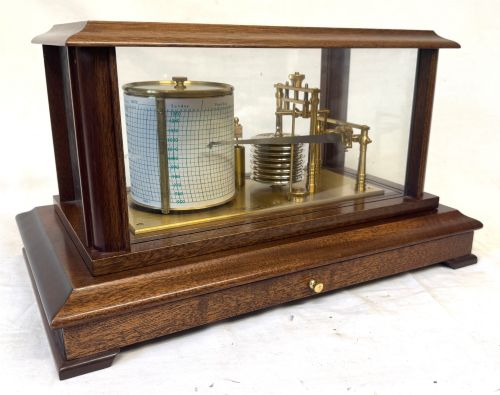
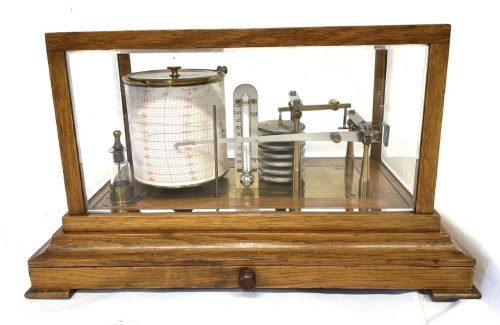
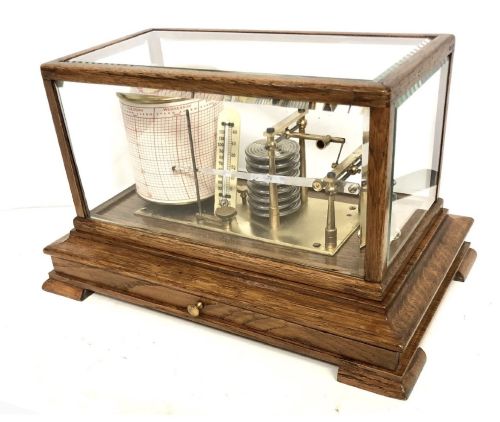
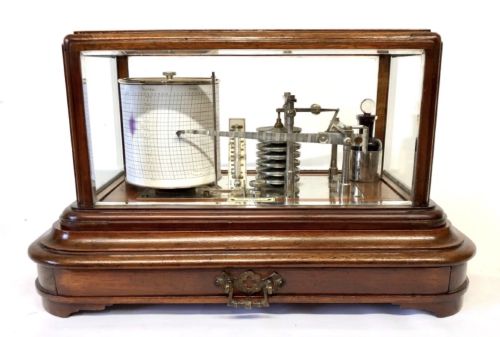
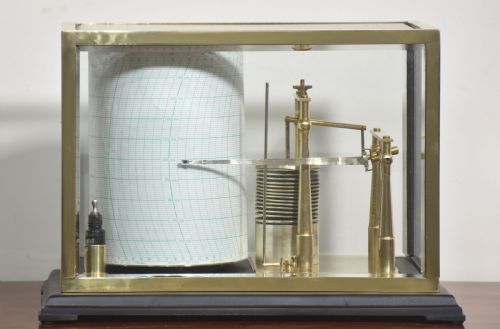
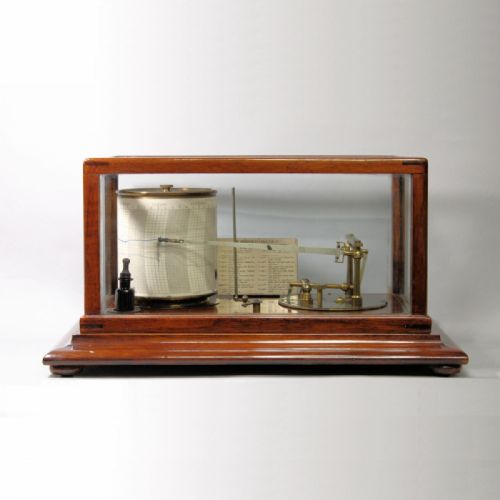
A glass cased barograph records atmospheric pressure onto a revolving drum, combining mechanical utility with decorative cabinetry. The pieces seen here span the Victorian, Edwardian, and mid-twentieth-century periods, with oak and mahogany being the predominant timber choices.
Materials and construction
The enclosures utilise seasoned timbers like oak, mahogany, and walnut, shaped with bevelled glass panels to afford clear visibility from multiple angles. Brass forms the primary material for the internal levers, frames, and recording drums, complemented by steel components and paper recording charts.
Cabinetmakers constructed the wooden bases to house specialised chart drawers, while instrument makers assembled the delicate stack of vacuum chambers that drive the recording arm. Precision engineering governs the linkage between the aneroid capsules and the ink nib.
The documented examples span the late Victorian era through the Edwardian period and into the mid-twentieth century.
Distinctions in quality
Quality rests in the precision of the mechanical linkages and the quality of the cabinet timber, where heavier brass framing and thick bevelled glass distinguish finer examples. Maker provenance also elevates an instrument, particularly those signed by established scientific makers.
The refinement of the wooden cabinetry, including polished mahogany or figured oak housings with fitted chart drawers, separates standard production pieces from higher-grade instruments.
Russell Norwich·Gaupp And Co·Short And Mason·Baines Harrogate·Harrods Of London·Negretti And Zambra·Depree And Young Ltd Exeter
The Glass Cased Barograph Glossary
- Barograph
- An instrument that continuously records barometric pressure on a paper chart. It translates atmospheric shifts into a graphical ink line.
- Aneroid
- Operating without liquid. These mechanisms use sealed metal vacuum chambers that expand or contract with pressure changes.
- Bevelled glass
- Glass panes with angled edges fitted into the protective case. This technique adds a decorative finish to the instrument housing.
- Thermometer
- A temperature-sensing instrument frequently mounted alongside the barograph mechanism. It provides supplementary meteorological data within the same case.
Glass Cased Barograph: Frequently Asked Questions
How does a barograph work?
A stack of metal vacuum chambers expands and contracts as air pressure rises and falls. This movement transfers through brass levers to an arm holding an ink nib.
The nib traces a continuous line onto a rotating paper chart secured around a clockwork drum. Each rotation typically covers the span of a single week.
Where should I place a barograph?
Position the instrument on a stable, level surface away from direct sunlight, radiators, and drafts. Sudden temperature changes can affect the internal mechanism.
Because the case relies on glass panels for viewing, place the barograph where it receives adequate light without risk of accidental knocks.
How do I change the chart paper?
Lift the glass cover and gently secure the recording arm away from the drum. Remove the cylindrical drum by lifting it from its spindle.
Wrap a fresh weekly chart around the metal cylinder, aligning the grid lines, and slide the drum back into position before lowering the nib.
How do I identify the period of a barograph?
Examine the timber used in the case and the style of the corner joints and mouldings. Oak and mahogany cases often reflect the prevailing domestic furniture styles of their decade of manufacture.
Maker signatures or engraved presentation plaques on the brass bedplate provide further chronological markers for dating the instrument.