


Glass Biscuit Barrel
A glass biscuit barrel sits on the table to hold dry treats, combining heavy cut glass with polished metal mounts for dining rooms and drawing rooms.
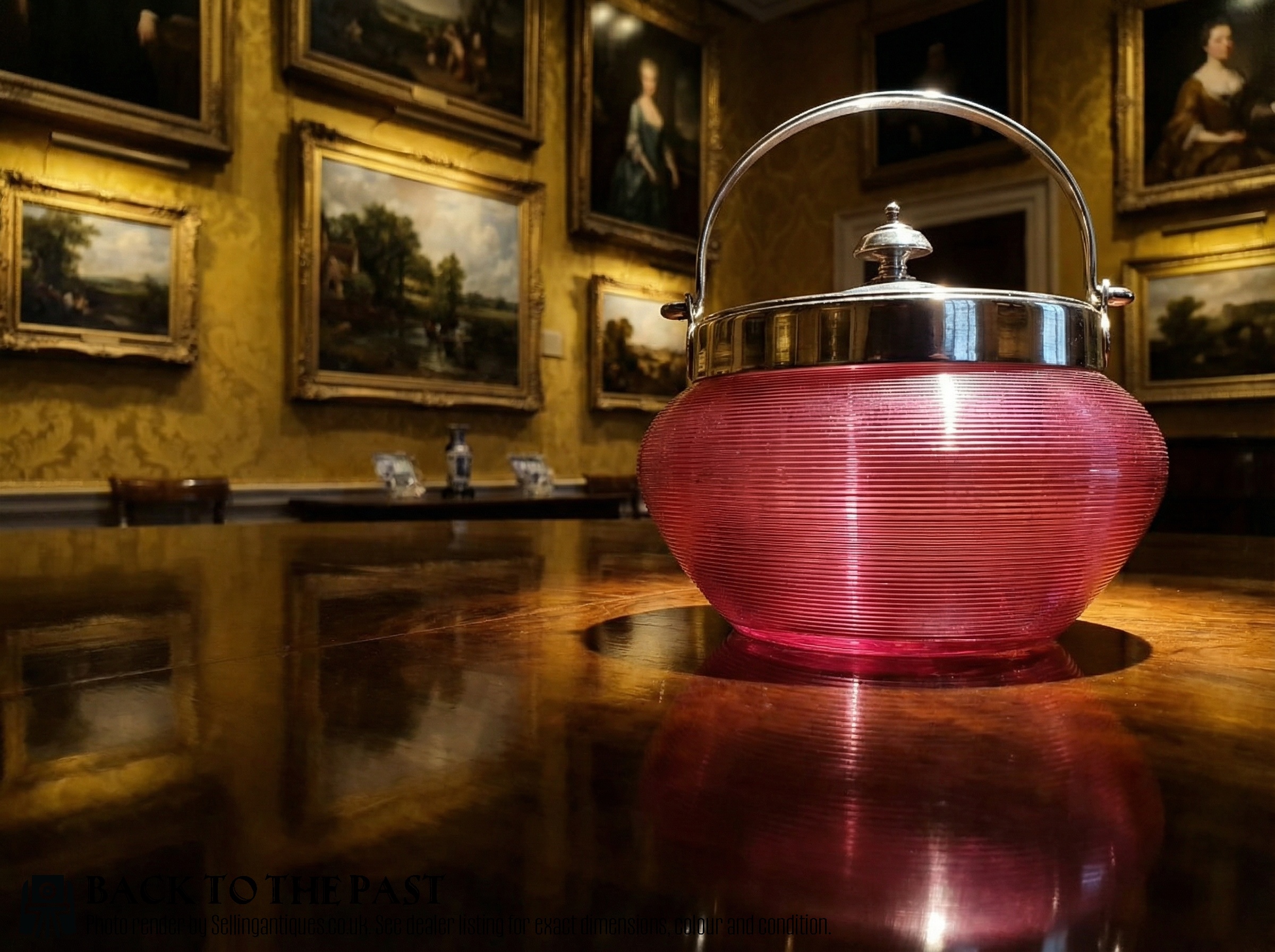
Glass Biscuit Barrel
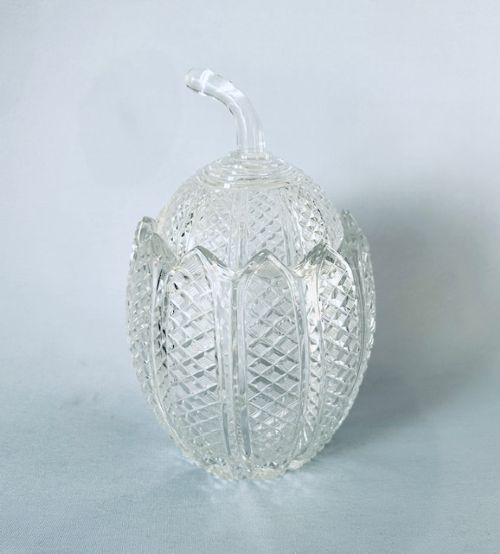
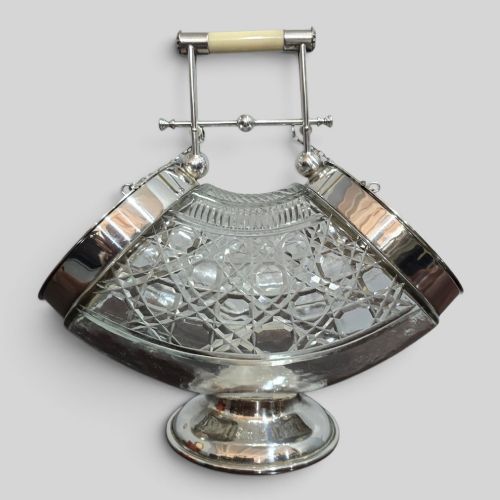
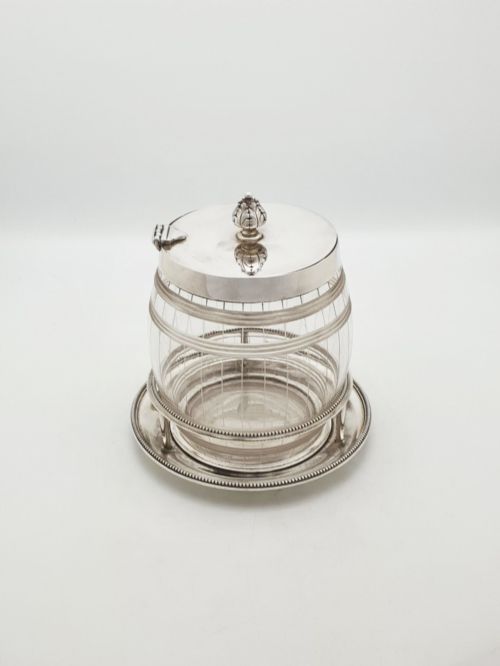
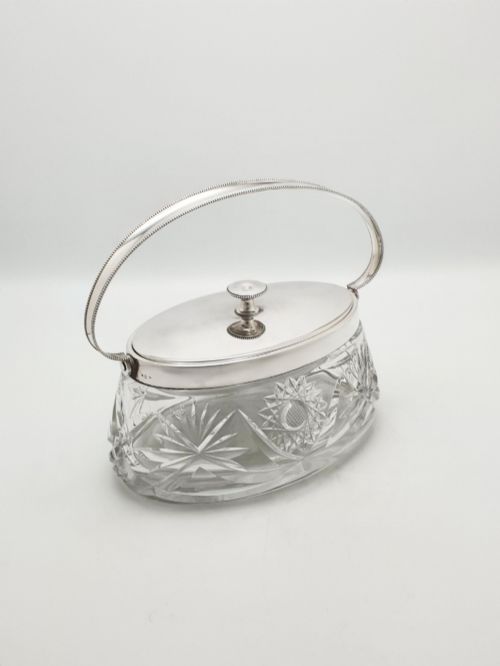
A glass biscuit barrel is a covered container designed to hold sweet biscuits and crackers on the dining table or sideboard. These vessels combine a moulded, cut, or coloured glass body with metal lids, swing handles, and rims.
Most examples found in trade date from the Victorian and Edwardian periods, stretching into the George V era and the Art Deco years. The form appears in various shapes, ranging from cylindrical jars to novelty melon designs and faceted bodies.
Makers produced these containers using clear lead crystal, cranberry glass, and enamelled vessels fitted with silver plate or sterling silver mounts. Collectors meet pieces bearing handles, pierced galleries, and finials that reflect the changing domestic tastes of the late nineteenth and early twentieth centuries.
How they were made
Glass bodies were formed by blowing or pressing molten metal into moulds, followed by hand-cutting, hobnail faceting, engraving, or enamel painting. Cranberry glass achieved its rich hue through the addition of gold chloride to the batch before blowing.
Metal mounts, including swing handles, rims, and covers, were cast in silver plate or sterling silver, frequently supplied by specialist silversmiths and electroplate manufacturers. These metal fittings were then secured to the glass body via collars or fixed pins.
Makers utilised hobnail cutting, enamel painting, and piercing techniques to adorn both everyday containers and high-end sterling silver pieces.
What varies in quality
Quality rests in the crispness of the glass cutting, the depth of the hobnail facets, and the weight of the metal mounts. Superior pieces display heavy lead crystal with sharp, clean facets that catch the light directly.
The sophistication of the metalwork distinguishes better vessels, seen in pierced silver-plated galleries, hallmarked sterling silver mounts, and detailed cast finials such as heraldic dragons. Simpler pieces rely on plain glass bodies with basic plated lids and wire swing handles.
Elkington·WMF·Walker and Hall·James Dixon and Sons·Grinsell and Sons·William Hutton·Sowerby
The Glass Biscuit Barrel Glossary
- Hobnail cut
- A pattern of raised square or diamond-shaped points cut into the surface of glass. This technique creates a tactile, light-refracting texture popular on Victorian and Edwardian tableware.
- Cranberry glass
- A transparent red glass made by adding gold to the molten batch. It ranges from a pale pink to a deep crimson hue.
- Silver plate
- A layer of silver fused to a base metal, typically nickel silver or Britannia metal. This material allowed manufacturers to produce durable decorative mounts at a lower cost than solid silver.
- Swing handle
- An arched metal handle attached to opposite sides of the rim via pivots. It allows the user to lift the lid or carry the barrel with ease.
- Finial
- A small decorative knob or ornament fixed to the centre of the lid. They appear in plain, floral, or figural forms such as animals.
- Lead crystal
- Glass containing a high proportion of lead oxide. This addition increases the weight, refractive index, and clarity of the vessel.
Glass Biscuit Barrel: Frequently Asked Questions
What is a glass biscuit barrel used for?
These vessels were designed to store dry biscuits, crackers, and sweet morsels on the dining table or sideboard during the Victorian and Edwardian eras. The covered container kept baked goods from going stale in humid dining rooms.
Today, buyers use them in living rooms and kitchens to hold small items, or display them empty to showcase the cut glass and metal mounts.
How do I date a glass biscuit barrel?
Dating relies on a combination of glass style, manufacturing technique, and any marks on the metal mounts. Victorian pieces often feature heavy hobnail cutting and cranberry glass, while Edwardian versions lean towards slender proportions and lighter geometric cuts.
Silver-plated mounts frequently bear manufacturer stamps or registry numbers that narrow the production year down to a specific decade. Hallmarked sterling silver pieces carry direct date letters for the assay office.
Are the handles original to the barrel?
Swing handles and metal rims were integral to the original manufacture, attached securely through collar mounts or side pins. Because these parts endured heavy handling, check that the pivot points match the plating wear of the main rim.
Replacement handles usually display mismatched metal colour or ill-fitting attachment points that do not align with the glass collar.
What is cranberry glass?
Cranberry glass is a pinkish-red decorative material created by introducing small amounts of gold into the molten glass batch. It gained immense popularity during the late Victorian period for tableware and display items.
In biscuit barrels, this coloured glass is frequently combined with cut patterns that reveal the lighter shade beneath the polished surface.