

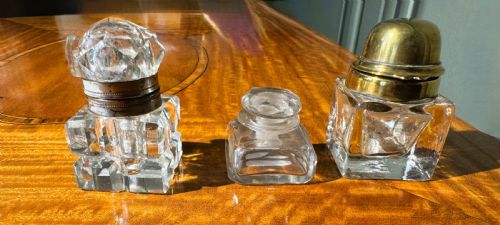
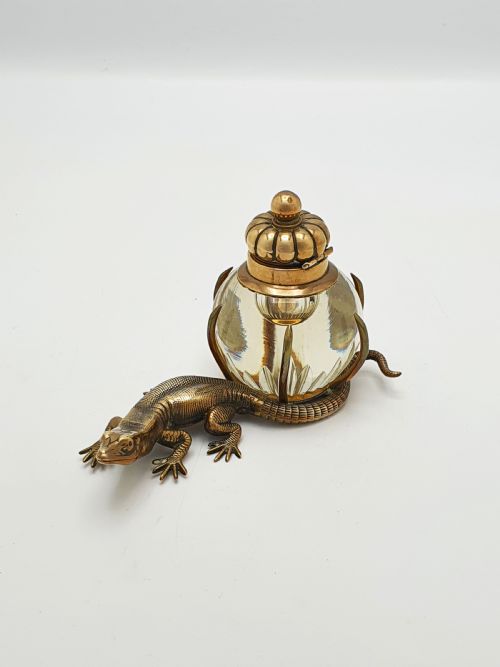


Glass and Brass Inkwell
A glass and brass inkwell brings a heavy, tactile presence of another century to a working desk.
Glass and Brass Inkwell
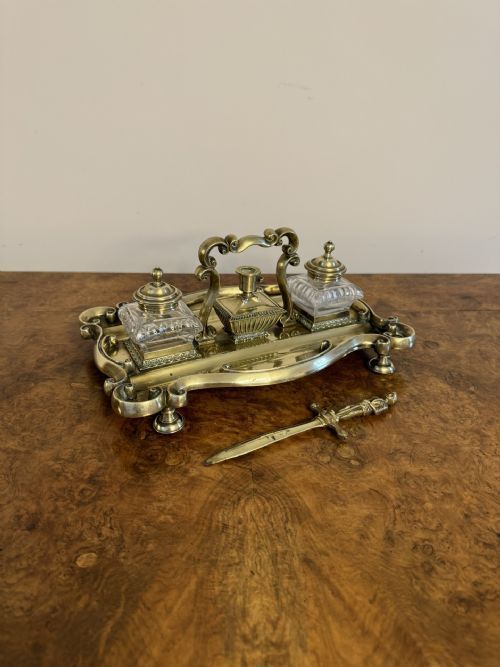
A glass and brass inkwell combines heavy cast metal with thick, pressed or cut glass reservoirs meant to hold liquid ink safely on a writing surface. These objects range from single portable ink pots to grand desk stands holding multiple bottles, pens and trays.
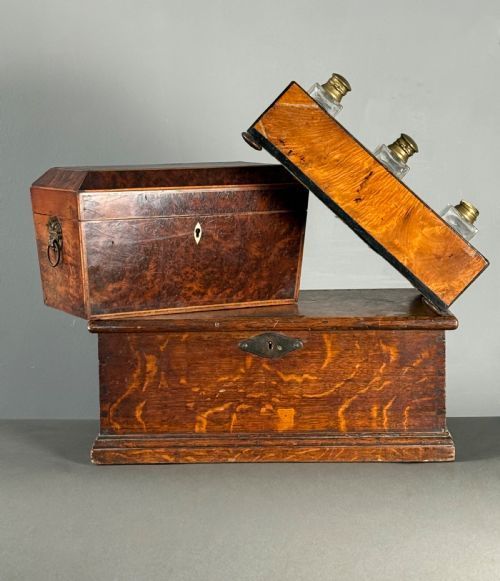
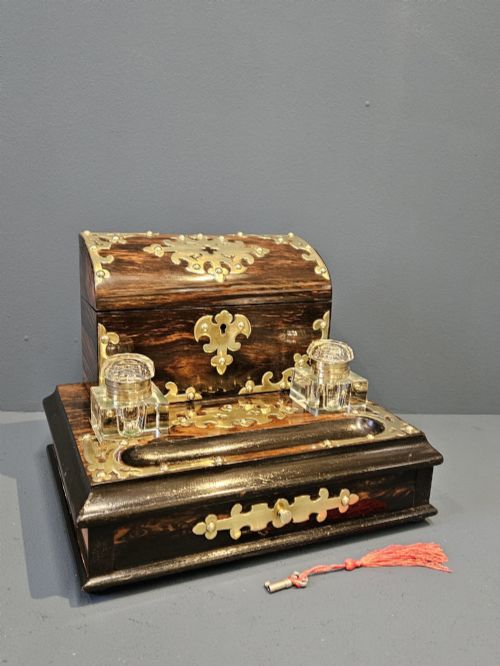
Most examples found here date from the nineteenth century, spanning Victorian, Edwardian and Regency periods, alongside earlier Georgian items. You will frequently encounter fitted desk tidies and elaborate stands that incorporate wood bases made from oak, walnut, coromandel or rosewood alongside the essential glass and brass components.
How they were made
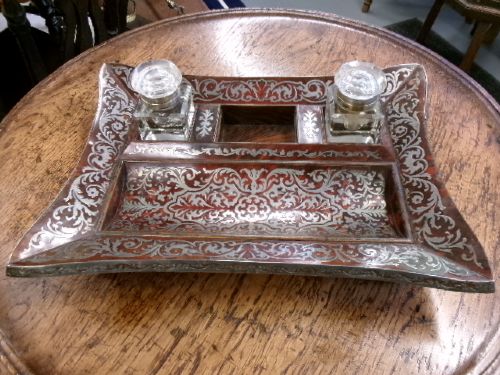
The brass elements are typically cast, chased or mounted to create sturdy frames, hinged lids and collars, while the glass reservoirs are moulded, heavy-cut or iridescent creations designed to withstand the corrosive nature of iron gall ink. Many nineteenth-century stands integrate exotic timbers, tortoiseshell or boulle work inlaid with brass wire.
Makers frequently combined materials, mounting glass bottles within brass housings or securing them to wooden trays with pierced brass galleries and fitted pen rests.
An owl or a bulldog staring back from your stationery tray watches silently over your daily correspondence with glass eyes.
What varies in quality
Quality rests in the weight of the castings, the crispness of the chasing on the brass work, and the depth and clarity of the cut glass. Superior examples feature well-fitted hinged lids that close tightly over original glass inserts, whilst lesser pieces show plain, thin metal and replacement bottles.
The choice of base materials also dictates standard, moving from simple solid oak to finely figured coromandel, rosewood, or elaborate boulle work with mother of pearl and bone details.
James Cartland and Sons·Kralik·Loetz·Moser
The Glass and Brass Inkwell Glossary
- Inkstand
- A complete desk accessory comprising one or more inkwells, a pen tray, and sometimes a sander or bell. It anchors the writing equipment of a nineteenth-century desk.
- Standish
- An alternative term for an inkstand or desk set, often denoting a more formal or portable receptacle for writing materials. These frequently incorporate small drawers and compartments.
- Cut Glass
- Glass shaped and patterned by grinding and polishing wheels to create deep facets. This heavy material prevents the inkwell from tipping during use.
- Boulle Work
- An ornamentation method using marquetry of tortoiseshell and brass, popular in French-inspired nineteenth-century desk sets. It adds high contrast and reflective detail to the wooden base.
- Coromandel Wood
- A dense, heavily grained timber from Asia used for luxury Victorian desk boxes and stands. Its dark brown colour with black stripes provides a dramatic backdrop for brass mounts.
Glass and Brass Inkwell: Frequently Asked Questions
How do I date an inkwell?
Dating relies on stylistic clues, manufacturing techniques, and the materials used in the base or mounts. Regency and Georgian pieces often display restrained elegance, whereas Victorian items frequently embrace elaborate Gothic revival, floral motifs, or novelty forms.
The evolution of glass pressing techniques and screw-top collars also helps narrow down the decade of production. Examining the hinges, screw heads, and secondary woods provides further chronological certainty.
Are original glass inserts important?
Original glass inserts significantly enhance the integrity and collectability of an inkstand. Finding a stand that retains its matching pair or trio of cut glass bottles confirms that the components have stayed together.
Replacements are common due to breakage over decades of daily use. While a mismatch does not ruin the utility, matching glass adds considerable character.
How were these inkwells used?
These pieces sat upon desks in studies, offices, and drawing rooms to supply liquid ink for dip pens. Users dipped steel or quill pens directly into the central glass reservoir before writing letters and ledgers.
Hinged brass lids kept the ink from drying out too quickly and prevented dust from settling in the fluid. Desk stands often included grooves to lay pens across between uses.
How do I clean brass and glass?
Cleaning requires a gentle touch to preserve the aged patina on the brass mounts and prevent scratching the glass. Use a soft, dry cloth on the metal rather than harsh chemical polishes that strip historical surface texture.
Glass inserts can be washed carefully in warm, soapy water if they contain dried ink residue. Ensure all parts are completely dry before reassembling the stand.