
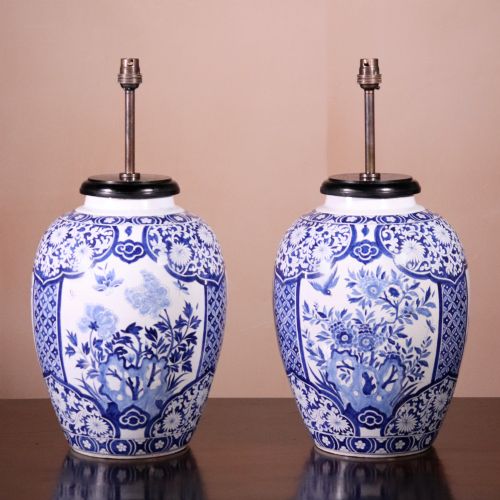


Ginger Jar Lamp
A ginger jar lamp brings substantial ceramic form and patterned glaze into a room, turning utilitarian storage vessels into grounded interior lighting.
Ginger Jar Lamp
A ginger jar lamp takes a ceramic vessel originally made for storage and mounts it as a table lamp, retaining the generous shoulder and narrow foot of the original form. When you search for ginger jar lamp, you meet pieces converted from earlier vases or produced specifically as lamps across the nineteenth and twentieth centuries.
Blue and white porcelain dominates the selections, alongside famille verte, famille rose, and powder blue surfaces. Pairs appear frequently alongside single examples, ranging from smaller cabinet pieces to large floor or table statements.
The aesthetic draws heavily on Chinese export porcelain, Japanese Kutani wares, and European interpretations including French chinoiserie and Georgian Delft styles. These objects bridge traditional Far Eastern ceramics with Western domestic lighting requirements.
How they were made
The core body is formed from porcelain or tin-glazed earthenware, thrown or moulded before being painted under or over the glaze with mineral pigments. Artisans then fitted these ceramic bodies with metal mounts in brass, tin-glazed elements, or ormolu to secure the electrical hardware and wooden or fabric components.
Many historical examples began life as lidded storage jars or vases that were later drilled and converted for electrical wiring. Silk, fabric, and gold leaf additions complete the assembly, pairing the ceramic base with complementary shades.
Materials across these listings include porcelain, brass, fabric, wood, ormolu, silk, gold leaf, and tin-glazed earthenware.
What varies in quality
Quality rests upon the crispness of the ceramic painting, the depth of the glaze, and the integration of any metal mounts. Finer nineteenth-century examples display hand-painted detail with controlled brushwork, whereas mass-produced interpretations lack the same tonal variation in the blue and white or polychrome pigments.
The proportion between the ceramic body and its hardware dictates visual balance. Superior conversions preserve the integrity of the original vessel without compromising the structural stability of the lamp.
The Ginger Jar Lamp Glossary
- Famille Rose
- A grouping of ceramic decoration utilising an opaque pink enamel introduced in the eighteenth century. This palette allows for soft tonal gradations in floral and human subjects.
- Ormolu
- Gilded bronze mounts used to frame or elevate ceramic bodies. It adds weight and decorative richness to nineteenth-century pieces.
- Chinoiserie
- European artistic styles reflecting Chinese motifs and techniques. It appears across various decorative arts from the Georgian period onward.
- Crackware
- Pottery featuring a deliberate network of fine cracks in the glaze texture. This stylistic finish highlights the age and decorative surface of the ceramic.
Ginger Jar Lamp: Frequently Asked Questions
Are these lamps converted from old jars?
Many examples are historic ceramic vessels that were drilled and fitted with electrical hardware at a later date. This conversion process transforms lidded jars and vases into functional table lighting while retaining their original glaze and form.
Other pieces were produced specifically as lamps during the nineteenth or twentieth centuries, utilising traditional ceramic forms from the outset.
How do I style a pair of lamps?
Matched pairs work effectively on large sideboards, desks, or flanking a mantelpiece. Their substantial ceramic forms provide symmetry and height to a room.
Single lamps anchor smaller reading tables or darker corners, introducing colour and pattern without dominating the layout.
What periods do these lamps come from?
The selection spans from the eighteenth century through the nineteenth century and into the twentieth century. Nineteenth-century pieces and later nineteenth-century adaptations form the largest share of available items.
Earlier eighteenth-century examples feature Delft earthenware or export porcelain, while later twentieth-century pieces include celadon conversions.
How do I identify different glaze styles?
Blue and white porcelain relies on cobalt oxide underglaze painting, creating deep blue designs against a white ground. Famille rose and famille verte employ overglaze enamel colours, adding pinks, greens, and yellows respectively.
Powder blue glazes present a blown-on mottled surface, sometimes highlighted with gilt decoration.