

Giltwood Wall Lights
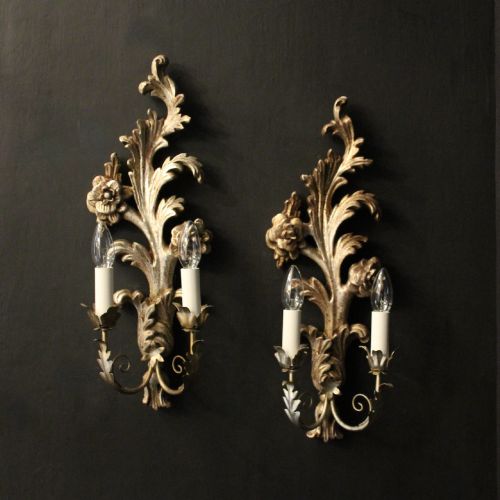
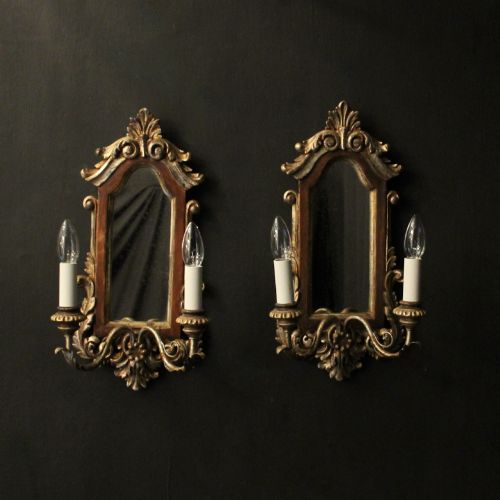
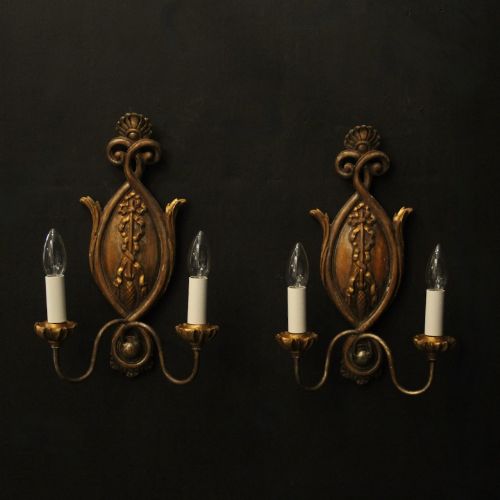
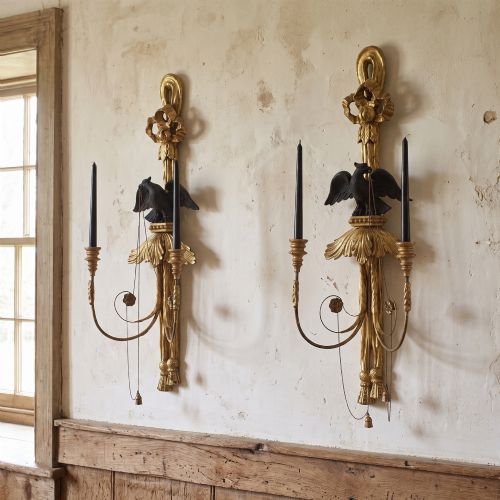
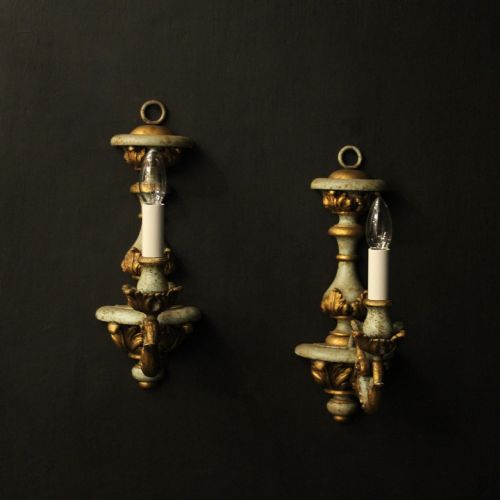
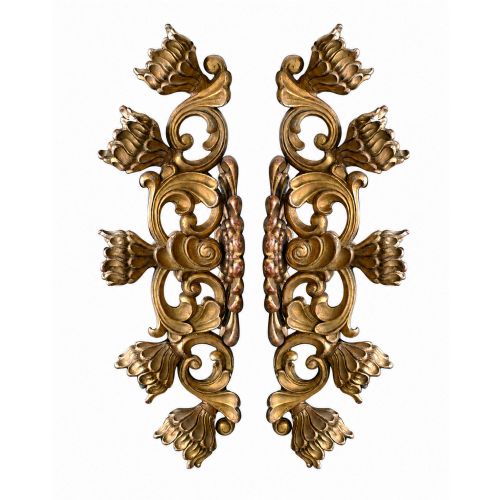
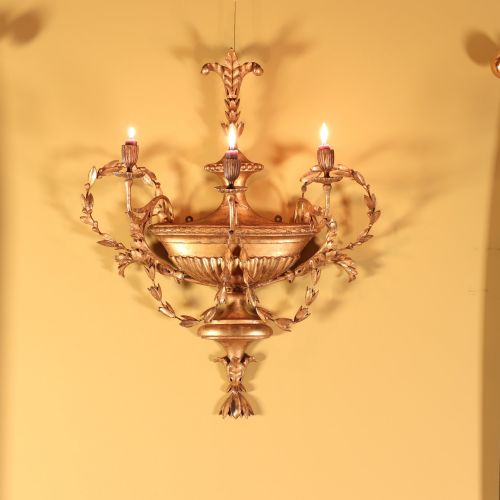
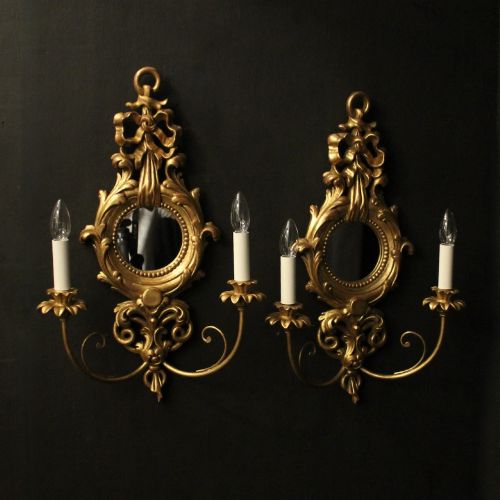
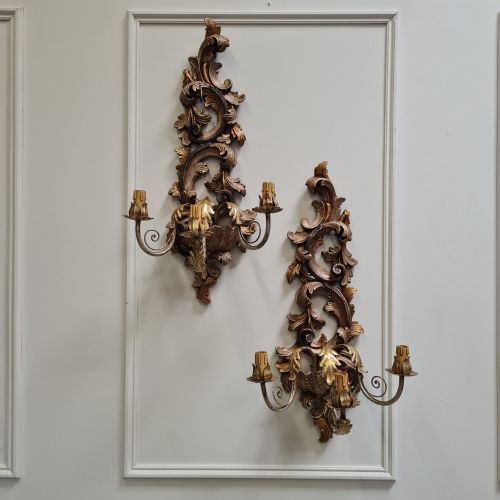
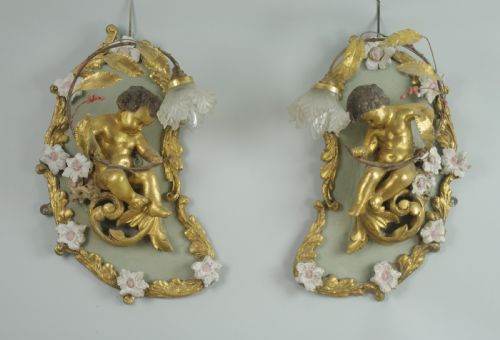
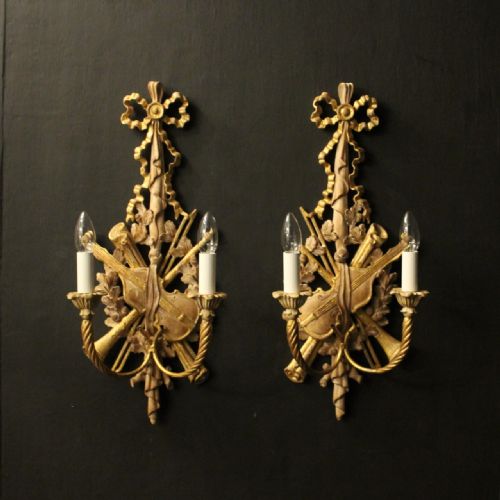
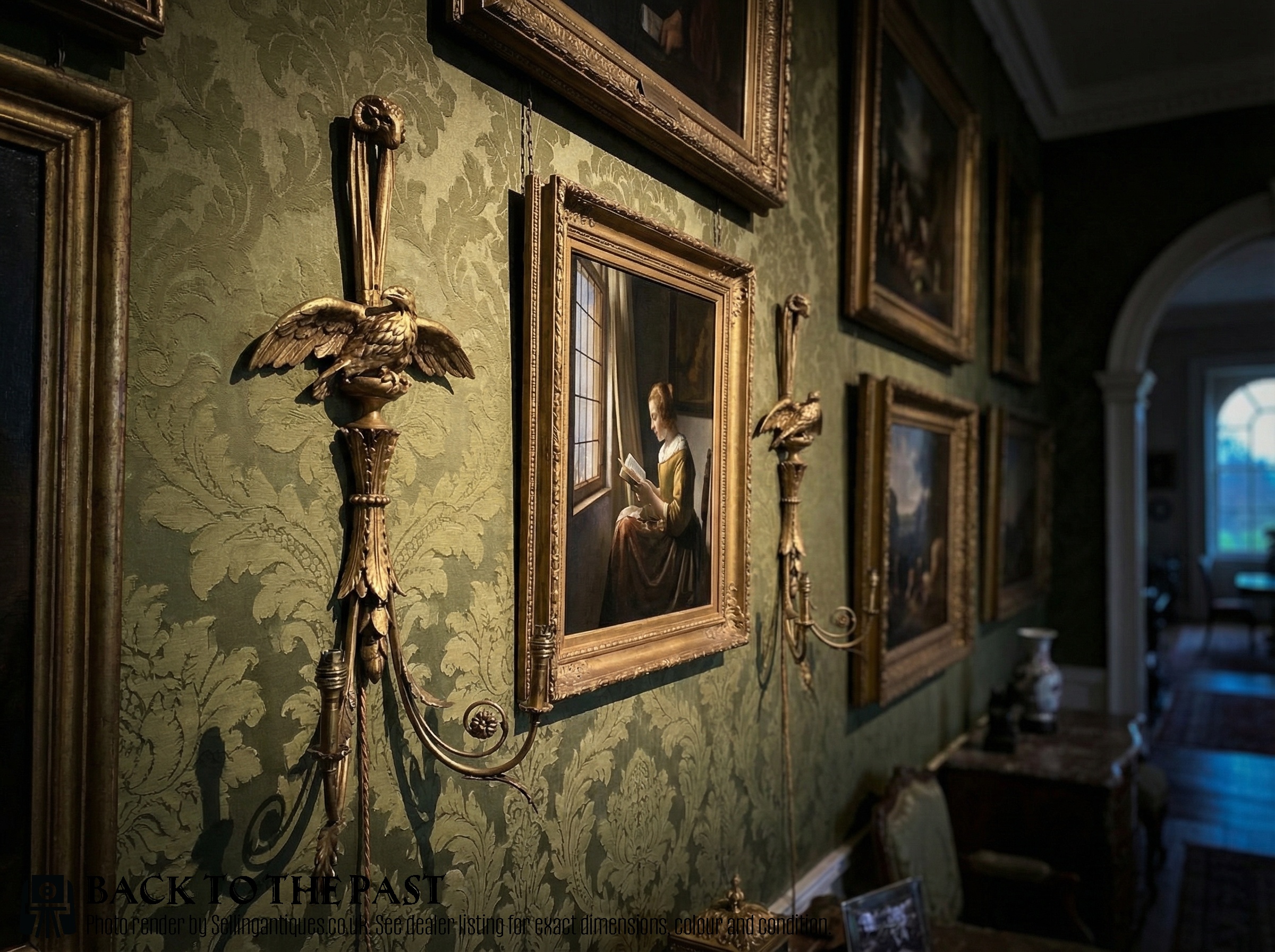
These giltwood wall lights bring warmth and historic character to a room, catching candle or electric light against carved surfaces.
Giltwood Wall Lights
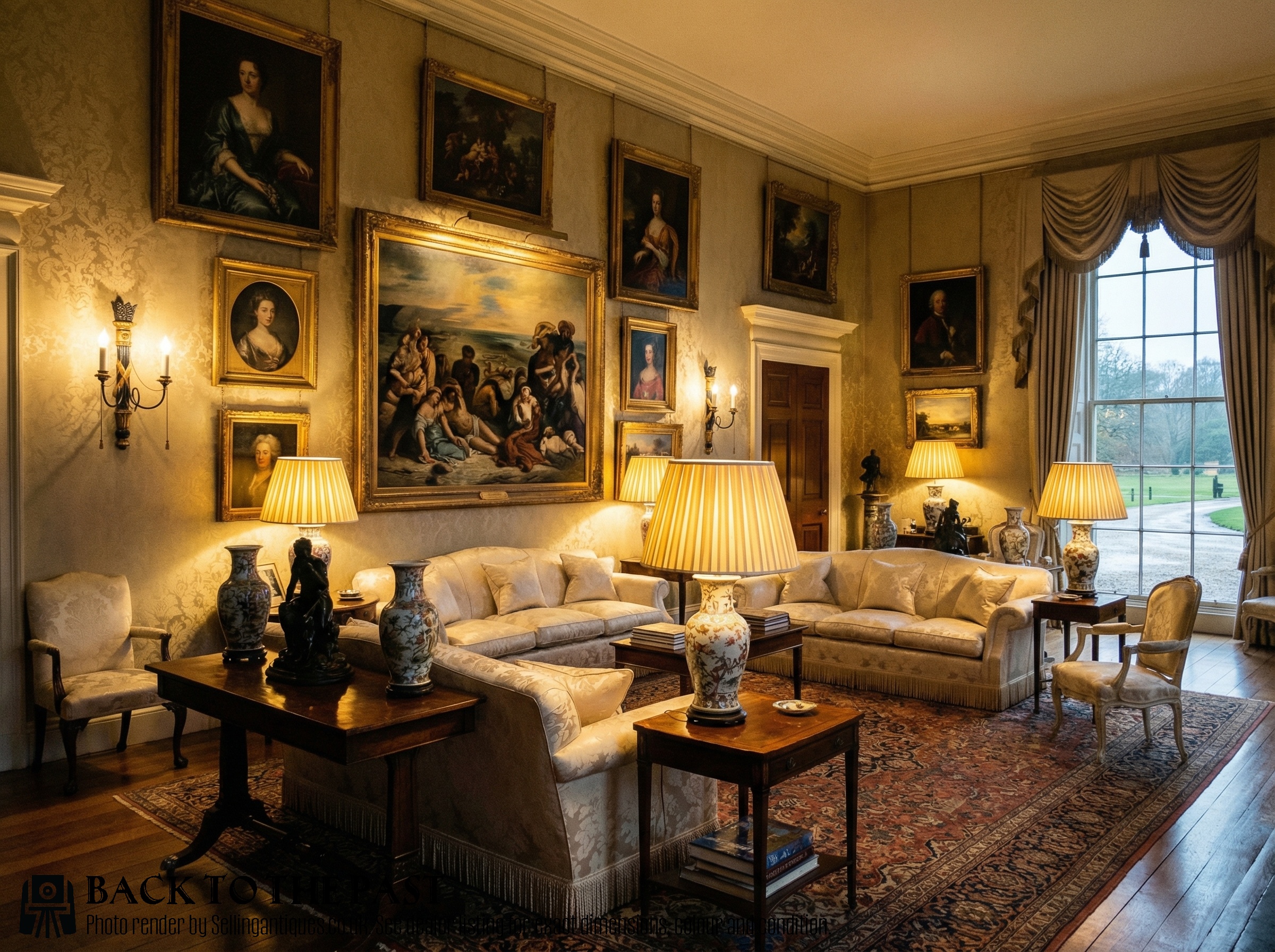
When you search for giltwood wall lights, you find decorative illuminating fixtures designed to mount directly onto domestic walls. These pieces originate predominantly from French and Italian workshops, spanning the eighteenth, nineteenth, and early twentieth centuries.
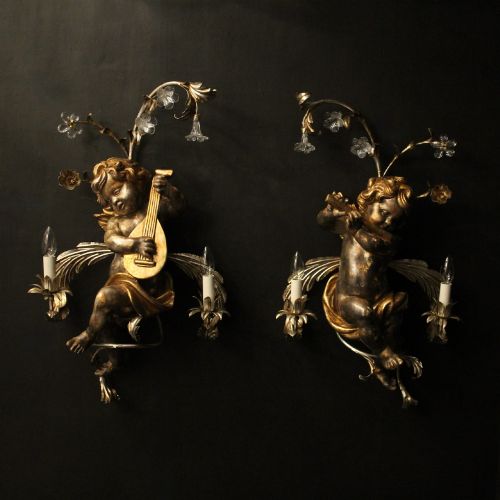
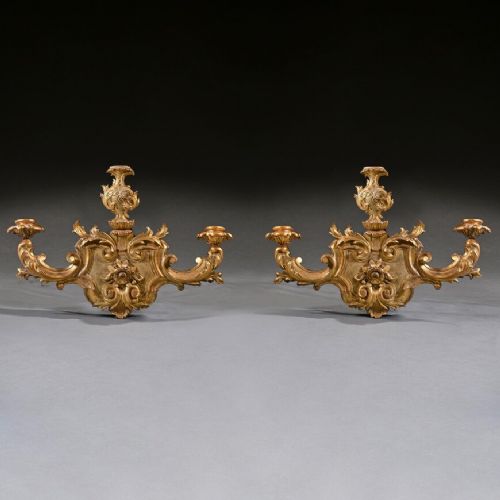
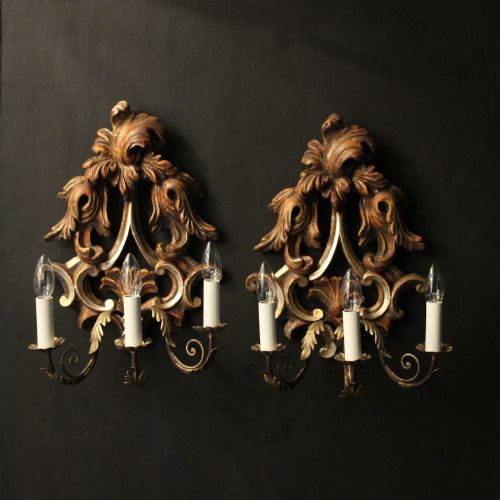
The most common format on this page is the pair, often fashioned with twin or triple branches for multiple candles or bulbs. Forms range from Florentine leaf carvings and Venetian rococo curves to formal Louis XIV designs.
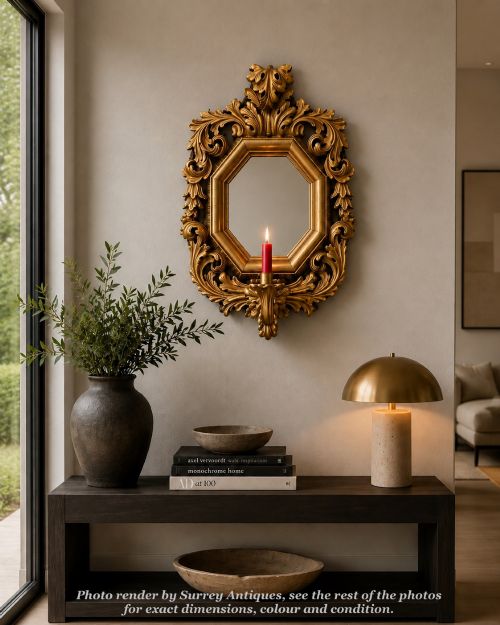
Regional variations appear frequently in the record, including ebonised wood details, silver gilt finishes, and combinations with toleware or polychrome decoration. Many examples double as mirrored sconces, reflecting interior space alongside their primary function.
Materials and Making
Maker artisans carved structural forms from solid wood, applying layers of gesso to build up fine detail before gilding. Gold leaf and liquid gilt finishes provided the luminous surface that defines the aesthetic of these wall fixtures.
Material combinations extend beyond plain timber to incorporate brass, metal fittings, and occasional ebonised wood contrasts. Surviving pieces sometimes reveal traces of polychrome paint beneath or beside the gilt layers, showing complex historical decoration.
Retail Price Guide 2026
Typical UK retail prices for giltwood wall lights, calculated from the Sellingantiques database of over a million retail prices indexed since 2003. This retail price guide relies exclusively on Sellingantiques data; no external sources or auction records are used, so the figures do not describe the wider market.
Some wall lights wear silver gilt coats, looking rather chilly until candle flicker warms them up.
Quality and Craft
Depth and crispness of hand carving separate ambitious workshop pieces from simpler production. Superior examples display undercut leaves and scrolls that catch the light dynamically, whereas lesser items rely on flat surface gesso work.
Proportion and balance across a pair dictate visual success on the wall, particularly where multiple arms or mirrored plates are involved. The integrity of the original gilt surface, rather than modern repainting, determines the historical character of the piece.
The Giltwood Wall Lights Glossary
- Giltwood
- Timber coated with gold leaf or metallic powder over a prepared ground. This technique creates a reflective surface designed to amplify ambient light in candlelit rooms.
- Gesso
- A plaster mixture applied to carved wood to create a smooth surface for gilding. It allows craftsmen to model sharp, intricate details before applying gold leaf.
- Sconce
- A wall-mounted lighting fixture designed to hold candles or electric lamps. Historical examples often incorporate mirrored backplates to maximise illumination.
- Toleware
- Painted or lacquered metalware frequently paired with carved wood elements in lighting pieces. It introduces contrasting colour and texture to gilt compositions.
- Rococo
- An ornate, asymmetrical style characterised by C-scrolls, plant motifs, and naturalistic asymmetry. This aesthetic heavily influences eighteenth-century and revival wall lights.
Frequently Asked Questions
How are wall lights fixed securely?
Most antique wall lights use designated mounting brackets or sturdy hanging loops attached to the rear wooden structure.
Installers should match fixings to the specific wall type to support the combined weight of timber, gesso, and metal arms.
Can antique wall lights use electricity?
Many surviving fixtures have been adapted with internal wiring to hold modern electric bulbs safely.
Original candle holders are often converted while retaining the exterior appearance of the nineteenth or early twentieth-century design.
How do I clean giltwood surfaces?
Dusting requires a very soft, dry brush to avoid disturbing fragile gold leaf or aged gesso layers.
Moisture and chemical cleaners damage historic gilding instantly, so wet cleaning methods must be avoided entirely.
Are pairs always identical?
Hand-carved antique pieces frequently show slight individual variations due to the bespoke nature of workshop production.
Pairs made centuries ago often match closely in overall design and dimensions while retaining subtle maker marks.