





Giltwood Oval Back Chairs
Giltwood oval back chairs bring neoclassical proportion and gilded warmth to a room, offering both seating and architectural presence.
Giltwood Oval Back Chairs
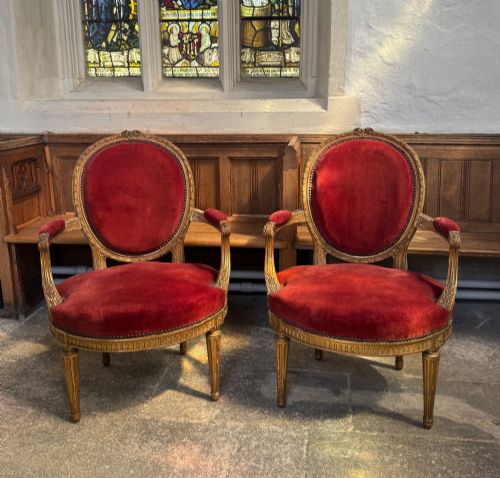
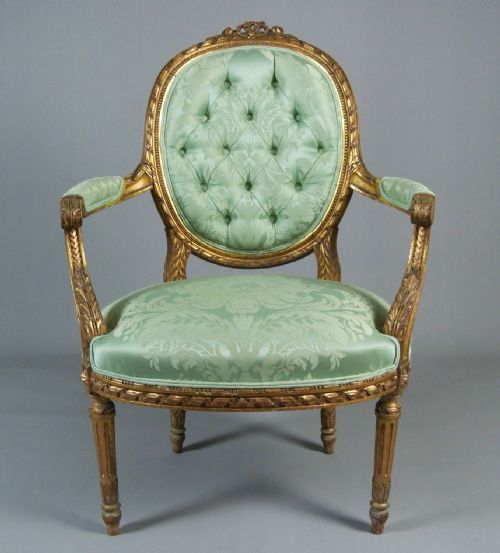
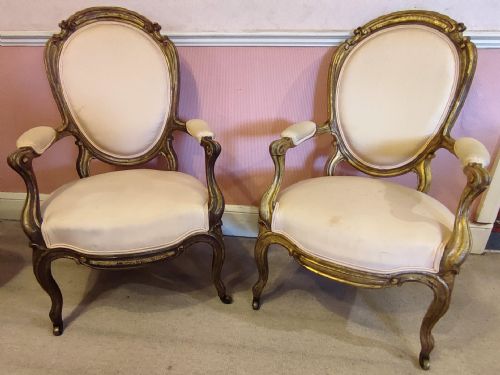
Giltwood oval back chairs are seating pieces defined by their rounded backs and gilded wooden frames, originating across the eighteenth and nineteenth centuries. Buyers searching for giltwood oval back chairs frequently encounter French styles, particularly Louis XVI revivals and nineteenth-century salon pieces.
The inventory includes diverse seating forms such as armchairs, dining chairs, nursing chairs, and complete salon suites. Makers adopted classical vocabulary from the George III neoclassical period through to twentieth-century revivals.
Origins span English workshops and French chateau aesthetics, utilising wood frames dressed in silk damask, velvet, or plain textiles. These chairs function as principal salon furniture, occasional seating, or matched sets for dining rooms.
How they were made
Makers carved timber frames from wood before applying layers of size and gesso to create a smooth surface for gilding. Fine gold leaf was then laid down by hand onto the prepared ground, occasionally burnished to create contrasting matte and reflective finishes.
Upholstery techniques involved webbing, stuffing, and covering the seats and backs in textiles such as silk damask, velvet, or brass-tacked silk. Frames display carved architectural motifs including fluting, ribbon twists, and neoclassical ornamentation.
Listings span the eighteenth, nineteenth, and early twentieth centuries, featuring wood frames finished in giltwood, silver gilt, and gold paint.
What varies in quality
The crispness of the wood carving dictates the initial quality of the frame, separating deeply defined acanthus leaves and fluting from soft, shallow moulding. Hand-applied gilding shows depth and tonal variation, whereas lower-grade pieces often display flat, modern metallic paints.
Structural integrity depends on the original joinery within the frame, particularly at the joints of the oval back and leg attachments. Upholstery quality reflects the choice of traditional textiles like silk damask and the retention of period stuffing methods.
Thomas Chippendale
The Giltwood Oval Back Chairs Glossary
- Giltwood
- Wood that has been coated with thin sheets of gold leaf over a prepared gesso ground. This finish provides the characteristic metallic brilliance seen on formal period furniture.
- Louis XVI Style
- A neoclassical design vocabulary originating in France, characterised by straight tapered legs, geometric symmetry, and classical motifs such as fluting and oval backs. It experienced revivals throughout the nineteenth and early twentieth centuries.
- Bergère
- An enclosed upholstered armchair with wooden arms and an exposed frame, typically featuring an upholstered back and seat. It provides a deeper and more enclosed seat than an open armchair.
- Salon Suite
- A matched set of seating furniture designed for a formal reception room, usually comprising a central settee alongside several matching armchairs and occasional chairs.
Giltwood Oval Back Chairs: Frequently Asked Questions
Are giltwood oval back chairs comfortable for daily use?
These chairs were designed for formal reception rooms and social gatherings rather than long lounging periods. Their upright posture and padded seats offer firm support for dining or conversation.
Living with them requires mindful placement away from heavy traffic to protect the delicate gilded frames from accidental knocks and scrapes.
How do I identify an eighteenth-century chair from a nineteenth-century revival?
Period pieces from the eighteenth century exhibit hand-tooling marks, older timber species, and wear patterns consistent with extended age. Nineteenth-century revivals often adopt the same Louis XVI vocabulary but display different construction markers and cleaner timber joins.
Examining the underside and the construction of the frame usually reveals the manufacturing techniques typical of each distinct era.
Can I reupholster a giltwood chair without damaging the frame?
Professional upholsterers can replace the fabric and internal stuffing by working around the tack rails without disturbing the gilded wooden exterior. Traditional materials like horsehair and webbing should be retained where possible to preserve the historical integrity of the piece.
Careful handling ensures the gold leaf remains unblemished during any textile update.
How should I clean and maintain a gilded finish?
Giltwood requires gentle dusting with a soft, dry ostrich feather brush to remove surface particles without abrading the thin gold leaf. Water, chemical sprays, and abrasive cloths must be avoided entirely to prevent permanent lifting of the surface.
Keeping the chairs away from direct sunlight and moisture fluctuations protects both the gesso ground and the timber beneath.