



Giltwood Eagle Wall Mirror
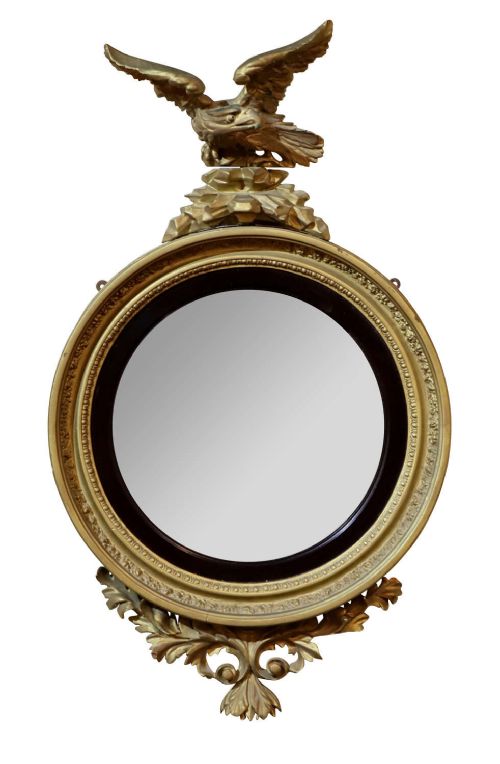
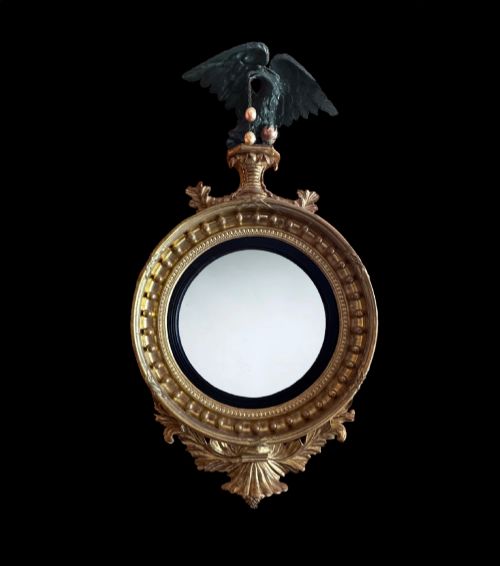
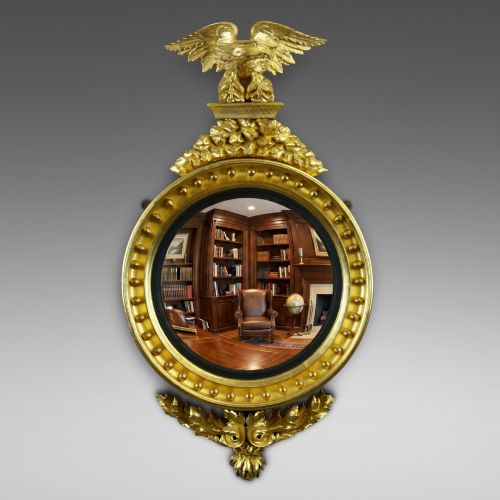
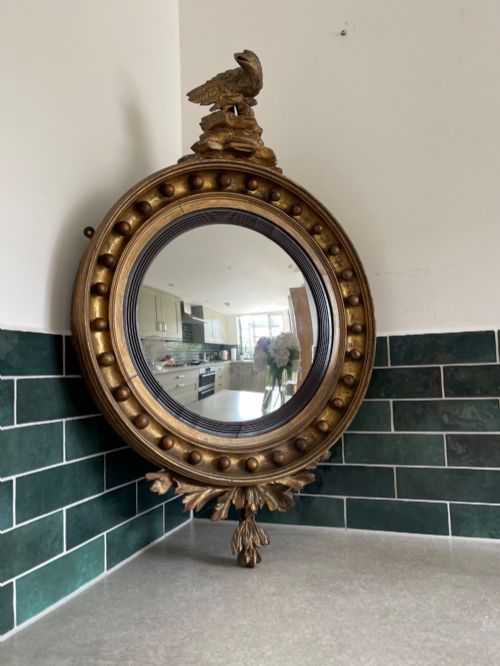
A giltwood eagle wall mirror brings intense focus to a room through its circular convex glass and commanding carved bird surmount.
Giltwood Eagle Wall Mirror
A giltwood eagle wall mirror is a striking focal point typically taking the form of a circular convex glass set within a decorative frame. These pieces frequently date from the Regency and Georgian eras, though revival periods also contribute to the selection.
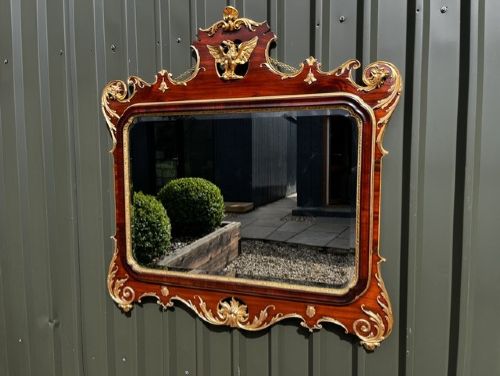
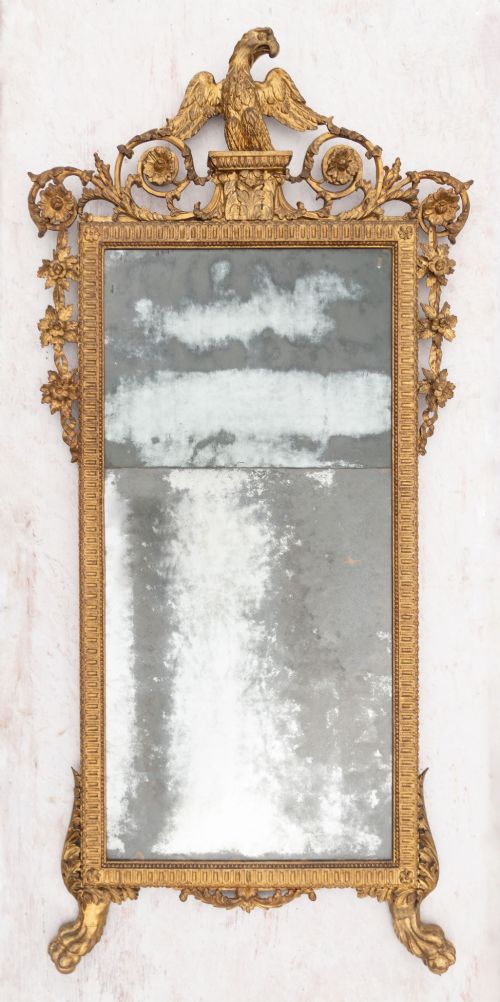
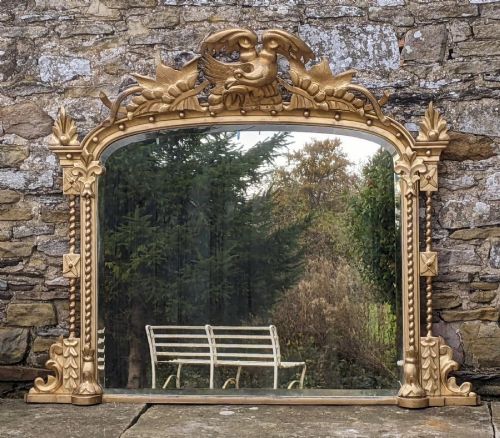
The defining characteristic is the bird surmount, with eagles and hoho birds perched atop the frame. Alongside convex wall mirrors, the evidence shows rectangular overmantel mirrors, pier mirrors, and girandoles bearing similar gilded decoration.
Materials and construction
Craftsmen built the frames using timber such as mahogany, walnut, or ebonised wood as a base. They applied gesso over the wood base to create a smooth surface for carving intricate details like the eagle crest.
Guilders applied thin layers of gold leaf over the gesso ground to achieve the characteristic gilt finish. Mirror glass was then fitted into the rebate, with circular convex plates requiring specialised curving techniques.
Some eagles clutch thunderbolts in their talons while keeping a sharp glass eye on the room.
Assessing quality and craftsmanship
The crispness of the carved eagle surmount and the depth of the gesso moulding separate finer examples from simpler pieces. Master carvers achieved spirited expression and intricate feather detail in the birds rather than a stiff or shallow relief.
The quality of the gilding and the preservation of the original mirror glass significantly influence the character of the object. Weighty timber frames and well-balanced proportions indicate superior cabinetmaking from periods such as the Regency and Georgian eras.
William Kent
The Giltwood Eagle Wall Mirror Glossary
- Giltwood
- Timber coated with gold leaf over a prepared gesso ground. This finish provides a bright reflective surface that catches interior candlelight or daylight.
- Convex glass
- A curved mirror plate that projects outward to capture a wide-angle reflection of the room. It distorts perspective slightly while illuminating dark corners.
- Gesso
- A plaster mixture applied to wood frames to create a smooth base for gilding and carving. It allows artisans to shape intricate relief details.
- Girandole
- A mirror fitted with one or more candle sconces attached to the frame. The polished branches multiply the flickering light in an apartment.
- Pier mirror
- A tall vertical glass designed to hang on the wall space between windows. These pieces often feature parcel-gilt details and classical motifs.
Giltwood Eagle Wall Mirror: Frequently Asked Questions
Where should I hang a convex mirror?
These mirrors work best on a prominent wall where they can capture light and reflect the entire room. Placing them opposite a window maximises their optical reach.
Because convex glasses shrink the field of view while widening the perspective, they suit living rooms, dining spaces, and hallways rather than task areas.
How do I identify a Regency period mirror?
Regency mirrors often feature bold circular convex forms, ebonised reeded inner bezels, and prominent eagle or bird crests. The frames rely on neoclassical motifs and heavy gilded mouldings.
Checking the construction timber and the oxidation of the mirror glass helps distinguish pieces from later George II or Regency revival eras.
What is the difference between an overmantel and a pier mirror?
Overmantel mirrors are wide horizontal glasses designed specifically to hang above a fireplace mantelpiece. They anchor the hearth area within the room.
Pier mirrors are narrower vertical plates built to occupy the wall space between two windows. Their proportions respond to architectural masonry rather than fireplaces.