
Gilt Writing Table
When you search for a gilt writing table, you are looking at nineteenth-century French and English desks defined by gilt mounts and leather writing surfaces.
Gilt Writing Table
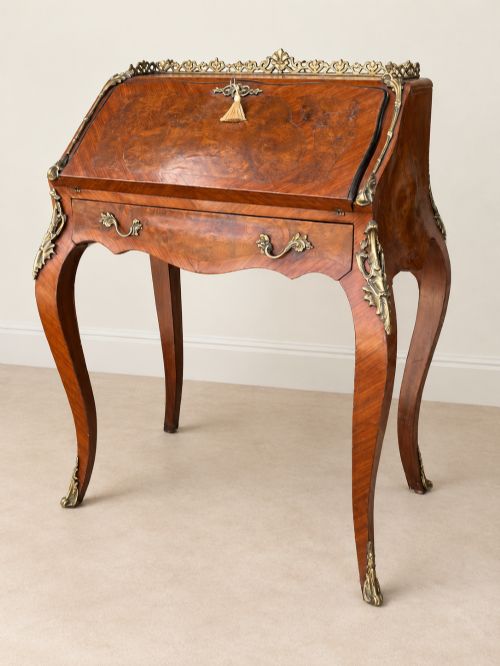
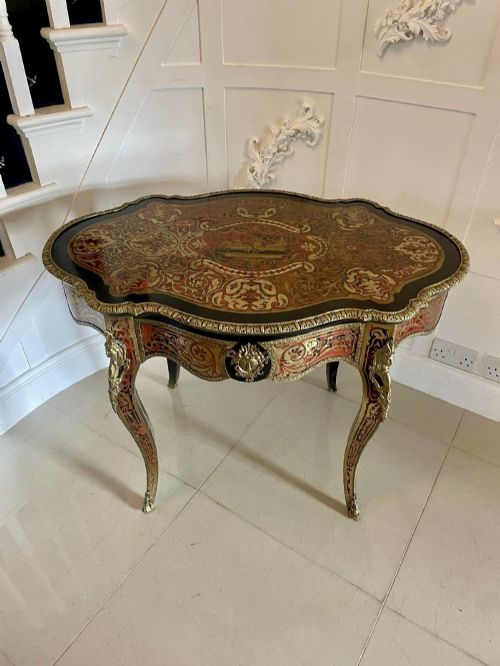
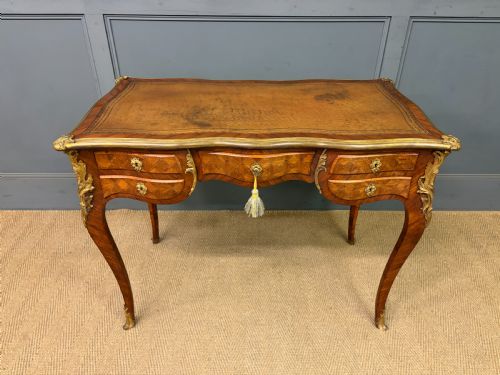
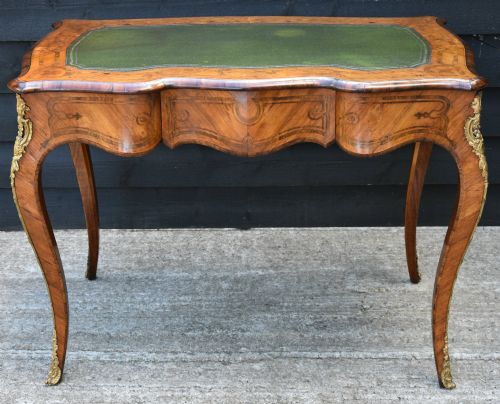
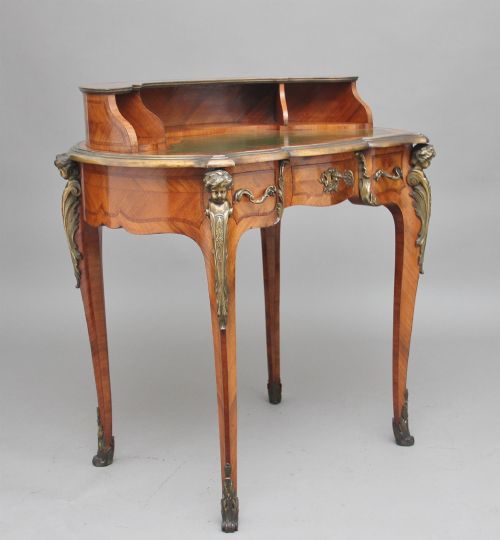
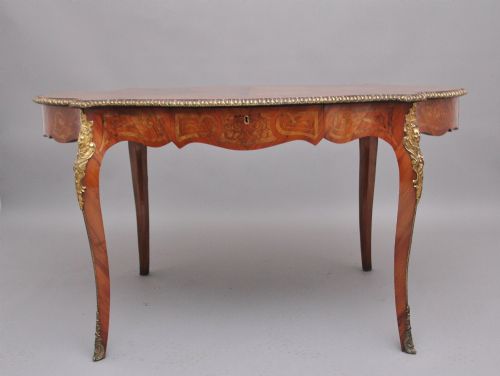
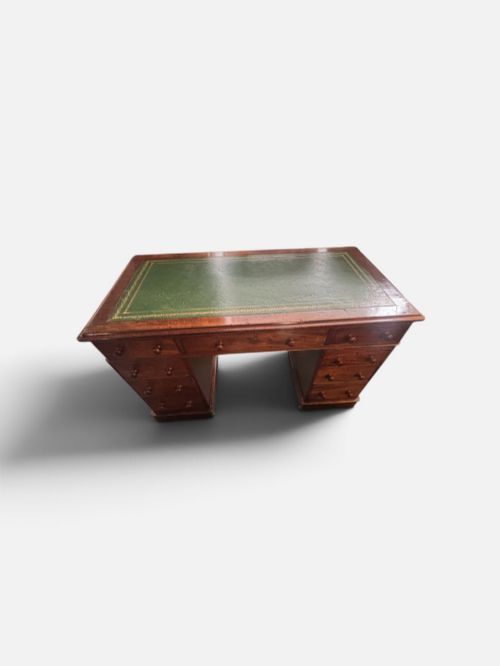
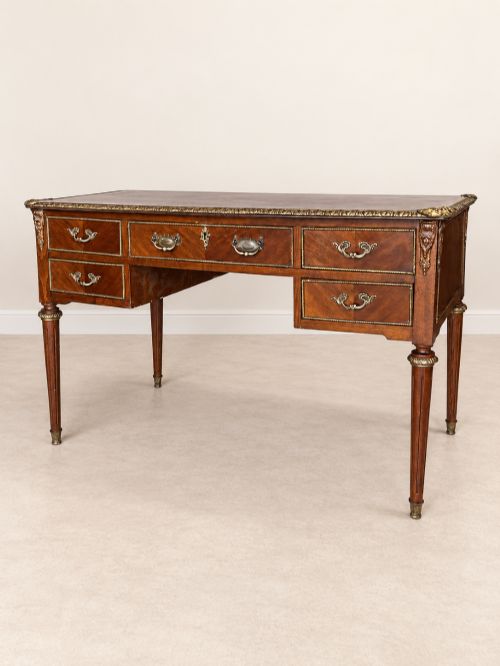
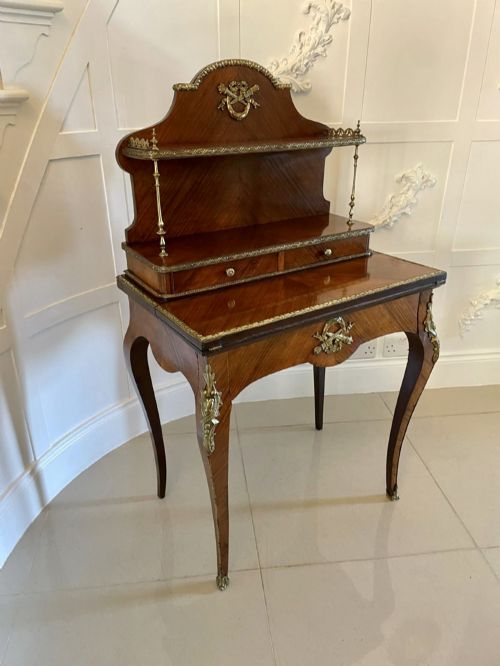
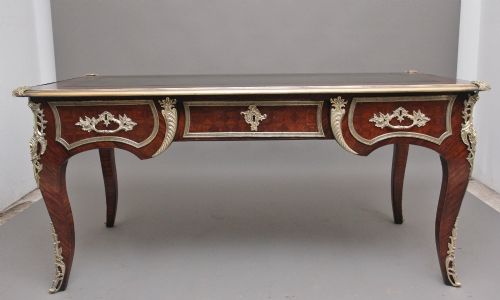
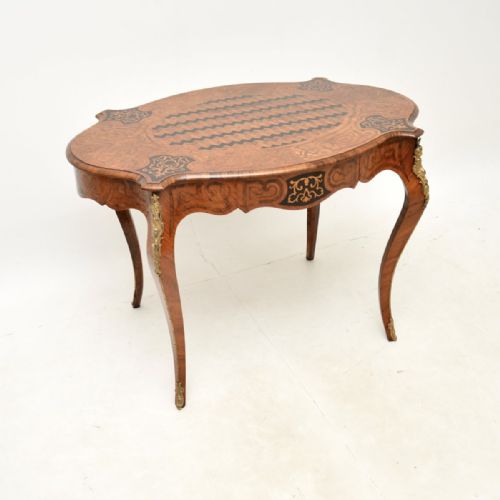
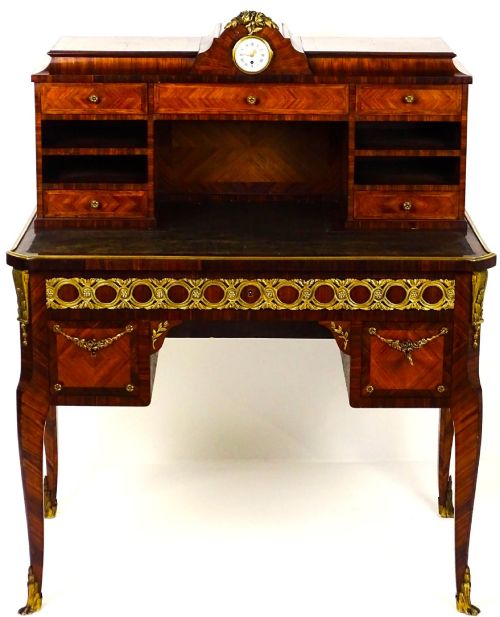
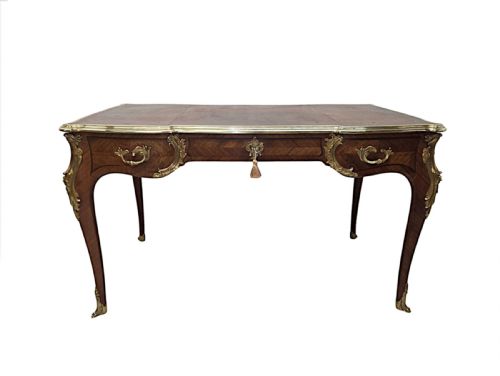
A gilt writing table encompasses nineteenth-century forms such as the bureau plat, the centre table, and the freestanding library desk. These pieces emerge predominantly in nineteenth-century contexts influenced by Louis XV and Louis XVI revivals.
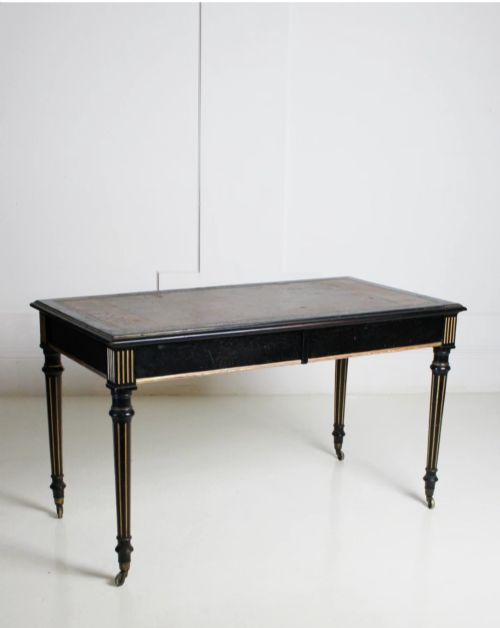
The buyer meets variations ranging from serpentine kingwood marquetry desks to ebonised library tables fitted with tooled leather inserts and gilt-bronze mounts. Many examples reflect French workshops operating during the Victorian period and the later nineteenth century.
How They Were Made
Cabinetmakers constructed carcass frames from timbers like mahogany, rosewood, and walnut, applying decorative veneers of kingwood, tulipwood, and satinwood in parquetry and marquetry patterns. Ebonised finishes and black lacquer also appear across the nineteenth-century selections.
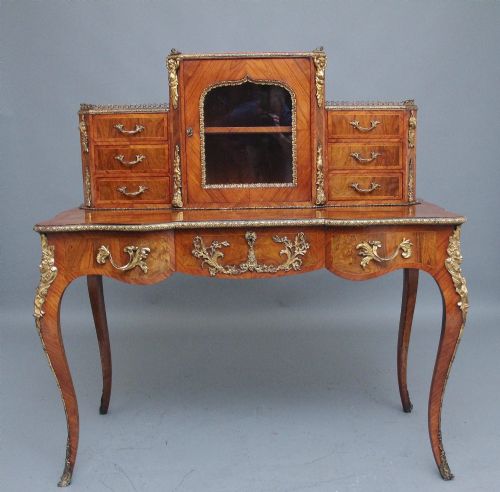
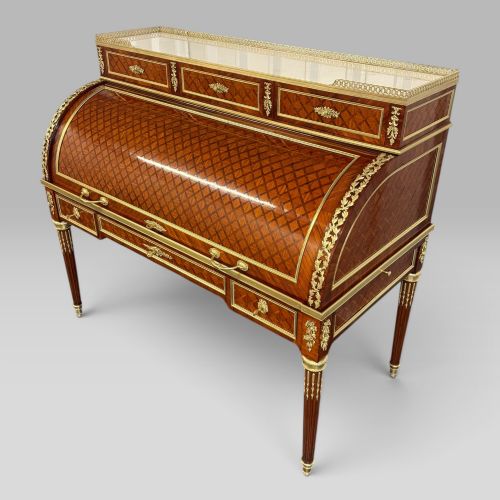
Mounts in ormolu, gilt bronze, and gilt metal were cast and chased to embellish corners, legs, and drawers, while writing surfaces incorporated inset leather tooled in gilt.
Listings feature nineteenth-century kingwood, mahogany, and ebonised wood alongside ormolu mounts and leather surfaces.
What Varies In Quality
The refinement of the cast ormolu and gilt-bronze mounts dictates the visual hierarchy, where crisp chasing and heavy metalwork distinguish superior examples from simpler casts. Precision in the floral parquetry and cabinet joinery further separates workshop output.
Subtleties in timber selection, such as figured kingwood veneers and carefully matched grain patterns across serpentine drawer fronts, mark the division between standard production pieces and masterworks.
Francois Linke·Edwards and Roberts·Paul Sormani·Durand·Millet
The Gilt Writing Table Glossary
- Bureau plat
- A freestanding double- or single-sided writing desk featuring drawers within the frieze. This form stands away from the wall.
- Ormolu
- Gilt bronze applied as decorative mounts to furniture frames. The technique involves a mercury amalgam fired onto brass or bronze.
- Parquetry
- Geometric wood inlay patterns forming repetitive designs across a tabletop or drawer front. Artisans use contrasting timbers to achieve the effect.
- Sabot
- A metal mount fitted to the foot of a cabriole leg. These serve to protect the timber base from wear.
- Bonheur du jour
- A small ladies writing desk featuring a tiered superstructure with shelves or small drawers above the main writing surface.
Gilt Writing Table: Frequently Asked Questions
Where were gilt writing tables used?
These tables stood typically within grand reception rooms, private libraries, or boudoirs as freestanding centrepieces rather than pushed against walls.
Their finished backs allowed them to occupy prominent positions in the middle of a room for correspondence and daily administration.
What is the difference between Louis XV and Louis XVI styles?
Louis XV style pieces display asymmetrical curves, naturalistic floral marquetry, and flowing cabriole legs derived from French Rococo revivals.
Louis XVI style furniture introduces neoclassical restraint, featuring straight fluted legs, symmetry, and geometric parquetry.
How should I care for the leather top?
The tooled leather writing insert requires cleaning with dry or slightly damp cloths, avoiding harsh chemical solvents that damage the gilt tooling.
Periodic application of suitable leather balms preserves the suppleness of the surface over decades of use.