
Gilt Wood Sconces
Gilt wood sconces bring warm reflected candlelight and carved ornament to vertical spaces, shaped by centuries of Italian and French design.
Gilt Wood Sconces
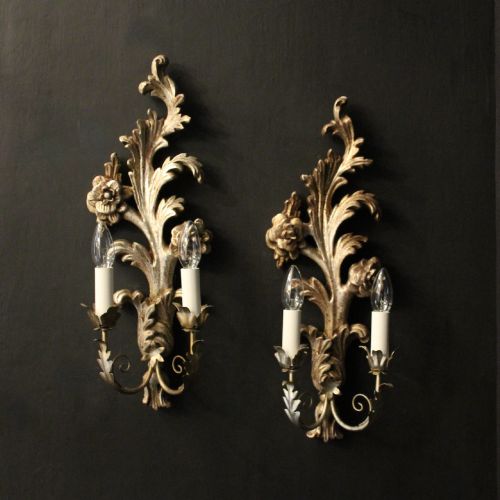
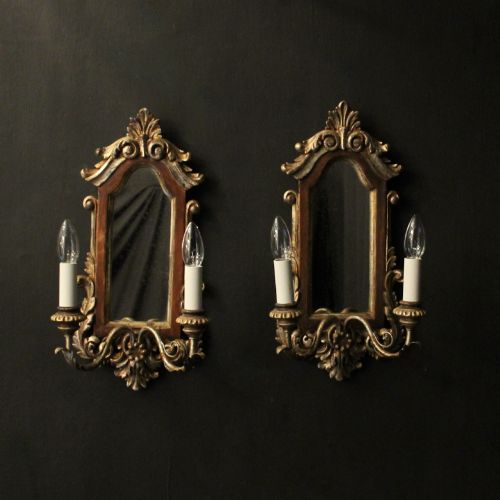
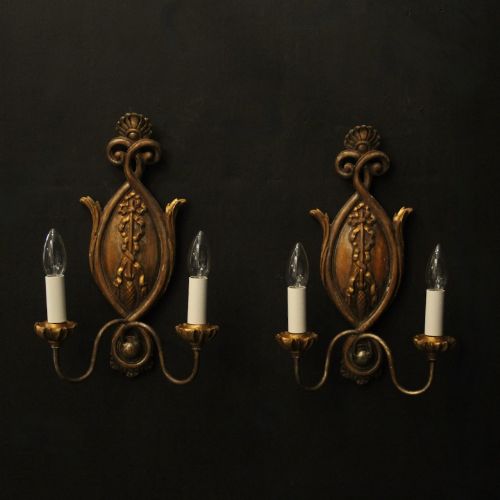
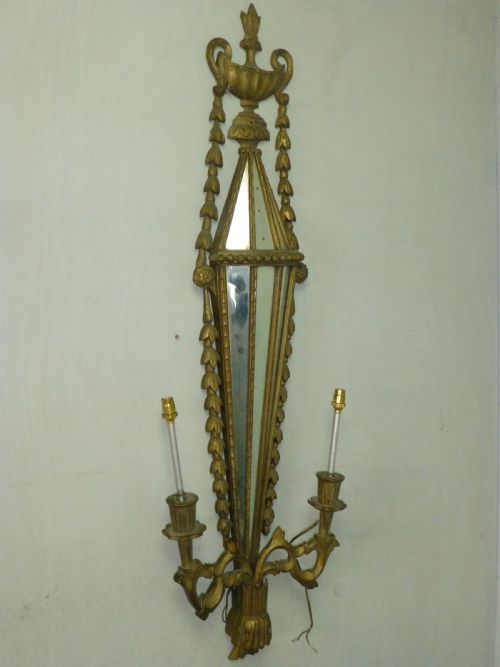
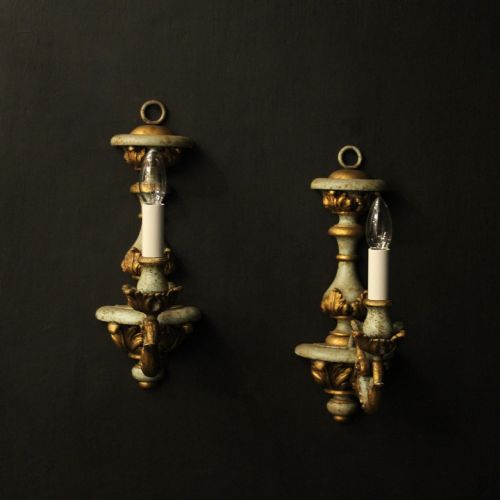
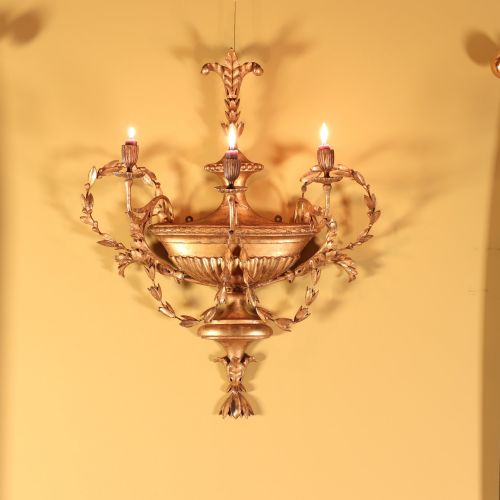
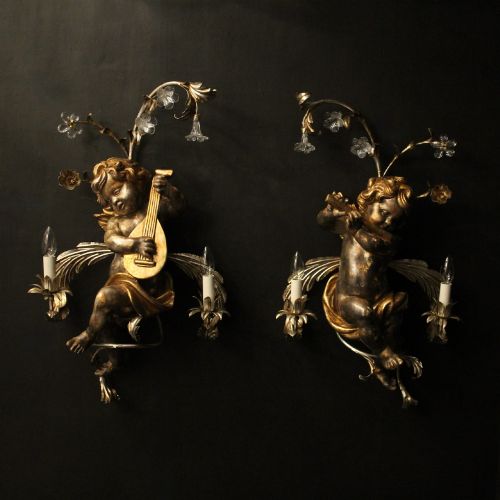
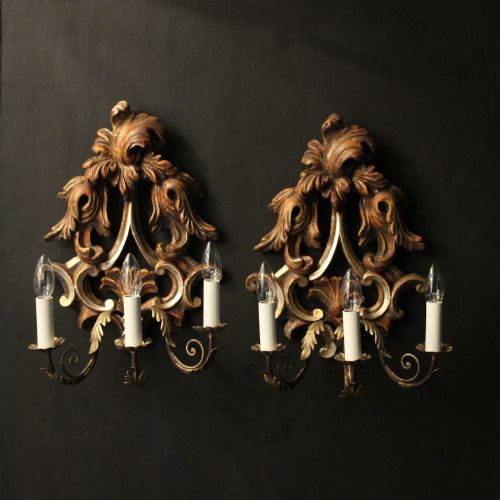
When you search for gilt wood sconces, you encounter wall-mounted illumination and decorative brackets designed to catch and amplify light from candles or early bulbs. The examples met most frequently on this page originate from Florentine workshops of the early twentieth century or nineteenth-century French and Italian makers, often taking the form of twin or triple arm wall lights.
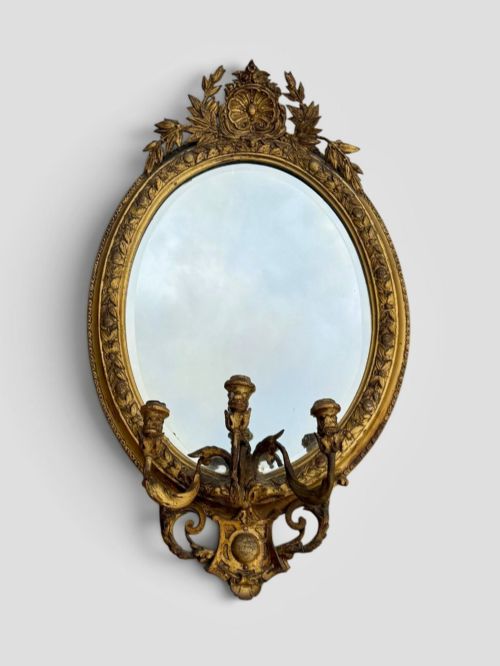
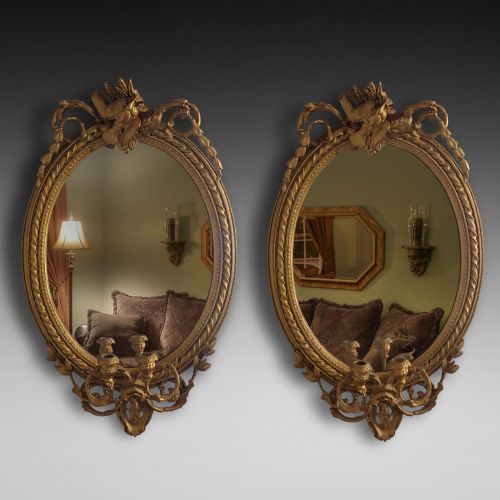
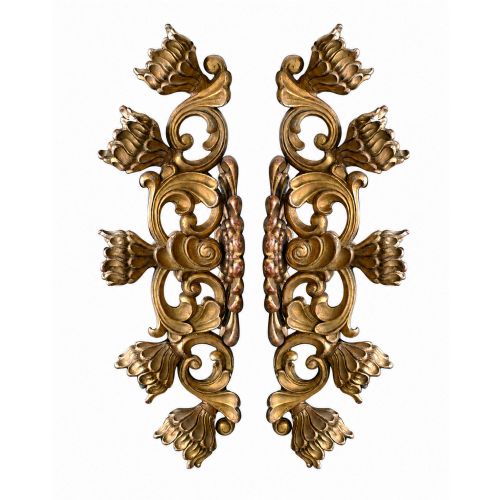
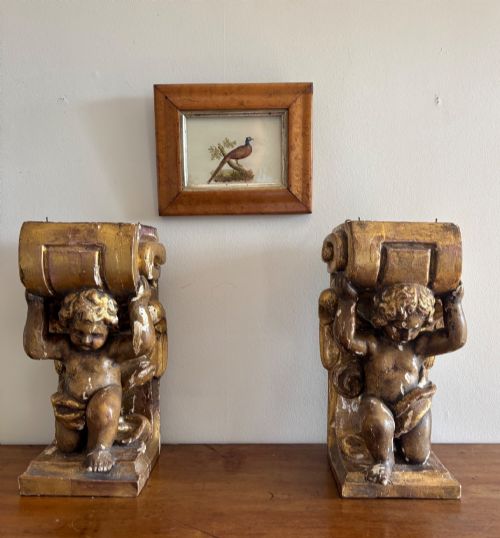
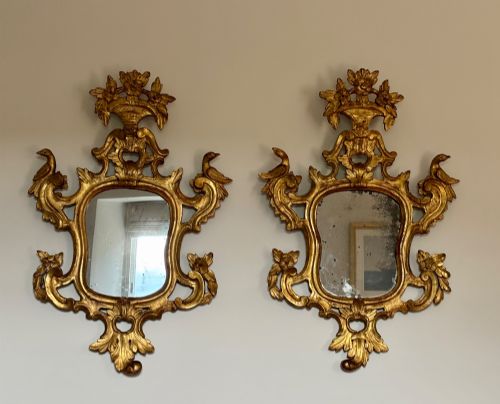
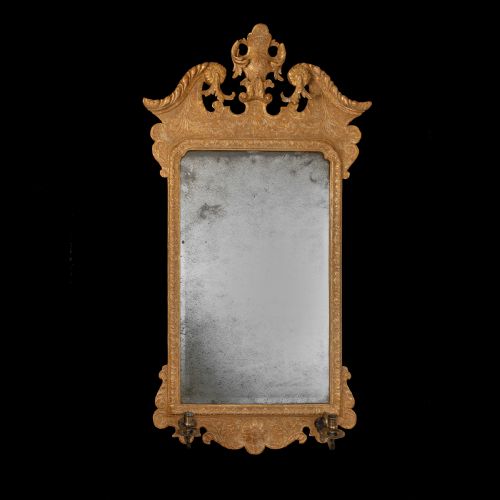
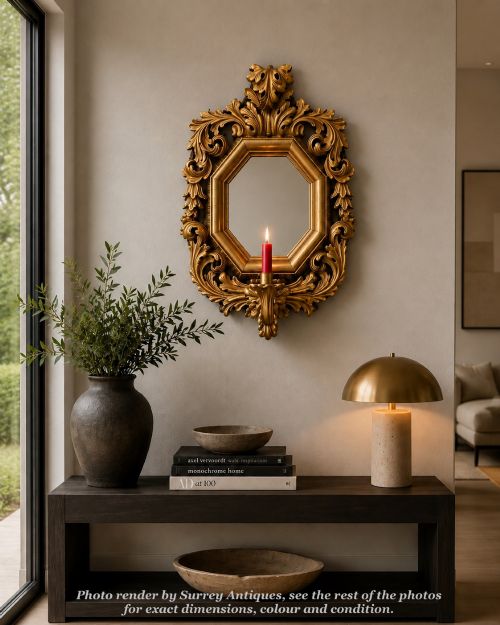
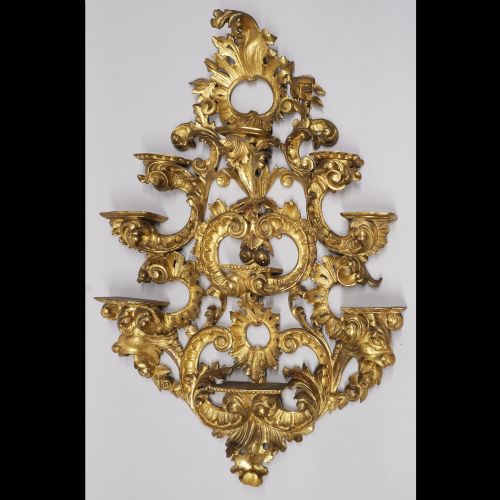
Beyond standard wall lights, the selection encompasses girandoles with integrated mirror plates, architectural wall brackets, and cartouche mirrors fitted with candle arms. These pieces range from compact single-light fittings to substantial carved groupings featuring cherubs, scrolling foliage, or classical motifs.
How They Were Made
Maker's hands shaped these objects using carved wood foundations coated in gesso, a plaster-like preparation layer that accepted fine detail work before gilding. Artisans applied thin sheets of gold leaf or silver leaf over the prepared surfaces, occasionally combining the metallic finish with polychrome paint.
Glass elements such as Murano components, foxed mirror plates, and crystal drops frequently accompanied the carved timber frames to enhance reflection. Metal armatures provided structural support for the candle nozzles extending from the wooden brackets.
Listings feature items spanning from the seventeenth century through to the 1930s, showcasing Florentine, Baroque, and Neoclassical design influences.
What Varies in Quality
The distinction between ordinary and exceptional wall fixtures lies in the depth and sharpness of the hand-carving. Crisp undercut foliage and expressive figures demonstrate superior craftsmanship compared to soft, moulded gesso over plain timber.
The integrity of the original surface finish dictates the character of the piece, with undisturbed gold leaf and patinated metal components holding greater visual coherence. Evidence of period handwork, from tool marks on the reverse to authentic foxing on mirror plates, separates historic studio pieces from later reproductions.
Benjamin Goodison
The Gilt Wood Sconces Glossary
- Giltwood
- Timber coated with gold leaf or metallic powder applied over a prepared ground. This technique provides a luminous surface that reflects ambient room light.
- Gesso
- A mixture of plaster of Paris and glue binder used to coat wooden bases before carving and gilding. It creates a smooth, absorbent skin for fine detail work.
- Girandole
- A branched wall light incorporating a mirror plate. The reflective glass multiplies the illumination cast by the candles.
- Cartouche
- An ornamental frame resembling a scroll or rolled-up piece of parchment. It frequently houses mirror glass or central carved motifs on wall fixtures.
- Foxed plate
- A mirror glass displaying dark spots and age-related oxidation. This natural degradation develops within the silvering over long periods.
Gilt Wood Sconces: Frequently Asked Questions
How do I mount a heavy gilt wood sconce safely?
Heavy carved wall lights require direct anchorage into wall studs or solid masonry using appropriate weight-bearing fixings. The substantial timber and gesso construction demands secure support rather than relying solely on plasterboard.
Professional installation ensures the bracket sits flush against the vertical surface without placing undue strain on the historic joints.
Were these fixtures originally wired for electricity?
Historic wall lights were built exclusively for candles or oil before modern electrification was introduced. Many surviving examples have subsequently received careful rewiring to accommodate small electrical bulbs.
Retaining or adapting the internal channels allows these historic fittings to function safely in contemporary interiors without losing their decorative purpose.
How should I clean antique gilded surfaces?
Dusting requires a very soft, dry brush to remove particles from delicate carved recesses without disturbing the metallic leaf. Moisture and chemical cleaners must be avoided entirely to prevent lifting the fragile gesso layer beneath.
Gentle maintenance preserves the accumulated patina developed across centuries of handling and exposure.
How do I distinguish Regency styles from Rococo pieces?
Regency wall fixtures favour restrained classical symmetry, geometric convex forms, and clean architectural lines influenced by ancient Greek and Roman design. Rococo items embrace asymmetrical scrolls, naturalistic shell motifs, and exuberant, flowing curves.
Examining the underlying silhouette and decorative vocabulary immediately clarifies which design period inspired the maker.