

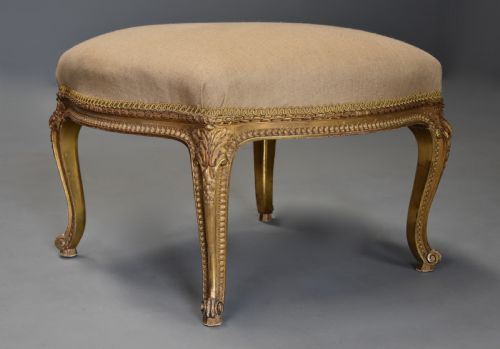


Gilt Wood Ottoman
A gilt wood ottoman brings effortless elegance to a room, offering versatile seating and footrests carved from gilded timber.
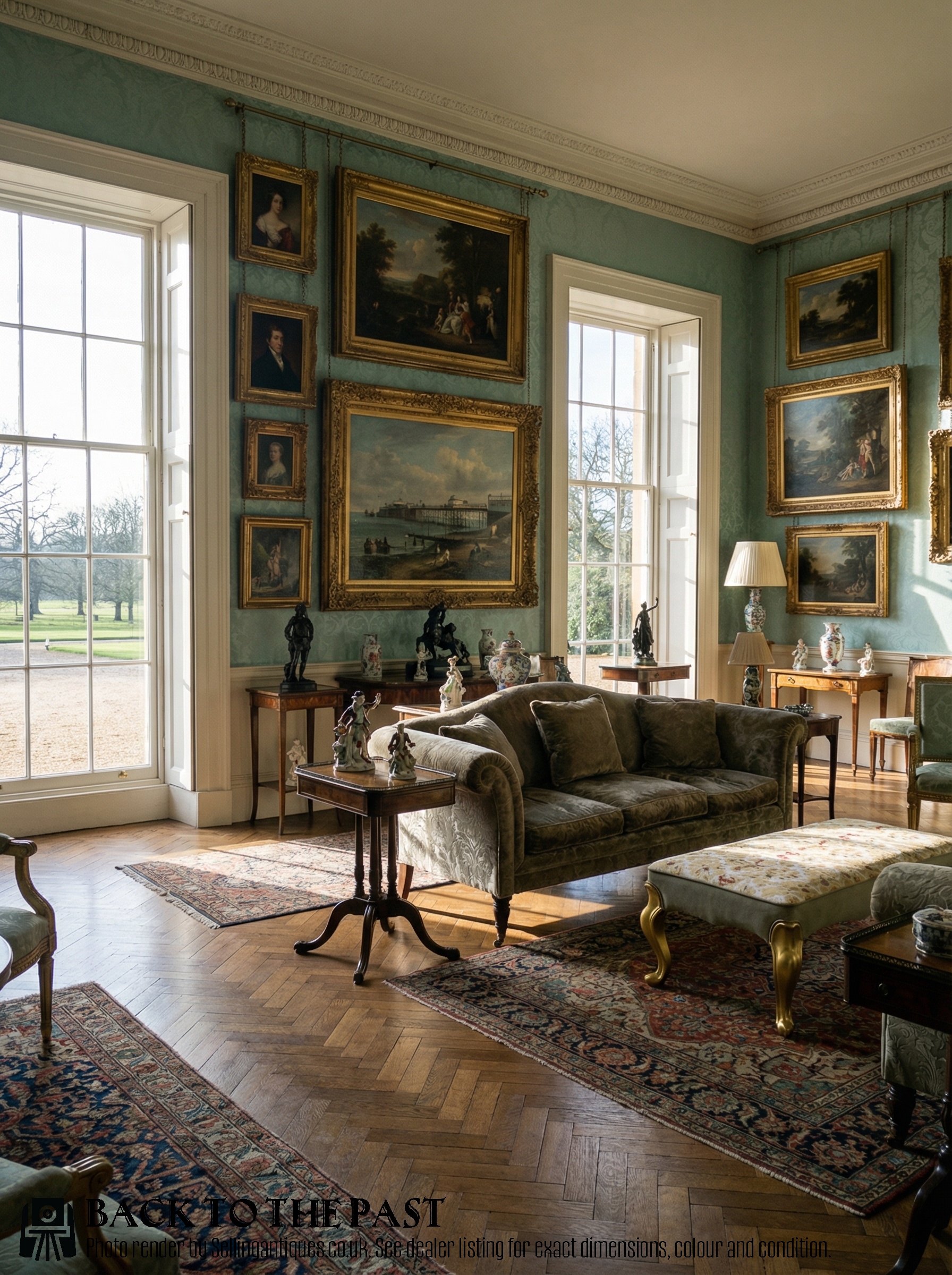
Gilt Wood Ottoman
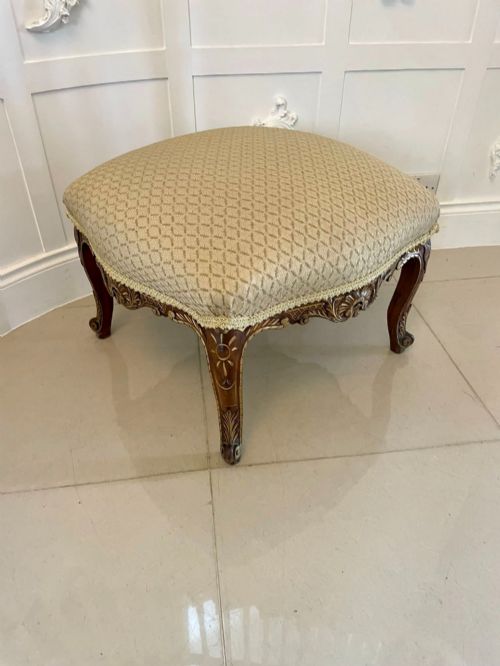
A gilt wood ottoman search uncovers a refined selection of low seating, primarily taking the form of stools, footstools, benches, and window seats. These pieces are designed to serve functional and decorative roles in traditional interiors.
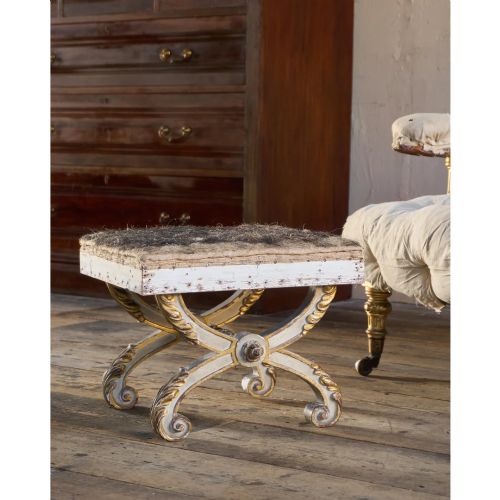
Most examples found on this page hail from the nineteenth century, including specific dates from eighteen hundred onwards, alongside Victorian and nineteen-twenty interpretations. Forms range from simple painted long stools to elaborate curule and window seat designs.
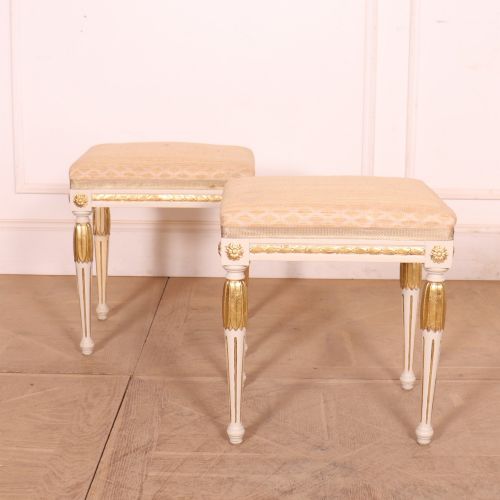
Continental European influences dominate the selection, with French, Swedish, and Italian origins appearing frequently across the inventory. Buyers encounter French neoclassical and Louis styles alongside crisp Gustavian pieces.
Materials and construction
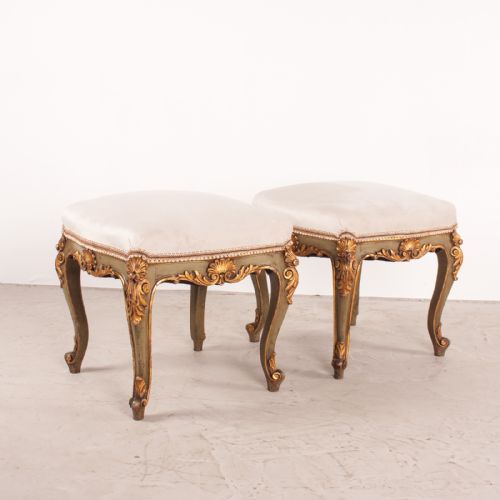
Construction relies primarily on carved wood, encompassing walnut, giltwood, and gesso, often finished with gold leaf or paint. Artisans applied thin layers of gold leaf or paint over prepared wooden frames to achieve the characteristic metallic sheen.
Upholstery forms a vital component, utilising fabrics such as linen to provide functional comfort atop the rigid wooden and gilded frames. Frameworks incorporate X-frame curule shapes and traditional joinery to ensure structural stability.
Listings feature nineteenth-century pieces alongside items dated eighteen hundred, eighteen sixty, eighteen ninety, and nineteen-twenty.
Distinguishing quality in craftsmanship
Quality separates pieces through the crispness of the wood carving and the depth of the gilding applied to the frame. Superior examples display sharply defined ornamentation and well-preserved gold leaf rather than flat, uniform modern coatings.
The integrity of the underlying wooden frame and the sophistication of the stylistic execution dictate the standing of an individual piece. Makers' stamps and documented regional origins further elevate specific examples above standard production items.
Miles & Edwards·Loidrault Freres Paris
The Gilt Wood Ottoman Glossary
- Giltwood
- Wood that has been coated with gold leaf or powder. This finish provides a bright, reflective metallic surface popular in formal furniture making.
- Curule stool
- An ancient Roman chair shape featuring X-shaped legs. This form translates into decorative footstools and benches with crossed supports.
- Gesso
- A plaster mixture applied to wood surfaces as a base for gilding or painting. It creates a smooth ground that holds fine carved details.
- Parcel gilt
- Furniture decoration where only specific carved portions are gilded while the rest remains painted or exposed wood. This technique highlights particular decorative motifs.
- Gustavian
- The Swedish interpretation of French neoclassical design, known for lighter colours and restrained carving. Pieces from this tradition often feature pale painted finishes.
Gilt Wood Ottoman: Frequently Asked Questions
What is a gilt wood ottoman?
A gilt wood ottoman is a low seat or footrest constructed from wood and finished with gold leaf or metallic paint.
These pieces function as stools, benches, or window seats in period settings.
How do I date a gilt wood stool?
Dating relies on stylistic clues, construction methods, and materials recorded from periods such as the nineteenth century.
French and Swedish designs often carry distinct revival characteristics of the era in which they were made.
Where were these stools made?
The available pieces originate largely from European workshops, particularly in France, Sweden, and Italy.
Maker stamps occasionally appear on the timber frames to confirm exact origins.
How do I care for giltwood?
Giltwood requires gentle dusting with a soft, dry cloth to protect the delicate gold leaf surface.
Keep these items away from direct sunlight and moisture to preserve the original finish.